
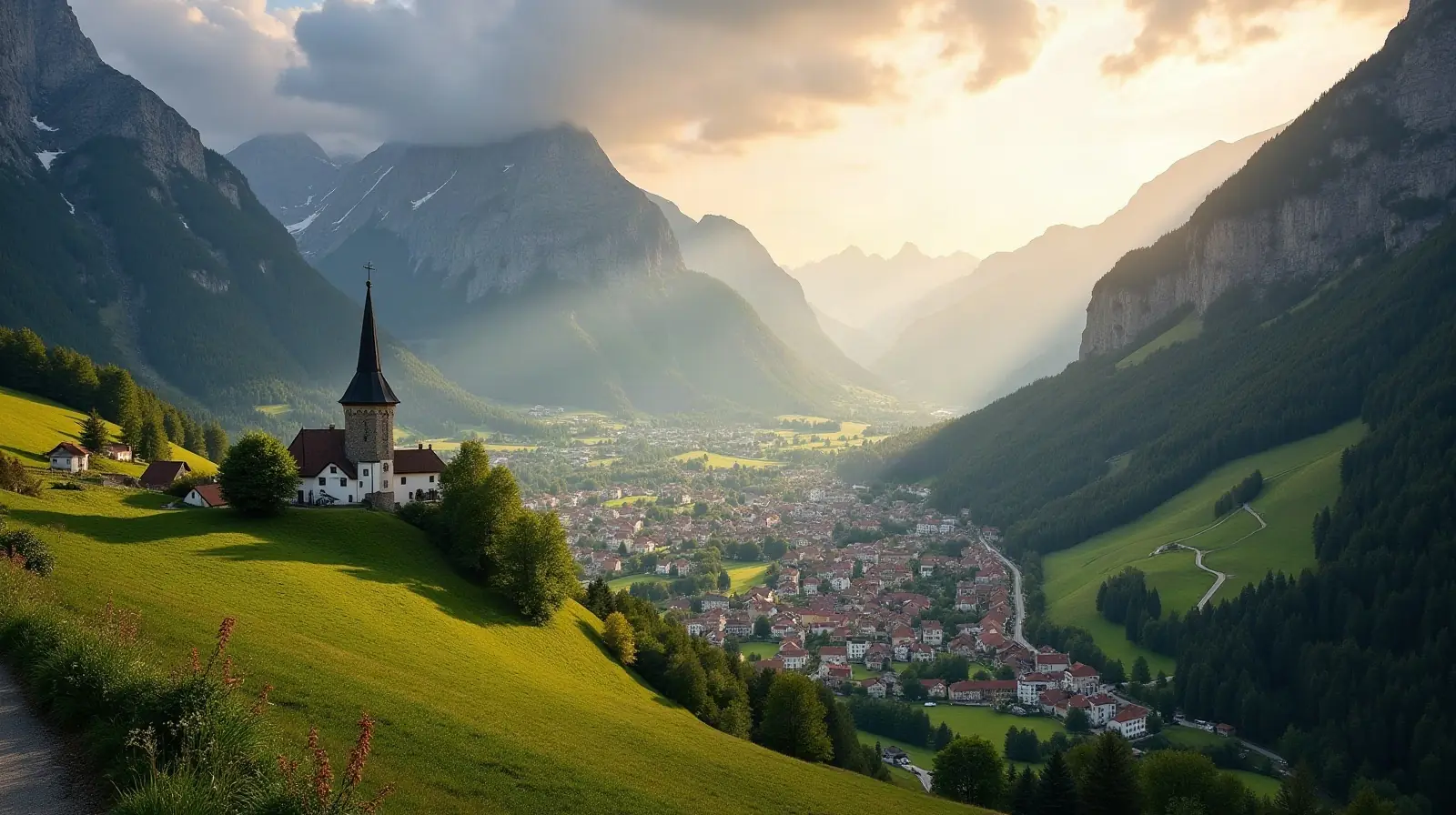
Western Europe · UN member

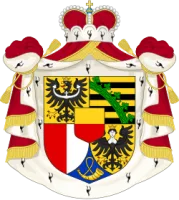
Liechtenstein: Travel Guide & Requirements
Principality of Liechtenstein
Liechtenstein is a country in Western Europe with its capital in Vaduz. It has a population of 41,024 (#207 in the world) and covers 160 km². The official language is German. The currency is the Swiss franc (CHF, Fr).
Where is Liechtenstein? Map of Liechtenstein
Central Europe, between Austria and Switzerland.
- Region
- Western Europe
- Coordinates
- 47.2667° N, 9.5333° E
- Neighbours
- 2 — see list
- Coastline
- Landlocked
- Liechtenstein
- Neighbours
- Capital
Travel requirements
What you need to travel to Liechtenstein
- Passport
The UK government tells British nationals that Liechtenstein follows Schengen area rules: their passport must have a date of issue less than 10 years before the date they arrive and an expiry date at least 3 months afte…
- Visa or eTA
Depends on your passport: of 198 passports, 93 need no visa, 105 need a visa from an embassy. Check yours or see Liechtenstein entry requirements for every passport.
- Return or onward ticket
No official requirement. Under the Schengen Borders Code (Annex I), the supporting documents border guards may check for tourist or private trips include a return or round-trip ticket.
- Proof of funds
The European Commission's table of reference amounts lists, as the minimum amount per day and per person for Liechtenstein, around CHF 100, and around CHF 30 for students with a valid student ID.
- Travel insurance
Under the Schengen Visa Code, visa applicants must hold travel medical insurance valid throughout the territory of the Member States and covering the entire period of the intended stay; the minimum coverage is EUR 30,00…
- Arrival card
The EU's Travel Europe site says that the first time you arrive at a border crossing point since the EES started, passport control officers will take a photo of your face and/or scan your fingerprints, and your passport…
- Customs allowance
The UK government says Switzerland handles customs matters for Liechtenstein.
- Travel advice
Safe to visit — US and UK advice.
Entry rules: TravelRequirements.info — Entry Requirements Dataset (CC BY 4.0), each rule cited to an official government source. Always confirm with the airline and the official source before you travel.
Before you go
10 things to know before you travel to Liechtenstein
- Safety: Yes — Liechtenstein is generally safe to visit: the US State Department rates Liechtenstein Level 1 (“Exercise Normal Precautions”), and the UK Foreign Office has no warnings against travel there.
- Best time to go: June to August — when daytime highs in Vaduz are around 18–19°C.
- Money: the Swiss franc (CHF) — 1 US dollar is about 0.8239 CHF.
- Plugs: type C and J, 230 V, 50 Hz — standard 220–240 V: devices from the US or Japan (110–120 V) need a converter unless they are dual voltage (100–240 V).
- Emergency numbers: Police 117, Ambulance 144, Fire 118.
- Language: German is official.
- Driving: on the right — speed limits are 50 km/h in built-up areas and 80 km/h outside built-up areas.
- Time zone: UTC+1 in Vaduz.
- Capital: Vaduz. About 41,024 people live in Liechtenstein.
- Outdoors: 2 ski areas.
Key facts
Liechtenstein at a glance
Languages spoken: German 91.5% (official, Alemannic is the main dialect), Italian 1.5%, Turkish 1.3%, Portuguese 1.1%, other 4.6% (2015 est.)
Geography & history
About Liechtenstein
The Principality of Liechtenstein was established within the Holy Roman Empire in 1719. Occupied by both French and Russian troops during the Napoleonic Wars, it became a sovereign state in 1806 and joined the German Confederation in 1815. Liechtenstein became fully independent in 1866 when the Confederation dissolved. Until the end of World War I, it was closely tied to Austria, but the economic devastation caused by that conflict forced Liechtenstein to enter into a customs and monetary union with Switzerland. Since World War II (in which Liechtenstein remained neutral), the country's low taxes have spurred outstanding economic growth. In 2000, shortcomings in banking regulatory oversight…
Read the full history
The Principality of Liechtenstein was established within the Holy Roman Empire in 1719. Occupied by both French and Russian troops during the Napoleonic Wars, it became a sovereign state in 1806 and joined the German Confederation in 1815. Liechtenstein became fully independent in 1866 when the Confederation dissolved. Until the end of World War I, it was closely tied to Austria, but the economic devastation caused by that conflict forced Liechtenstein to enter into a customs and monetary union with Switzerland. Since World War II (in which Liechtenstein remained neutral), the country's low taxes have spurred outstanding economic growth. In 2000, shortcomings in banking regulatory oversight resulted in concerns about the use of financial institutions for money laundering. However, Liechtenstein implemented anti-money laundering legislation and a Mutual Legal Assistance Treaty with the US that went into effect in 2003.
Location
Central Europe, between Austria and Switzerland
Climate
continental; cold, cloudy winters with frequent snow or rain; cool to moderately warm, cloudy, humid summers
Terrain
mostly mountainous (Alps) with Rhine Valley in western third
Highest point
Vorder-Grauspitz 2,599 m
Natural resources
hydroelectric potential, arable land
Natural hazards
avalanches, landslides
National symbols
princely hat (crown)
Driving
Speed limits & road rules in Liechtenstein
The default speed limits in Liechtenstein are 50 km/h in built-up areas and 80 km/h outside built-up areas. Posted signs always take priority over these defaults.
- 5050 km/hBuilt-up areasTowns and cities
- 8080 km/hOutside built-up areasCountry roads
- International Driving PermitRecognised: 1968 Vienna, 1949 GenevaCarry the IDP together with your national licence
- Driving sideDrive on the rightOvertake on the left
Speed limits: OpenStreetMap wiki — Default speed limits (CC BY-SA 2.0). Road-safety laws: WHO Global Health Observatory. Compare speed limits and alcohol limits by country. Defaults for cars; local signs, weather and vehicle type can lower them.
Safety
Is Liechtenstein safe to visit?
Yes — Liechtenstein is generally safe to visit: the US State Department rates Liechtenstein Level 1 (“Exercise Normal Precautions”), and the UK Foreign Office has no warnings against travel there.
 US State Department
 UK Foreign Office (FCDO)
Latest update: Updated information on European Entry-Exit System (EES) (‘Entry requirements’ page).
Updated 11 Aug 2026 · Full travel advice
Sources: US Department of State travel advisories (public domain) and UK FCDO foreign travel advice (contains public sector information licensed under the Open Government Licence v3.0). Checked daily. Advice can change quickly — always read the official page before you travel.
Weather
Best time to visit Liechtenstein
The best time to visit Liechtenstein is June to August, when daytime highs in Vaduz are around 18–19°C. July is the warmest month (19°C by day), January the coldest (-10°C at night), and August the wettest with about 185 mm of rain.
- Jan-2°C-10°C
- Feb-1°C-10°C
- Mar3°C-5°C
- Apr9°C-1°C
- May14°C3°C
- Jun18°C8°C
- Jul19°C10°C
- Aug19°C9°C
- Sep15°C5°C
- Oct11°C1°C
- Nov4°C-4°C
- Dec-0°C-8°C
Best time Good Less ideal
Before you go
Plugs, voltage & emergency numbers in Liechtenstein
Plugs & sockets
230 V, 50 Hz · Standard 220–240 V: devices from the US or Japan (110–120 V) need a converter unless they are dual voltage (100–240 V).
Emergency numbers
Save the local numbers before you travel — 112 or 911 may not connect here. All countries →
Sources: Wikipedia — Mains electricity by country and List of emergency telephone numbers (CC BY-SA 4.0).
Ski resorts
2 ski resorts in Liechtenstein
- 17 km of slopes
- 8 lifts
- up to 1,990 m
Biggest: Malbun · Steg
Currency · 26 October 2026
Swiss franc exchange rates today
Liechtenstein uses the Swiss franc (CHF, Fr). One US dollar buys 0.8239 CHF; over the last 30 days the CHF has gained 0.6% against the dollar.
What other currencies cost in CHF
Currency converter
Daily reference rates from the open-source currency-api (CC0), 26 Oct 2026. Banks and exchange offices add a margin.
World rankings
Where Liechtenstein ranks
How Liechtenstein compares with the rest of the world — open any card for the full ranking.
Airports
Airports in Liechtenstein
2 airports and airfields — 0 large, 0 medium and 0 small, plus 2 heliports. 0 have scheduled passenger flights.
Borders
Neighbouring countries
Liechtenstein borders 2 countries along 75 km of land borders. It is landlocked.


People
Population & society
Religion
Largest cities: Vaduz (5,000)
Economy
Economy
Main industries
electronics, metal manufacturing, dental products, ceramics, pharmaceuticals, food products, precision instruments, tourism, optical instruments
Top exports
small specialty machinery, connectors for audio and video, parts for motor vehicles, dental products, hardware
Travel tools
Handy before every trip to Liechtenstein
Next public holiday
All Saints Day — Sunday, 1 November 2026. Then Immaculate Conception (8 Dec).

Liechtenstein passport
Ranked #39: 114 countries visa-free, 38 with visa on arrival, 8 with an eTA and 21 with an eVisa.
Liechtenstein passport photo
Exact size, head position and background for Liechtenstein's passport and visa photos — make one free with AI checks.
Calling Liechtenstein
Dial +423 before the local number. Internet domain .li.
Climate footprint
0.1 million tonnes of CO₂ in 2024 — 3.30 t per person.
Entry requirements
Visa rules for every passport visiting Liechtenstein: visa-free stays, eVisas, visas on arrival and documents to bring.
News
Latest travel news about Liechtenstein

Thailand and Liechtenstein weigh possible Schengen visa exemption for Thai passports
Thai and Liechtenstein leaders discussed exploring a possible Schengen visa exemption for holders of Thai ordinary passports during a meeting on 16 O…

Vatican City Citizens Exempt from EU Biometric Border Registration
Citizens of Vatican City, along with three other micro-states, are exempt from biometric registration at EU borders, under the new Entry/Exit System.
Travel Guide to Liechtenstein: Access, Visa Requirements, and Attractions
Liechtenstein, a small Alpine country with no airport, requires Indian travellers to obtain a Schengen visa. Explore its unique attractions and trave…
Frequently asked questions about Liechtenstein
What do I need to travel to Liechtenstein?
How long must my passport be valid for Liechtenstein?
Where is Liechtenstein?
What is the capital of Liechtenstein?
What language is spoken in Liechtenstein?
What currency does Liechtenstein use?
What is the calling code of Liechtenstein?
Which countries border Liechtenstein?
How strong is the Liechtenstein passport?
What is the speed limit in Liechtenstein?
Is Liechtenstein safe to visit?
When is the best time to visit Liechtenstein?
What plug type does Liechtenstein use?
How many airports does Liechtenstein have?
Sources: CIA World Factbook (public domain); World Bank Open Data (CC BY 4.0); names, languages and currencies: mledoze/countries (ODbL); flag: flag-icons (MIT); coat of arms: Wikimedia Commons (file page); exchange rates: Daily reference rates from the open-source currency-api (CC0); airports: OurAirports.