
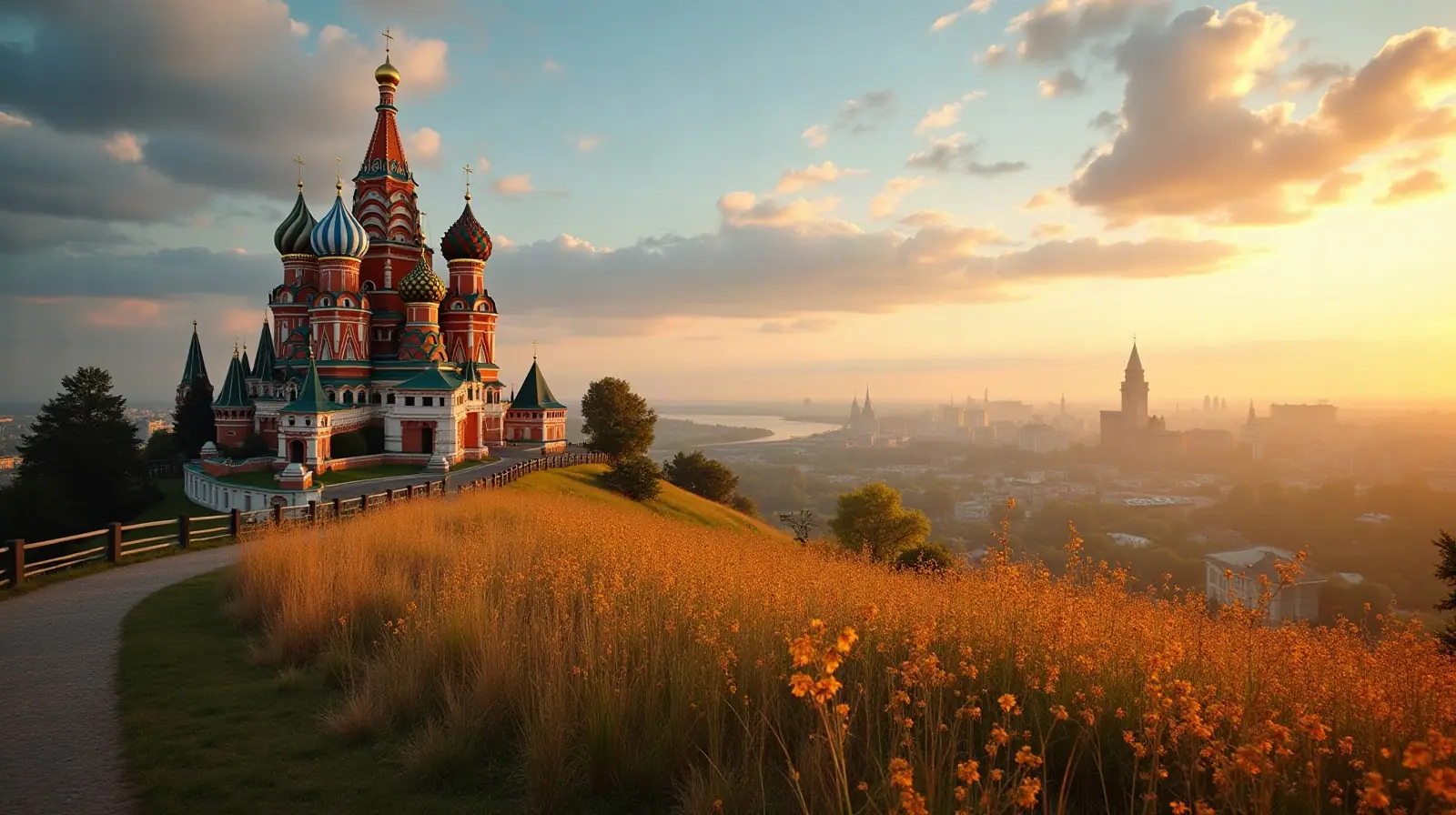
Eastern Europe · UN member

Russia: Travel Guide & Requirements
Russian Federation · Российская Федерация
Russia is a country in Eastern Europe with its capital in Moscow. It has a population of 143.5 million (#9 in the world) and covers 17,098,242 km². The official language is Russian. The currency is the Russian ruble (RUB, ₽).
Where is Russia? Map of Russia
North Asia bordering the Arctic Ocean, extending from Eastern Europe (the portion west of the Urals) to the North Pacific Ocean.
- Region
- Eastern Europe
- Coordinates
- 60° N, 100° E
- Neighbours
- 14 — see list
- Coastline
- 37,653 km
- Russia
- Neighbours
- Capital
- Largest cities
Map of Russia showing Moscow (capital) and the largest cities: Saint Petersburg, Novosibirsk, Yekaterinburg, Nizhniy Novgorod, Kazan, Chelyabinsk, Omsk and Samara.
Travel requirements
What you need to travel to Russia
- Passport
Russia's Foreign Ministry says e-visa applicants need a machine-readable passport issued by their country of nationality, valid for at least 6 months from the date the e-visa application is submitted, with sufficient sp…
- Visa or eTA
Depends on your passport: of 198 passports, 68 need no visa, 60 need an eVisa, 70 need a visa from an embassy. Check yours or see Russia entry requirements for every passport.
- Return or onward ticket
No official requirement. Russia's Foreign Ministry asks transit-visa applicants for tickets valid for leaving Russia, and says the unified e-visa is valid for entry and exit only through the border crossing points on the Government's list.
- Proof of funds
No official requirement.
- Travel insurance
Russia's Foreign Ministry says visa applicants provide a medical insurance policy unless Russia's international treaties provide otherwise; holders of diplomatic and service passports and some other categories are exemp…
- Arrival card
Russia's Foreign Ministry says migration card forms are handed to arriving foreigners by the crew (air, sea or river), the train crew, the bus driver or, for private transport or on foot, border control officials.
- Customs allowance
The UK government says you may bring cash in any currency and travellers' cheques into or out of Russia without declaring them if their combined value does not exceed the equivalent of 10,000 US dollars, and that you ca…
- Travel advice
Avoid travel — US and UK advice.
Entry rules: TravelRequirements.info — Entry Requirements Dataset (CC BY 4.0), each rule cited to an official government source. Always confirm with the airline and the official source before you travel.
Before you go
10 things to know before you travel to Russia
- Safety: Governments advise against travel to Russia: the US State Department rates Russia Level 4 (“Do Not Travel”), and the UK Foreign Office advises against all travel to the whole country.
- Best time to go: July to August — when daytime highs in Moscow are around 22–24°C.
- Money: the Russian ruble (RUB) — 1 US dollar is about 81.4857 RUB.
- Plugs: type C and F, 230 V, 50 Hz — standard 220–240 V: devices from the US or Japan (110–120 V) need a converter unless they are dual voltage (100–240 V).
- Emergency numbers: Police 102 / 112, Ambulance 103 / 112, Fire 101 / 112.
- Language: Russian is official.
- Driving: on the right — speed limits are 60 km/h in built-up areas, 90 km/h outside built-up areas and 110 km/h on motorways.
- Time zone: UTC+3 in Moscow.
- Capital: Moscow. About 143.5 million people live in Russia.
- Russia is the largest country in the world by area.
Key facts
Russia at a glance
Languages spoken: Russian (official) 85.7%, Tatar 3.2%, Chechen 1%, other 10.1% (2010 est.)
Geography & history
About Russia
Founded in the 12th century, the Principality of Muscovy emerged from over 200 years of Mongol domination (13th-15th centuries) and gradually conquered and absorbed surrounding principalities. In the early 17th century, a new ROMANOV dynasty continued this policy of expansion across Siberia to the Pacific. Under PETER I (1682-1725), hegemony was extended to the Baltic Sea and the country was renamed the Russian Empire. During the 19th century, more territorial acquisitions were made in Europe and Asia. Defeat in the Russo-Japanese War of 1904-05 contributed to the Revolution of 1905, which resulted in the formation of a parliament and other reforms. Devastating defeats and food shortages in…
Read the full history
Founded in the 12th century, the Principality of Muscovy emerged from over 200 years of Mongol domination (13th-15th centuries) and gradually conquered and absorbed surrounding principalities. In the early 17th century, a new ROMANOV dynasty continued this policy of expansion across Siberia to the Pacific. Under PETER I (1682-1725), hegemony was extended to the Baltic Sea and the country was renamed the Russian Empire. During the 19th century, more territorial acquisitions were made in Europe and Asia. Defeat in the Russo-Japanese War of 1904-05 contributed to the Revolution of 1905, which resulted in the formation of a parliament and other reforms. Devastating defeats and food shortages in World War I led to widespread rioting in the major cities of the Russian Empire and to the overthrow of the ROMANOV Dynasty in 1917. The communists under Vladimir LENIN seized power soon after and formed the Union of Soviet Socialist Republics (USSR). The brutal rule of Iosif STALIN (1928-53) strengthened communist control and Russian dominance of the Soviet Union at a cost of tens of millions of lives. After defeating Germany in World War II as part of an alliance with the US (1939-1945), the USSR expanded its territory and influence in Eastern Europe and emerged as a global power. The USSR was the principal US adversary during the Cold War (1947-1991). The Soviet economy and society stagnated in the decades following Stalin's rule, until General Secretary Mikhail GORBACHEV (1985-91) introduced glasnost (openness) and perestroika (restructuring) in an attempt to modernize communism. His initiatives inadvertently released political and economic forces that by December 1991 led to the dissolution of the USSR into Russia and 14 other independent states. In response to the ensuing turmoil during President Boris YELTSIN's term (1991-99), Russia shifted toward a centralized authoritarian state under President Vladimir PUTIN (2000-2008, 2012-present) in which the regime seeks to legitimize its rule through managed elections, populist appeals, a foreign policy focused on enhancing the country's geopolitical influence, and commodity-based economic growth. In 2014, Russia purported to annex Ukraine's Crimean Peninsula and occupied large portions of two eastern Ukrainian oblasts. In sporadic fighting over the next eight years, more than 14,000 civilians were killed or wounded as a result of the Russian invasion in eastern Ukraine. On 24 February 2022, Russia escalated its conflict with Ukraine by invading the country on several fronts in what has become the largest conventional military attack on a sovereign state in Europe since World War II. The invasion received near-universal international condemnation, and many countries imposed sanctions on Russia and supplied humanitarian and military aid to Ukraine. In September 2022, Russia unilaterally declared its annexation of four Ukrainian oblasts -- Donetsk, Kherson, Luhansk, and Zaporizhzhia -- even though none were fully under Russian control. The annexations remain unrecognized by the international community.
Location
North Asia bordering the Arctic Ocean, extending from Eastern Europe (the portion west of the Urals) to the North Pacific Ocean
Climate
ranges from steppes in the south through humid continental in much of European Russia; subarctic in Siberia to tundra climate in the polar north; winters vary from cool along Black Sea coast to frigid in Siberia; summers vary from warm in the steppes to cool …
Terrain
broad plain with low hills west of Urals; vast coniferous forest and tundra in Siberia; uplands and mountains along southern border regions
Highest point
Gora El'brus (highest point in Europe) 5,642 m
Natural resources
wide natural-resource base including major deposits of oil, natural gas, coal, and many strategic minerals, bauxite, reserves of rare earth elements, timber
Natural hazards
permafrost over much of Siberia is a major impediment to development; volcanic activity in the Kuril Islands; volcanoes and earthquakes on the Kamchatka Peninsula; spring floods and summer/autumn forest fires in Siberia and parts of European Russia volcanism:…
National symbols
bear, double-headed eagle
Driving
Speed limits & road rules in Russia
The default speed limits in Russia are 60 km/h in built-up areas, 90 km/h outside built-up areas and 110 km/h on motorways. The legal alcohol limit for drivers is 0.3‰. Posted signs always take priority over these defaults.
- 2020 km/hResidential zonesLiving streets & residential areas
- 6060 km/hBuilt-up areasTowns and cities
- 9090 km/hOutside built-up areasCountry roadsWith a trailer: 70 km/h
- 110110 km/hMotorwaysMotorways / freewaysWith a trailer: 90 km/h
- International Driving PermitRecognised: 1968 Vienna, 1949 GenevaCarry the IDP together with your national licence
- Driving sideDrive on the rightOvertake on the left
- Alcohol limit0.3‰ blood alcohol (0.03% BAC)
- Seat beltsRequired by law
- Child seatsRequired by law
- Motorcycle helmetsRequired for riders
- Road deaths (2021)10.6 per 100,000 peopleClose to the world median (12.4)
Speed limits: OpenStreetMap wiki — Default speed limits (CC BY-SA 2.0). Road-safety laws: WHO Global Health Observatory. Compare speed limits and alcohol limits by country. Defaults for cars; local signs, weather and vehicle type can lower them.
Safety
Is Russia safe to visit?
Governments advise against travel to Russia: the US State Department rates Russia Level 4 (“Do Not Travel”), and the UK Foreign Office advises against all travel to the whole country.
 US State Department
 UK Foreign Office (FCDO)
Latest update: Updated information about drone attacks leading to short-notice restrictions on airspace use and airport operations (‘Warnings and insurance’ and ‘Safety and security’ pages).
Updated 18 Sep 2026 · Full travel advice
Sources: US Department of State travel advisories (public domain) and UK FCDO foreign travel advice (contains public sector information licensed under the Open Government Licence v3.0). Checked daily. Advice can change quickly — always read the official page before you travel.
Weather
Best time to visit Russia
The best time to visit Russia is July to August, when daytime highs in Moscow are around 22–24°C. June is also a good time to go. July is the warmest month (24°C by day), January the coldest (-14°C at night), and July the wettest with about 93 mm of rain.
- Jan-7°C-14°C
- Feb-6°C-13°C
- Mar-0°C-8°C
- Apr9°C-0°C
- May18°C8°C
- Jun21°C11°C
- Jul24°C15°C
- Aug22°C12°C
- Sep16°C7°C
- Oct8°C1°C
- Nov0°C-5°C
- Dec-5°C-11°C
Best time Good Less ideal
Before you go
Plugs, voltage & emergency numbers in Russia
Plugs & sockets
230 V, 50 Hz · Standard 220–240 V: devices from the US or Japan (110–120 V) need a converter unless they are dual voltage (100–240 V).
Sources: Wikipedia — Mains electricity by country and List of emergency telephone numbers (CC BY-SA 4.0).
Ski resorts
166 ski resorts in Russia
- 713 km of slopes
- 529 lifts
- up to 3,841 m
Biggest: Роза Хутор · Шерегеш · Манжерок (Manzherok)
National parks
64 national parks in Russia
- 190,572 km² protected
- oldest from 1925
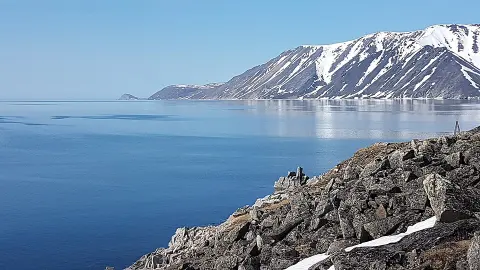
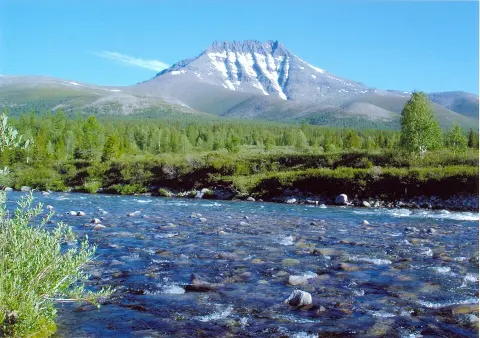
Largest: Beringia National Park · Yugyd Va National Park · Kytalyk National Park
Currency · 26 October 2026
Russian ruble exchange rates today
Russia uses the Russian ruble (RUB, ₽). One US dollar buys 81.4857 RUB; over the last 30 days the RUB has gained 3.6% against the dollar.
What other currencies cost in RUB
Currency converter
Daily reference rates from the open-source currency-api (CC0), 26 Oct 2026. Banks and exchange offices add a margin.
World rankings
Where Russia ranks
How Russia compares with the rest of the world — open any card for the full ranking.
Airports
Airports in Russia
1,504 airports and airfields — 44 large, 211 medium and 689 small, plus 556 heliports. 157 have scheduled passenger flights.
Borders
Neighbouring countries
Russia borders 14 countries along 22,407 km of land borders. Coastline: 37,653 km.


Military
Russian armed forces
Russia ranks #2 of 145 in the Global Firepower military strength ranking, with a defence budget of $190.4 billion (2025).
People
Population & society
Religion
Largest cities: Moscow (12.7 million), Saint Petersburg (5.6 million), Novosibirsk (1.7 million), Yekaterinburg (1.5 million), Kazan (1.3 million)
Economy
Economy
Main industries
complete range of mining and extractive industries producing coal, oil, gas, chemicals, and metals; all forms of machine building from rolling mills to high-performance aircraft and space vehicles; defense industries (i…
Export partners
China 33%, India 17%, Turkey 8%, Kazakhstan 4%, Brazil 3% (2023)
Top exports
crude petroleum, refined petroleum, natural gas, coal, fertilizers (2023)
Travel tools
Handy before every trip to Russia
Next public holiday
Unity Day — Wednesday, 4 November 2026. Then New Year's Day (1 Jan).

Russian passport
Ranked #76: 81 countries visa-free, 31 with visa on arrival, 7 with an eTA and 19 with an eVisa.
Russian passport photo
Exact size, head position and background for Russia's passport and visa photos — make one free with AI checks.
Calling Russia
Dial +7 before the local number. Internet domain .ru.
Climate footprint
1,780.5 million tonnes of CO₂ in 2024 — 12.30 t per person.
Entry requirements
Visa rules for every passport visiting Russia: visa-free stays, eVisas, visas on arrival and documents to bring.
News
Latest travel news about Russia
Russian water polo team plans camps in visa-free Serbia and Montenegro
Russia's men's water polo coach says his squad can travel visa-free only to Serbia and Montenegro, while Hungary, Italy, Spain, France and the Nether…
Azerbaijani passport ranks 76th for visa-free travel worldwide
Azerbaijan shares 76th place with the Philippines in a global passport ranking by Swiss company Henley & Partners, with Azerbaijani citizens able to …
Czechia keeps current Russian visa rules, rejects EU-wide tightening for travellers
Czechia declined to support a Finnish initiative for tighter EU-wide visa restrictions on Russian travellers. Foreign Minister Petr Macinka said Czec…
Frequently asked questions about Russia
What do I need to travel to Russia?
How long must my passport be valid for Russia?
Where is Russia?
What is Russia known for?
What is the capital of Russia?
What language is spoken in Russia?
What currency does Russia use?
What is the calling code of Russia?
Which countries border Russia?
How strong is the Russian passport?
What is the speed limit in Russia?
Is Russia safe to visit?
When is the best time to visit Russia?
What plug type does Russia use?
How many airports does Russia have?
Sources: CIA World Factbook (public domain); World Bank Open Data (CC BY 4.0); names, languages and currencies: mledoze/countries (ODbL); flag: flag-icons (MIT); coat of arms: Wikimedia Commons (file page); exchange rates: Daily reference rates from the open-source currency-api (CC0); airports: OurAirports.