
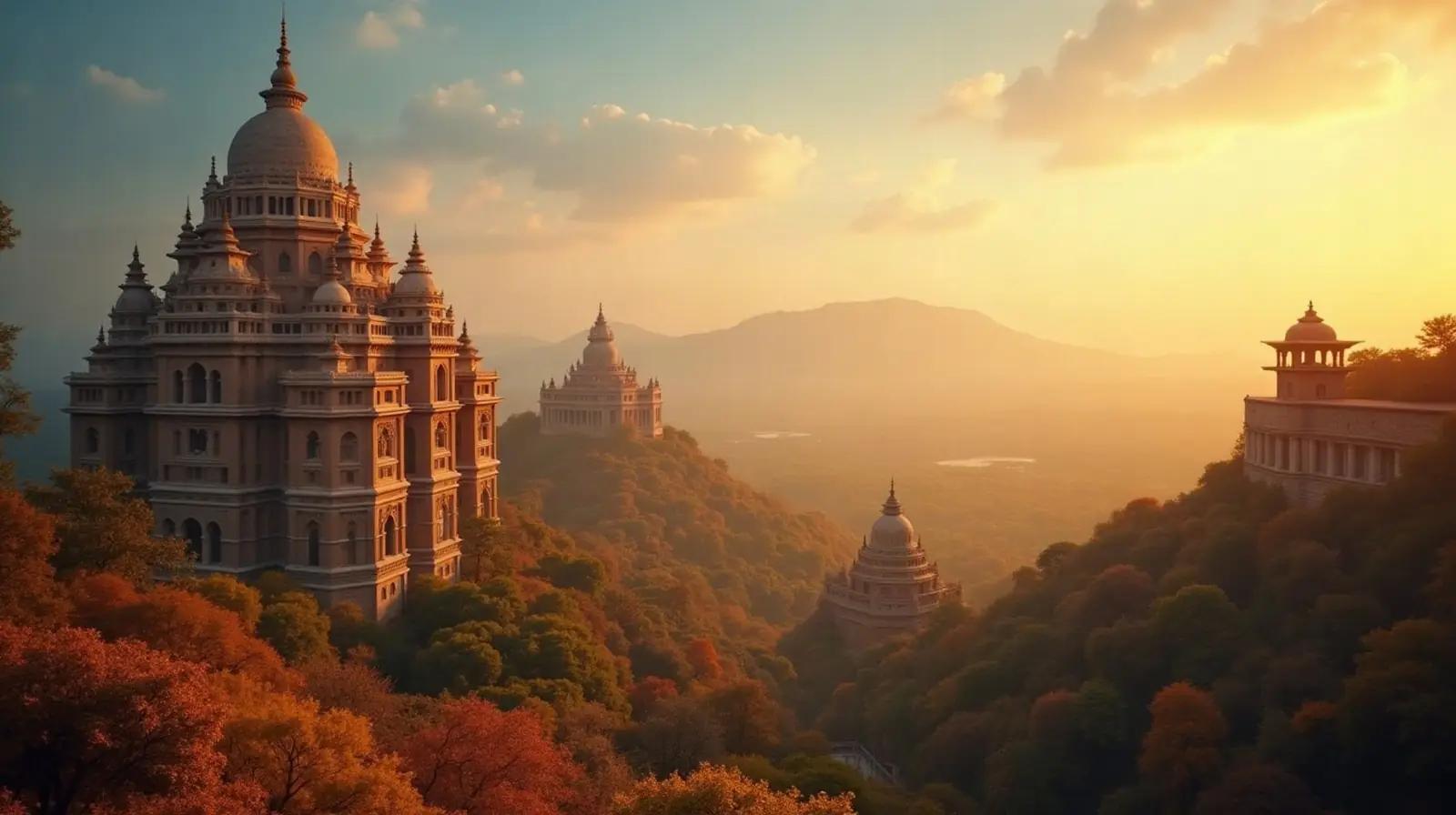
Southern Asia · UN member

India: Travel Guide & Requirements
Republic of India · भारत गणराज्य · இந்தியக் குடியரசு
India is a country in Southern Asia with its capital in New Delhi. It has a population of 1.46 billion (#1 in the world) and covers 3,287,263 km². The official languages are English, Hindi and Tamil. The currency is the Indian rupee (INR, ₹).
Where is India? Map of India
Southern Asia, bordering the Arabian Sea and the Bay of Bengal, between Burma and Pakistan.
- Region
- Southern Asia
- Coordinates
- 20° N, 77° E
- Neighbours
- 6 — see list
- Coastline
- 7,000 km
- India
- Neighbours
- Capital
- Largest cities
Map of India showing New Delhi (capital) and the largest cities: Mumbai, Bengaluru, Hyderābād, Ahmedabad, Chennai, Kolkata, Surat and Pune.
Travel requirements
What you need to travel to India
- Passport
India's e-Visa instructions say the passport should have at least six months' validity at the time of applying for the e-Visa and at least two blank pages for stamping.
- Visa or eTA
Depends on your passport: of 198 passports, 3 need no visa, 165 need an eVisa, 30 need a visa from an embassy. Check yours or see India entry requirements for every passport.
- Return or onward ticket
India's e-Visa instructions say the foreigner should have a return ticket or onward journey ticket, with sufficient money to spend during the stay in India.
- Proof of funds
India's e-Visa instructions say the foreigner should have a return ticket or onward journey ticket, with sufficient money to spend during the stay in India.
- Travel insurance
No official requirement. The UK Foreign Office advises checking before you travel that you have appropriate travel insurance for local treatment or unexpected medical evacuation.
- Vaccinations
India's Bureau of Immigration says anyone arriving from or transiting through a yellow fever endemic country by air or sea must hold a valid yellow fever vaccination certificate, and that foreigners or Indians (excludin…
- Arrival card
The e-Visa portal says eVisa holders will be allowed to enter India only through the designated international airports (37 on its checkpoint list) and seaports listed on the e-Visa website.
- Customs allowance
India's customs guide for travellers says you must declare to Customs on a Currency Declaration Form when foreign exchange exceeds USD 10,000 or its equivalent and/or foreign currency notes exceed USD 5,000 or equivalen…
- Travel advice
High risk — US and UK advice.
Entry rules: TravelRequirements.info — Entry Requirements Dataset (CC BY 4.0), each rule cited to an official government source. Always confirm with the airline and the official source before you travel.
Before you go
10 things to know before you travel to India
- Safety: Travel to India carries a high risk: the US State Department rates India Level 2 (“Exercise Increased Caution”), and the UK Foreign Office advises against all travel to parts of the country.
- Best time to go: November to February — when daytime highs in New Delhi are around 21–28°C.
- Money: the Indian rupee (INR) — 1 US dollar is about 94.9572 INR.
- Plugs: type C, D and M, 230 V, 50 Hz — standard 220–240 V: devices from the US or Japan (110–120 V) need a converter unless they are dual voltage (100–240 V).
- Emergency numbers: Police 112, Ambulance 112, Fire 112.
- Language: English, Hindi and Tamil are official.
- Driving: on the left — speed limits are 70 km/h in built-up areas, 70 km/h outside built-up areas, 100 km/h on expressways and 120 km/h on motorways.
- Time zone: UTC+5.5 in New Delhi.
- Capital: New Delhi. About 1.46 billion people live in India.
- India is the 7th largest country in the world by area.
Key facts
India at a glance
Languages spoken: Hindi 43.6%, Bengali 8%, Marathi 6.9%, Telugu 6.7%, Tamil 5.7%, Gujarati 4.6%, Urdu 4.2%, Kannada 3.6%, Odia 3.1%, Malayalam 2.9%, Punjabi 2.7%, Assamese 1.3%, Maithili 1.1%, other 5.6%; English is the subsidiary official language but is the most important one for national, political, and commercial communication (2011 est.)
Geography & history
About India
The Indus Valley civilization, one of the world's oldest, flourished during the 3rd and 2nd millennia B.C. and extended into northwestern India. Aryan tribes from the northwest infiltrated the Indian subcontinent about 1500 B.C.; their merger with the earlier Dravidian inhabitants created the classical Indian culture. The Maurya Empire of the 4th and 3rd centuries B.C. -- which reached its zenith under ASHOKA -- united much of South Asia. The Gupta dynasty (4th to 6th centuries A.D.) ushered in The Golden Age, which saw a flowering of Indian science, art, and culture. Islam spread across the subcontinent over a period of 700 years. In the 10th and 11th centuries, Turks and Afghans invaded I…
Read the full history
The Indus Valley civilization, one of the world's oldest, flourished during the 3rd and 2nd millennia B.C. and extended into northwestern India. Aryan tribes from the northwest infiltrated the Indian subcontinent about 1500 B.C.; their merger with the earlier Dravidian inhabitants created the classical Indian culture. The Maurya Empire of the 4th and 3rd centuries B.C. -- which reached its zenith under ASHOKA -- united much of South Asia. The Gupta dynasty (4th to 6th centuries A.D.) ushered in The Golden Age, which saw a flowering of Indian science, art, and culture. Islam spread across the subcontinent over a period of 700 years. In the 10th and 11th centuries, Turks and Afghans invaded India and established the Delhi Sultanate. In the early 16th century, the Emperor BABUR established the Mughal Dynasty, which ruled large sections of India for more than three centuries. European explorers began establishing footholds in India during the 16th century. By the 19th century, Great Britain had become the dominant political power on the subcontinent, and India was seen as the "Jewel in the Crown" of the British Empire. The British Indian Army played a vital role in both World Wars. Years of nonviolent resistance to British rule, led by Mohandas GANDHI and Jawaharlal NEHRU, eventually resulted in Indian independence in 1947. Large-scale communal violence took place before and after the subcontinent partition into two separate states -- India and Pakistan. The neighboring countries have fought three wars since independence, the last of which was in 1971 and resulted in East Pakistan becoming the separate nation of Bangladesh. India's nuclear weapons tests in 1998 emboldened Pakistan to conduct its own tests that same year. In 2008, terrorists originating from Pakistan conducted a series of coordinated attacks in Mumbai, India's financial capital. India's economic growth after economic reforms in 1991, a massive youth population, and a strategic geographic location have contributed to the country's emergence as a regional and global power. However, India still faces pressing problems such as extensive poverty, widespread corruption, and environmental degradation, and its restrictive business climate challenges economic growth expectations.
Location
Southern Asia, bordering the Arabian Sea and the Bay of Bengal, between Burma and Pakistan
Climate
varies from tropical monsoon in south to temperate in north
Terrain
upland plain (Deccan Plateau) in south, flat to rolling plain along the Ganges, deserts in west, Himalayas in north
Highest point
Kanchenjunga 8,586 m
Natural resources
coal (fourth-largest reserves in the world), antimony, iron ore, lead, manganese, mica, bauxite, rare earth elements, titanium ore, chromite, natural gas, diamonds, petroleum, limestone, arable land
Natural hazards
droughts; flash floods, as well as widespread and destructive flooding from monsoonal rains; severe thunderstorms; earthquakes volcanism: Barren Island (354 m) in the Andaman Sea has been active in recent years
National symbols
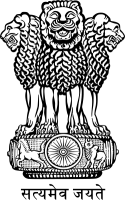
the Lion Capital of Ashoka, which depicts four Asiatic lions standing back-to-back and mounted on a circular abacus (official); Bengal tiger and lotus flower (traditional)
Driving
Speed limits & road rules in India
The default speed limits in India are 70 km/h in built-up areas, 70 km/h outside built-up areas, 100 km/h on expressways and 120 km/h on motorways. The legal alcohol limit for drivers is 0.3‰. Posted signs always take priority over these defaults.
- 7070 km/hBuilt-up areasTowns and cities
- 7070 km/hOutside built-up areasCountry roads
- 100100 km/hExpresswaysDual carriageways & expressways
- 120120 km/hMotorwaysMotorways / freeways
- International Driving PermitRecognised: 1949 GenevaCarry the IDP together with your national licence
- Driving sideDrive on the leftOvertake on the right
- Alcohol limit0.3‰ blood alcohol (0.03% BAC)
- Seat beltsRequired by law
- Child seatsNo national child-restraint law
- Motorcycle helmetsRequired for riders
- Road deaths (2021)14.6 per 100,000 peopleClose to the world median (12.4)
Speed limits: OpenStreetMap wiki — Default speed limits (CC BY-SA 2.0). Road-safety laws: WHO Global Health Observatory. Compare speed limits and alcohol limits by country. Defaults for cars; local signs, weather and vehicle type can lower them.
Safety
Is India safe to visit?
Travel to India carries a high risk: the US State Department rates India Level 2 (“Exercise Increased Caution”), and the UK Foreign Office advises against all travel to parts of the country.
 US State Department
 UK Foreign Office (FCDO)
Latest update: This travel advice has been reviewed for accuracy, with minor amendments made throughout, including updated information on access permits, scams, trekking in India, air and rail travel, India-Pakistan border area and Western India and healthcare in India (‘Entry requirements’,‘Safety and security’ a
Updated 7 Oct 2026 · Full travel advice
Sources: US Department of State travel advisories (public domain) and UK FCDO foreign travel advice (contains public sector information licensed under the Open Government Licence v3.0). Checked daily. Advice can change quickly — always read the official page before you travel.
Weather
Best time to visit India
The best time to visit India is November to February, when daytime highs in New Delhi are around 21–28°C. May is the warmest month (43°C by day), January the coldest (6°C at night), and July the wettest with about 217 mm of rain.
- Jan21°C6°C
- Feb26°C9°C
- Mar32°C15°C
- Apr39°C22°C
- May43°C27°C
- Jun42°C30°C
- Jul37°C28°C
- Aug34°C26°C
- Sep33°C23°C
- Oct32°C18°C
- Nov28°C13°C
- Dec23°C8°C
Best time Good Less ideal
Before you go
Plugs, voltage & emergency numbers in India
Plugs & sockets
- Type C (Europlug)two round pins
- Type Dthree large round pins in a triangle
- Type Mthree large round pins in a triangle
230 V, 50 Hz · Standard 220–240 V: devices from the US or Japan (110–120 V) need a converter unless they are dual voltage (100–240 V).
Emergency numbers
112 works from any mobile phone, even without a SIM card in most networks. All countries →
Sources: Wikipedia — Mains electricity by country and List of emergency telephone numbers (CC BY-SA 4.0).
Ski resorts
3 ski resorts in India
- 12 km of slopes
- 6 lifts
- up to 3,941 m
Biggest: Gulmarg Ski Resort area Phase 2 · Solang Valley · Auli
National parks
116 national parks in India
- 61,702 km² protected
- oldest from 1897
Largest: Hemis National Park · Desert National Park · Guru Ghasidas - Tamor Pingla Tiger Reserve
Currency · 26 October 2026
Indian rupee exchange rates today
India uses the Indian rupee (INR, ₹). One US dollar buys 94.9572 INR; over the last 30 days the INR has gained 0.8% against the dollar.
What other currencies cost in INR
Currency converter
Daily reference rates from the open-source currency-api (CC0), 26 Oct 2026. Banks and exchange offices add a margin.
World rankings
Where India ranks
How India compares with the rest of the world — open any card for the full ranking.
Airports
Airports in India
622 airports and airfields — 43 large, 98 medium and 179 small, plus 301 heliports. 119 have scheduled passenger flights.
Borders
Neighbouring countries
India borders 6 countries along 13,888 km of land borders. Coastline: 7,000 km.


Military
Indian armed forces
India ranks #4 of 145 in the Global Firepower military strength ranking, with a defence budget of $92.1 billion (2025).
People
Population & society
Religion
Largest cities: New Delhi (32.9 million), Mumbai (21.3 million), Kolkata (15.3 million), Bangalore (13.6 million), Chennai (11.8 million)
Economy
Economy
Main industries
textiles, chemicals, food processing, steel, transportation equipment, cement, mining, petroleum, machinery, software, pharmaceuticals
Export partners
USA 19%, UAE 7%, China 4%, Germany 3%, UK 3% (2023)
Top exports
refined petroleum, packaged medicine, diamonds, broadcasting equipment, garments (2023)
Travel tools
Handy before every trip to India
Next public holiday
Diwali (Deepavali) — Sunday, 8 November 2026. Then Guru Nanak's Birthday (24 Nov).

Indian passport
Ranked #152: 27 countries visa-free, 28 with visa on arrival, 3 with an eTA and 47 with an eVisa.
Indian passport photo
Exact size, head position and background for India's passport and visa photos — make one free with AI checks.
Calling India
Dial +91 before the local number. Internet domain .in.
Climate footprint
3,193.5 million tonnes of CO₂ in 2024 — 2.20 t per person.
Entry requirements
Visa rules for every passport visiting India: visa-free stays, eVisas, visas on arrival and documents to bring.
News
Latest travel news about India
UK student visa squeeze and £925 levy planned for 2028: what applicants face
British universities say tighter UK immigration rules are cutting international student numbers, putting a £925 annual levy planned for August 2028 a…
UK care worker visa rules squeeze Nigerians and Zimbabweans in the sector
Nigerian and Zimbabwean nationals received a combined 120,692 UK Health and Care Worker visa extensions in the year to March 2026, Home Office figure…
Sri Lanka Detains 1,000 Foreign Scam Suspects and Charges Visa Breaches
Sri Lankan police have detained more than 1,000 foreign suspects in cyber-scam raids this year but secured no successful prosecution. Most detainees …
Frequently asked questions about India
What do I need to travel to India?
How long must my passport be valid for India?
Where is India?
What is India known for?
What is the capital of India?
What language is spoken in India?
What currency does India use?
What is the calling code of India?
Which countries border India?
How strong is the Indian passport?
What is the speed limit in India?
Is India safe to visit?
When is the best time to visit India?
What plug type does India use?
How many airports does India have?
Sources: CIA World Factbook (public domain); World Bank Open Data (CC BY 4.0); names, languages and currencies: mledoze/countries (ODbL); flag: flag-icons (MIT); coat of arms: Wikimedia Commons (file page); exchange rates: Daily reference rates from the open-source currency-api (CC0); airports: OurAirports.