
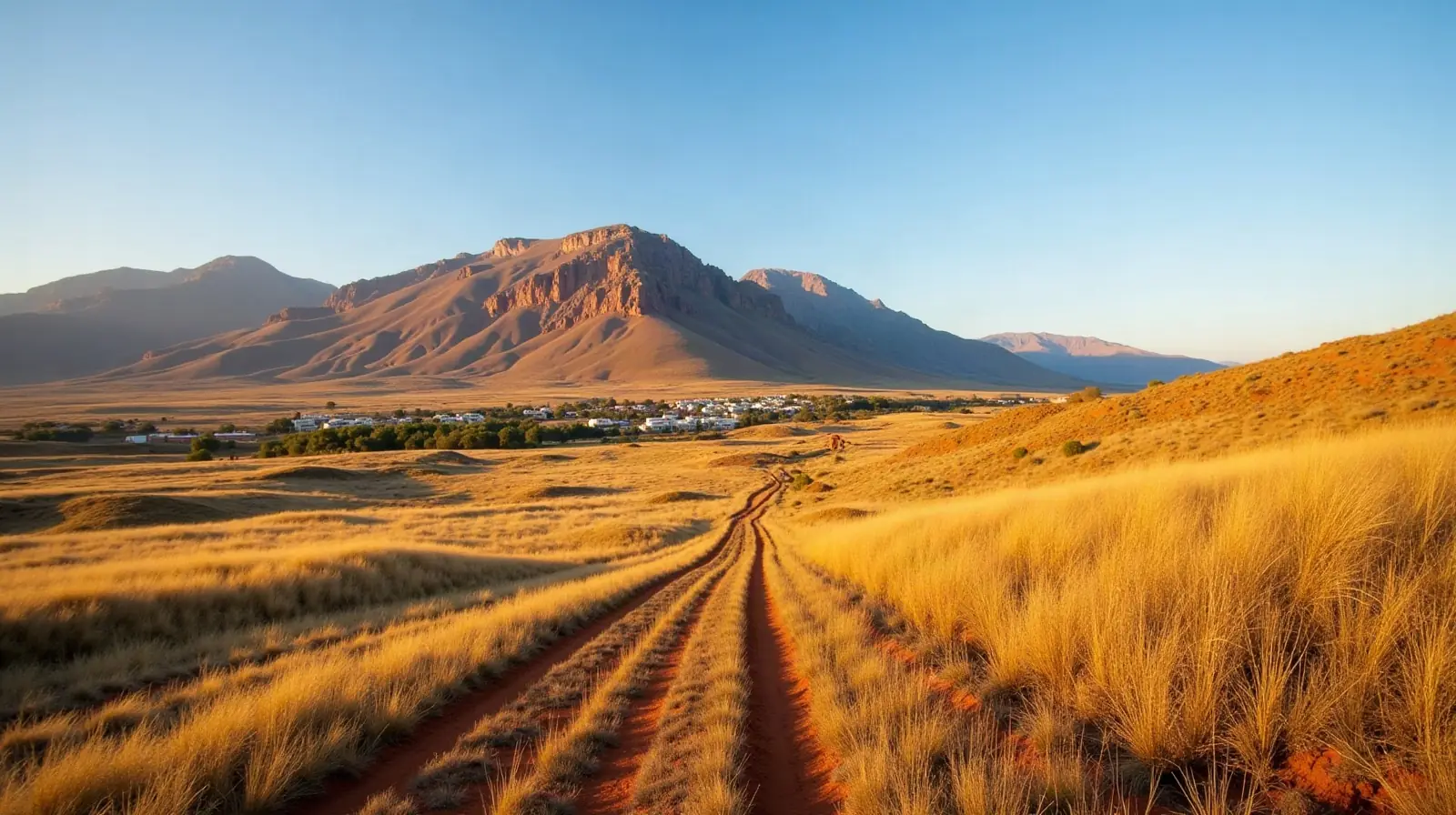
Southern Africa · UN member

Lesotho: Travel Guide & Requirements
Kingdom of Lesotho
Lesotho is a country in Southern Africa with its capital in Maseru. It has a population of 2.4 million (#144 in the world) and covers 30,355 km². The official languages are English and Sotho. The currency is the Lesotho loti (LSL, L).
Where is Lesotho? Map of Lesotho
Southern Africa, an enclave of South Africa.
- Region
- Southern Africa
- Coordinates
- 29.5° S, 28.5° E
- Neighbours
- 1 — see list
- Coastline
- Landlocked
- Lesotho
- Neighbours
- Capital
- Largest cities
Map of Lesotho showing Maseru (capital) and the largest cities: Maputsoe, Mohale's Hoek, Qacha’s Nek and Thaba-Tseka.
Travel requirements
What you need to travel to Lesotho
- Passport
The UK government says your passport must have an expiry date at least 90 days after the date you arrive in Lesotho and at least 4 blank pages, because Lesotho border control need to stamp it and so do South African bor…
- Visa or eTA
Depends on your passport: of 198 passports, 65 need no visa, 126 need an eVisa, 7 need a visa from an embassy. Check yours or see Lesotho entry requirements for every passport.
- Return or onward ticket
The Government of Lesotho's service charter lists a return ticket among the requirements for a visitor's entry visa.
- Proof of funds
The Government of Lesotho's service charter lists, for a tourist entry visa, a 3 months' bank statement or a valid debit or credit card with sufficient funds to sustain the duration of stay, and, for a visitor's entry v…
- Travel insurance
The Government of Lesotho's service charter lists medical insurance among the requirements for an entry visa, including the tourist category.
- Customs allowance
The UK government says to declare cash or travellers cheques in any currency if the value is 25,000 maloti or more; if you do not, the authorities could seize your money when you leave and you could be fined.
- Travel advice
Some caution needed — US and UK advice.
Entry rules: TravelRequirements.info — Entry Requirements Dataset (CC BY 4.0), each rule cited to an official government source. Always confirm with the airline and the official source before you travel.
Before you go
10 things to know before you travel to Lesotho
- Safety: Lesotho is generally safe for travellers, but some caution is needed: the US State Department rates Lesotho Level 2 (“Exercise Increased Caution”), and the UK Foreign Office has no warnings against travel there.
- Best time to go: March and September to November — when daytime highs in Maseru are around 22–26°C.
- Money: the Lesotho loti (LSL) — 1 US dollar is about 16.6040 LSL.
- Plugs: type M, 220 V, 50 Hz — standard 220–240 V: devices from the US or Japan (110–120 V) need a converter unless they are dual voltage (100–240 V).
- Emergency numbers: Police 123, Ambulance 121, Fire 122.
- Language: English and Sotho are official.
- Driving: on the left — speed limits are 60 km/h in built-up areas, 100 km/h outside built-up areas and 120 km/h on motorways.
- Time zone: UTC+2 in Maseru.
- Capital: Maseru. About 2.4 million people live in Lesotho.
- Outdoors: 2 national parks and 1 ski area.
Key facts
Lesotho at a glance
Languages spoken: Sesotho (official), English (official), Phuthi, Xhosa, Zulu
Geography & history
About Lesotho
Paramount chief MOSHOESHOE I consolidated what would become Basutoland in the early 19th century and made himself king in 1822. Continuing encroachments by Dutch settlers from the neighboring Orange Free State caused the king to enter into an 1868 agreement with the UK that made Basutoland first a British protectorate and, after 1884, a crown colony. After gaining independence in 1966, the country was renamed the Kingdom of Lesotho. The Basotho National Party ruled the country during its first two decades. King MOSHOESHOE II was exiled in 1990, returned to Lesotho in 1992, was reinstated in 1995, and was then succeeded by his son, King LETSIE III, in 1996. Constitutional government was rest…
Read the full history
Paramount chief MOSHOESHOE I consolidated what would become Basutoland in the early 19th century and made himself king in 1822. Continuing encroachments by Dutch settlers from the neighboring Orange Free State caused the king to enter into an 1868 agreement with the UK that made Basutoland first a British protectorate and, after 1884, a crown colony. After gaining independence in 1966, the country was renamed the Kingdom of Lesotho. The Basotho National Party ruled the country during its first two decades. King MOSHOESHOE II was exiled in 1990, returned to Lesotho in 1992, was reinstated in 1995, and was then succeeded by his son, King LETSIE III, in 1996. Constitutional government was restored in 1993 after seven years of military rule. In 1998, violent protests and a military mutiny following a contentious election prompted a brief but bloody intervention by South African and Batswana military forces under the aegis of the Southern African Development Community (SADC). Subsequent constitutional reforms restored relative political stability. Peaceful parliamentary elections were held in 2002, but the National Assembly elections in 2007 were hotly contested, and aggrieved parties disputed how seats were awarded. In 2012, competitive elections saw Prime Minister Motsoahae Thomas THABANE form a coalition government -- the first in the country's history -- that ousted the 14-year incumbent, Pakalitha MOSISILI, who peacefully transferred power the following month. MOSISILI returned to power in snap elections in 2015 after the collapse of THABANE’s coalition government and an alleged attempted military coup. In 2017, THABANE returned to become prime minister but stepped down in 2020 after being implicated in his estranged wife’s murder. He was succeeded by Moseketsi MAJORO. In 2022, Ntsokoane Samuel MATEKANE was inaugurated as prime minister and head of a three-party coalition.
Location
Southern Africa, an enclave of South Africa
Climate
temperate; cool to cold, dry winters; hot, wet summers
Terrain
mostly highland with plateaus, hills, and mountains
Highest point
Thabana Ntlenyana 3,482 m
Natural resources
water, agricultural and grazing land, diamonds, sand, clay, building stone
Natural hazards
periodic droughts
National symbols
mokorotio (Basotho hat)
Driving
Speed limits & road rules in Lesotho
The default speed limits in Lesotho are 60 km/h in built-up areas, 100 km/h outside built-up areas and 120 km/h on motorways. The legal alcohol limit for drivers is 0.8‰. Posted signs always take priority over these defaults.
- 6060 km/hBuilt-up areasTowns and cities
- 100100 km/hOutside built-up areasCountry roads
- 120120 km/hMotorwaysMotorways / freeways
- International Driving PermitRecognised: 1949 GenevaCarry the IDP together with your national licence
- Driving sideDrive on the leftOvertake on the right
- Alcohol limit0.8‰ blood alcohol (0.08% BAC)
- Seat beltsRequired by law
- Child seatsNo national child-restraint law
- Motorcycle helmetsRequired for riders
- Road deaths (2021)21.6 per 100,000 peopleHigher than most countries (median 12.4)
Speed limits: OpenStreetMap wiki — Default speed limits (CC BY-SA 2.0). Road-safety laws: WHO Global Health Observatory. Compare speed limits and alcohol limits by country. Defaults for cars; local signs, weather and vehicle type can lower them.
Safety
Is Lesotho safe to visit?
Lesotho is generally safe for travellers, but some caution is needed: the US State Department rates Lesotho Level 2 (“Exercise Increased Caution”), and the UK Foreign Office has no warnings against travel there.
 US State Department
 UK Foreign Office (FCDO)
Latest update: New information about dual nationals returning to the UK (‘Entry requirements’ page).
Updated 10 Dec 2025 · Full travel advice
Sources: US Department of State travel advisories (public domain) and UK FCDO foreign travel advice (contains public sector information licensed under the Open Government Licence v3.0). Checked daily. Advice can change quickly — always read the official page before you travel.
Weather
Best time to visit Lesotho
The best time to visit Lesotho is March and September to November, when daytime highs in Maseru are around 22–26°C. December to February and April are also a good time to go. January is the warmest month (28°C by day), July the coldest (-0°C at night), and December the wettest with about 103 mm of rain.
- Jan28°C14°C
- Feb27°C13°C
- Mar25°C11°C
- Apr21°C7°C
- May17°C4°C
- Jun14°C0°C
- Jul14°C-0°C
- Aug17°C2°C
- Sep22°C5°C
- Oct25°C9°C
- Nov26°C10°C
- Dec28°C13°C
Best time Good Less ideal
Before you go
Plugs, voltage & emergency numbers in Lesotho
Plugs & sockets
220 V, 50 Hz · Standard 220–240 V: devices from the US or Japan (110–120 V) need a converter unless they are dual voltage (100–240 V).
Emergency numbers
Save the local numbers before you travel — 112 or 911 may not connect here. All countries →
Sources: Wikipedia — Mains electricity by country and List of emergency telephone numbers (CC BY-SA 4.0).
Ski resorts
1 ski resort in Lesotho
- 2 lifts
- up to 3,223 m
Biggest: AfriSki
National parks
2 national parks in Lesotho
- 65 km² protected
- oldest from 1969
Largest: Sehlabathebe National Park · Ts'ehlanyane National Park
Currency · 26 October 2026
Lesotho loti exchange rates today
Lesotho uses the Lesotho loti (LSL, L). One US dollar buys 16.6040 LSL; over the last 30 days the LSL has lost 1.8% against the dollar.
What other currencies cost in LSL
Currency converter
Daily reference rates from the open-source currency-api (CC0), 26 Oct 2026. Banks and exchange offices add a margin.
World rankings
Where Lesotho ranks
How Lesotho compares with the rest of the world — open any card for the full ranking.
Airports
Airports in Lesotho
34 airports and airfields — 1 large, 0 medium and 33 small, plus 0 heliports. 1 have scheduled passenger flights.
Borders
Neighbouring countries
Lesotho borders 1 country along 1,106 km of land borders. It is landlocked.

People
Population & society
Religion
Largest cities: Maseru (202,000)
Economy
Economy
Main industries
food, beverages, textiles, apparel assembly, handicrafts, construction, tourism
Export partners
South Africa 31%, Belgium 26%, USA 20%, UAE 8%, India 8% (2023)
Top exports
diamonds, garments, wool, power equipment, bedding (2023)
Travel tools
Handy before every trip to Lesotho
Next public holiday
Christmas Day — Friday, 25 December 2026. Then Boxing Day (26 Dec).
Basotho passport
Ranked #111: 45 countries visa-free, 25 with visa on arrival, 5 with an eTA and 32 with an eVisa.
Basotho passport photo
Exact size, head position and background for Lesotho's passport and visa photos — make one free with AI checks.
Calling Lesotho
Dial +266 before the local number. Internet domain .ls.
Climate footprint
2.6 million tonnes of CO₂ in 2024 — 1.10 t per person.
Entry requirements
Visa rules for every passport visiting Lesotho: visa-free stays, eVisas, visas on arrival and documents to bring.
News
Latest travel news about Lesotho
Japan drops visa application fees for travellers from 63 countries
Japan has published a list of 63 countries and regions whose nationals do not pay the visa application fee. Honduras is among the American countries …
Maseru border fraud puts cross-border travellers with Lesotho passports on alert
A Border Management Authority official at the Maseru Port of Entry was arrested with 22 stamped passports belonging to Lesotho nationals and R2 100 i…
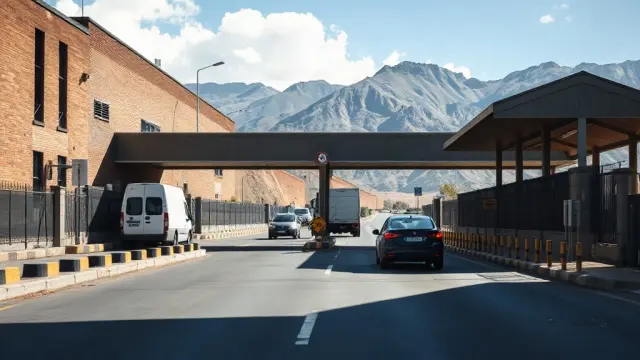
Travellers to Lesotho face closer scrutiny at Maseru after illegal stamp scheme
The Border Management Authority arrested a 56-year-old official at the Maseru Port of Entry found with 22 stamped passports belonging to absent Lesot…
Frequently asked questions about Lesotho
What do I need to travel to Lesotho?
How long must my passport be valid for Lesotho?
Where is Lesotho?
What is Lesotho known for?
What is the capital of Lesotho?
What language is spoken in Lesotho?
What currency does Lesotho use?
What is the calling code of Lesotho?
Which countries border Lesotho?
How strong is the Basotho passport?
What is the speed limit in Lesotho?
Is Lesotho safe to visit?
When is the best time to visit Lesotho?
What plug type does Lesotho use?
How many airports does Lesotho have?
Sources: CIA World Factbook (public domain); World Bank Open Data (CC BY 4.0); names, languages and currencies: mledoze/countries (ODbL); flag: flag-icons (MIT); coat of arms: Wikimedia Commons (file page); exchange rates: Daily reference rates from the open-source currency-api (CC0); airports: OurAirports.