
South America · UN member

Ecuador: Travel Guide & Requirements
Republic of Ecuador
Ecuador is a country in South America with its capital in Quito. It has a population of 18.3 million (#70 in the world) and covers 283,561 km². The official language is Spanish. The currency is the United States dollar (USD, $).
Where is Ecuador? Map of Ecuador
Western South America, bordering the Pacific Ocean at the Equator, between Colombia and Peru.
- Region
- South America
- Coordinates
- 2° S, 77.5° W
- Neighbours
- 2 — see list
- Coastline
- 2,237 km
- Ecuador
- Neighbours
- Capital
- Largest cities
Map of Ecuador showing Quito (capital) and the largest cities: Guayaquil, Cuenca, Santo Domingo de los Colorados, Ambato, Portoviejo, Machala, Loja and Riobamba.
Travel requirements
What you need to travel to Ecuador
- Passport
The UK Foreign Office tells British nationals that, to enter Ecuador, their passport must have an expiry date at least 6 months after the date they arrive.
- Visa or eTA
Depends on your passport: of 198 passports, 151 need no visa, 1 needs an eVisa, 46 need a visa from an embassy. Check yours or see Ecuador entry requirements for every passport.
- Return or onward ticket
Ecuador's Foreign Ministry lists a travel itinerary and outbound and return tickets among the requirements for its 90-day tourist visa.
- Proof of funds
Ecuador's Foreign Ministry requires tourist-visa applicants to prove lawful means of support under Ministerial Agreement No. 70 of 28 June 2024.
- Travel insurance
The UK government tells British travellers that to enter Galápagos they must have travel health insurance, which it says is mandatory for foreign tourists.
- Vaccinations
Ecuador's Ministry of Public Health said on 28 August 2025 that it had modified the requirement to present a yellow fever vaccination certificate to enter the country from Colombia, Peru, Bolivia and Brazil: instead of …
- Arrival card
The Galápagos Governing Council says the Transit Control Card is a mandatory requirement for everyone who wishes to visit the province of Galápagos, as a tourist or a transient, and must be presented both on entering an…
- Customs allowance
The UK government says every adult passenger or family group travelling to or from Ecuador carrying cash equal to or higher than USD 10,000 must declare it online and present the form to customs on arrival or departure,…
- Travel advice
Some caution needed — US and UK advice.
Entry rules: TravelRequirements.info — Entry Requirements Dataset (CC BY 4.0), each rule cited to an official government source. Always confirm with the airline and the official source before you travel.
Before you go
10 things to know before you travel to Ecuador
- Safety: Ecuador is generally safe for travellers, but some caution is needed: the US State Department rates Ecuador Level 2 (“Exercise Increased Caution”), and the UK Foreign Office advises against all but essential travel to parts of the country.
- Best time to go: July to September — when daytime highs in Quito are around 24°C.
- Money: the United States dollar (USD) — 1 euro is about 1.1222 USD.
- Plugs: type A and B, 120 V, 60 Hz — low-voltage country: devices made only for 220–240 V need a voltage converter. Phone and laptop chargers (100–240 V) only need a plug adapter.
- Emergency numbers: Police 911, Ambulance 911, Fire 911.
- Language: Spanish is official.
- Driving: on the right — speed limits are 50 km/h in built-up areas and 100 km/h outside built-up areas.
- Time zone: UTC-5 in Quito.
- Capital: Quito; the largest city is Guayaquil. About 18.3 million people live in Ecuador.
- Outdoors: 14 national parks.
Key facts
Ecuador at a glance
Languages spoken: Spanish (Castilian; official) 98.6%, indigenous 3.9% (Quechua 3.2%, other indigenous 0.7%), foreign 2.8%, other 0.6% (includes Ecuadorian sign language) (2022 est.)
Geography & history
About Ecuador
What is now Ecuador formed part of the northern Inca Empire until the Spanish conquest in 1533. Quito -- the traditional name for the area -- became a seat of Spanish colonial government in 1563 and part of the Viceroyalty of New Granada in 1717. The territories of the Viceroyalty -- New Granada (Colombia), Venezuela, and Quito -- gained their independence between 1819 and 1822 and formed a federation known as Gran Colombia. When Quito withdrew to become an independent republic in 1830, the traditional name was changed to the "Republic of the Equator." Between 1904 and 1942, Ecuador lost territories in a series of conflicts with its neighbors. A border war with Peru that flared in 1995 was …
Read the full history
What is now Ecuador formed part of the northern Inca Empire until the Spanish conquest in 1533. Quito -- the traditional name for the area -- became a seat of Spanish colonial government in 1563 and part of the Viceroyalty of New Granada in 1717. The territories of the Viceroyalty -- New Granada (Colombia), Venezuela, and Quito -- gained their independence between 1819 and 1822 and formed a federation known as Gran Colombia. When Quito withdrew to become an independent republic in 1830, the traditional name was changed to the "Republic of the Equator." Between 1904 and 1942, Ecuador lost territories in a series of conflicts with its neighbors. A border war with Peru that flared in 1995 was resolved in 1999. Although Ecuador has had nearly 50 years of civilian governance, the period has been marked by political instability.
Location
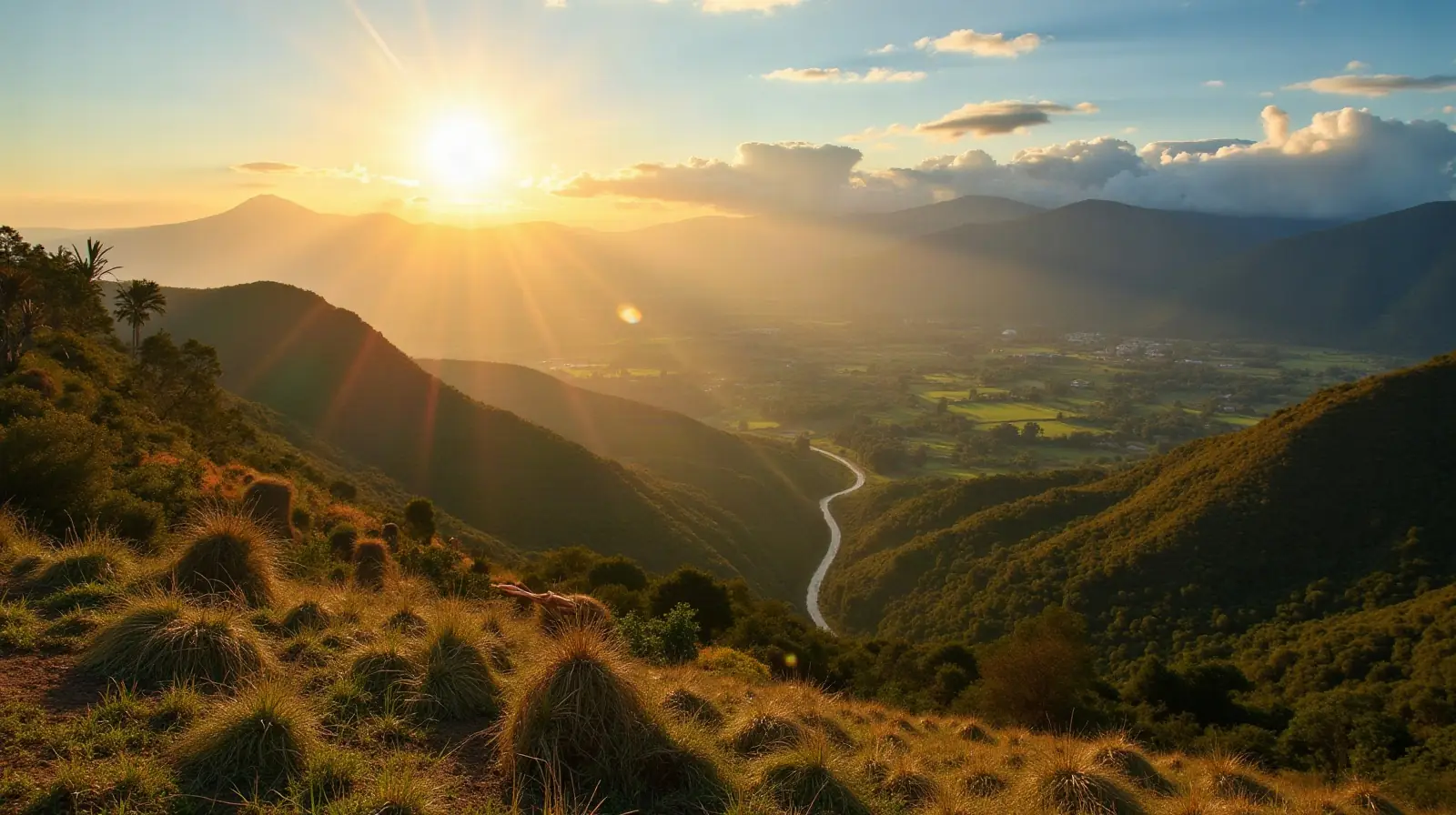
Western South America, bordering the Pacific Ocean at the Equator, between Colombia and Peru
Climate
tropical along coast, becoming cooler inland at higher elevations; tropical in Amazonian jungle lowlands
Terrain
coastal plain (costa), inter-Andean central highlands (sierra), and flat to rolling eastern jungle (oriente)
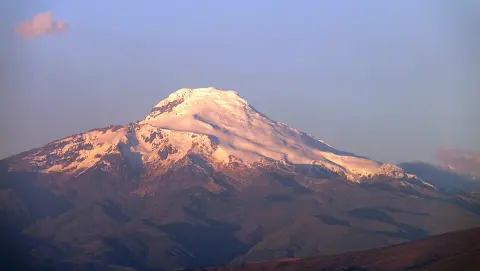
Highest point
Chimborazo 6,267
Natural resources
petroleum, fish, timber, hydropower
Natural hazards
frequent earthquakes; landslides; volcanic activity; floods; periodic droughts volcanism: volcanic activity concentrated along the Andes Mountains; Sangay (5,230 m) is mainland Ecuador's most active volcano; other historically active volcanoes in the Andes in…
National symbols
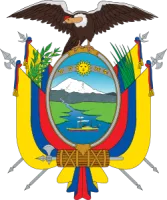
Andean condor
Driving
Speed limits & road rules in Ecuador
The default speed limits in Ecuador are 50 km/h in built-up areas and 100 km/h outside built-up areas. The legal alcohol limit for drivers is 0.3‰. Posted signs always take priority over these defaults.
- 5050 km/hBuilt-up areasTowns and cities
- 100100 km/hOutside built-up areasCountry roads
- International Driving PermitRecognised: 1968 Vienna, 1949 GenevaCarry the IDP together with your national licence
- Driving sideDrive on the rightOvertake on the left
- Alcohol limit0.3‰ blood alcohol (0.03% BAC)
- Seat beltsRequired by law
- Child seatsRequired by law
- Motorcycle helmetsRequired for riders
- Road deaths (2021)23.4 per 100,000 peopleHigher than most countries (median 12.4)
Speed limits: OpenStreetMap wiki — Default speed limits (CC BY-SA 2.0). Road-safety laws: WHO Global Health Observatory. Compare speed limits and alcohol limits by country. Defaults for cars; local signs, weather and vehicle type can lower them.
Safety
Is Ecuador safe to visit?
Ecuador is generally safe for travellers, but some caution is needed: the US State Department rates Ecuador Level 2 (“Exercise Increased Caution”), and the UK Foreign Office advises against all but essential travel to parts of the country.
 US State Department
 UK Foreign Office (FCDO)
Latest update: New information about the 2026–2027 El Niño weather event ('Safety and security' page).
Updated 2 Oct 2026 · Full travel advice
Sources: US Department of State travel advisories (public domain) and UK FCDO foreign travel advice (contains public sector information licensed under the Open Government Licence v3.0). Checked daily. Advice can change quickly — always read the official page before you travel.
Weather
Best time to visit Ecuador
The best time to visit Ecuador is July to September, when daytime highs in Quito are around 24°C. June and October to November are also a good time to go. August is the warmest month (24°C by day), August the coldest (11°C at night), and April the wettest with about 177 mm of rain.
- Jan22°C13°C
- Feb21°C13°C
- Mar21°C14°C
- Apr22°C14°C
- May23°C13°C
- Jun23°C12°C
- Jul24°C11°C
- Aug24°C11°C
- Sep24°C12°C
- Oct23°C12°C
- Nov22°C13°C
- Dec22°C13°C
Best time Good Less ideal
Before you go
Plugs, voltage & emergency numbers in Ecuador
Plugs & sockets
120 V, 60 Hz · Low-voltage country: devices made only for 220–240 V need a voltage converter. Phone and laptop chargers (100–240 V) only need a plug adapter.
Emergency numbers
Save the local numbers before you travel — 112 or 911 may not connect here. All countries →
Sources: Wikipedia — Mains electricity by country and List of emergency telephone numbers (CC BY-SA 4.0).
National parks
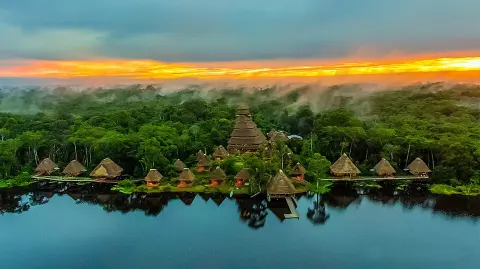
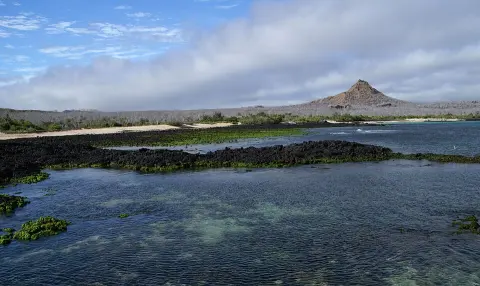
14 national parks in Ecuador
- 34,171 km² protected
- oldest from 1959
Largest: Yasuni National Park · Galápagos National Park · Cayambe Coca National Park
Currency · 26 October 2026
United States dollar exchange rates today
Ecuador uses the United States dollar (USD, $).
What other currencies cost in USD
Currency converter
Daily reference rates from the open-source currency-api (CC0), 26 Oct 2026. Banks and exchange offices add a margin.
World rankings
Where Ecuador ranks
How Ecuador compares with the rest of the world — open any card for the full ranking.
Airports
Airports in Ecuador
349 airports and airfields — 4 large, 13 medium and 303 small, plus 29 heliports. 15 have scheduled passenger flights.
Borders
Neighbouring countries
Ecuador borders 2 countries along 2,237 km of land borders. Coastline: 2,237 km.


Military
Ecuadorian armed forces
Ecuador ranks #70 of 145 in the Global Firepower military strength ranking, with a defence budget of $2.7 billion (2025).
People
Population & society
Religion
Largest cities: Guayaquil (3.1 million), Quito (2.0 million)
Economy
Economy
Main industries
petroleum, food processing, textiles, wood products, chemicals
Export partners
USA 22%, China 21%, Panama 12%, Japan 3%, Peru 3% (2023)
Top exports
crude petroleum, shellfish, bananas, fish, gold (2023)
Travel tools
Handy before every trip to Ecuador
Next public holiday
All Souls' Day — Monday, 2 November 2026. Then Independence of Cuenca (3 Nov).
Ecuadorian passport
Ranked #106: 48 countries visa-free, 35 with visa on arrival, 5 with an eTA and 33 with an eVisa.
Ecuadorian passport photo
Exact size, head position and background for Ecuador's passport and visa photos — make one free with AI checks.
Calling Ecuador
Dial +593 before the local number. Internet domain .ec.
Climate footprint
46.0 million tonnes of CO₂ in 2024 — 2.54 t per person.
Entry requirements
Visa rules for every passport visiting Ecuador: visa-free stays, eVisas, visas on arrival and documents to bring.
News
Latest travel news about Ecuador
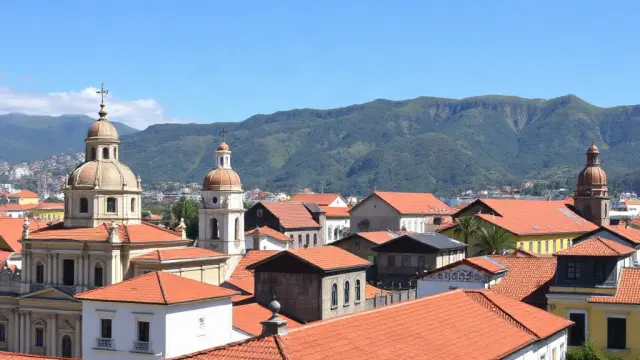
Ecuador on a $1,200 Budget: Quito Costs and Long-Stay Visa Options
Ecuador is named among the most affordable countries for living on about $1,200 a month, with Quito estimated at $950 to $1,250. Visitors can enter w…
What F-1 students need to re-enter the U.S. after travelling abroad
F-1 students leaving the United States generally need a valid passport, a valid visa and a travel-endorsed Form I-20 to return, U.S. Immigration and …
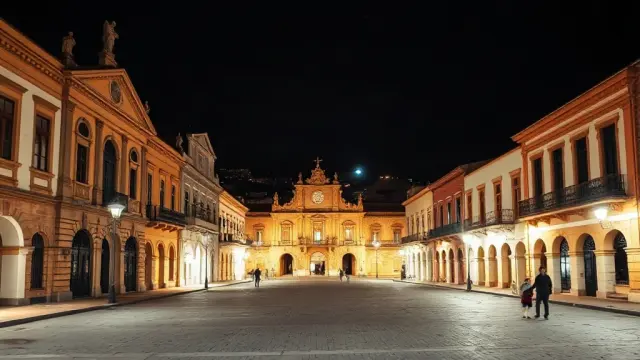
Ecuador homicides fall in 2026 but violence clusters on the coast
Ecuador recorded 4,882 homicides between January and July 2026, down from 5,295 a year earlier, yet murders rose in 79 cities. The IMF estimates abou…
Frequently asked questions about Ecuador
What do I need to travel to Ecuador?
How long must my passport be valid for Ecuador?
Where is Ecuador?
What is Ecuador known for?
What is the capital of Ecuador?
What language is spoken in Ecuador?
What currency does Ecuador use?
What is the calling code of Ecuador?
Which countries border Ecuador?
How strong is the Ecuadorian passport?
What is the speed limit in Ecuador?
Is Ecuador safe to visit?
When is the best time to visit Ecuador?
What plug type does Ecuador use?
How many airports does Ecuador have?
Sources: CIA World Factbook (public domain); World Bank Open Data (CC BY 4.0); names, languages and currencies: mledoze/countries (ODbL); flag: flag-icons (MIT); coat of arms: Wikimedia Commons (file page); exchange rates: Daily reference rates from the open-source currency-api (CC0); airports: OurAirports.