

South-Eastern Asia · UN member

Thailand: Travel Guide & Requirements
Kingdom of Thailand · ราชอาณาจักรไทย
Thailand is a country in South-Eastern Asia with its capital in Bangkok. It has a population of 71.6 million (#20 in the world) and covers 513,120 km². The official language is Thai. The currency is the Thai baht (THB, ฿).
Where is Thailand? Map of Thailand
Southeastern Asia, bordering the Andaman Sea and the Gulf of Thailand, southeast of Burma.
- Region
- South-Eastern Asia
- Coordinates
- 15° N, 100° E
- Neighbours
- 4 — see list
- Coastline
- 3,219 km
- Thailand
- Neighbours
- Capital
- Largest cities
Map of Thailand showing Bangkok (capital) and the largest cities: Chon Buri, Hat Yai, Lampang, Kabin Buri, Surat Thani, Udon Thani and Chiang Mai.
Travel requirements
What you need to travel to Thailand
- Passport
The UK government tells British nationals that to enter Thailand the passport must have an expiry date at least 6 months after the date you arrive and at least 1 blank page.
- Visa or eTA
Depends on your passport: of 198 passports, 78 need no visa, 117 need an eVisa, 3 get a visa on arrival. Check yours or see Thailand entry requirements for every passport.
- Return or onward ticket
No official requirement. The UK government tells British nationals they may be asked to show evidence of onward or return travel, and that British nationals have been refused entry for failing to provide this evidence.
- Proof of funds
The Tourism Authority of Thailand says visitors may be asked to show sufficient funds or equivalent documents during immigration screening.
- Travel insurance
No official requirement. The Royal Thai Embassy in Washington says certain types of visas (O-A and O-X) require the applicant to submit a Foreign Insurance Certificate.
- Vaccinations
The UK government says that to enter Thailand you must have a certificate to prove you have had a yellow fever vaccination if you are coming from a country listed as a transmission risk.
- Arrival card
The Immigration Bureau says all passengers must complete the Thailand Digital Arrival Card, and that foreigners are required to submit their arrival card information 3 days in advance of their arrival date in Thailand.
- Customs allowance
Thailand's Ministry of Finance requires anyone taking out of Thailand currency notes or coins worth more than 450,000 Baht, or foreign currency notes or coins worth more than US$15,000 or its equivalent, to declare them…
- Travel advice
Some caution needed — US and UK advice.
Entry rules: TravelRequirements.info — Entry Requirements Dataset (CC BY 4.0), each rule cited to an official government source. Always confirm with the airline and the official source before you travel.
Before you go
10 things to know before you travel to Thailand
- Safety: Thailand is generally safe for travellers, but some caution is needed: the US State Department rates Thailand Level 1 (“Exercise Normal Precautions”), and the UK Foreign Office advises against all but essential travel to parts of the country.
- Best time to go: November to January — when daytime highs in Bangkok are around 30–33°C.
- Money: the Thai baht (THB) — 1 US dollar is about 33.7994 THB.
- Plugs: type A, B, C and O, 230 V, 50 Hz — standard 220–240 V: devices from the US or Japan (110–120 V) need a converter unless they are dual voltage (100–240 V).
- Emergency numbers: Police 191, Ambulance 1669, Fire 199.
- Language: Thai is official; English is also spoken.
- Driving: on the left — speed limits are 80 km/h in built-up areas, 90 km/h outside built-up areas and 100 km/h on expressways.
- Time zone: UTC+7 in Bangkok.
- Capital: Bangkok. About 71.6 million people live in Thailand.
- Outdoors: 152 national parks.
Key facts
Thailand at a glance
Languages spoken: Thai (official) only 90.7%, Thai and other languages 6.4%, only other languages 2.9% (includes Malay, Burmese); English is a secondary language among the elite (2010 est.)
Geography & history
About Thailand
Two unified Thai kingdoms emerged in the mid-13th century. The Sukhothai Kingdom, located in the south-central plains, gained its independence from the Khmer Empire to the east. By the late 13th century, Sukhothai’s territory extended into present-day Burma and Laos. Sukhothai lasted until the mid-15th century. The Thai Lan Na Kingdom was established in the north with its capital at Chang Mai; the Burmese conquered Lan Na in the 16th century. The Ayutthaya Kingdom (14th-18th centuries) succeeded the Sukhothai and would become known as the Siamese Kingdom. During the Ayutthaya period, the Thai/Siamese peoples consolidated their hold on what is present-day central and north-central Thailand. …
Read the full history
Two unified Thai kingdoms emerged in the mid-13th century. The Sukhothai Kingdom, located in the south-central plains, gained its independence from the Khmer Empire to the east. By the late 13th century, Sukhothai’s territory extended into present-day Burma and Laos. Sukhothai lasted until the mid-15th century. The Thai Lan Na Kingdom was established in the north with its capital at Chang Mai; the Burmese conquered Lan Na in the 16th century. The Ayutthaya Kingdom (14th-18th centuries) succeeded the Sukhothai and would become known as the Siamese Kingdom. During the Ayutthaya period, the Thai/Siamese peoples consolidated their hold on what is present-day central and north-central Thailand. Following a military defeat at the hands of the Burmese in 1767, the Siamese Kingdom rose to new heights under the military ruler TAKSIN, who defeated the Burmese occupiers and expanded the kingdom’s territory into modern-day northern Thailand (formerly the Lan Na Kingdom), Cambodia, Laos, and the Malay Peninsula. In the mid-1800s, Western pressure led to Siam signing trade treaties that reduced the country’s sovereignty and independence. In the 1890s and 1900s, the British and French forced the kingdom to cede Cambodian, Laotian, and Malay territories that had been under Siamese control. Following a bloodless revolution in 1932 that led to the establishment of a constitutional monarchy, Thailand's political history was marked by a series of mostly bloodless coups with power concentrated among military and bureaucratic elites. Periods of civilian rule were unstable. The Cold War era saw a communist insurgency and the rise of strongman leaders. Thailand became a US treaty ally in 1954 after sending troops to Korea and later fighting alongside the US in Vietnam. In the 21st century, Thailand has experienced additional turmoil, including a military coup in 2006 that ousted then Prime Minister THAKSIN Chinnawat and large-scale street protests led by competing political factions in 2008-2010. In 2011, THAKSIN's youngest sister, YINGLAK Chinnawat, led the Puea Thai Party to an electoral win and assumed control of the government. In 2014, after months of major anti-government protests in Bangkok, the Constitutional Court removed YINGLAK from office, and the Army, led by Gen. PRAYUT Chan-ocha, then staged a coup against the caretaker government. The military-affiliated National Council for Peace and Order (NCPO) ruled the country under PRAYUT for more than four years, drafting a new constitution that allowed the military to appoint the entire 250-member Senate and required a joint meeting of the House and Senate to select the prime minister -- which effectively gave the military a veto on the selection. King PHUMIPHON Adunyadet passed away in 2016 after 70 years on the throne; his only son, WACHIRALONGKON (aka King RAMA X), formally ascended the throne in 2019. The same year, a long-delayed election allowed PRAYUT to continue his premiership, although the results were disputed and widely viewed as skewed in favor of the party aligned with the military. The country again experienced major anti-government protests in 2020. The reformist Move Forward Party won the most seats in the 2023 election but was unable to form a government, and Srettha THRAVISIN from the Pheu Thai Party replaced PRAYUT as prime minister after forming a coalition of moderate and conservative parties.
Location
Southeastern Asia, bordering the Andaman Sea and the Gulf of Thailand, southeast of Burma
Climate
tropical; rainy, warm, cloudy southwest monsoon (mid-May to September); dry, cool northeast monsoon (November to mid-March); southern isthmus always hot and humid
Terrain
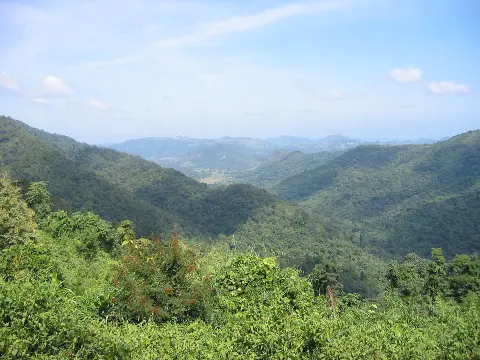
central plain; Khorat Plateau in the east; mountains elsewhere
Highest point
Doi Inthanon 2,565 m
Natural resources
tin, rubber, natural gas, tungsten, tantalum, timber, lead, fish, gypsum, lignite, fluorite, arable land
Natural hazards
land subsidence in Bangkok area resulting from the depletion of the water table; droughts
National symbols
garuda (mythical half-man, half-bird figure), elephant
Driving
Speed limits & road rules in Thailand
The default speed limits in Thailand are 80 km/h in built-up areas, 90 km/h outside built-up areas and 100 km/h on expressways. The legal alcohol limit for drivers is 0.5‰. Posted signs always take priority over these defaults.
- 8080 km/hBuilt-up areasTowns and citiesWith a trailer: 45 km/h
- 9090 km/hOutside built-up areasCountry roadsWith a trailer: 55 km/h
- 100100 km/hExpresswaysDual carriageways & expresswaysWith a trailer: 65 km/h
- International Driving PermitRecognised: 1968 Vienna, 1949 GenevaCarry the IDP together with your national licence
- Driving sideDrive on the leftOvertake on the right
- Alcohol limit0.5‰ blood alcohol (0.05% BAC)0.2‰ for young / novice drivers
- Seat beltsRequired by law
- Child seatsNo national child-restraint law
- Motorcycle helmetsRequired for riders
- Road deaths (2021)25.4 per 100,000 peopleHigher than most countries (median 12.4)
Speed limits: OpenStreetMap wiki — Default speed limits (CC BY-SA 2.0). Road-safety laws: WHO Global Health Observatory. Compare speed limits and alcohol limits by country. Defaults for cars; local signs, weather and vehicle type can lower them.
Safety
Is Thailand safe to visit?
Thailand is generally safe for travellers, but some caution is needed: the US State Department rates Thailand Level 1 (“Exercise Normal Precautions”), and the UK Foreign Office advises against all but essential travel to parts of the country.
 US State Department
 UK Foreign Office (FCDO)
Latest update: Updated information about visa requirements for travellers entering Thailand by land or air (‘Entry requirements’ page).
Updated 12 Oct 2026 · Full travel advice
Sources: US Department of State travel advisories (public domain) and UK FCDO foreign travel advice (contains public sector information licensed under the Open Government Licence v3.0). Checked daily. Advice can change quickly — always read the official page before you travel.
Weather
Best time to visit Thailand
The best time to visit Thailand is November to January, when daytime highs in Bangkok are around 30–33°C. February is also a good time to go. March is the warmest month (36°C by day), December the coldest (19°C at night), and September the wettest with about 278 mm of rain.
- Jan33°C20°C
- Feb35°C22°C
- Mar36°C24°C
- Apr36°C26°C
- May34°C26°C
- Jun32°C25°C
- Jul31°C24°C
- Aug31°C24°C
- Sep30°C24°C
- Oct30°C24°C
- Nov30°C22°C
- Dec31°C19°C
Best time Good Less ideal
Before you go
Plugs, voltage & emergency numbers in Thailand
Plugs & sockets
- Type Atwo flat parallel pins
- Type Btwo flat parallel pins and a round earth pin
- Type C (Europlug)two round pins
- Type Othree round pins
230 V, 50 Hz · Standard 220–240 V: devices from the US or Japan (110–120 V) need a converter unless they are dual voltage (100–240 V).
Emergency numbers
Save the local numbers before you travel — 112 or 911 may not connect here. All countries →
Sources: Wikipedia — Mains electricity by country and List of emergency telephone numbers (CC BY-SA 4.0).
National parks
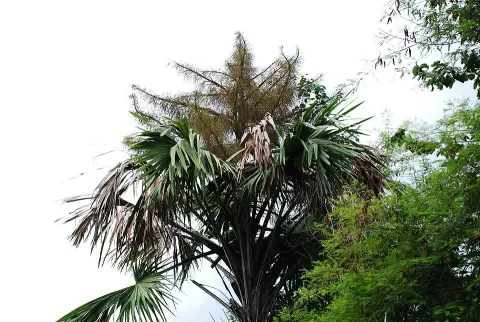
152 national parks in Thailand
- 70,909 km² protected
- oldest from 1962
Largest: Nam Tok Sai Khao National Park · Kaeng Krachan National Park · Thap Lan National Park

Currency · 26 October 2026
Thai baht exchange rates today
Thailand uses the Thai baht (THB, ฿). One US dollar buys 33.7994 THB; over the last 30 days the THB has lost 1.2% against the dollar.
What other currencies cost in THB
Currency converter
Daily reference rates from the open-source currency-api (CC0), 26 Oct 2026. Banks and exchange offices add a margin.
World rankings
Where Thailand ranks
How Thailand compares with the rest of the world — open any card for the full ranking.
Airports
Airports in Thailand
117 airports and airfields — 10 large, 33 medium and 65 small, plus 9 heliports. 34 have scheduled passenger flights.
Borders
Neighbouring countries
Thailand borders 4 countries along 5,673 km of land borders. Coastline: 3,219 km.


Military
Thai armed forces
Thailand ranks #24 of 145 in the Global Firepower military strength ranking, with a defence budget of $6.0 billion (2025).
People
Population & society
Religion
Largest cities: Bangkok (11.1 million), Chon Buri (1), Samut Prakan (1.4 million), Chiang Mai (1.2 million), Songkla (1.0 million)
Economy
Economy
Main industries
tourism, textiles and garments, agricultural processing, beverages, tobacco, cement, light manufacturing such as jewelry and electric appliances, computers and parts, integrated circuits, furniture, plastics, automobile…
Export partners
USA 18%, China 13%, Japan 7%, Australia 4%, Singapore 4% (2023)
Top exports
machine parts, integrated circuits, trucks, cars, broadcasting equipment (2023)
Travel tools
Handy before every trip to Thailand
Next public holiday
HM King Bhumibol Adulyadej the Great's Birthday — Saturday, 5 December 2026. Then National Day (5 Dec).

Thai passport
Ranked #123: 40 countries visa-free, 37 with visa on arrival, 6 with an eTA and 33 with an eVisa.
Thai passport photo
Exact size, head position and background for Thailand's passport and visa photos — make one free with AI checks.
Calling Thailand
Dial +66 before the local number. Internet domain .th.
Climate footprint
267.8 million tonnes of CO₂ in 2024 — 3.74 t per person.
Entry requirements
Visa rules for every passport visiting Thailand: visa-free stays, eVisas, visas on arrival and documents to bring.
News
Latest travel news about Thailand
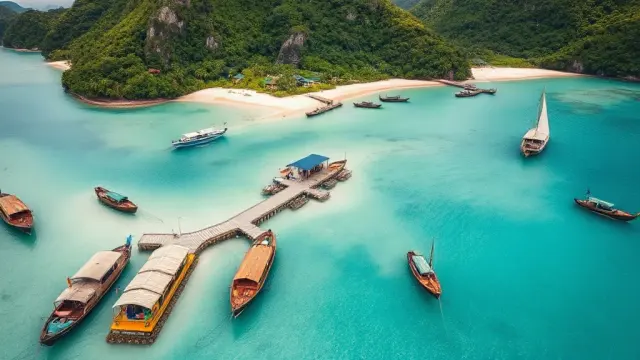
Thailand's Koh Phangan panel urges visa revocation for Israeli visitor
A Koh Phangan committee has recommended revoking the visa of a 33-year-old Israeli woman after complaints about her conduct toward hotel staff and to…
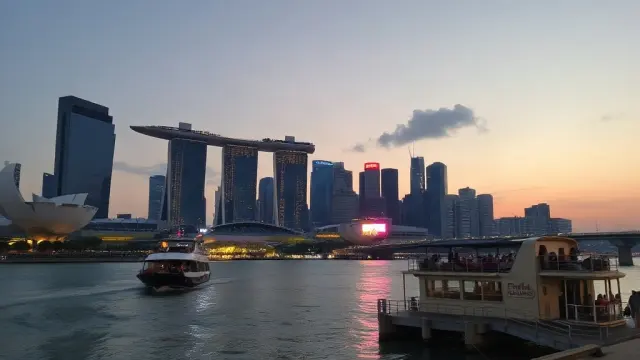
Singapore joins Visa Destinations in November with cardholder perks
Visa and the Singapore Tourism Board have signed a three-year agreement that brings the Visa Destinations travel programme to Singapore in November. …
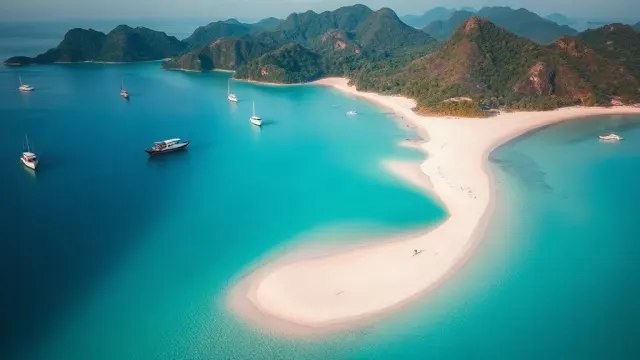
Visitors to Koh Phangan lose visas as 10 foreign nationals revoked since January
Thai authorities on Koh Phangan have revoked the visa of a 33-year-old Israeli woman over alleged threats and aggressive behaviour. She is the third …
Frequently asked questions about Thailand
What do I need to travel to Thailand?
How long must my passport be valid for Thailand?
Where is Thailand?
What is Thailand known for?
What is the capital of Thailand?
What language is spoken in Thailand?
What currency does Thailand use?
What is the calling code of Thailand?
Which countries border Thailand?
How strong is the Thai passport?
What is the speed limit in Thailand?
Is Thailand safe to visit?
When is the best time to visit Thailand?
What plug type does Thailand use?
How many airports does Thailand have?
Sources: CIA World Factbook (public domain); World Bank Open Data (CC BY 4.0); names, languages and currencies: mledoze/countries (ODbL); flag: flag-icons (MIT); coat of arms: Wikimedia Commons (file page); exchange rates: Daily reference rates from the open-source currency-api (CC0); airports: OurAirports.