
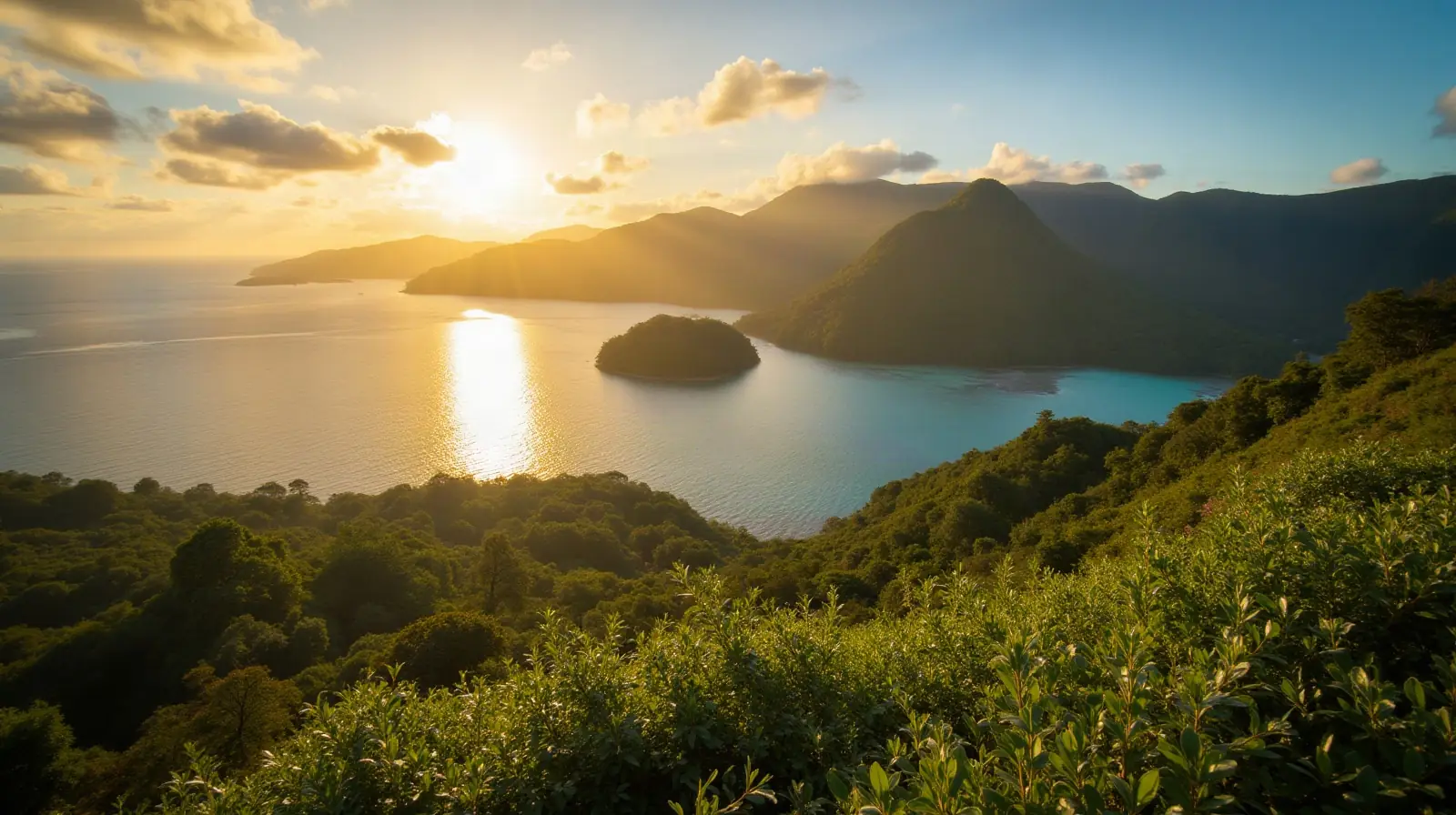
Melanesia · UN member

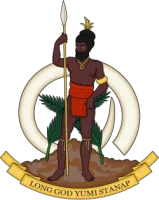
Vanuatu: Travel Guide & Requirements
Republic of Vanuatu
Vanuatu is a country in Melanesia with its capital in Port-Vila. It has a population of 335,169 (#177 in the world) and covers 12,189 km². The official languages are Bislama, English and French. The currency is the Vanuatu vatu (VUV, Vt).
Where is Vanuatu? Map of Vanuatu
Oceania, group of islands in the South Pacific Ocean, about three-quarters of the way from Hawaii to Australia.
- Region
- Melanesia
- Coordinates
- 16° S, 167° E
- Neighbours
- none (no land borders)
- Coastline
- 2,528 km
- Vanuatu
- Capital
Travel requirements
What you need to travel to Vanuatu
- Passport
Vanuatu's Department of Immigration says a non-citizen's passport must be valid for more than 6 months at the time of arrival.
- Visa or eTA
Depends on your passport: of 198 passports, 113 need no visa, 85 need an eVisa. Check yours or see Vanuatu entry requirements for every passport.
- Return or onward ticket
The Department of Immigration lists a return airline ticket on arrival, and a confirmed accommodation or local address, among the documents non-citizens arriving in Vanuatu must produce for inspection.
- Proof of funds
The Department of Immigration lists having the financial means to support oneself and any dependants in Vanuatu among the criteria for a tourist visa, which travellers from exempted countries can obtain on arrival provi…
- Travel insurance
No official requirement. The UK Foreign Office advises checking before you travel that you have appropriate travel insurance for local treatment or unexpected medical evacuation.
- Vaccinations
The US CDC lists P. vivax as the main malaria species in Vanuatu, recommends that travellers take prescription medicine to prevent malaria, and says to talk to your doctor about which medication to take.
- Customs allowance
No official requirement.
- Travel advice
Safe to visit — US and UK advice.
Entry rules: TravelRequirements.info — Entry Requirements Dataset (CC BY 4.0), each rule cited to an official government source. Always confirm with the airline and the official source before you travel.
Before you go
9 things to know before you travel to Vanuatu
- Safety: Yes — Vanuatu is generally safe to visit: the US State Department rates Vanuatu Level 1 (“Exercise Normal Precautions”), and the UK Foreign Office has no warnings against travel there.
- Best time to go: June to October — when daytime highs in Port-Vila are around 25–26°C.
- Money: the Vanuatu vatu (VUV) — 1 US dollar is about 119.1370 VUV.
- Plugs: type I, 230 V, 50 Hz — standard 220–240 V: devices from the US or Japan (110–120 V) need a converter unless they are dual voltage (100–240 V).
- Emergency numbers: Police 111, Ambulance 112, Fire 113.
- Language: Bislama, English and French are official.
- Driving: on the right.
- Time zone: UTC+11 in Port-Vila.
- Capital: Port-Vila. About 335,169 people live in Vanuatu.
Key facts
Vanuatu at a glance
Languages spoken: indigenous languages (more than 100) 82.6%, Bislama (official; creole) 14.5%, English (official) 2.1%, French (official) 0.8% (2020 est.)
Geography & history
About Vanuatu
Austronesian speakers from the Solomon Islands first settled Vanuatu around 2000 B.C. By around 1000, localized chieftain systems began to develop on the islands. Around 1600, Melanesian Chief ROI MATA united some of the islands of modern-day Vanuatu under his rule. In 1606, a Portuguese explorer was the first European to see Vanuatu's Banks Islands and Espiritu Santo, setting up a short-lived settlement on the latter. The next European explorers arrived in the 1760s, and the islands -- then known as the New Hebrides -- were frequented by whalers in the 1800s. European interest in harvesting the islands’ sandalwood trees caused conflict with the inhabitants. In the 1860s, European planters …
Read the full history
Austronesian speakers from the Solomon Islands first settled Vanuatu around 2000 B.C. By around 1000, localized chieftain systems began to develop on the islands. Around 1600, Melanesian Chief ROI MATA united some of the islands of modern-day Vanuatu under his rule. In 1606, a Portuguese explorer was the first European to see Vanuatu's Banks Islands and Espiritu Santo, setting up a short-lived settlement on the latter. The next European explorers arrived in the 1760s, and the islands -- then known as the New Hebrides -- were frequented by whalers in the 1800s. European interest in harvesting the islands’ sandalwood trees caused conflict with the inhabitants. In the 1860s, European planters in Australia, Fiji, New Caledonia, and Samoa needed labor and kidnapped almost half the adult males on the islands to work as indentured servants. With growing and overlapping interests in the islands, France and the UK agreed that the New Hebrides would be neutral in 1878 and established a joint naval commission in 1887. In 1906, the two countries created the UK-France condominium to jointly administer the islands, with separate laws, police forces, currencies, and education and health systems. The condominium arrangement was dysfunctional, and the UK used France’s initial defeat in World War II to assert greater control over the islands. During the war, the US stationed up to 50,000 soldiers in Vanuatu. In 1945, they withdrew and sold their equipment, leading to the rise of political and religious movements known as "cargo cults," such as the John Frum movement. The UK-France condominium was reestablished after World War II. The UK was interested in moving the condominium toward independence in the 1960s, but France was hesitant. Political parties agitating for independence began to form, largely divided along linguistic lines. France eventually relented, and elections were held in 1974, with independence granted to the newly named Vanuatu in 1980 under English-speaking Prime Minister Walter LINI. The Nagriamel Movement, with support from French-speaking landowners, then declared the island of Espiritu Santo independent from Vanuatu, but the short-lived state was dissolved 12 weeks later. Linguistic divisions have lessened over time, but highly fractious political parties have led to weak coalition governments that require support from both Anglophone and Francophone parties. Since 2008, prime ministers have been ousted more than a dozen times through no-confidence motions or temporary procedural issues.
Location
Oceania, group of islands in the South Pacific Ocean, about three-quarters of the way from Hawaii to Australia
Climate
tropical; moderated by southeast trade winds from May to October; moderate rainfall from November to April; may be affected by cyclones from December to April
Terrain
mostly mountainous islands of volcanic origin; narrow coastal plains
Highest point
Tabwemasana 1,877 m
Natural resources
manganese, hardwood forests, fish
Natural hazards
tropical cyclones (January to April); volcanic activity; volcanism also causes minor earthquakes; tsunamis volcanism: significant volcanic activity with multiple eruptions in recent years; Yasur (361 m), one of the world's most active volcanoes, has experienc…
National symbols
boar's tusk with crossed fern fronds
Safety
Is Vanuatu safe to visit?
Yes — Vanuatu is generally safe to visit: the US State Department rates Vanuatu Level 1 (“Exercise Normal Precautions”), and the UK Foreign Office has no warnings against travel there.
 US State Department
 UK Foreign Office (FCDO)
Latest update: Updated information about global travel impacts due to escalation in the Middle East (‘Warnings and insurance’ page).
Updated 19 Mar 2026 · Full travel advice
Sources: US Department of State travel advisories (public domain) and UK FCDO foreign travel advice (contains public sector information licensed under the Open Government Licence v3.0). Checked daily. Advice can change quickly — always read the official page before you travel.
Weather
Best time to visit Vanuatu
The best time to visit Vanuatu is June to October, when daytime highs in Port-Vila are around 25–26°C. May and November are also a good time to go. February is the warmest month (29°C by day), August the coldest (24°C at night), and March the wettest with about 232 mm of rain.
- Jan28°C27°C
- Feb29°C28°C
- Mar28°C28°C
- Apr28°C27°C
- May27°C26°C
- Jun26°C25°C
- Jul25°C24°C
- Aug25°C24°C
- Sep25°C24°C
- Oct26°C25°C
- Nov27°C26°C
- Dec28°C27°C
Best time Good Less ideal
Before you go
Plugs, voltage & emergency numbers in Vanuatu
Plugs & sockets
230 V, 50 Hz · Standard 220–240 V: devices from the US or Japan (110–120 V) need a converter unless they are dual voltage (100–240 V).
Emergency numbers
112 works from any mobile phone, even without a SIM card in most networks. All countries →
Sources: Wikipedia — Mains electricity by country and List of emergency telephone numbers (CC BY-SA 4.0).
Currency · 26 October 2026
Vanuatu vatu exchange rates today
Vanuatu uses the Vanuatu vatu (VUV, Vt). One US dollar buys 119.1370 VUV; over the last 30 days the VUV has lost 0.6% against the dollar.
What other currencies cost in VUV
Currency converter
Daily reference rates from the open-source currency-api (CC0), 26 Oct 2026. Banks and exchange offices add a margin.
World rankings
Where Vanuatu ranks
How Vanuatu compares with the rest of the world — open any card for the full ranking.
Airports
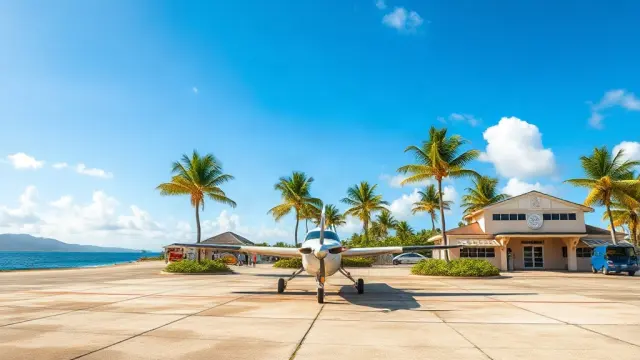
Airports in Vanuatu
31 airports and airfields — 1 large, 3 medium and 27 small, plus 0 heliports. 17 have scheduled passenger flights.
Borders
No land borders
Vanuatu has no land borders with other countries. Coastline: 2,528 km.
People
Population & society
Religion
Largest cities: Port-Vila (53,000)
Economy
Economy
Main industries
food and fish freezing, wood processing, meat canning
Export partners
Thailand 49%, Japan 19%, Cote d'Ivoire 10%, China 7%, USA 3% (2023)
Top exports
fish, ships, perfume plants, wood, copra (2023)
Travel tools
Handy before every trip to Vanuatu
Next public holiday
National Unity Day — Sunday, 29 November 2026. Then Christmas Day (25 Dec).

Ni-Vanuatu passport
Ranked #106: 48 countries visa-free, 32 with visa on arrival, 4 with an eTA and 37 with an eVisa.
Ni-Vanuatu passport photo
Exact size, head position and background for Vanuatu's passport and visa photos — make one free with AI checks.
Calling Vanuatu
Dial +678 before the local number. Internet domain .vu.
Climate footprint
0.2 million tonnes of CO₂ in 2024 — 0.60 t per person.
Entry requirements
Visa rules for every passport visiting Vanuatu: visa-free stays, eVisas, visas on arrival and documents to bring.
News
Latest travel news about Vanuatu
Vanuatu Citizenship by Investment: Costs, Timelines and the End of EU Visa-Free Travel
Vanuatu collected about $95.5 million from its citizenship program in the first half of 2026, even after the EU permanently ended visa-free access fo…
Travellers to Pacific islands urged to avoid mosquito bites after Maui dengue case
Hawaii's Department of Health has confirmed a tenth travel-related dengue case of 2026, on Maui. All 10 cases this year involved travel to Pacific Is…
Vanuatu Exempt From Australia's International Student Visa Fee Rises
Vanuatu is not affected by increases to Australia's international student visa fees, a Pacific news bulletin dated 20 October 2026 reports. No fee am…
Frequently asked questions about Vanuatu
What do I need to travel to Vanuatu?
How long must my passport be valid for Vanuatu?
Where is Vanuatu?
What is the capital of Vanuatu?
What language is spoken in Vanuatu?
What currency does Vanuatu use?
What is the calling code of Vanuatu?
Does Vanuatu have land borders?
How strong is the Ni-Vanuatu passport?
Is Vanuatu safe to visit?
When is the best time to visit Vanuatu?
What plug type does Vanuatu use?
How many airports does Vanuatu have?
Sources: CIA World Factbook (public domain); World Bank Open Data (CC BY 4.0); names, languages and currencies: mledoze/countries (ODbL); flag: flag-icons (MIT); coat of arms: Wikimedia Commons (file page); exchange rates: Daily reference rates from the open-source currency-api (CC0); airports: OurAirports.