
Middle Africa · UN member

DR Congo: Travel Guide & Requirements
Democratic Republic of the Congo · République démocratique du Congo · Repubilika ya Kongo Demokratiki
DR Congo is a country in Middle Africa with its capital in Kinshasa. It has a population of 112.8 million (#15 in the world) and covers 2,344,858 km². The official languages are French, Kikongo, Lingala, Tshiluba and Swahili. The currency is the Congolese franc (CDF, FC).
Where is DR Congo? Map of DR Congo
Central Africa, northeast of Angola.
- Region
- Middle Africa
- Coordinates
- 0° N, 25° E
- Neighbours
- 9 — see list
- Coastline
- 37 km
- DR Congo
- Neighbours
- Capital
- Largest cities
Map of DR Congo showing Kinshasa (capital) and the largest cities: Lubumbashi, Mbuji-Mayi, Kisangani, Kananga, Bukavu, Kolwezi, Likasi and Tshikapa.
Travel requirements
What you need to travel to DR Congo
- Passport
The UK Foreign Office says your passport must have an expiry date at least 6 months after the date you arrive in the DRC.
- Visa or eTA
Depends on your passport: of 198 passports, 198 need an eVisa. Check yours or see DR Congo entry requirements for every passport.
- Return or onward ticket
No official requirement. The embassy in Washington asks visa applicants for a copy of their flight itinerary, which it says is not an actual booking or ticket.
- Proof of funds
The DRC Embassy in Washington says tourists not using a tourist agency or private host must provide proof of sufficient funds for the trip.
- Travel insurance
No official requirement.
- Vaccinations
The UK government says that to enter the DRC you must have a certificate proving yellow fever vaccination, and that you may need one for onward travel to some other countries because of the risk of yellow fever in the D…
- Customs allowance
Canada's travel advice says you must declare any sum equivalent to more than US$10,000 on arrival, and any foreign currency on exit.
- Travel advice
Avoid travel — US and UK advice.
Entry rules: TravelRequirements.info — Entry Requirements Dataset (CC BY 4.0), each rule cited to an official government source. Always confirm with the airline and the official source before you travel.
Before you go
10 things to know before you travel to DR Congo
- Safety: Governments advise against travel to DR Congo: the US State Department rates DR Congo Level 4 (“Do Not Travel”), and the UK Foreign Office advises against all travel to parts of the country.
- Best time to go: June to August — when daytime highs in Kinshasa are around 29–30°C.
- Money: the Congolese franc (CDF) — 1 US dollar is about 2,317.5 CDF.
- Plugs: type C and E, 220 V, 50 Hz — standard 220–240 V: devices from the US or Japan (110–120 V) need a converter unless they are dual voltage (100–240 V).
- Emergency numbers: Police 112, Fire 118.
- Language: French, Kikongo, Lingala, Tshiluba and Swahili are official.
- Driving: on the right — speed limits are 60 km/h in built-up areas, 90 km/h outside built-up areas and 120 km/h on motorways.
- Time zone: UTC+1 in Kinshasa.
- Capital: Kinshasa. About 112.8 million people live in DR Congo.
- DR Congo is the 11th largest country in the world by area.
Key facts
DR Congo at a glance
Languages spoken: French (official), Lingala (a trade language), Kingwana (a dialect of Kiswahili or Swahili), Kikongo, Tshiluba
Geography & history
About DR Congo
Bantu, Sudanic, and other migrants from West and Northeastern Africa arrived in the Congo River Basin between 2000 B.C. and A.D. 500. The territory that is now the Democratic Republic of the Congo has more than 200 ethnic groups that trace their histories to many communal organizations and kingdoms. The Kingdom of Kongo, for example, ruled the area around the mouth of the Congo River from the 14th to 19th centuries. Meanwhile, the Kingdoms of Luba and Lunda, located to the south and east, were also notable political groupings in the territory and ruled from the 16th and 17th centuries to the 19th century. European prospectors in the Congo Basin invaded and splintered these kingdoms in the l…
Read the full history
Bantu, Sudanic, and other migrants from West and Northeastern Africa arrived in the Congo River Basin between 2000 B.C. and A.D. 500. The territory that is now the Democratic Republic of the Congo has more than 200 ethnic groups that trace their histories to many communal organizations and kingdoms. The Kingdom of Kongo, for example, ruled the area around the mouth of the Congo River from the 14th to 19th centuries. Meanwhile, the Kingdoms of Luba and Lunda, located to the south and east, were also notable political groupings in the territory and ruled from the 16th and 17th centuries to the 19th century. European prospectors in the Congo Basin invaded and splintered these kingdoms in the late 1800’s, sponsored by King LEOPOLD II of Belgium, and the kingdoms were eventually forced to grant Leopold the rights to the Congo territory as his private property. During this period, known as the Congo Free State, the king's private colonial military forced the local population to produce rubber. From 1885 to 1908, millions of Congolese people died as a result of disease and inhumane treatment. International condemnation finally forced LEOPOLD to cede the land to the state of Belgium, creating the Belgian Congo. The Republic of the Congo gained its independence from Belgium in 1960, but its early years were marred by instability. Col. Joseph MOBUTU seized power and declared himself president in a 1965 coup. He subsequently changed his name to MOBUTU Sese Seko and the country's name to Zaire. MOBUTU retained his position for 32 years, using sham elections and brute force. In 1994, a massive inflow of refugees from conflict in neighboring Rwanda and Burundi sparked ethnic strife and civil war. A rebellion backed by Rwanda and Uganda and fronted by Laurent KABILA toppled the MOBUTU regime in 1997. KABILA renamed the country the Democratic Republic of the Congo (DRC). In 1998, another insurrection -- again backed by Rwanda and Uganda -- challenged the KABILA regime, but troops from Angola, Chad, Namibia, Sudan, and Zimbabwe helped quell the uprising. In 2001, KABILA was assassinated, and his son, Joseph KABILA, was named head of state. In 2002, the new president negotiated the withdrawal of Rwandan forces occupying the eastern DRC; the remaining warring parties subsequently signed the Pretoria Accord to end the fighting and establish a government of national unity. KABILA was elected as president in 2006 and 2011. The DRC constitution barred him from running for a third term, so in 2016, the DRC Government delayed national elections for two years. This fueled significant civil and political unrest, with sporadic street protests and exacerbation of tensions in the eastern DRC regions. The results of the 2018 elections were disputed, but opposition candidate Felix TSHISEKEDI, son of long-time opposition leader Etienne TSHISEKEDI, was announced as the election winner. This was the first transfer of power to an opposition candidate without significant violence or a coup since 1960. In 2023, the DRC held its fourth electoral cycle since independence; TSHISEKEDI was proclaimed the winner despite some allegations of fraud, with his Sacred Union alliance retaining a large parliamentary majority. The DRC continues to experience violence -- particularly in the East -- perpetrated by more than 100 armed groups active in the region, including the March 23 (M23) rebel group, the ISIS-affiliated Allied Democratic Forces (ADF, or ISIS-DRC), the Democratic Forces for the Liberation of Rwanda (FDLR), and assorted local militias known as Mai Mai militias. The UN Organization Stabilization Mission in the DRC (MONUSCO) has operated in the region since 1999 and is the largest and most expensive UN peacekeeping mission in the world.
Location
Central Africa, northeast of Angola
Climate
tropical; hot and humid in equatorial river basin; cooler and drier in southern highlands; cooler and wetter in eastern highlands; north of Equator - wet season (April to October), dry season (December to February); south of Equator - wet season (November to …
Terrain
vast central basin is a low-lying plateau; mountains in east
Highest point
Pic Marguerite on Mont Ngaliema (Mount Stanley) 5,110 m
Natural resources
cobalt, copper, niobium, tantalum, petroleum, industrial and gem diamonds, gold, silver, zinc, manganese, tin, uranium, coal, hydropower, timber
Natural hazards
periodic droughts in south; Congo River floods (seasonal); active volcanoes in the east along the Great Rift Valley volcanism: the active volcano Nyiragongo (3,470 m) poses a major threat to the city of Goma, home to a quarter of a million people; it produces…
National symbols
leopard
Driving
Speed limits & road rules in DR Congo
The default speed limits in DR Congo are 60 km/h in built-up areas, 90 km/h outside built-up areas and 120 km/h on motorways. The legal alcohol limit for drivers is 1.0‰. Posted signs always take priority over these defaults.
- 6060 km/hBuilt-up areasTowns and cities
- 9090 km/hOutside built-up areasCountry roads
- 120120 km/hMotorwaysMotorways / freeways
- International Driving PermitRecognised: 1968 Vienna, 1949 GenevaCarry the IDP together with your national licence
- Driving sideDrive on the rightOvertake on the left
- Alcohol limit1.0‰ blood alcohol (0.1% BAC)
- Seat beltsRequired by law
- Child seatsNo national child-restraint law
- Motorcycle helmetsRequired for riders
- Road deaths (2021)16.3 per 100,000 peopleHigher than most countries (median 12.4)
Speed limits: OpenStreetMap wiki — Default speed limits (CC BY-SA 2.0). Road-safety laws: WHO Global Health Observatory. Compare speed limits and alcohol limits by country. Defaults for cars; local signs, weather and vehicle type can lower them.
Safety
Is DR Congo safe to visit?
Governments advise against travel to DR Congo: the US State Department rates DR Congo Level 4 (“Do Not Travel”), and the UK Foreign Office advises against all travel to parts of the country.
 US State Department
 UK Foreign Office (FCDO)
Latest update: New information and guidance about the ongoing Ebola outbreak in DRC (see 'Warnings and insurance' and 'Health' pages).
Updated 8 Oct 2026 · Full travel advice
Sources: US Department of State travel advisories (public domain) and UK FCDO foreign travel advice (contains public sector information licensed under the Open Government Licence v3.0). Checked daily. Advice can change quickly — always read the official page before you travel.
Weather
Best time to visit DR Congo
The best time to visit DR Congo is June to August, when daytime highs in Kinshasa are around 29–30°C. September is also a good time to go. September is the warmest month (31°C by day), July the coldest (18°C at night), and November the wettest with about 278 mm of rain.
- Jan29°C22°C
- Feb29°C22°C
- Mar29°C22°C
- Apr29°C22°C
- May29°C21°C
- Jun29°C19°C
- Jul29°C18°C
- Aug30°C20°C
- Sep31°C21°C
- Oct30°C22°C
- Nov28°C22°C
- Dec28°C21°C
Best time Good Less ideal
Before you go
Plugs, voltage & emergency numbers in DR Congo
Plugs & sockets
220 V, 50 Hz · Standard 220–240 V: devices from the US or Japan (110–120 V) need a converter unless they are dual voltage (100–240 V).
Emergency numbers
112 works from any mobile phone, even without a SIM card in most networks. All countries →
Sources: Wikipedia — Mains electricity by country and List of emergency telephone numbers (CC BY-SA 4.0).
National parks
8 national parks in DR Congo
- 93,859 km² protected
- oldest from 1925
Largest: Salonga National Park · Upemba National Park · Maiko National Park
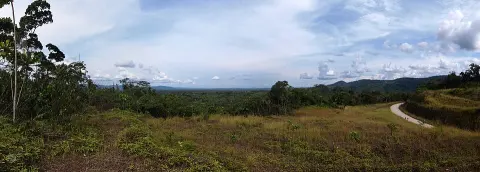
Currency · 26 October 2026
Congolese franc exchange rates today
DR Congo uses the Congolese franc (CDF, FC). One US dollar buys 2,317.5 CDF; over the last 30 days the CDF has lost 0.9% against the dollar.
What other currencies cost in CDF
Currency converter
Daily reference rates from the open-source currency-api (CC0), 26 Oct 2026. Banks and exchange offices add a margin.
World rankings
Where DR Congo ranks
How DR Congo compares with the rest of the world — open any card for the full ranking.
Airports
Airports in DR Congo
270 airports and airfields — 4 large, 17 medium and 248 small, plus 1 heliports. 21 have scheduled passenger flights.
Borders
Neighbouring countries
DR Congo borders 9 countries along 11,027 km of land borders. Coastline: 37 km.


Military
Congolese or Congo armed forces
DR Congo ranks #72 of 145 in the Global Firepower military strength ranking, with a defence budget of $1.2 billion (2025).
People
Population & society
Religion
Largest cities: Kinshasa (16.3 million), Mbuji-Mayi (2.9 million), Lubumbashi (2.8 million), Kananga (1.7 million), Kisangani (1.4 million)
Economy
Economy
Main industries
mining (copper, cobalt, gold, diamonds, coltan, zinc, tin, tungsten), mineral processing, consumer products (textiles, plastics, footwear, cigarettes), metal products, processed foods and beverages, timber, cement, comm…
Export partners
China 69%, UAE 7%, India 3%, Spain 3%, Egypt 3% (2023)
Top exports
refined copper, cobalt, copper ore, raw copper, crude petroleum (2023)
Travel tools
Handy before every trip to DR Congo
Next public holiday
Christmas Day — Friday, 25 December 2026. Then New Year's Day (1 Jan).

Congolese or Congo passport
Ranked #177: 17 countries visa-free, 25 with visa on arrival, 2 with an eTA and 41 with an eVisa.
Calling DR Congo
Dial +243 before the local number. Internet domain .cd.
Climate footprint
5.9 million tonnes of CO₂ in 2024 — 0.05 t per person.
Entry requirements
Visa rules for every passport visiting DR Congo: visa-free stays, eVisas, visas on arrival and documents to bring.
News
Latest travel news about DR Congo
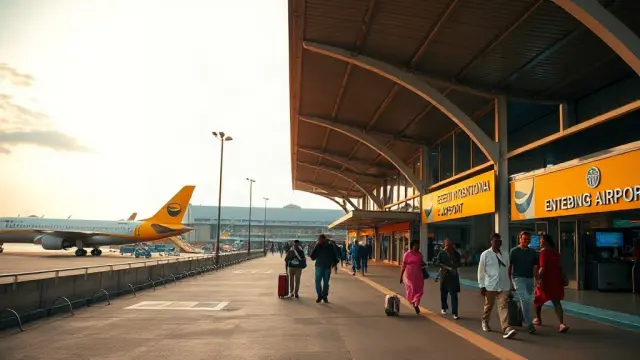
Recent DR Congo trips now trigger 21-day quarantine for returning Ugandans
Uganda will quarantine its own citizens for 21 days if they are returning with recent travel to the Democratic Republic of Congo, Health Minister Chr…
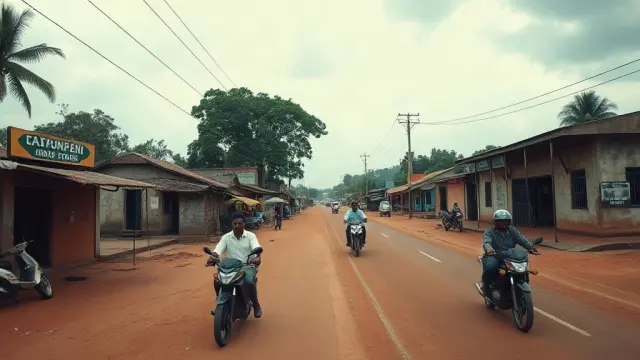
Travellers to DR Congo: Bunia launches first Ebola vaccine study as deaths pass 4,600
A first Ebola vaccine clinical trial has begun in Bunia, in DR Congo's Ituri province, as the country's worst-ever outbreak passes 9,700 cases and mo…
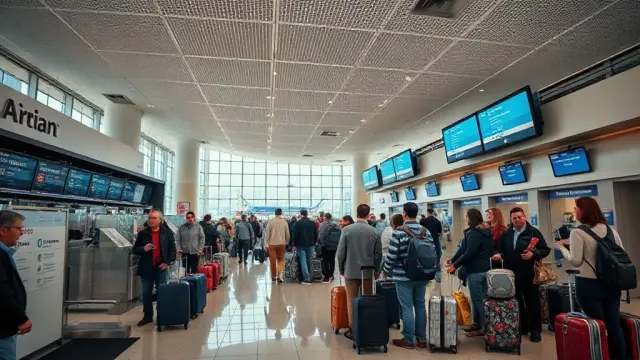
US-bound air travellers face new Ebola attestation from 3 November
All airline passengers flying to the United States must file a digital or paper attestation from 3 November confirming they have not been in the Demo…
Frequently asked questions about DR Congo
What do I need to travel to DR Congo?
How long must my passport be valid for DR Congo?
Where is DR Congo?
What is DR Congo known for?
What is the capital of DR Congo?
What language is spoken in DR Congo?
What currency does DR Congo use?
What is the calling code of DR Congo?
Which countries border DR Congo?
How strong is the Congolese or Congo passport?
What is the speed limit in DR Congo?
Is DR Congo safe to visit?
When is the best time to visit DR Congo?
What plug type does DR Congo use?
How many airports does DR Congo have?
Sources: CIA World Factbook (public domain); World Bank Open Data (CC BY 4.0); names, languages and currencies: mledoze/countries (ODbL); flag: flag-icons (MIT); coat of arms: Wikimedia Commons (file page); exchange rates: Daily reference rates from the open-source currency-api (CC0); airports: OurAirports.