
Western Africa · UN member

Senegal: Travel Guide & Requirements
Republic of Senegal · République du Sénégal
Senegal is a country in Western Africa with its capital in Dakar. It has a population of 18.9 million (#68 in the world) and covers 196,722 km². The official language is French. The currency is the West African CFA franc (XOF, Fr).
Where is Senegal? Map of Senegal
Western Africa, bordering the North Atlantic Ocean, between Guinea-Bissau and Mauritania.
- Region
- Western Africa
- Coordinates
- 14° N, 14° W
- Neighbours
- 5 — see list
- Coastline
- 531 km
- Senegal
- Neighbours
- Capital
- Largest cities
Map of Senegal showing Dakar (capital) and the largest cities: Touba, Thiès, Kaolack, Saint-Louis, Ziguinchor, Tambacounda, Louga and Kolda.
Travel requirements
What you need to travel to Senegal
- Passport
Senegal's Foreign Ministry says visa-exempt visitors need a passport or laissez-passer valid for at least 6 months.
- Visa or eTA
Depends on your passport: of 198 passports, 60 need no visa, 138 need a visa from an embassy. Check yours or see Senegal entry requirements for every passport.
- Return or onward ticket
The UK government tells British visitors, who can visit Senegal without a visa for up to 3 months, that they need to show border officials evidence of return or onward travel and proof of their arranged accommodation, a…
- Proof of funds
No official requirement. Ireland's foreign ministry says Irish citizens entering without a visa must provide proof of sufficient funds.
- Travel insurance
No official requirement. The UK Foreign Office says to check before you travel that you have appropriate travel insurance for local treatment or unexpected medical evacuation.
- Vaccinations
The UK government says you must have a yellow fever vaccination certificate if you arrive from a country listed as a transmission risk, including if you transited through the airport of such a country, and that babies a…
- Customs allowance
The Central Bank of West African States (BCEAO) sets at 5,000,000 CFA francs the threshold from which anyone entering a West African Monetary Union (UMOA) member state from a third state, or leaving it for a third state…
- Travel advice
Safe to visit — US and UK advice.
Entry rules: TravelRequirements.info — Entry Requirements Dataset (CC BY 4.0), each rule cited to an official government source. Always confirm with the airline and the official source before you travel.
Before you go
10 things to know before you travel to Senegal
- Safety: Yes — Senegal is generally safe to visit: the US State Department rates Senegal Level 1 (“Exercise Normal Precautions”), and the UK Foreign Office has no warnings against travel there.
- Best time to go: December to February and May to June — when daytime highs in Dakar are around 22–26°C.
- Money: the West African CFA franc (XOF) — 1 US dollar is about 584.5354 XOF.
- Plugs: type C, D, E and K, 230 V, 50 Hz — standard 220–240 V: devices from the US or Japan (110–120 V) need a converter unless they are dual voltage (100–240 V).
- Emergency numbers: Police 17, Ambulance 18, Fire 1515.
- Language: French is official.
- Driving: on the right — speed limits are 90 km/h outside built-up areas and 110 km/h on motorways.
- Time zone: UTC0 in Dakar.
- Capital: Dakar. About 18.9 million people live in Senegal.
- Outdoors: 6 national parks.
Key facts
Senegal at a glance
Languages spoken: French (official), Wolof, Pulaar, Jola, Mandinka, Serer, Soninke
Geography & history
About Senegal
Senegal is one of the few countries in the world with evidence of continuous human life from the Paleolithic period to present. Between the 14th and 16th centuries, the Jolof Empire ruled most of Senegal. Starting in the 15th century, Portugal, the Netherlands, France, and Great Britain traded along the Senegalese coast. Senegal’s location on the western tip of Africa made it a favorable base for the European slave trade. European powers used the Senegalese island of Goree as a base to purchase slaves from the warring chiefdoms on the mainland, and at the height of the slave trade in Senegal, over one-third of the Senegalese population was enslaved. In 1815, France abolished slavery and beg…
Read the full history
Senegal is one of the few countries in the world with evidence of continuous human life from the Paleolithic period to present. Between the 14th and 16th centuries, the Jolof Empire ruled most of Senegal. Starting in the 15th century, Portugal, the Netherlands, France, and Great Britain traded along the Senegalese coast. Senegal’s location on the western tip of Africa made it a favorable base for the European slave trade. European powers used the Senegalese island of Goree as a base to purchase slaves from the warring chiefdoms on the mainland, and at the height of the slave trade in Senegal, over one-third of the Senegalese population was enslaved. In 1815, France abolished slavery and began expanding inland. During the second half of the 19th century, France took possession of Senegal as a French colony. In 1959, the French colonies of Senegal and French Sudan were merged and granted independence in 1960 as the Mali Federation. The union broke up after only a few months. In 1982, Senegal joined with The Gambia to form the nominal confederation of Senegambia. The envisaged integration of the two countries was never implemented, and the union dissolved in 1989. Since the 1980s, the Movement of Democratic Forces in the Casamance -- a separatist movement based in southern Senegal -- has led a low-level insurgency. Several attempts at reaching a comprehensive peace agreement have failed. Since 2012, despite sporadic incidents of violence, an unofficial cease-fire has remained largely in effect. Senegal is one of the most stable democracies in Africa and has a long history of participating in international peacekeeping and regional mediation. The Socialist Party of Senegal ruled for 40 years until Abdoulaye WADE was elected president in 2000 and re-elected in 2007. WADE amended Senegal's constitution over a dozen times to increase executive power and weaken the opposition. In 2012, WADE’s decision to run for a third presidential term sparked public backlash that led to his loss to current President Macky SALL. A 2016 constitutional referendum limited future presidents to two consecutive five-year terms. President Bassirou Diomaye FAYE took office in April 2024.
Location
Western Africa, bordering the North Atlantic Ocean, between Guinea-Bissau and Mauritania
Climate
tropical; hot, humid; rainy season (May to November) has strong southeast winds; dry season (December to April) dominated by hot, dry, harmattan wind
Terrain
generally low, rolling, plains rising to foothills in southeast
Highest point
unnamed elevation 2.8 km southeast of Nepen Diaka 648 m
Natural resources
fish, phosphates, iron ore
Natural hazards
lowlands seasonally flooded; periodic droughts
National symbols
lion
Driving
Speed limits & road rules in Senegal
The default speed limits in Senegal are 90 km/h outside built-up areas and 110 km/h on motorways. Posted signs always take priority over these defaults.
- 9090 km/hOutside built-up areasCountry roads
- 110110 km/hMotorwaysMotorways / freeways
- International Driving PermitRecognised: 1968 Vienna, 1949 GenevaCarry the IDP together with your national licence
- Driving sideDrive on the rightOvertake on the left
- Seat beltsRequired by law
- Child seatsNo national child-restraint law
- Motorcycle helmetsNo nationwide law
- Road deaths (2021)20.8 per 100,000 peopleHigher than most countries (median 12.4)
Speed limits: OpenStreetMap wiki — Default speed limits (CC BY-SA 2.0). Road-safety laws: WHO Global Health Observatory. Compare speed limits and alcohol limits by country. Defaults for cars; local signs, weather and vehicle type can lower them.
Safety
Is Senegal safe to visit?
Yes — Senegal is generally safe to visit: the US State Department rates Senegal Level 1 (“Exercise Normal Precautions”), and the UK Foreign Office has no warnings against travel there.
 US State Department
 UK Foreign Office (FCDO)
Latest update: Updated information about health risks you'll face in Senegal ('Health' page).
Updated 15 Oct 2026 · Full travel advice
Sources: US Department of State travel advisories (public domain) and UK FCDO foreign travel advice (contains public sector information licensed under the Open Government Licence v3.0). Checked daily. Advice can change quickly — always read the official page before you travel.
Weather
Best time to visit Senegal
The best time to visit Senegal is December to February and May to June, when daytime highs in Dakar are around 22–26°C. March to April, July and October to November are also a good time to go. October is the warmest month (29°C by day), February the coldest (19°C at night), and August the wettest with about 191 mm of rain.
- Jan24°C20°C
- Feb22°C19°C
- Mar22°C19°C
- Apr21°C20°C
- May23°C22°C
- Jun25°C24°C
- Jul27°C26°C
- Aug28°C27°C
- Sep28°C27°C
- Oct29°C28°C
- Nov28°C26°C
- Dec26°C23°C
Best time Good Less ideal
Before you go
Plugs, voltage & emergency numbers in Senegal
Plugs & sockets
- Type C (Europlug)two round pins
- Type Dthree large round pins in a triangle
- Type Etwo round pins and a hole for the socket's earth pin
- Type Ktwo round pins and a half-round earth pin
230 V, 50 Hz · Standard 220–240 V: devices from the US or Japan (110–120 V) need a converter unless they are dual voltage (100–240 V).
Emergency numbers
Save the local numbers before you travel — 112 or 911 may not connect here. All countries →
Sources: Wikipedia — Mains electricity by country and List of emergency telephone numbers (CC BY-SA 4.0).
National parks
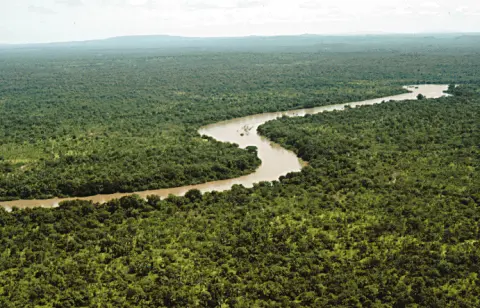
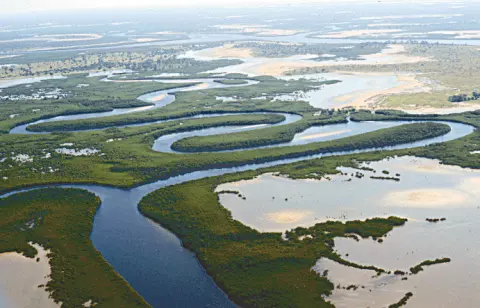
6 national parks in Senegal
- 10,120 km² protected
- oldest from 1954
Largest: Niokolo-Koba National Park · Saloum Delta National Park · Djoudj National Bird Sanctuary
Currency · 26 October 2026
West African CFA franc exchange rates today
Senegal uses the West African CFA franc (XOF, Fr). One US dollar buys 584.5354 XOF; over the last 30 days the XOF has lost 1.5% against the dollar.
What other currencies cost in XOF
Currency converter
Daily reference rates from the open-source currency-api (CC0), 26 Oct 2026. Banks and exchange offices add a margin.
World rankings
Where Senegal ranks
How Senegal compares with the rest of the world — open any card for the full ranking.
Airports
Airports in Senegal
20 airports and airfields — 2 large, 8 medium and 10 small, plus 0 heliports. 3 have scheduled passenger flights.
Borders
Neighbouring countries
Senegal borders 5 countries along 2,684 km of land borders. Coastline: 531 km.


Military
Senegalese armed forces
Senegal ranks #125 of 145 in the Global Firepower military strength ranking, with a defence budget of $567 million (2025).
People
Population & society
Religion
Largest cities: Dakar (3.3 million)
Economy
Economy
Main industries
agricultural and fish processing, phosphate mining, fertilizer production, petroleum refining, zircon, and gold mining, construction materials, ship construction and repair
Export partners
Mali 21%, India 12%, Switzerland 11%, China 5%, UAE 4% (2023)
Top exports
gold, refined petroleum, phosphoric acid, fish, cement (2023)
Travel tools
Handy before every trip to Senegal
Next public holiday
All Saints' Day — Sunday, 1 November 2026. Then Christmas Day (25 Dec).

Senegalese passport
Ranked #139: 32 countries visa-free, 22 with visa on arrival, 2 with an eTA and 45 with an eVisa.
Senegalese passport photo
Exact size, head position and background for Senegal's passport and visa photos — make one free with AI checks.
Calling Senegal
Dial +221 before the local number. Internet domain .sn.
Climate footprint
14.1 million tonnes of CO₂ in 2024 — 0.76 t per person.
Entry requirements
Visa rules for every passport visiting Senegal: visa-free stays, eVisas, visas on arrival and documents to bring.
News
Latest travel news about Senegal
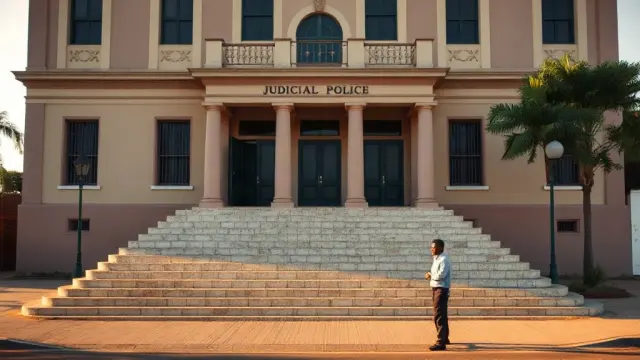
Guinea-Bissau police free 71 people from fake jobs and visas scam
Guinea-Bissau's judicial police freed 71 people and arrested four suspects after raiding two houses in Bissau, targeting a network that promised jobs…
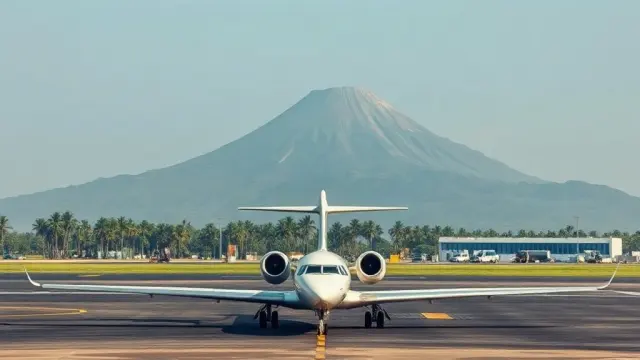
ICE Charter to Equatorial Guinea to Expel 25, Not Return Jailed Man
Documents show an ICE charter flight due in Equatorial Guinea on Thursday plans to expel 25 people there rather than retrieve Ahmed Soliman, an Egypt…
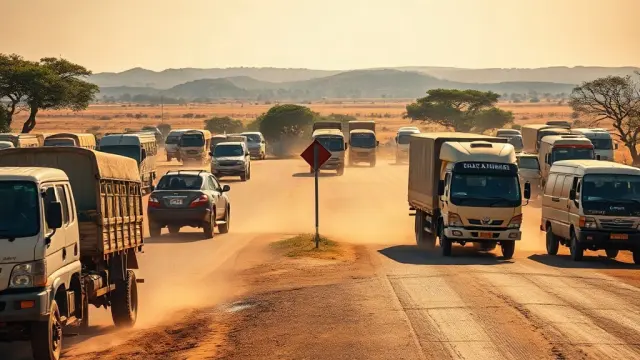
Mali, Burkina Faso and Niger keep visa-free ECOWAS travel after Dakar talks
ECOWAS and the Alliance of Sahel States (AES) held their first formal ministerial dialogue since their split and agreed to set up joint working group…
Frequently asked questions about Senegal
What do I need to travel to Senegal?
How long must my passport be valid for Senegal?
Where is Senegal?
What is Senegal known for?
What is the capital of Senegal?
What language is spoken in Senegal?
What currency does Senegal use?
What is the calling code of Senegal?
Which countries border Senegal?
How strong is the Senegalese passport?
What is the speed limit in Senegal?
Is Senegal safe to visit?
When is the best time to visit Senegal?
What plug type does Senegal use?
How many airports does Senegal have?
Sources: CIA World Factbook (public domain); World Bank Open Data (CC BY 4.0); names, languages and currencies: mledoze/countries (ODbL); flag: flag-icons (MIT); coat of arms: Wikimedia Commons (file page); exchange rates: Daily reference rates from the open-source currency-api (CC0); airports: OurAirports.