
Australia and New Zealand · UN member

New Zealand: Travel Guide & Requirements
· Aotearoa
New Zealand is a country in Australia and New Zealand with its capital in Wellington. It has a population of 5.3 million (#124 in the world) and covers 268,838 km². The official languages are English, Māori and New Zealand Sign Language. The currency is the New Zealand dollar (NZD, $).
Where is New Zealand? Map of New Zealand
Oceania, islands in the South Pacific Ocean, southeast of Australia.
- Region
- Australia and New Zealand
- Coordinates
- 41° S, 174° E
- Neighbours
- none (no land borders)
- Coastline
- 15,134 km
- New Zealand
- Capital
- Largest cities
Map of New Zealand showing Wellington (capital) and the largest cities: Auckland, Christchurch, Hamilton, Tauranga, Dunedin, Palmerston North, New Plymouth and Hastings.
Travel requirements
What you need to travel to New Zealand
- Passport
Immigration New Zealand says your passport must be valid for at least 3 months after the date you plan to leave New Zealand.
- Visa or eTA
Depends on your passport: of 198 passports, 1 needs no visa, 60 need an eTA, 137 need an eVisa. Check yours or see New Zealand entry requirements for every passport.
- Return or onward ticket
Immigration New Zealand says visa-waiver visitors must be able to show they plan to leave at the end of their stay, with a paid ticket out of New Zealand to a country they have the right to enter, or a craft owner's let…
- Proof of funds
Immigration New Zealand says visitors must have at least NZD 1,000 a month, or NZD 400 a month if accommodation is already paid for, and may be asked to show it at check-in or on arrival.
- Travel insurance
No official requirement. Immigration New Zealand says visitors will need to pay for any health care or medical assistance they need in New Zealand, and recommends full medical insurance for the stay.
- Arrival card
Everyone travelling into New Zealand, including New Zealand passport holders, must complete the free New Zealand Traveller Declaration (website or app), which collects travel, customs, immigration and biosecurity inform…
- Customs allowance
New Zealand Customs says you must complete a Border Cash Report if you carry NZ$10,000 or more in cash (or foreign equivalent) into or out of New Zealand.
- Travel advice
Safe to visit — US and UK advice.
Entry rules: TravelRequirements.info — Entry Requirements Dataset (CC BY 4.0), each rule cited to an official government source. Always confirm with the airline and the official source before you travel.
Before you go
10 things to know before you travel to New Zealand
- Safety: Yes — New Zealand is generally safe to visit: the US State Department rates New Zealand Level 1 (“Exercise Normal Precautions”), and the UK Foreign Office has no warnings against travel there.
- Best time to go: January to March — when daytime highs in Wellington are around 18–19°C.
- Money: the New Zealand dollar (NZD) — 1 US dollar is about 1.7538 NZD.
- Plugs: type I, 230 V, 50 Hz — standard 220–240 V: devices from the US or Japan (110–120 V) need a converter unless they are dual voltage (100–240 V).
- Emergency numbers: Police 111, Ambulance 111, Fire 111.
- Language: English, Māori and New Zealand Sign Language are official.
- Driving: on the left — speed limits are 50 km/h in built-up areas and 100 km/h outside built-up areas.
- Time zone: UTC+12 in Wellington.
- Capital: Wellington; the largest city is Auckland. About 5.3 million people live in New Zealand.
- Outdoors: 13 national parks and 28 ski areas.
Key facts
New Zealand at a glance
Languages spoken: English (de facto official) 95.4%, Maori (de jure official) 4%, Samoan 2.2%, Northern Chinese 2%, Hindi 1.5%, French 1.2%, Yue 1.1%, New Zealand Sign Language (de jure official) 0.5%, other or not stated 17.2% (2018 est.)
Geography & history
About New Zealand
Polynesians settled New Zealand between the late 1200s and the mid-1300s. They called the land Aotearoa, which legend holds is the name of the canoe that Kupe, the first Polynesian in New Zealand, used to sail to the country; the name Aotearoa is now in widespread use as the local Maori name for the country. By the 1500s, competition for land and resources led to intermittent fighting between different Maori tribes as large game became extinct. Dutch explorer Abel TASMAN was the first European to see the islands in 1642 but left after an encounter with local Maori. British sea captain James COOK arrived in 1769, followed by whalers, sealers, and traders. The UK only nominally claimed New Ze…
Read the full history
Polynesians settled New Zealand between the late 1200s and the mid-1300s. They called the land Aotearoa, which legend holds is the name of the canoe that Kupe, the first Polynesian in New Zealand, used to sail to the country; the name Aotearoa is now in widespread use as the local Maori name for the country. By the 1500s, competition for land and resources led to intermittent fighting between different Maori tribes as large game became extinct. Dutch explorer Abel TASMAN was the first European to see the islands in 1642 but left after an encounter with local Maori. British sea captain James COOK arrived in 1769, followed by whalers, sealers, and traders. The UK only nominally claimed New Zealand and included it as part of New South Wales in Australia. Concerns about increasing lawlessness led the UK to appoint its first British Resident in New Zealand in 1832, although the position had few legal powers. In 1835, some Maori tribes from the North Island declared independence. Fearing an impending French settlement and takeover, the majority of Maori chiefs signed the Treaty of Waitangi with the British in 1840. Land tenure issues stemming from the treaty are still being actively negotiated in New Zealand. The UK declared New Zealand a separate colony in 1841 and granted limited self-government in 1852. Different traditions of authority and land use led to a series of wars between Europeans and various Maori tribes from the 1840s to the 1870s. Along with disease, these conflicts halved the Maori population. In the 1890s, New Zealand initially expressed interest in joining independence talks with Australia but ultimately opted against it and changed its status to an independent dominion in 1907. New Zealand provided more than 100,000 troops during each World War, many of whom fought as part of the Australia and New Zealand Army Corps (ANZAC). New Zealand reaffirmed its independence in 1947 and signed the Australia, New Zealand, and US (ANZUS) Treaty in 1951. Beginning in 1984, New Zealand began to adopt nuclear-free policies, contributing to a dispute with the US over naval ship visits that led the US to suspend its defense obligations to New Zealand in 1986, but bilateral relations and military ties have been revitalized since the 2010s with new security agreements. A key challenge for Auckland that has emerged over the past decade is balancing concerns over China’s growing influence in the Pacific region with its role as New Zealand's largest export destination. New Zealand has close ties with Australia based to a large extent on the two nations’ common origins as British colonies and their shared military history.
Location
Oceania, islands in the South Pacific Ocean, southeast of Australia
Climate
temperate with sharp regional contrasts
Terrain
predominately mountainous with large coastal plains
Highest point
Aoraki/Mount Cook 3,724 m; note - the mountain's height was 3,764 m until 14 December 1991 when it lost about 10 m in an avalanche of rock and ice; erosion of the ice cap since then has brought the height down another 30 m
Natural resources
natural gas, iron ore, sand, coal, timber, hydropower, gold, limestone
Natural hazards
earthquakes are common, though usually not severe; volcanic activity volcanism: significant volcanism on North Island; Ruapehu (2,797 m) has a history of large eruptions in the past century; Taranaki has the potential to produce dangerous avalanches and lahar…
National symbols
Southern Cross constellation (four five-pointed stars), kiwi (bird), silver fern
Driving
Speed limits & road rules in New Zealand
The default speed limits in New Zealand are 50 km/h in built-up areas and 100 km/h outside built-up areas. The legal alcohol limit for drivers is 0.5‰. Posted signs always take priority over these defaults.
- 1010 km/hResidential zonesLiving streets & residential areas
- 5050 km/hBuilt-up areasTowns and cities
- 100100 km/hOutside built-up areasCountry roadsWith a trailer: 90 km/h
- International Driving PermitRecognised: 1949 GenevaCarry the IDP together with your national licence
- Driving sideDrive on the leftOvertake on the right
- Alcohol limit0.5‰ blood alcohol (0.05% BAC)Zero tolerance for young / novice drivers
- Seat beltsRequired by law
- Child seatsRequired by law
- Motorcycle helmetsRequired for riders
- Road deaths (2021)6.6 per 100,000 peopleSafer than most countries (median 12.4)
Speed limits: OpenStreetMap wiki — Default speed limits (CC BY-SA 2.0). Road-safety laws: WHO Global Health Observatory. Compare speed limits and alcohol limits by country. Defaults for cars; local signs, weather and vehicle type can lower them.
Safety
Is New Zealand safe to visit?
Yes — New Zealand is generally safe to visit: the US State Department rates New Zealand Level 1 (“Exercise Normal Precautions”), and the UK Foreign Office has no warnings against travel there.
 US State Department
 UK Foreign Office (FCDO)
Latest update: Updated information about global travel impacts due to escalation in the Middle East (‘Warnings and insurance’ page).
Updated 19 Mar 2026 · Full travel advice
Sources: US Department of State travel advisories (public domain) and UK FCDO foreign travel advice (contains public sector information licensed under the Open Government Licence v3.0). Checked daily. Advice can change quickly — always read the official page before you travel.
Weather
Best time to visit New Zealand
The best time to visit New Zealand is January to March, when daytime highs in Wellington are around 18–19°C. December is also a good time to go. February is the warmest month (19°C by day), July the coldest (8°C at night), and June the wettest with about 92 mm of rain.
- Jan19°C14°C
- Feb19°C15°C
- Mar18°C14°C
- Apr16°C12°C
- May14°C11°C
- Jun12°C9°C
- Jul11°C8°C
- Aug12°C9°C
- Sep13°C9°C
- Oct14°C10°C
- Nov15°C11°C
- Dec17°C13°C
Best time Good Less ideal
Before you go
Plugs, voltage & emergency numbers in New Zealand
Plugs & sockets
230 V, 50 Hz · Standard 220–240 V: devices from the US or Japan (110–120 V) need a converter unless they are dual voltage (100–240 V).
Emergency numbers
Save the local numbers before you travel — 112 or 911 may not connect here. All countries →
Sources: Wikipedia — Mains electricity by country and List of emergency telephone numbers (CC BY-SA 4.0).
Ski resorts
28 ski resorts in New Zealand
- 262 km of slopes
- 126 lifts
- up to 2,316 m
Biggest: Cardrona Alpine Resort · Treble Cone Ski Area · Whakapapa
National parks
13 national parks in New Zealand
- 28,856 km² protected
- oldest from 1887
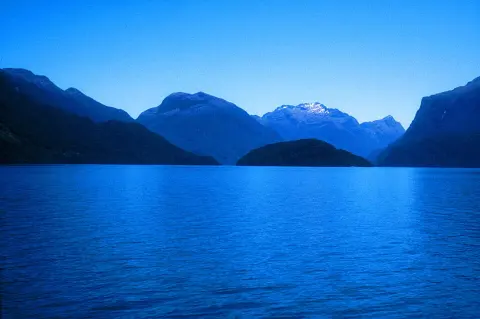
Largest: Fiordland National Park · Kahurangi National Park · Mount Aspiring National Park
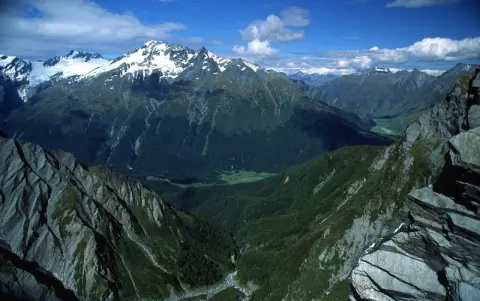
Currency · 26 October 2026
New Zealand dollar exchange rates today
New Zealand uses the New Zealand dollar (NZD, $). One US dollar buys 1.7538 NZD; over the last 30 days the NZD has gained 0.7% against the dollar.
What other currencies cost in NZD
Currency converter
Daily reference rates from the open-source currency-api (CC0), 26 Oct 2026. Banks and exchange offices add a margin.
World rankings
Where New Zealand ranks
How New Zealand compares with the rest of the world — open any card for the full ranking.
Airports
Airports in New Zealand
320 airports and airfields — 4 large, 34 medium and 184 small, plus 94 heliports. 30 have scheduled passenger flights.
Borders
No land borders
New Zealand has no land borders with other countries. Coastline: 15,134 km.
Military
New Zealand armed forces
New Zealand ranks #103 of 145 in the Global Firepower military strength ranking, with a defence budget of $2.9 billion (2025).
People
Population & society
Religion
Largest cities: Auckland (1.7 million), Wellington (422,000)
Economy
Economy
Main industries
agriculture, forestry, fishing, logs and wood articles, manufacturing, mining, construction, financial services, real estate services, tourism
Export partners
China 28%, USA 12%, Australia 12%, Japan 6%, S. Korea 3% (2023)
Top exports
milk, wood, beef, butter, sheep and goat meat (2023)
Travel tools
Handy before every trip to New Zealand
Next public holiday
Christmas Day — Friday, 25 December 2026. Then Boxing Day (28 Dec).
New Zealand passport
Ranked #38: 115 countries visa-free, 40 with visa on arrival, 7 with an eTA and 21 with an eVisa.
New Zealand passport photo
Exact size, head position and background for New Zealand's passport and visa photos — make one free with AI checks.
Calling New Zealand
Dial +64 before the local number. Internet domain .nz.
Climate footprint
32.5 million tonnes of CO₂ in 2024 — 6.23 t per person.
Entry requirements
Visa rules for every passport visiting New Zealand: visa-free stays, eVisas, visas on arrival and documents to bring.
News
Latest travel news about New Zealand

Rwanda courts Asian private wealth for Grand Prix, Bugesera airport and hotels
Raffles Family Office will market Rwandan projects — including Bugesera International Airport, hotels and Formula One infrastructure — to wealthy Asi…
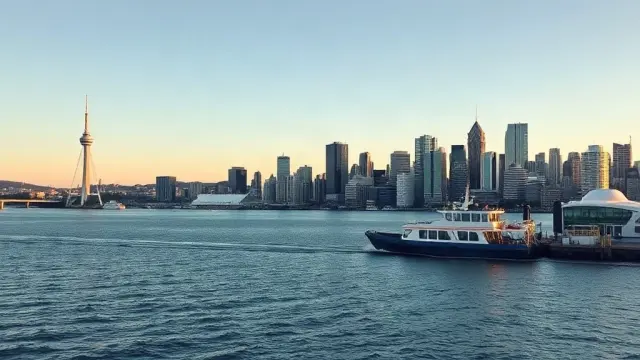
New Zealand Opens New Work Visa Routes for Indians Under Trade Deal
The India-New Zealand Free Trade Agreement took effect on 20 October 2026, creating two new temporary work visa categories for Indian citizens, longe…
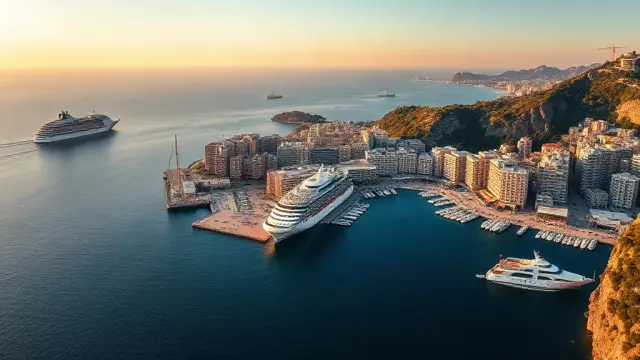
Monaco Passport Holders Among 82 Nationalities Listed for UK ETA
The United Kingdom has published a list of 82 countries and territories whose citizens can apply for an Electronic Travel Authorisation (ETA) instead…
Frequently asked questions about New Zealand
What do I need to travel to New Zealand?
How long must my passport be valid for New Zealand?
Where is New Zealand?
What is New Zealand known for?
What is the capital of New Zealand?
What language is spoken in New Zealand?
What currency does New Zealand use?
What is the calling code of New Zealand?
Does New Zealand have land borders?
How strong is the New Zealand passport?
What is the speed limit in New Zealand?
Is New Zealand safe to visit?
When is the best time to visit New Zealand?
What plug type does New Zealand use?
How many airports does New Zealand have?
Sources: CIA World Factbook (public domain); World Bank Open Data (CC BY 4.0); names, languages and currencies: mledoze/countries (ODbL); flag: flag-icons (MIT); coat of arms: Wikimedia Commons (file page); exchange rates: Daily reference rates from the open-source currency-api (CC0); airports: OurAirports.