
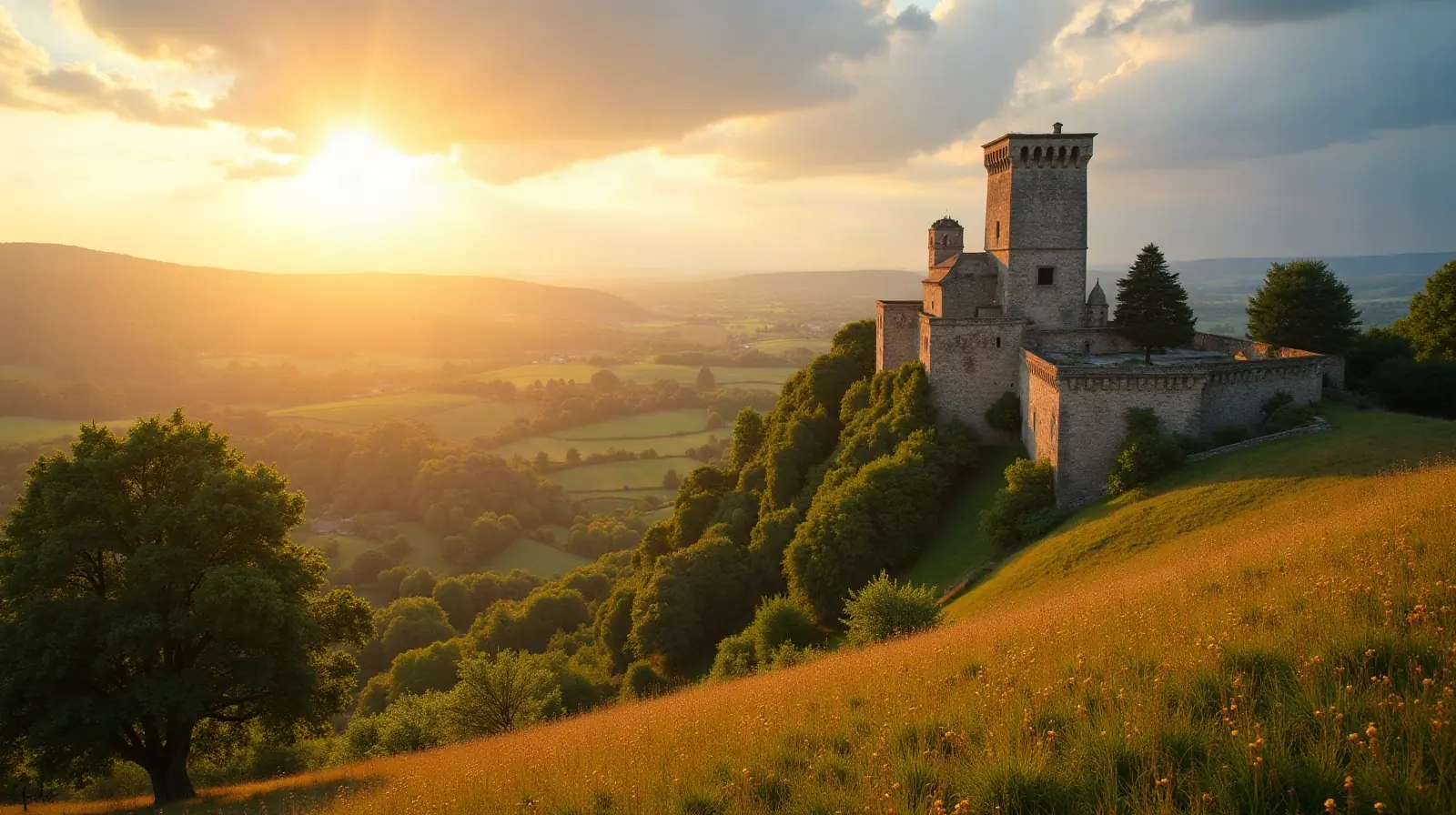
Western Europe · UN member


France: Travel Guide & Requirements
French Republic
France is a country in Western Europe with its capital in Paris. It has a population of 68.7 million (#23 in the world) and covers 643,801 km². The official language is French. The currency is the Euro (EUR, €).
Where is France? Map of France
metropolitan France: Western Europe, bordering the Bay of Biscay and English Channel, between Belgium and Spain, southeast of the UK; bordering the Mediterranean Sea, between Italy and Spain French Guiana: Northern South America, bordering the North Atlantic Ocean, between Brazil and Suriname Guadeloupe: Caribbean, islands between the Caribbean Sea and the North Atlantic Ocean, southeast of Puerto Rico Martinique: Caribbean, island between the Caribbean Sea and North Atlantic Ocean, north of Tri.
- Region
- Western Europe
- Coordinates
- 46° N, 2° E
- Neighbours
- 8 — see list
- Coastline
- 4,853 km
- France
- Neighbours
- Capital
- Largest cities
Map of France showing Paris (capital) and the largest cities: Marseille, Lyon, Toulouse, Nice, Nantes, Strasbourg, Bordeaux and Montpellier.
Travel requirements
What you need to travel to France
- Passport
Service-Public says a foreigner must have a passport issued less than 10 years ago and valid for at least 3 months beyond the planned date of departure.
- Visa or eTA
Depends on your passport: of 198 passports, 93 need no visa, 105 need a visa from an embassy. Check yours or see France entry requirements for every passport.
- Return or onward ticket
No official requirement. Under the Schengen Borders Code (Annex I), the supporting documents for journeys for tourism or private reasons include, as regards return, a return or round-trip ticket.
- Proof of funds
Service-Public says a foreigner must have sufficient resources, and that the level required per day of stay in France depends on the proof of accommodation: €32.50 with an attestation d'accueil (host certificate), €65 w…
- Travel insurance
Service-Public lists, among the conditions a foreigner must all meet when crossing the border, insurance covering medical and hospital costs for care you might receive in France, with minimum cover of €30,000.
- Arrival card
The UK government says that when you travel into the Schengen area for short stays you may need to register biometric details such as fingerprints and a photo, that on your first visit you may be asked to register at a …
- Customs allowance
Your Europe (EU) says that if you plan to enter or leave the EU with €10,000 in cash (or its equivalent in other currencies), you must declare it to the customs authorities in the EU country you are entering or leaving.
- Travel advice
Some caution needed — US and UK advice.
Entry rules: TravelRequirements.info — Entry Requirements Dataset (CC BY 4.0), each rule cited to an official government source. Always confirm with the airline and the official source before you travel.
Before you go
10 things to know before you travel to France
- Safety: France is generally safe for travellers, but some caution is needed: the US State Department rates France Level 2 (“Exercise Increased Caution”), and the UK Foreign Office has no warnings against travel there.
- Best time to go: July to August — when daytime highs in Paris are around 25°C.
- Money: the Euro (EUR) — 1 US dollar is about 0.8911 EUR.
- Plugs: type C and E, 230 V, 50 Hz — standard 220–240 V: devices from the US or Japan (110–120 V) need a converter unless they are dual voltage (100–240 V).
- Emergency numbers: Police 17, Ambulance 112 / 15, Fire 112 / 18.
- Language: French is official.
- Driving: on the right — speed limits are 50 km/h in built-up areas, 80 km/h outside built-up areas, 110 km/h on expressways and 130 km/h on motorways.
- Time zone: UTC+1 in Paris.
- Capital: Paris. About 68.7 million people live in France.
- Outdoors: 13 national parks and 333 ski areas.
Key facts
France at a glance
Languages spoken: French (official) 100%, declining regional dialects and languages (Provençal, Breton, Alsatian, Corsican, Catalan, Basque, Flemish, Occitan, Picard)
Geography & history
About France
France today is one of the most modern countries in the world and is a leader among European nations. It plays an influential global role as a permanent member of the United Nations Security Council, NATO, the G-7, the G-20, the EU, and other multilateral organizations. France rejoined NATO's integrated military command structure in 2009, reversing then President Charles DE GAULLE's 1966 decision to withdraw French forces from NATO. Since 1958, it has constructed a hybrid presidential-parliamentary governing system resistant to the instabilities experienced in earlier, more purely parliamentary administrations. In recent decades, its reconciliation and cooperation with Germany have proved c…
Read the full history
France today is one of the most modern countries in the world and is a leader among European nations. It plays an influential global role as a permanent member of the United Nations Security Council, NATO, the G-7, the G-20, the EU, and other multilateral organizations. France rejoined NATO's integrated military command structure in 2009, reversing then President Charles DE GAULLE's 1966 decision to withdraw French forces from NATO. Since 1958, it has constructed a hybrid presidential-parliamentary governing system resistant to the instabilities experienced in earlier, more purely parliamentary administrations. In recent decades, its reconciliation and cooperation with Germany have proved central to the economic integration of Europe, including the introduction of a common currency, the euro, in January 1999. In the early 21st century, five French overseas entities -- French Guiana, Guadeloupe, Martinique, Mayotte, and Reunion -- became French regions and were made part of France proper.
Location
metropolitan France: Western Europe, bordering the Bay of Biscay and English Channel, between Belgium and Spain, southeast of the UK; bordering the Mediterranean Sea, between Italy and Spain French Guiana: Northern South America, bordering the North Atlantic …
Climate
metropolitan France: generally cool winters and mild summers, but mild winters and hot summers along the Mediterranean; occasional strong, cold, dry, north-to-northwesterly wind known as the mistral
Terrain
metropolitan France: mostly flat plains or gently rolling hills in north and west; remainder is mountainous, especially Pyrenees in south, Alps in east French Guiana: low-lying coastal plains rising to hills and small mountains Guadeloupe: Basse-Terre is volc…
Highest point
Mont Blanc 4,810
Natural resources
metropolitan France: coal, iron ore, bauxite, zinc, uranium, antimony, arsenic, potash, feldspar, fluorspar, gypsum, timber, arable land, fish; French Guiana: gold deposits, petroleum, kaolin, niobium, tantalum, clay
Natural hazards
metropolitan France: flooding; avalanches; midwinter windstorms; drought; forest fires in south overseas departments: hurricanes (cyclones); flooding volcanism: Montagne Pelée (1,394 m) on the island of Martinique in the Caribbean is the most active volcano o…
National symbols
Gallic rooster, fleur-de-lis, Marianne (female personification of the country)
Driving
Speed limits & road rules in France
The default speed limits in France are 50 km/h in built-up areas, 80 km/h outside built-up areas, 110 km/h on expressways and 130 km/h on motorways. The legal alcohol limit for drivers is 0.5‰. Posted signs always take priority over these defaults.
- 2020 km/hResidential zonesLiving streets & residential areas
- 5050 km/hBuilt-up areasTowns and cities
- 8080 km/hOutside built-up areasCountry roads
- 110110 km/hExpresswaysDual carriageways & expressways
- 130130 km/hMotorwaysMotorways / freeways
- International Driving PermitRecognised: 1968 Vienna, 1949 Geneva, 1926 ParisCarry the IDP together with your national licence
- Driving sideDrive on the rightOvertake on the left
- Alcohol limit0.5‰ blood alcohol (0.05% BAC)0.2‰ for young / novice drivers
- Seat beltsRequired by law
- Child seatsRequired by law
- Motorcycle helmetsRequired for riders
- Road deaths (2021)4.7 per 100,000 peopleSafer than most countries (median 12.4)
Speed limits: OpenStreetMap wiki — Default speed limits (CC BY-SA 2.0). Road-safety laws: WHO Global Health Observatory. Compare speed limits and alcohol limits by country. Defaults for cars; local signs, weather and vehicle type can lower them.
Safety
Is France safe to visit?
France is generally safe for travellers, but some caution is needed: the US State Department rates France Level 2 (“Exercise Increased Caution”), and the UK Foreign Office has no warnings against travel there.
 US State Department
 UK Foreign Office (FCDO)
Latest update: Updated information about demonstrations (‘Warnings and insurance’ page).
Updated 22 Oct 2026 · Full travel advice
Sources: US Department of State travel advisories (public domain) and UK FCDO foreign travel advice (contains public sector information licensed under the Open Government Licence v3.0). Checked daily. Advice can change quickly — always read the official page before you travel.
Weather
Best time to visit France
The best time to visit France is July to August, when daytime highs in Paris are around 25°C. June and September are also a good time to go. July is the warmest month (25°C by day), February the coldest (-0°C at night), and December the wettest with about 69 mm of rain.
- Jan6°C0°C
- Feb7°C-0°C
- Mar12°C2°C
- Apr16°C5°C
- May19°C8°C
- Jun23°C12°C
- Jul25°C14°C
- Aug25°C13°C
- Sep21°C10°C
- Oct16°C7°C
- Nov10°C4°C
- Dec6°C1°C
Best time Good Less ideal
Before you go
Plugs, voltage & emergency numbers in France
Plugs & sockets
230 V, 50 Hz · Standard 220–240 V: devices from the US or Japan (110–120 V) need a converter unless they are dual voltage (100–240 V).
Sources: Wikipedia — Mains electricity by country and List of emergency telephone numbers (CC BY-SA 4.0).
Ski resorts
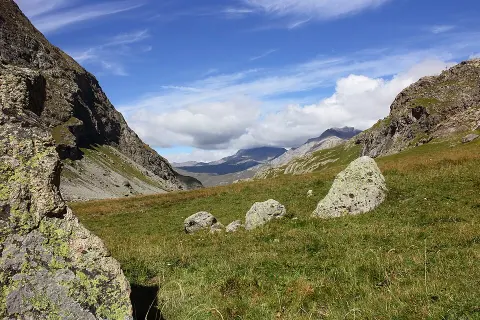
333 ski resorts in France
- 8,988 km of slopes
- 3,851 lifts
- up to 3,543 m
Biggest: Les Trois Vallées · Les Portes du Soleil · Paradiski
National parks
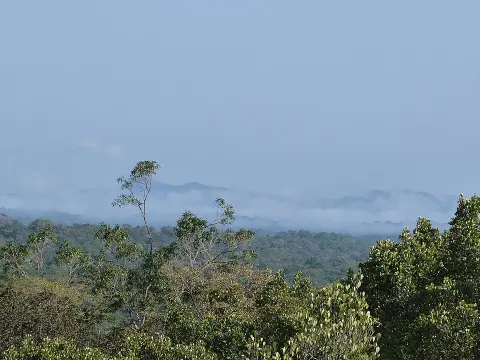
13 national parks in France
- 26,096 km² protected
- oldest from 1963
Largest: Guiana Amazonian Park · Réunion National Park · Écrins National Park

Currency · 26 October 2026
Euro exchange rates today
France uses the Euro (EUR, €). One US dollar buys 0.8911 EUR; over the last 30 days the EUR has lost 1.5% against the dollar.
What other currencies cost in EUR
Currency converter
Daily reference rates from the open-source currency-api (CC0), 26 Oct 2026. Banks and exchange offices add a margin.
World rankings
Where France ranks
How France compares with the rest of the world — open any card for the full ranking.
Airports
Airports in France
1,672 airports and airfields — 18 large, 117 medium and 1053 small, plus 465 heliports. 51 have scheduled passenger flights.
Borders
Neighbouring countries
France borders 8 countries along 3,956 km of land borders. Coastline: 4,853 km.


Military
French armed forces
France ranks #9 of 145 in the Global Firepower military strength ranking, with a defence budget of $68.0 billion (2025).
People
Population & society
Religion
Largest cities: Paris (11.2 million), Lyon (1.8 million), Marseille-Aix-en-Provence (1.6 million), Lille (1.1 million), Toulouse (1.1 million)
Economy
Economy
Main industries
machinery, chemicals, automobiles, metallurgy, aircraft, electronics, textiles, food processing, tourism
Export partners
Germany 11%, Italy 9%, USA 8%, Belgium 8%, Spain 7% (2023)
Top exports
aircraft, cars, packaged medicine, gas turbines, vehicle parts/accessories (2023)
Travel tools
Handy before every trip to France
Next public holiday
All Saints' Day — Sunday, 1 November 2026. Then Armistice Day (11 Nov).

French passport
Ranked #3: 126 countries visa-free, 31 with visa on arrival, 9 with an eTA and 18 with an eVisa.
French passport photo
Exact size, head position and background for France's passport and visa photos — make one free with AI checks.
Calling France
Dial +33 before the local number. Internet domain .fr.
Climate footprint
264.2 million tonnes of CO₂ in 2024 — 3.97 t per person.
Entry requirements
Visa rules for every passport visiting France: visa-free stays, eVisas, visas on arrival and documents to bring.
News
Latest travel news about France

Russian water polo team plans camps in visa-free Serbia and Montenegro
Russia's men's water polo coach says his squad can travel visa-free only to Serbia and Montenegro, while Hungary, Italy, Spain, France and the Nether…
South Koreans Face the Highest U.S. Visitor Visa Refusal Rate Among Allies
One in four South Korean applications for U.S. B1/B2 visitor visas was refused in 2025, a rate of 24.73% that is higher than those of Japan, Germany,…
Thailand's Koh Phangan panel urges visa revocation for Israeli visitor
A Koh Phangan committee has recommended revoking the visa of a 33-year-old Israeli woman after complaints about her conduct toward hotel staff and to…
Frequently asked questions about France
What do I need to travel to France?
How long must my passport be valid for France?
Where is France?
What is France known for?
What is the capital of France?
What language is spoken in France?
What currency does France use?
What is the calling code of France?
Which countries border France?
How strong is the French passport?
What is the speed limit in France?
Is France safe to visit?
When is the best time to visit France?
What plug type does France use?
How many airports does France have?
Sources: CIA World Factbook (public domain); World Bank Open Data (CC BY 4.0); names, languages and currencies: mledoze/countries (ODbL); flag: flag-icons (MIT); coat of arms: Wikimedia Commons (file page); exchange rates: Daily reference rates from the open-source currency-api (CC0); airports: OurAirports.