
South America · UN member

Venezuela: Travel Guide & Requirements
Bolivarian Republic of Venezuela
Venezuela is a country in South America with its capital in Caracas. It has a population of 28.5 million (#53 in the world) and covers 912,050 km². The official language is Spanish. The currency is the Venezuelan bolívar soberano (VES, Bs.S.).
Where is Venezuela? Map of Venezuela
Northern South America, bordering the Caribbean Sea and the North Atlantic Ocean, between Colombia and Guyana.
- Region
- South America
- Coordinates
- 8° N, 66° W
- Neighbours
- 3 — see list
- Coastline
- 2,800 km
- Venezuela
- Neighbours
- Capital
- Largest cities
Map of Venezuela showing Caracas (capital) and the largest cities: Maracaibo, Valencia, Barquisimeto, Ciudad Guayana, Barcelona, Maturín, Maracay and Ciudad Bolívar.
Travel requirements
What you need to travel to Venezuela
- Passport
The UK government says your passport must have an expiry date at least 6 months after the date you plan to leave Venezuela.
- Visa or eTA
Depends on your passport: of 198 passports, 74 need no visa, 2 need an eVisa, 122 need a visa from an embassy. Check yours or see Venezuela entry requirements for every passport.
- Return or onward ticket
The UK government tells British visitors that if they arrive by air they can stay up to 90 days visa-free on a tourist card issued on arrival, and must show their return or onward travel ticket.
- Proof of funds
Venezuela's Foreign Ministry lists proof of economic solvency (a bank statement) as required ("obligatorio") for a tourist visa application; no official source we could read states an amount.
- Travel insurance
No official requirement. The US State Department highly recommends buying travel insurance and says to make sure it includes medical evacuation coverage; it says the healthcare system is in a state of severe crisis, with critical shortages of m…
- Vaccinations
WHO's country list gives Venezuela's requirement as proof of yellow fever vaccination for travellers aged 1 year or over arriving from Brazil, and for travellers who transited more than 12 hours through an airport in Br…
- Customs allowance
The UK government says to declare cash or travellers cheques worth 10,000 US dollars or more when entering Venezuela, and that tax is payable on the excess.
- Travel advice
High risk — US and UK advice.
Entry rules: TravelRequirements.info — Entry Requirements Dataset (CC BY 4.0), each rule cited to an official government source. Always confirm with the airline and the official source before you travel.
Before you go
10 things to know before you travel to Venezuela
- Safety: Travel to Venezuela carries a high risk: the US State Department rates Venezuela Level 3 (“Reconsider Travel”), and the UK Foreign Office advises against all travel to parts of the country.
- Best time to go: December to March — when daytime highs in Caracas are around 26–28°C.
- Money: the Venezuelan bolívar soberano (VES) — 1 US dollar is about 881.9066 VES.
- Plugs: type A and B, 120 V, 60 Hz — low-voltage country: devices made only for 220–240 V need a voltage converter. Phone and laptop chargers (100–240 V) only need a plug adapter.
- Emergency numbers: Police 911 / 171, Ambulance 911 / 171, Fire 911 / 171.
- Language: Spanish is official.
- Driving: on the right — speed limits are 40 km/h in built-up areas, 70 km/h outside built-up areas and 90 km/h on motorways.
- Time zone: UTC-4 in Caracas.
- Capital: Caracas. About 28.5 million people live in Venezuela.
- Outdoors: 42 national parks.
Key facts
Venezuela at a glance
Languages spoken: Spanish (official) 98.2%, indigenous 1.3%, Portuguese 0.1%, other 0.4% (2023 est.)
Geography & history
About Venezuela
Venezuela was one of three countries that emerged from the collapse of Gran Colombia in 1830, the others being Ecuador and New Granada (Colombia). For most of the first half of the 20th century, military strongmen ruled Venezuela and promoted the oil industry while allowing some social reforms. Democratically elected governments largely held sway until 1999, but Hugo CHAVEZ, who was president from 1999 to 2013, exercised authoritarian control over other branches of government. This trend continued in 2018 when Nicolas MADURO claimed the presidency for his second term in an election boycotted by most opposition parties and widely viewed as fraudulent. The legislative elections in 2020 were a…
Read the full history
Venezuela was one of three countries that emerged from the collapse of Gran Colombia in 1830, the others being Ecuador and New Granada (Colombia). For most of the first half of the 20th century, military strongmen ruled Venezuela and promoted the oil industry while allowing some social reforms. Democratically elected governments largely held sway until 1999, but Hugo CHAVEZ, who was president from 1999 to 2013, exercised authoritarian control over other branches of government. This trend continued in 2018 when Nicolas MADURO claimed the presidency for his second term in an election boycotted by most opposition parties and widely viewed as fraudulent. The legislative elections in 2020 were also seen as fraudulent, and most opposition parties and many international actors consider the resulting National Assembly illegitimate. In 2021, many opposition parties broke a three-year election boycott and participated in mayoral and gubernatorial elections, despite flawed conditions. As a result, the opposition more than doubled its representation at the mayoral level and retained four of 23 governorships. The 2021 regional elections marked the first time since 2006 that the EU was allowed to send an electoral observation mission to Venezuela. MADURO has placed strong restrictions on free speech and the press. Since CHAVEZ, the ruling party has expanded the state's role in the economy through expropriations of major enterprises, strict currency exchange and price controls, and over-dependence on the petroleum industry for revenues. Years of economic mismanagement left Venezuela ill-prepared to weather the global drop in oil prices in 2014, sparking an economic decline that has resulted in reduced government social spending, shortages of basic goods, and high inflation. Worsened living conditions have prompted nearly 8 million Venezuelans to emigrate, mainly settling in nearby countries. The US imposed financial sanctions on MADURO and his representatives in 2017 and on sectors of the Venezuelan economy in 2018. Limited sanctions relief followed when the MADURO administration began making democratic and electoral concessions. The government's mismanagement and lack of investment in infrastructure has also weakened the country's energy sector. Caracas has relaxed some controls to mitigate the impact of its sustained economic crisis, such as allowing increased import flexibility for the private sector and the informal use of US dollars and other international currencies. Ongoing concerns include human rights abuses, rampant violent crime, political manipulation of the judicial and electoral systems, and corruption.
Location
Northern South America, bordering the Caribbean Sea and the North Atlantic Ocean, between Colombia and Guyana
Climate
tropical; hot, humid; more moderate in highlands
Terrain
Andes Mountains and Maracaibo Lowlands in northwest; central plains (llanos); Guiana Highlands in southeast
Highest point
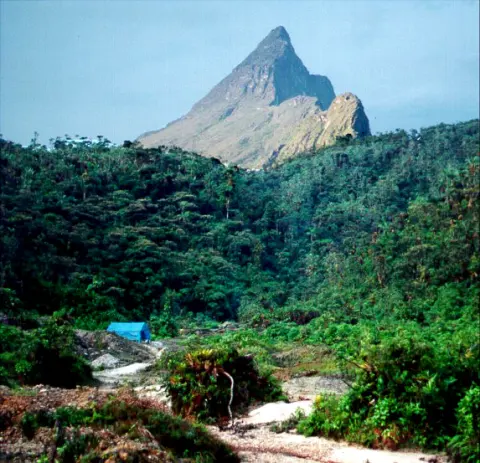
Pico Bolivar 4,978 m
Natural resources
petroleum, natural gas, iron ore, gold, bauxite, other minerals, hydropower, diamonds
Natural hazards
subject to floods, rockslides, mudslides; periodic droughts
National symbols
troupial (bird)
Driving
Speed limits & road rules in Venezuela
The default speed limits in Venezuela are 40 km/h in built-up areas, 70 km/h outside built-up areas and 90 km/h on motorways. Posted signs always take priority over these defaults.
- 4040 km/hBuilt-up areasTowns and cities
- 7070 km/hOutside built-up areasCountry roads
- 9090 km/hMotorwaysMotorways / freeways
- International Driving PermitRecognised: 1968 Vienna, 1949 GenevaCarry the IDP together with your national licence
- Driving sideDrive on the rightOvertake on the left
- Seat beltsRequired by law
- Child seatsRequired by law
- Motorcycle helmetsRequired for riders
- Road deaths (2021)13.2 per 100,000 peopleClose to the world median (12.4)
Speed limits: OpenStreetMap wiki — Default speed limits (CC BY-SA 2.0). Road-safety laws: WHO Global Health Observatory. Compare speed limits and alcohol limits by country. Defaults for cars; local signs, weather and vehicle type can lower them.
Safety
Is Venezuela safe to visit?
Travel to Venezuela carries a high risk: the US State Department rates Venezuela Level 3 (“Reconsider Travel”), and the UK Foreign Office advises against all travel to parts of the country.
 US State Department
 UK Foreign Office (FCDO)
Latest update: FCDO now advises against all travel to Amazonas state and to within 40km (25 miles) of the border with Colombia. FCDO continues to advise against all travel to the Orinoco Mining Arc (‘Arco Minero’) region to the south of the Orinoco river, and within 40km (25 miles) of the border Brazil and Guyana
Updated 14 Oct 2026 · Full travel advice
Sources: US Department of State travel advisories (public domain) and UK FCDO foreign travel advice (contains public sector information licensed under the Open Government Licence v3.0). Checked daily. Advice can change quickly — always read the official page before you travel.
Weather
Best time to visit Venezuela
The best time to visit Venezuela is December to March, when daytime highs in Caracas are around 26–28°C. April to November are also a good time to go. May is the warmest month (29°C by day), February the coldest (19°C at night), and August the wettest with about 120 mm of rain.
- Jan26°C19°C
- Feb27°C19°C
- Mar28°C19°C
- Apr28°C20°C
- May29°C21°C
- Jun28°C21°C
- Jul27°C21°C
- Aug28°C21°C
- Sep28°C22°C
- Oct28°C22°C
- Nov27°C21°C
- Dec27°C20°C
Best time Good Less ideal
Before you go
Plugs, voltage & emergency numbers in Venezuela
Plugs & sockets
120 V, 60 Hz · Low-voltage country: devices made only for 220–240 V need a voltage converter. Phone and laptop chargers (100–240 V) only need a plug adapter.
Sources: Wikipedia — Mains electricity by country and List of emergency telephone numbers (CC BY-SA 4.0).
National parks
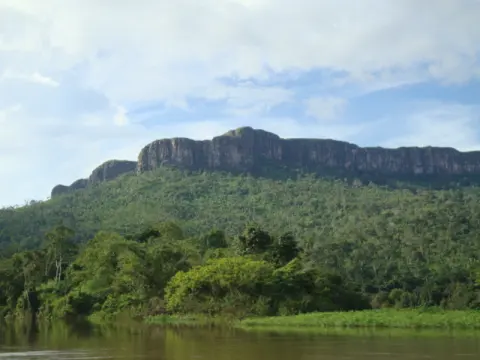
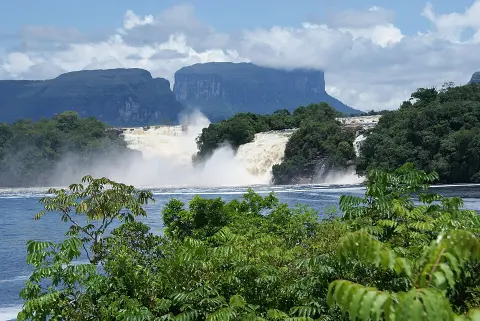
42 national parks in Venezuela
- 128,418 km² protected
- oldest from 1937
Largest: Parima-Tapirapecó National Park · Canaima National Park · Serranía La Neblina National Park
Currency · 26 October 2026
Venezuelan bolívar soberano exchange rates today
Venezuela uses the Venezuelan bolívar soberano (VES, Bs.S.). One US dollar buys 881.9066 VES; over the last 30 days the VES has lost 3.2% against the dollar.
What other currencies cost in VES
Currency converter
Daily reference rates from the open-source currency-api (CC0), 26 Oct 2026. Banks and exchange offices add a margin.
World rankings
Where Venezuela ranks
How Venezuela compares with the rest of the world — open any card for the full ranking.
Airports
Airports in Venezuela
840 airports and airfields — 7 large, 43 medium and 468 small, plus 322 heliports. 22 have scheduled passenger flights.
Borders
Neighbouring countries
Venezuela borders 3 countries along 5,267 km of land borders. Coastline: 2,800 km.


Military
Venezuelan armed forces
Venezuela ranks #52 of 145 in the Global Firepower military strength ranking.
People
Population & society
Religion
Largest cities: Caracas (3.0 million), Maracaibo (2.4 million), Valencia (2.0 million), Barquisimeto (1.3 million), Maracay (1.2 million)
Economy
Economy
Main industries
agricultural products, livestock, raw materials, machinery and equipment, transport equipment, construction materials, medical equipment, pharmaceuticals, chemicals, iron and steel products, crude oil and petroleum prod…
Export partners
USA 50%, China 10%, Spain 9%, Brazil 6%, Turkey 5% (2023)
Top exports
crude petroleum, petroleum coke, scrap iron, alcohols, fertilizers (2023)
Travel tools
Handy before every trip to Venezuela
Next public holiday
Christmas Eve — Thursday, 24 December 2026. Then Christmas Day (25 Dec).
Venezuelan passport
Ranked #91: 71 countries visa-free, 38 with visa on arrival, 3 with an eTA and 36 with an eVisa.
Venezuelan passport photo
Exact size, head position and background for Venezuela's passport and visa photos — make one free with AI checks.
Calling Venezuela
Dial +58 before the local number. Internet domain .ve.
Climate footprint
116.0 million tonnes of CO₂ in 2024 — 4.09 t per person.
Entry requirements
Visa rules for every passport visiting Venezuela: visa-free stays, eVisas, visas on arrival and documents to bring.
News
Latest travel news about Venezuela
Ecuadorean man detained in Utah after U.S. denies his visa application
An Ecuadorean man who entered the United States on a tourist visa was detained by ICE in Ogden, Utah, on 3 September 2026. Federal officials say his …
Yellow Fever Vaccination Advised for Travellers to Brazil From Age 9 Months
The US Centers for Disease Control and Prevention (CDC) recommends yellow fever vaccination for most travellers aged 9 months and older visiting at-r…
El Salvador TPS stays in effect past expiry as DHS weighs next move
El Salvador's Temporary Protected Status was due to expire in early September 2026 but remains in force while the U.S. Department of Homeland Securit…
Frequently asked questions about Venezuela
What do I need to travel to Venezuela?
How long must my passport be valid for Venezuela?
Where is Venezuela?
What is Venezuela known for?
What is the capital of Venezuela?
What language is spoken in Venezuela?
What currency does Venezuela use?
What is the calling code of Venezuela?
Which countries border Venezuela?
How strong is the Venezuelan passport?
What is the speed limit in Venezuela?
Is Venezuela safe to visit?
When is the best time to visit Venezuela?
What plug type does Venezuela use?
How many airports does Venezuela have?
Sources: CIA World Factbook (public domain); World Bank Open Data (CC BY 4.0); names, languages and currencies: mledoze/countries (ODbL); flag: flag-icons (MIT); coat of arms: Wikimedia Commons (file page); exchange rates: Daily reference rates from the open-source currency-api (CC0); airports: OurAirports.