
Central America · UN member

Panama: Travel Guide & Requirements
Republic of Panama · República de Panamá
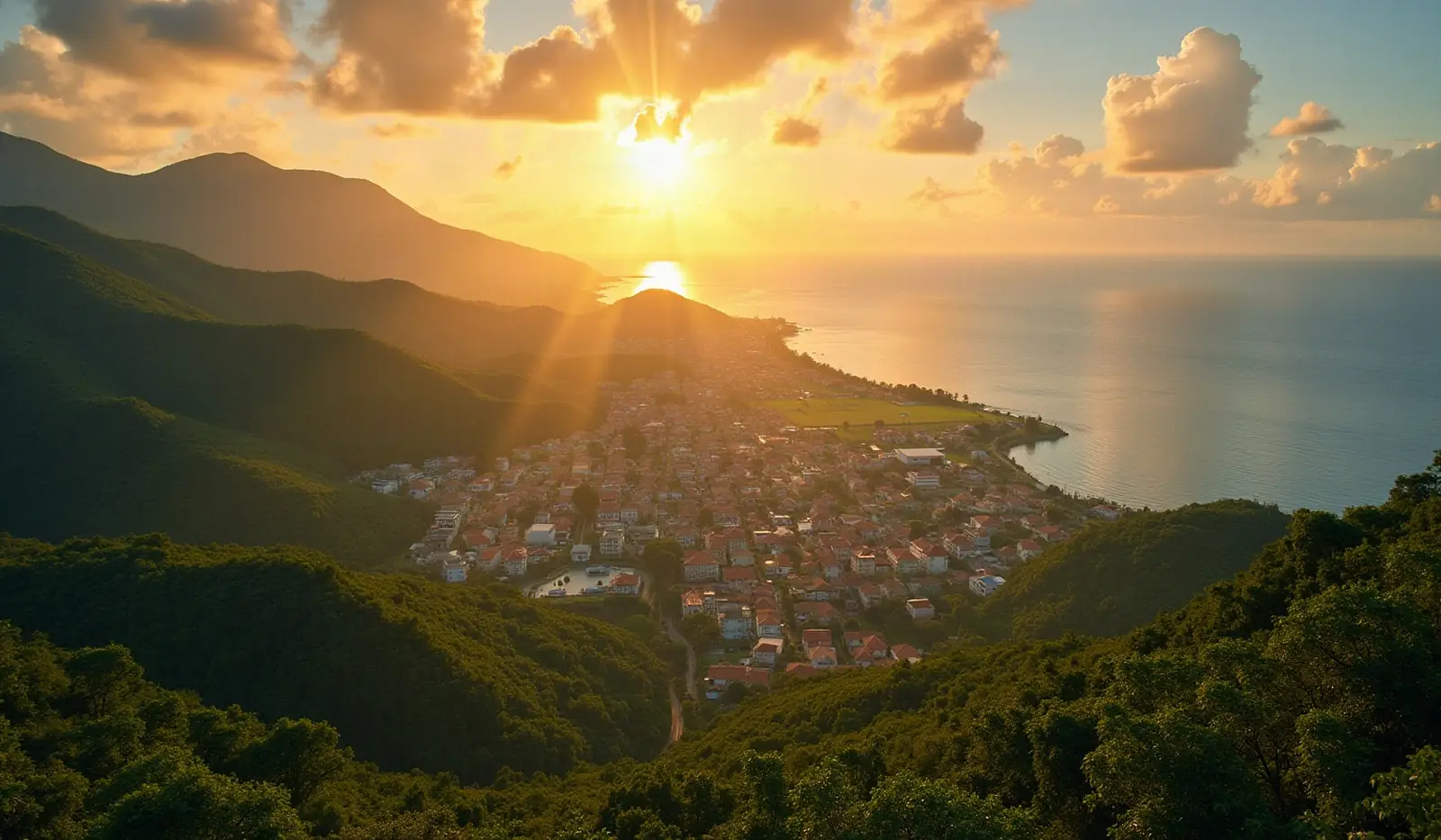
Panama is a country in Central America with its capital in Panama City. It has a population of 4.6 million (#128 in the world) and covers 75,420 km². The official language is Spanish. The currency is the Panamanian balboa (PAB, B/.).
Where is Panama? Map of Panama
Central America, bordering both the Caribbean Sea and the North Pacific Ocean, between Colombia and Costa Rica.
- Region
- Central America
- Coordinates
- 9° N, 80° W
- Neighbours
- 2 — see list
- Coastline
- 2,490 km
- Panama
- Neighbours
- Capital
- Largest cities
Map of Panama showing Panama City (capital) and the largest cities: David, Colón, Santiago de Veraguas, Changuinola and Penonomé.
Travel requirements
What you need to travel to Panama
- Passport
Panama's National Immigration Service lists a passport or travel document with a minimum of 3 months' validity among its entry requirements.
- Visa or eTA
Depends on your passport: of 198 passports, 115 need no visa, 83 need a visa from an embassy. Check yours or see Panama entry requirements for every passport.
- Return or onward ticket
Panama's National Immigration Service lists a confirmed reservation to leave the country within the established period among its entry requirements, and Article 43 of Decreto Ley 3 of 2008 requires a return ticket to th…
- Proof of funds
Panama's National Immigration Service says visitors must show proof of economic solvency consistent with the terms they declare for their stay and in no case less than B/.500.00; a child under 18 does not need to show i…
- Travel insurance
Travel insurance is not among the requirements that foreigners must meet to enter Panama under Article 43 of Decreto Ley 3 of 2008 ("los extranjeros deben cumplir los siguientes requisitos"), as the National Immigration…
- Vaccinations
WHO lists Panama as requiring proof of yellow fever vaccination from travellers aged 1 year or over arriving from countries with risk of yellow fever transmission.
- Arrival card
Panama's National Immigration Service lists among the entry requirements for foreigners (Decreto Ley 3 of 2008, art. 43) presenting the entry and exit card (Tarjeta de Ingreso y Egreso) supplied by the international tra…
- Customs allowance
Panama's traveller declaration (run by the National Customs Authority) asks whether you are carrying cash or monetary instruments, securities, objects, precious metals or a combination of these worth US$10,000.00 or mor…
- Travel advice
Some caution needed — US and UK advice.
Entry rules: TravelRequirements.info — Entry Requirements Dataset (CC BY 4.0), each rule cited to an official government source. Always confirm with the airline and the official source before you travel.
Before you go
10 things to know before you travel to Panama
- Safety: Panama is generally safe for travellers, but some caution is needed: the US State Department rates Panama Level 2 (“Exercise Increased Caution”), and the UK Foreign Office has no warnings against travel there.
- Best time to go: January to March — when daytime highs in Panama City are around 29–31°C.
- Money: the Panamanian balboa (PAB) — 1 US dollar is about 1.0000 PAB.
- Plugs: type A and B, 120 V, 60 Hz — low-voltage country: devices made only for 220–240 V need a voltage converter. Phone and laptop chargers (100–240 V) only need a plug adapter.
- Emergency numbers: Police 911, Ambulance 911, Fire 911.
- Language: Spanish is official; English is also spoken.
- Driving: on the right — speed limits are 40 km/h in built-up areas, 100 km/h outside built-up areas and 120 km/h on motorways.
- Time zone: UTC-5 in Panama City.
- Capital: Panama City. About 4.6 million people live in Panama.
- Outdoors: 12 national parks.
Key facts
Panama at a glance
Languages spoken: Spanish (official), Indigenous languages (including Ngabere (Guaymi), Buglere, Kuna, Embera, Wounaan, Naso (Teribe), and Bri Bri), Panamanian English Creole (a mixture of English and Spanish with elements of Ngabere, also known as Guari Guari and Colon Creole), English, Chinese (Yue and Hakka), Arabic, French Creole, other (Yiddish, Hebrew, Korean, Japanese)
Geography & history
About Panama
Explored and settled by the Spanish in the 16th century, Panama broke with Spain in 1821 and joined a union of Colombia, Ecuador, and Venezuela that was named the Republic of Gran Colombia. When the union dissolved in 1830, Panama remained part of Colombia. With US backing, Panama seceded from Colombia in 1903 and promptly signed a treaty with the US allowing for the construction of a canal and US sovereignty over a strip of land known as the Panama Canal Zone on either side of the structure. The US Army Corps of Engineers built the Panama Canal between 1904 and 1914. In 1977, an agreement was signed for the complete transfer of the Canal from the US to Panama by the end of the century. Cer…
Read the full history
Explored and settled by the Spanish in the 16th century, Panama broke with Spain in 1821 and joined a union of Colombia, Ecuador, and Venezuela that was named the Republic of Gran Colombia. When the union dissolved in 1830, Panama remained part of Colombia. With US backing, Panama seceded from Colombia in 1903 and promptly signed a treaty with the US allowing for the construction of a canal and US sovereignty over a strip of land known as the Panama Canal Zone on either side of the structure. The US Army Corps of Engineers built the Panama Canal between 1904 and 1914. In 1977, an agreement was signed for the complete transfer of the Canal from the US to Panama by the end of the century. Certain portions of the Zone and increasing responsibility over the Canal were turned over in the subsequent decades. With US help, Panamanian dictator Manuel NORIEGA was deposed in 1989. The entire Panama Canal, the area supporting the Canal, and remaining US military bases were transferred to Panama by the end of 1999. An ambitious expansion project to more than double the Canal's capacity by allowing for more Canal transits and larger ships was carried out between 2007 and 2016.
Location
Central America, bordering both the Caribbean Sea and the North Pacific Ocean, between Colombia and Costa Rica
Climate
tropical maritime; hot, humid, cloudy; prolonged rainy season (May to January), short dry season (January to May)
Terrain
interior mostly steep, rugged mountains with dissected, upland plains; coastal plains with rolling hills
Highest point
Volcan Baru 3,475 m
Natural resources
copper, mahogany forests, shrimp, hydropower
Natural hazards
occasional severe storms and forest fires in the Darien area
National symbols
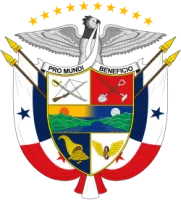
harpy eagle
Driving
Speed limits & road rules in Panama
The default speed limits in Panama are 40 km/h in built-up areas, 100 km/h outside built-up areas and 120 km/h on motorways. The legal alcohol limit for drivers is 0.5‰. Posted signs always take priority over these defaults.
- 4040 km/hBuilt-up areasTowns and cities
- 100100 km/hOutside built-up areasCountry roads
- 120120 km/hMotorwaysMotorways / freeways
- International Driving PermitNot a party to the IDP conventionsCheck with the embassy whether your licence is accepted
- Driving sideDrive on the rightOvertake on the left
- Alcohol limit0.5‰ blood alcohol (0.05% BAC)
- Seat beltsRequired by law
- Child seatsNo national child-restraint law
- Motorcycle helmetsRequired for riders
- Road deaths (2021)7.3 per 100,000 peopleSafer than most countries (median 12.4)
Speed limits: OpenStreetMap wiki — Default speed limits (CC BY-SA 2.0). Road-safety laws: WHO Global Health Observatory. Compare speed limits and alcohol limits by country. Defaults for cars; local signs, weather and vehicle type can lower them.
Safety
Is Panama safe to visit?
Panama is generally safe for travellers, but some caution is needed: the US State Department rates Panama Level 2 (“Exercise Increased Caution”), and the UK Foreign Office has no warnings against travel there.
 US State Department
 UK Foreign Office (FCDO)
Latest update: Information about a 7.6 earthquake in Panama (Warnings and insurance)
Updated 9 Oct 2026 · Full travel advice
Sources: US Department of State travel advisories (public domain) and UK FCDO foreign travel advice (contains public sector information licensed under the Open Government Licence v3.0). Checked daily. Advice can change quickly — always read the official page before you travel.
Weather
Best time to visit Panama
The best time to visit Panama is January to March, when daytime highs in Panama City are around 29–31°C. April and December are also a good time to go. April is the warmest month (31°C by day), February the coldest (24°C at night), and October the wettest with about 260 mm of rain.
- Jan29°C24°C
- Feb30°C24°C
- Mar31°C25°C
- Apr31°C25°C
- May30°C26°C
- Jun29°C26°C
- Jul29°C26°C
- Aug29°C26°C
- Sep29°C26°C
- Oct28°C25°C
- Nov28°C25°C
- Dec29°C25°C
Best time Good Less ideal
Before you go
Plugs, voltage & emergency numbers in Panama
Plugs & sockets
120 V, 60 Hz · Low-voltage country: devices made only for 220–240 V need a voltage converter. Phone and laptop chargers (100–240 V) only need a plug adapter.
Emergency numbers
Save the local numbers before you travel — 112 or 911 may not connect here. All countries →
Sources: Wikipedia — Mains electricity by country and List of emergency telephone numbers (CC BY-SA 4.0).
National parks
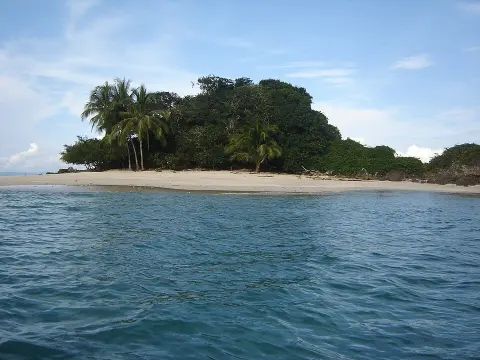
12 national parks in Panama
- 8,736 km² protected
- oldest from 1966
Largest: Darién National Park · Chagres National Park · Coiba
Currency · 26 October 2026
Panamanian balboa exchange rates today
Panama uses the Panamanian balboa (PAB, B/.). One US dollar buys 1.0000 PAB; over the last 30 days the PAB has gained 0.0% against the dollar.
What other currencies cost in PAB
Currency converter
Daily reference rates from the open-source currency-api (CC0), 26 Oct 2026. Banks and exchange offices add a margin.
World rankings
Where Panama ranks
How Panama compares with the rest of the world — open any card for the full ranking.
Airports
Airports in Panama
77 airports and airfields — 1 large, 7 medium and 68 small, plus 1 heliports. 13 have scheduled passenger flights.
Borders
Neighbouring countries
Panama borders 2 countries along 687 km of land borders. Coastline: 2,490 km.


Military
Panamanian armed forces
Panama ranks #135 of 145 in the Global Firepower military strength ranking, with a defence budget of $0 (2025).
People
Population & society
Religion
Largest cities: Panama City (2.0 million)
Economy
Economy
Main industries
construction, brewing, cement and other construction materials, sugar milling
Export partners
China 25%, Japan 10%, USA 6%, Thailand 5%, Costa Rica 5% (2023)
Top exports
copper ore, ships, refined petroleum, bananas, fish (2023)
Travel tools
Handy before every trip to Panama
Next public holiday
Separation Day — Tuesday, 3 November 2026. Then Flag Day (4 Nov).

Panamanian passport
Ranked #69: 88 countries visa-free, 33 with visa on arrival, 5 with an eTA and 36 with an eVisa.
Panamanian passport photo
Exact size, head position and background for Panama's passport and visa photos — make one free with AI checks.
Calling Panama
Dial +507 before the local number. Internet domain .pa.
Climate footprint
12.7 million tonnes of CO₂ in 2024 — 2.81 t per person.
Entry requirements
Visa rules for every passport visiting Panama: visa-free stays, eVisas, visas on arrival and documents to bring.
News
Latest travel news about Panama
Filings say Canada did not respond before ICE sent Afghan woman to Africa
An Afghan woman travelling to Toronto was detained by U.S. ICE and deported to the Central African Republic in June 2026. Legal filings say U.S. auth…
Grenadians gain year-long, multi-entry Saudi tourist eVisa access in 2026
Saudi Arabia's 2026 tourist eVisa is available to citizens of 66 countries, including Grenada, Canada and the United States. The one-year, multiple-e…
What F-1 students need to re-enter the U.S. after travelling abroad
F-1 students leaving the United States generally need a valid passport, a valid visa and a travel-endorsed Form I-20 to return, U.S. Immigration and …
Frequently asked questions about Panama
What do I need to travel to Panama?
How long must my passport be valid for Panama?
Where is Panama?
What is Panama known for?
What is the capital of Panama?
What language is spoken in Panama?
What currency does Panama use?
What is the calling code of Panama?
Which countries border Panama?
How strong is the Panamanian passport?
What is the speed limit in Panama?
Is Panama safe to visit?
When is the best time to visit Panama?
What plug type does Panama use?
How many airports does Panama have?
Sources: CIA World Factbook (public domain); World Bank Open Data (CC BY 4.0); names, languages and currencies: mledoze/countries (ODbL); flag: flag-icons (MIT); coat of arms: Wikimedia Commons (file page); exchange rates: Daily reference rates from the open-source currency-api (CC0); airports: OurAirports.