
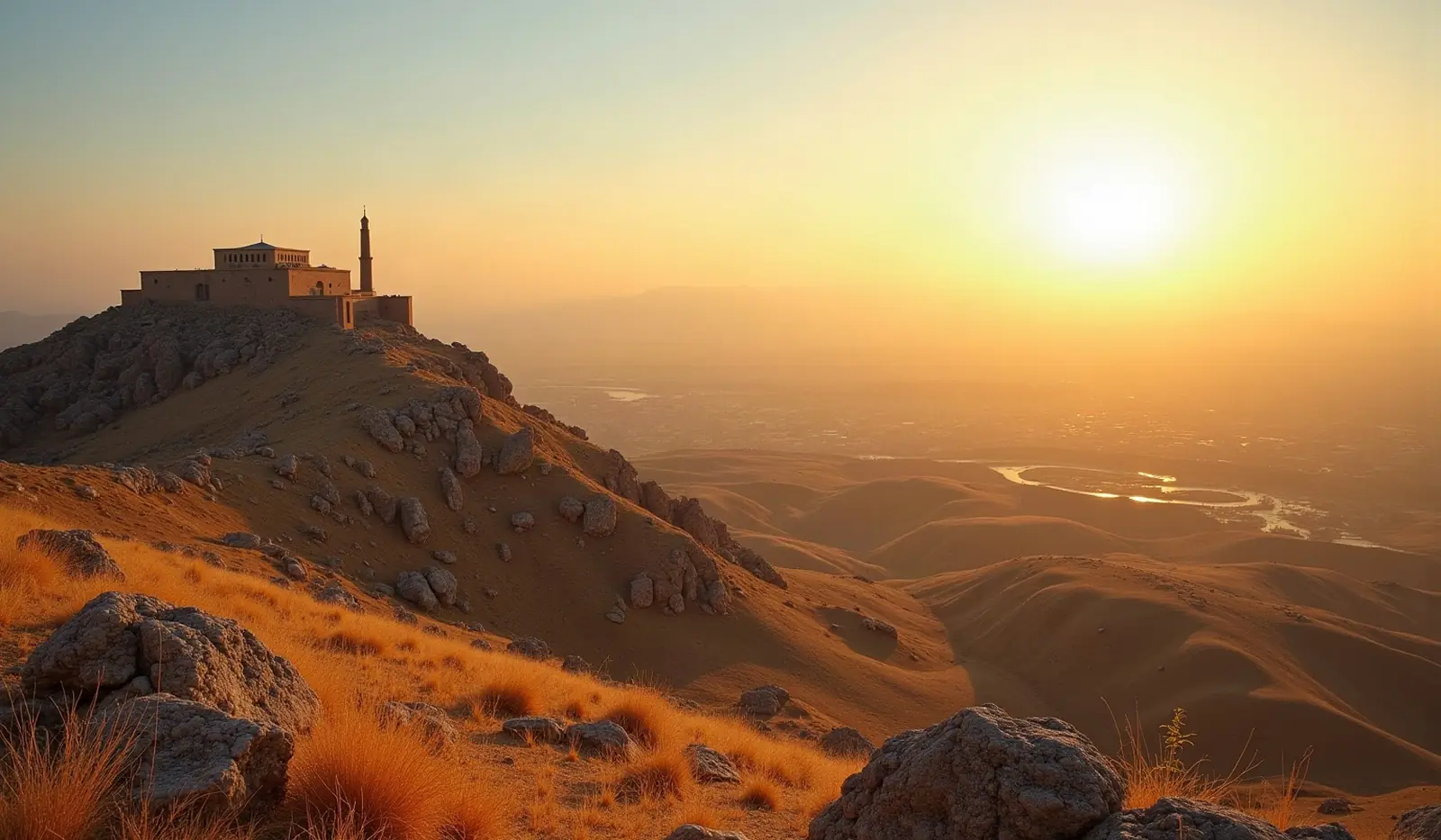
Western Asia · UN member


Syria: Travel Guide & Requirements
Syrian Arab Republic · الجمهورية العربية السورية
Syria is a country in Western Asia with its capital in Damascus. It has a population of 25.6 million (#57 in the world) and covers 187,437 km². The official language is Arabic. The currency is the Syrian pound (SYP, £).
Where is Syria? Map of Syria
Middle East, bordering the Mediterranean Sea, between Lebanon and Turkey.
- Region
- Western Asia
- Coordinates
- 35° N, 38° E
- Neighbours
- 5 — see list
- Coastline
- 193 km
- Syria
- Neighbours
- Capital
- Largest cities
Map of Syria showing Damascus (capital) and the largest cities: Aleppo, Homs, Latakia, Ar Raqqah, Ḩamāh, Ţarţūs, Al Ḩasakah and Deir ez-Zor.
Travel requirements
What you need to travel to Syria
- Passport
The UK government says that to enter Syria your passport must have an expiry date at least 3 months after the date you arrive.
- Visa or eTA
Depends on your passport: of 198 passports, 9 need no visa, 144 need an eVisa, 13 get a visa on arrival, 30 need a visa from an embassy. Check yours or see Syria entry requirements for every passport.
- Return or onward ticket
No official requirement.
- Proof of funds
No official requirement. The UK Foreign Office says there are restrictions on financial transactions in Syria and limits on cash withdrawals in the country.
- Travel insurance
No official requirement. The UK Foreign Office warns that travel insurance could be invalidated if you travel against its advice.
- Customs allowance
No official requirement. The UK Foreign Office says only that you must declare anything that may be prohibited or subject to tax or duty.
- Travel advice
Avoid travel — US and UK advice.
Entry rules: TravelRequirements.info — Entry Requirements Dataset (CC BY 4.0), each rule cited to an official government source. Always confirm with the airline and the official source before you travel.
Before you go
10 things to know before you travel to Syria
- Safety: Governments advise against travel to Syria: the US State Department rates Syria Level 4 (“Do Not Travel”), and the UK Foreign Office advises against all travel to the whole country.
- Best time to go: May and October — when daytime highs in Damascus are around 25–27°C.
- Money: the Syrian pound (SYP) — 1 US dollar is about 13,003.1 SYP.
- Plugs: type C, E and L, 220 V, 50 Hz — standard 220–240 V: devices from the US or Japan (110–120 V) need a converter unless they are dual voltage (100–240 V).
- Emergency numbers: Police 112, Ambulance 110, Fire 113.
- Language: Arabic is official; English is also spoken.
- Driving: on the right.
- Time zone: UTC+3 in Damascus.
- Capital: Damascus. About 25.6 million people live in Syria.
- Outdoors: 1 national park.
Key facts
Syria at a glance
Languages spoken: Arabic (official), Kurdish, Armenian, Aramaic, Circassian, French, English
Geography & history
About Syria
After World War I, France acquired a mandate over the northern portion of the former Ottoman Empire province of Syria. The French administered the area until granting it independence in 1946. The new country lacked political stability and experienced a series of military coups. Syria united with Egypt in 1958 to form the United Arab Republic. In 1961, the two entities separated, and the Syrian Arab Republic was reestablished. In the 1967 Arab-Israeli War, Syria lost control of the Golan Heights region to Israel. During the 1990s, Syria and Israel held occasional, albeit unsuccessful, peace talks over its return. In 1970, Hafiz al-ASAD, a member of the socialist Ba'ath Party and the minority…
Read the full history
After World War I, France acquired a mandate over the northern portion of the former Ottoman Empire province of Syria. The French administered the area until granting it independence in 1946. The new country lacked political stability and experienced a series of military coups. Syria united with Egypt in 1958 to form the United Arab Republic. In 1961, the two entities separated, and the Syrian Arab Republic was reestablished. In the 1967 Arab-Israeli War, Syria lost control of the Golan Heights region to Israel. During the 1990s, Syria and Israel held occasional, albeit unsuccessful, peace talks over its return. In 1970, Hafiz al-ASAD, a member of the socialist Ba'ath Party and the minority Alawi sect, seized power in a bloodless coup and brought political stability to the country. Following the death of al-ASAD, his son, Bashar al-ASAD, was approved as president by popular referendum in 2000. Syrian troops that were stationed in Lebanon since 1976 in an ostensible peacekeeping role were withdrawn in 2005. During the 2006 conflict between Israel and Hizballah, Syria placed its military forces on alert but did not intervene directly on behalf of its ally Hizballah. In 2007, Bashar al-ASAD's second term as president was again approved in a referendum. In the wake of major uprisings elsewhere in the region, antigovernment protests broke out in the southern province of Dar'a in 2011. Protesters called for the legalization of political parties, the removal of corrupt local officials, and the repeal of the restrictive Emergency Law allowing arrests without charge. Demonstrations and violent unrest spread across Syria, and the government responded with concessions, but also with military force and detentions that led to extended clashes and eventually civil war. International pressure on the Syrian Government intensified after 2011, as the Arab League, the EU, Turkey, and the US expanded economic sanctions against the ASAD regime and those entities that supported it. In 2012, more than 130 countries recognized the Syrian National Coalition as the sole legitimate representative of the Syrian people. In 2015, Russia launched a military intervention on behalf of the ASAD regime, and domestic and foreign-government-aligned forces recaptured swaths of territory from opposition forces. With foreign support, the regime continued to periodically regain opposition-held territory until 2020, when Turkish firepower halted a regime advance and forced a stalemate between regime and opposition forces. The government lacks territorial control over much of the northeastern part of the country, which the predominantly Kurdish Syrian Democratic Forces (SDF) hold, and a smaller area dominated by Turkey. Since 2016, Turkey has conducted three large-scale military operations to capture territory along Syria's northern border. Some opposition forces organized under the Turkish-backed Syrian National Army and Turkish forces have maintained control of northwestern Syria along the Turkish border with the Afrin area of Aleppo Province since 2018. The violent extremist organization Hay’at Tahrir al-Sham (formerly the Nusrah Front) emerged in 2017 as the predominant opposition force in Idlib Province, and still dominates an area also hosting Turkish forces. Negotiations have failed to produce a resolution to the conflict, and the UN estimated in 2022 that at least 306,000 people have died during the civil war. Approximately 6.7 million Syrians were internally displaced as of 2022, and 14.6 million people were in need of humanitarian assistance across the country. An additional 5.6 million Syrians were registered refugees in Turkey, Jordan, Iraq, Egypt, and North Africa. The conflict in Syria remains one of the two largest displacement crises worldwide (the other is the full-scale invasion of Ukraine). On 8 December 2024, Syrian Islamist rebels captured the capital city of Damascus and overthrew President Bashar al-ASAD. The former president and his family fled to Moscow, where they were granted political asylum. The al-ASAD regime had ruled Syria for over 50 years.
Location
Middle East, bordering the Mediterranean Sea, between Lebanon and Turkey
Climate
mostly desert; hot, dry, sunny summers (June to August) and mild, rainy winters (December to February) along coast; cold weather with snow or sleet periodically in Damascus
Terrain
primarily semiarid and desert plateau; narrow coastal plain; mountains in west
Highest point
Mount Hermon (Jabal a-Shayk) 2,814 m
Natural resources
petroleum, phosphates, chrome and manganese ores, asphalt, iron ore, rock salt, marble, gypsum, hydropower
Natural hazards
dust storms, sandstorms volcanism: Syria's two historically active volcanoes, Es Safa and an unnamed volcano near the Turkish border, have not erupted in centuries
National symbols
northern bald ibis
Safety
Is Syria safe to visit?
Governments advise against travel to Syria: the US State Department rates Syria Level 4 (“Do Not Travel”), and the UK Foreign Office advises against all travel to the whole country.
 US State Department
 UK Foreign Office (FCDO)
Latest update: This travel advice has been reviewed for accuracy with changes made throughout, including terrorism in Syria, security situation, journalists in Syria and crime ('Safety and security' page).
Updated 2 Sep 2026 · Full travel advice
Sources: US Department of State travel advisories (public domain) and UK FCDO foreign travel advice (contains public sector information licensed under the Open Government Licence v3.0). Checked daily. Advice can change quickly — always read the official page before you travel.
Weather
Best time to visit Syria
The best time to visit Syria is May and October, when daytime highs in Damascus are around 25–27°C. April is also a good time to go. July is the warmest month (35°C by day), January the coldest (0°C at night), and January the wettest with about 69 mm of rain.
- Jan10°C0°C
- Feb12°C1°C
- Mar16°C3°C
- Apr21°C7°C
- May27°C11°C
- Jun32°C15°C
- Jul35°C18°C
- Aug35°C18°C
- Sep31°C16°C
- Oct25°C12°C
- Nov17°C6°C
- Dec12°C2°C
Best time Good Less ideal
Before you go
Plugs, voltage & emergency numbers in Syria
Plugs & sockets
- Type C (Europlug)two round pins
- Type Etwo round pins and a hole for the socket's earth pin
- Type Lthree round pins in a row
220 V, 50 Hz · Standard 220–240 V: devices from the US or Japan (110–120 V) need a converter unless they are dual voltage (100–240 V).
Emergency numbers
112 works from any mobile phone, even without a SIM card in most networks. All countries →
Sources: Wikipedia — Mains electricity by country and List of emergency telephone numbers (CC BY-SA 4.0).
Currency · 26 October 2026
Syrian pound exchange rates today
Syria uses the Syrian pound (SYP, £). One US dollar buys 13,003.1 SYP; over the last 30 days the SYP has lost 0.0% against the dollar.
What other currencies cost in SYP
Currency converter
Daily reference rates from the open-source currency-api (CC0), 26 Oct 2026. Banks and exchange offices add a margin.
World rankings
Where Syria ranks
How Syria compares with the rest of the world — open any card for the full ranking.
Airports
Airports in Syria
56 airports and airfields — 2 large, 8 medium and 34 small, plus 12 heliports. 4 have scheduled passenger flights.


Military
Syrian armed forces
Syria ranks #64 of 145 in the Global Firepower military strength ranking.
People
Population & society
Religion
Largest cities: Damascus (2.6 million), Aleppo (2.2 million), Hims (1.4 million), Hamah (996,000)
Economy
Economy
Main industries
petroleum, textiles, food processing, beverages, tobacco, phosphate rock mining, cement, oil seeds crushing, automobile assembly
Export partners
Turkey 29%, Saudi Arabia 16%, Lebanon 10%, India 10%, UAE 5% (2023)
Top exports
olive oil, phosphates, spice seeds, cotton, tomatoes (2023)
Travel tools
Handy before every trip to Syria
Next public holiday
Liberation Day — Tuesday, 8 December 2026. Then Christmas Day (25 Dec).

Syrian passport
Ranked #198: 7 countries visa-free, 19 with visa on arrival, 2 with an eTA and 45 with an eVisa.
Syrian passport photo
Exact size, head position and background for Syria's passport and visa photos — make one free with AI checks.
Calling Syria
Dial +963 before the local number. Internet domain .sy.
Climate footprint
31.8 million tonnes of CO₂ in 2024 — 1.29 t per person.
Entry requirements
Visa rules for every passport visiting Syria: visa-free stays, eVisas, visas on arrival and documents to bring.
News
Latest travel news about Syria
Jordan advisory stays at Level 3 as Houthi regional threat is cited
The U.S. Department of State updated Jordan's travel advisory on 23 October 2026 to reflect increased Iranian-supported Houthi aggression. The level …
El Salvador travellers face deportation risk as TPS court challenges limited
A June 2026 Supreme Court decision means federal courts cannot review most challenges to ending Temporary Protected Status (TPS). Around 1 million pe…
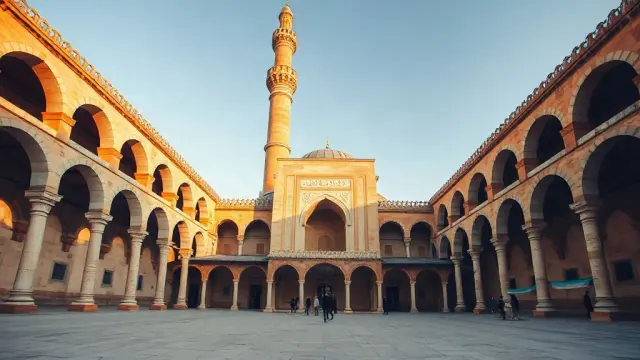
Before flying to Syria, confirm entry approval if your passport is on the restricted list
Most travellers can get a Syrian visa on arrival for USD 25 to 400 in cash, under Decision No. 128. Passports including Afghan, Chinese, Russian, Yem…
Frequently asked questions about Syria
What do I need to travel to Syria?
How long must my passport be valid for Syria?
Where is Syria?
What is Syria known for?
What is the capital of Syria?
What language is spoken in Syria?
What currency does Syria use?
What is the calling code of Syria?
Which countries border Syria?
How strong is the Syrian passport?
Is Syria safe to visit?
When is the best time to visit Syria?
What plug type does Syria use?
How many airports does Syria have?
Sources: CIA World Factbook (public domain); World Bank Open Data (CC BY 4.0); names, languages and currencies: mledoze/countries (ODbL); flag: flag-icons (MIT); coat of arms: Wikimedia Commons (file page); exchange rates: Daily reference rates from the open-source currency-api (CC0); airports: OurAirports.