
Western Africa · UN member

Cape Verde: Travel Guide & Requirements
Republic of Cabo Verde · República de Cabo Verde
Cape Verde is a country in Western Africa with its capital in Praia. It has a population of 527,326 (#172 in the world) and covers 4,033 km². The official language is Portuguese. The currency is the Cape Verdean escudo (CVE, Esc).
Where is Cape Verde? Map of Cape Verde
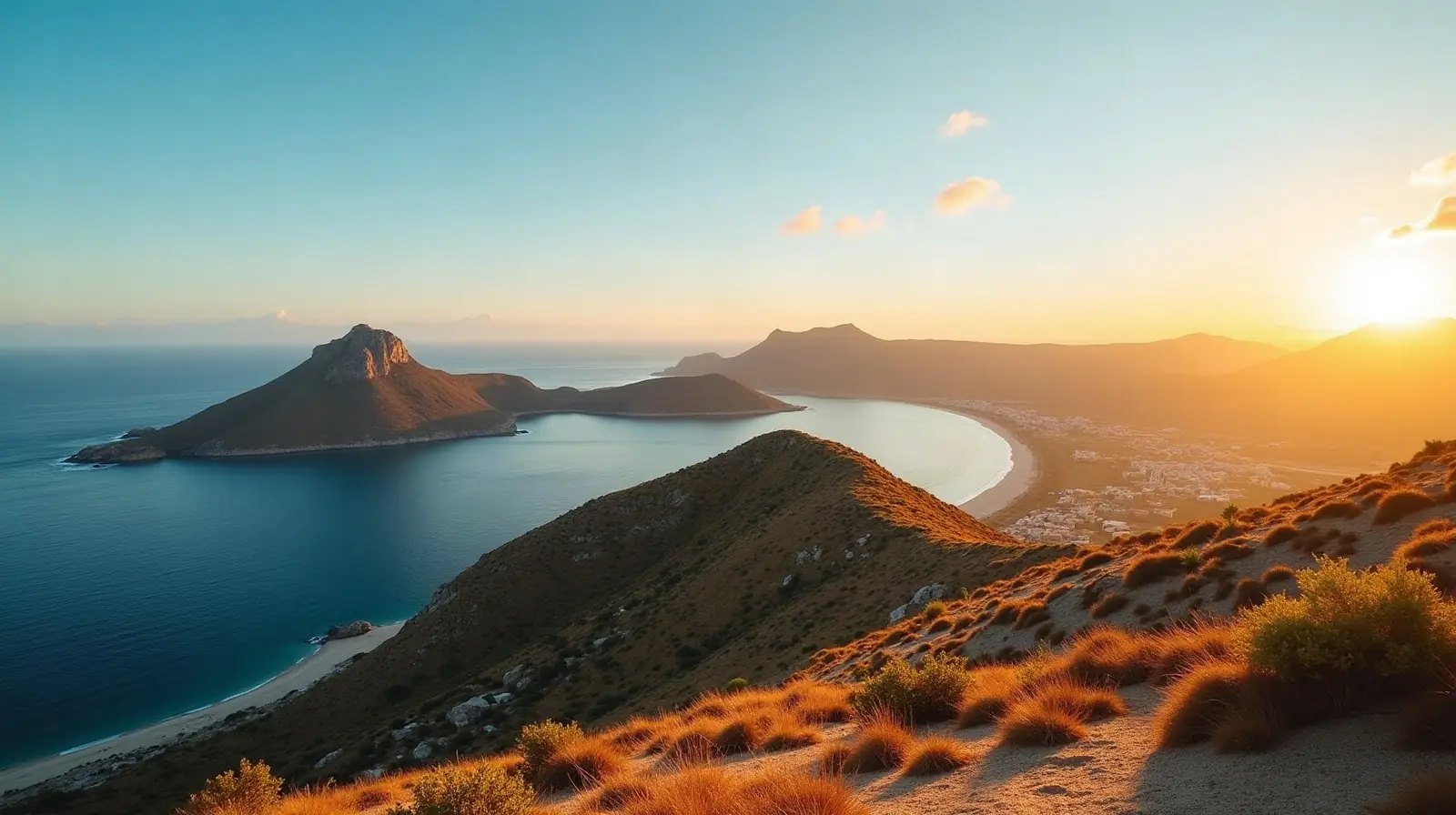
Western Africa, group of islands in the North Atlantic Ocean, west of Senegal.
- Region
- Western Africa
- Coordinates
- 16° N, 24° W
- Neighbours
- none (no land borders)
- Coastline
- 965 km
- Cape Verde
- Capital
- Largest cities
Map of Cape Verde showing Praia (capital) and the largest cities: Mindelo and Espargos.
Travel requirements
What you need to travel to Cape Verde
- Passport
Cabo Verde's foreigners law (Lei n.º 66/VIII/2014, Article 7(3)) says travel documents must be valid for longer than the authorised stay, except on the re-entry of a foreigner legally resident in Cabo Verde.
- Visa or eTA
Depends on your passport: of 198 passports, 66 need no visa, 89 need an eVisa, 43 get a visa on arrival. Check yours or see Cape Verde entry requirements for every passport.
- Return or onward ticket
Cabo Verde's foreigners law requires tourist-visa applicants to hold a transport ticket that lets them enter and leave Cabo Verde.
- Proof of funds
Cabo Verde's foreigners law does not permit the entry of foreigners without sufficient means of subsistence for the stay and for the journey to a country where their admission is guaranteed, and leaves the amount to a m…
- Travel insurance
No official requirement. The UK Foreign Office says Global Health Insurance Cards (GHIC) are not accepted in Cape Verde, so it is essential to have appropriate travel insurance.
- Vaccinations
WHO's country list says Cabo Verde requires proof of yellow fever vaccination from travellers aged 1 year or over arriving from countries with risk of yellow fever transmission.
- Arrival card
The Embassy of Cabo Verde in Washington says all foreign citizens planning to travel to Cabo Verde must pre-register on the EASE platform (ease.gov.cv) 5 days before departure to pay the airport security tax (TSA).
- Customs allowance
No official requirement.
- Travel advice
Safe to visit — US and UK advice.
Entry rules: TravelRequirements.info — Entry Requirements Dataset (CC BY 4.0), each rule cited to an official government source. Always confirm with the airline and the official source before you travel.
Before you go
10 things to know before you travel to Cape Verde
- Safety: Yes — Cape Verde is generally safe to visit: the US State Department rates Cape Verde Level 1 (“Exercise Normal Precautions”), and the UK Foreign Office has no warnings against travel there.
- Best time to go: December to July — when daytime highs in Praia are around 23–26°C.
- Money: the Cape Verdean escudo (CVE) — 1 US dollar is about 98.2636 CVE.
- Plugs: type C and F, 220 V, 50 Hz — standard 220–240 V: devices from the US or Japan (110–120 V) need a converter unless they are dual voltage (100–240 V).
- Emergency numbers: Police 132, Ambulance 130, Fire 131.
- Language: Portuguese is official.
- Driving: on the right — speed limits are 50 km/h in built-up areas, 90 km/h outside built-up areas, 100 km/h on expressways and 120 km/h on motorways.
- Time zone: UTC-1 in Praia.
- Capital: Praia. About 527,326 people live in Cape Verde.
- Outdoors: 1 national park.
Key facts
Cape Verde at a glance
Languages spoken: Portuguese (official), Crioulo (a Portuguese-based creole language with two main dialects)
Geography & history
About Cape Verde
The Portuguese discovered and colonized the uninhabited islands of Cabo Verde in the 15th century; Cabo Verde subsequently became a trading center for African slaves and later an important coaling and resupply stop for whaling and transatlantic shipping. The fusing of European and various African cultural traditions is reflected in Cabo Verde’s Crioulo language, music, and pano textiles. After gaining independence in 1975, a one-party system was established and maintained until multi-party elections were held in 1990. Cabo Verde continues to sustain one of Africa's most stable democratic governments and relatively stable economies, maintaining a currency pegged first to the Portuguese escud…
Read the full history
The Portuguese discovered and colonized the uninhabited islands of Cabo Verde in the 15th century; Cabo Verde subsequently became a trading center for African slaves and later an important coaling and resupply stop for whaling and transatlantic shipping. The fusing of European and various African cultural traditions is reflected in Cabo Verde’s Crioulo language, music, and pano textiles. After gaining independence in 1975, a one-party system was established and maintained until multi-party elections were held in 1990. Cabo Verde continues to sustain one of Africa's most stable democratic governments and relatively stable economies, maintaining a currency pegged first to the Portuguese escudo and then to the euro since 1998. Repeated droughts during the second half of the 20th century caused significant hardship and prompted heavy emigration. As a result, Cabo Verde's expatriate population -- concentrated in Boston, Massachusetts and Western Europe -- is greater than its domestic one. Most Cabo Verdeans have both African and Portuguese antecedents. Cabo Verde’s population descends from its first permanent inhabitants in the late 15th-century -- a preponderance of West African slaves, a small share of Portuguese colonists, and even fewer Italians and Spaniards. Among the nine inhabited islands, population distribution is varied. The islands in the east are very dry and are home to the country's growing tourism industry. The more western islands receive more precipitation and support larger populations, but agriculture and livestock grazing have damaged their soil fertility and vegetation. For centuries, the country’s overall population size has fluctuated significantly, as recurring periods of famine and epidemics have caused high death tolls and emigration.
Location
Western Africa, group of islands in the North Atlantic Ocean, west of Senegal
Climate
temperate; warm, dry summer; precipitation meager and erratic
Terrain
steep, rugged, rocky, volcanic
Highest point
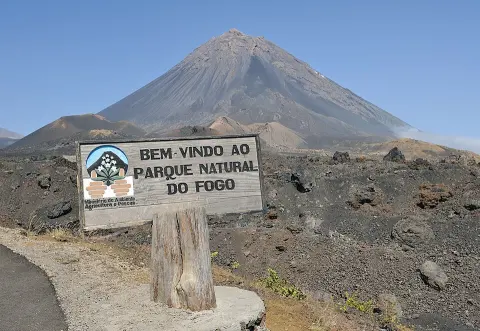
Mt. Fogo (a volcano on Fogo Island) 2,829 m
Natural resources
salt, basalt rock, limestone, kaolin, fish, clay, gypsum
Natural hazards
prolonged droughts; seasonal harmattan wind produces obscuring dust; volcanically and seismically active volcanism: Fogo (2,829 m), which last erupted in 1995, is Cabo Verde's only active volcano
National symbols
ten five-pointed yellow stars
Driving
Speed limits & road rules in Cape Verde
The default speed limits in Cape Verde are 50 km/h in built-up areas, 90 km/h outside built-up areas, 100 km/h on expressways and 120 km/h on motorways. The legal alcohol limit for drivers is 0.8‰. Posted signs always take priority over these defaults.
- 5050 km/hBuilt-up areasTowns and cities
- 9090 km/hOutside built-up areasCountry roadsWith a trailer: 70 km/h
- 100100 km/hExpresswaysDual carriageways & expresswaysWith a trailer: 80 km/h
- 120120 km/hMotorwaysMotorways / freewaysWith a trailer: 100 km/h
- International Driving PermitRecognised: 1968 ViennaCarry the IDP together with your national licence
- Driving sideDrive on the rightOvertake on the left
- Alcohol limit0.8‰ blood alcohol (0.08% BAC)
- Seat beltsRequired by law
- Child seatsNo national child-restraint law
- Motorcycle helmetsRequired for riders
- Road deaths (2021)16.5 per 100,000 peopleHigher than most countries (median 12.4)
Speed limits: OpenStreetMap wiki — Default speed limits (CC BY-SA 2.0). Road-safety laws: WHO Global Health Observatory. Compare speed limits and alcohol limits by country. Defaults for cars; local signs, weather and vehicle type can lower them.
Safety
Is Cape Verde safe to visit?
Yes — Cape Verde is generally safe to visit: the US State Department rates Cape Verde Level 1 (“Exercise Normal Precautions”), and the UK Foreign Office has no warnings against travel there.
 US State Department
 UK Foreign Office (FCDO)
Latest update: Updated information about travelling with medication (‘Health’ page).
Updated 28 Jul 2026 · Full travel advice
Sources: US Department of State travel advisories (public domain) and UK FCDO foreign travel advice (contains public sector information licensed under the Open Government Licence v3.0). Checked daily. Advice can change quickly — always read the official page before you travel.
Weather
Best time to visit Cape Verde
The best time to visit Cape Verde is December to July, when daytime highs in Praia are around 23–26°C. August and October to November are also a good time to go. September is the warmest month (28°C by day), February the coldest (21°C at night), and September the wettest with about 82 mm of rain.
- Jan24°C22°C
- Feb23°C21°C
- Mar23°C21°C
- Apr24°C22°C
- May24°C22°C
- Jun25°C23°C
- Jul26°C24°C
- Aug27°C26°C
- Sep28°C26°C
- Oct28°C26°C
- Nov27°C25°C
- Dec25°C23°C
Best time Good Less ideal
Before you go
Plugs, voltage & emergency numbers in Cape Verde
Plugs & sockets
220 V, 50 Hz · Standard 220–240 V: devices from the US or Japan (110–120 V) need a converter unless they are dual voltage (100–240 V).
Emergency numbers
Save the local numbers before you travel — 112 or 911 may not connect here. All countries →
Sources: Wikipedia — Mains electricity by country and List of emergency telephone numbers (CC BY-SA 4.0).
National parks
1 national park in Cape Verde
- 85 km² protected
Largest: Fogo National Park
Currency · 26 October 2026
Cape Verdean escudo exchange rates today
Cape Verde uses the Cape Verdean escudo (CVE, Esc). One US dollar buys 98.2636 CVE; over the last 30 days the CVE has lost 1.5% against the dollar.
What other currencies cost in CVE
Currency converter
Daily reference rates from the open-source currency-api (CC0), 26 Oct 2026. Banks and exchange offices add a margin.
World rankings
Where Cape Verde ranks
How Cape Verde compares with the rest of the world — open any card for the full ranking.
Airports
Airports in Cape Verde
8 airports and airfields — 4 large, 2 medium and 2 small, plus 0 heliports. 7 have scheduled passenger flights.
Borders
No land borders
Cape Verde has no land borders with other countries. Coastline: 965 km.
People
Population & society
Religion
Largest cities: Praia (168,000)
Economy
Economy
Main industries
food and beverages, fish processing, shoes and garments, salt mining, ship repair
Export partners
Spain 46%, Portugal 9%, Togo 7%, Italy 7%, India 6% (2023)
Top exports
fish, refined petroleum, railway cargo containers, shellfish, garments (2023)
Travel tools
Handy before every trip to Cape Verde
Next public holiday
All Saints' Day — Sunday, 1 November 2026. Then Christmas Day (25 Dec).

Cabo Verdean passport
Ranked #129: 37 countries visa-free, 27 with visa on arrival, 2 with an eTA and 36 with an eVisa.
Cabo Verdean passport photo
Exact size, head position and background for Cape Verde's passport and visa photos — make one free with AI checks.
Calling Cape Verde
Dial +238 before the local number. Internet domain .cv.
Climate footprint
0.6 million tonnes of CO₂ in 2024 — 1.13 t per person.
Entry requirements
Visa rules for every passport visiting Cape Verde: visa-free stays, eVisas, visas on arrival and documents to bring.
News
Latest travel news about Cape Verde

Cabo Verde Airports Win €120m Loan to Boost Island Flight Connections
IFC has announced a second €120 million sustainability-linked loan to Cabo Verde Airports S.A. to modernise the country's aviation network. Fewer tha…

Guinea-Bissau Travellers Holding Nigerian Passports Get 24 Visa-Free Entries
Nigerian passport holders can enter 24 destinations without arranging a visa in advance, according to the IziVisa Passport Ranking Index, which ranks…
Botswana Places Third in Africa for Remote Workers but Lacks a Nomad Visa
A new 2026 ranking puts Botswana third in Africa for remote workers on safety grounds, but the country has no digital nomad visa. Travellers working …
Frequently asked questions about Cape Verde
What do I need to travel to Cape Verde?
How long must my passport be valid for Cape Verde?
Where is Cape Verde?
What is Cape Verde known for?
What is the capital of Cape Verde?
What language is spoken in Cape Verde?
What currency does Cape Verde use?
What is the calling code of Cape Verde?
Does Cape Verde have land borders?
How strong is the Cabo Verdean passport?
What is the speed limit in Cape Verde?
Is Cape Verde safe to visit?
When is the best time to visit Cape Verde?
What plug type does Cape Verde use?
How many airports does Cape Verde have?
Sources: CIA World Factbook (public domain); World Bank Open Data (CC BY 4.0); names, languages and currencies: mledoze/countries (ODbL); flag: flag-icons (MIT); coat of arms: Wikimedia Commons (file page); exchange rates: Daily reference rates from the open-source currency-api (CC0); airports: OurAirports.