
Eastern Asia · UN member

Mongolia: Travel Guide & Requirements
· Монгол улс
Mongolia is a country in Eastern Asia with its capital in Ulaanbaatar. It has a population of 3.6 million (#132 in the world) and covers 1,564,116 km². The official language is Mongolian. The currency is the Mongolian tögrög (MNT, ₮).
Where is Mongolia? Map of Mongolia
Northern Asia, between China and Russia.
- Region
- Eastern Asia
- Coordinates
- 46° N, 105° E
- Neighbours
- 2 — see list
- Coastline
- Landlocked
- Mongolia
- Neighbours
- Capital
- Largest cities
Map of Mongolia showing Ulaanbaatar (capital) and the largest cities: Erdenet, Darhan, Choibalsan, Mörön, Bayanhongor, Ulaangom, Khovd and Arvayheer.
Travel requirements
What you need to travel to Mongolia
- Passport
The UK Foreign Office tells British nationals their passport must have an expiry date at least 6 months after the date they arrive in Mongolia.
- Visa or eTA
Depends on your passport: of 198 passports, 67 need no visa, 129 need an eVisa, 2 need a visa from an embassy. Check yours or see Mongolia entry requirements for every passport.
- Return or onward ticket
No official requirement. The Embassy of Mongolia in London advises visitors using the 30-day tourist visa exemption to book their return flight before arriving.
- Proof of funds
No official requirement.
- Travel insurance
No official requirement. The UK Foreign Office advises checking before you travel that you have appropriate travel insurance for local treatment or unexpected medical evacuation.
- Arrival card
Mongolia's Immigration Agency says individuals or legal entities providing housing for a foreign national must register them within 48 hours, online through the agency's website or its mobile application.
- Customs allowance
The US Department of State gives 15,000,000 Mongolian tugrik (approx.
- Travel advice
Safe to visit — US and UK advice.
Entry rules: TravelRequirements.info — Entry Requirements Dataset (CC BY 4.0), each rule cited to an official government source. Always confirm with the airline and the official source before you travel.
Before you go
10 things to know before you travel to Mongolia
- Safety: Yes — Mongolia is generally safe to visit: the US State Department rates Mongolia Level 1 (“Exercise Normal Precautions”), and the UK Foreign Office has no warnings against travel there.
- Best time to go: June to July — when daytime highs in Ulaanbaatar are around 22–24°C.
- Money: the Mongolian tögrög (MNT) — 1 US dollar is about 3,600.5 MNT.
- Plugs: type C, E and F, 220 V, 50 Hz — standard 220–240 V: devices from the US or Japan (110–120 V) need a converter unless they are dual voltage (100–240 V).
- Emergency numbers: Police 105, Ambulance 105, Fire 105.
- Language: Mongolian is official.
- Driving: on the right — speed limits are 60 km/h in built-up areas and 80 km/h outside built-up areas.
- Time zone: UTC+8 in Ulaanbaatar.
- Capital: Ulaanbaatar. About 3.6 million people live in Mongolia.
- Mongolia is the 19th largest country in the world by area.
Key facts
Mongolia at a glance
Languages spoken: Mongolian 90% (official, Khalkha dialect is predominant), Turkic, Russian (1999)
Geography & history
About Mongolia
The peoples of Mongolia have a long history under a number of nomadic empires dating back to the Xiongnu in the 4th century B.C., and the name Mongol goes back to at least the 11th century A.D. The most famous Mongol, TEMÜÜJIN (aka Genghis Khan), emerged as the ruler of all Mongols in the early 1200s. By the time of his death in 1227, he had created through conquest a Mongol Empire that extended across much of Eurasia. His descendants, including ÖGÖDEI and KHUBILAI (aka Kublai Khan), continued to conquer Eastern Europe, the Middle East, and the rest of China, where KHUBILAI established the Yuan Dynasty in the 1270s. The Mongols attempted to invade Japan and Java before their empire broke ap…
Read the full history
The peoples of Mongolia have a long history under a number of nomadic empires dating back to the Xiongnu in the 4th century B.C., and the name Mongol goes back to at least the 11th century A.D. The most famous Mongol, TEMÜÜJIN (aka Genghis Khan), emerged as the ruler of all Mongols in the early 1200s. By the time of his death in 1227, he had created through conquest a Mongol Empire that extended across much of Eurasia. His descendants, including ÖGÖDEI and KHUBILAI (aka Kublai Khan), continued to conquer Eastern Europe, the Middle East, and the rest of China, where KHUBILAI established the Yuan Dynasty in the 1270s. The Mongols attempted to invade Japan and Java before their empire broke apart in the 14th century. In the 17th century, Mongolia fell under the rule of the Manchus of the Chinese Qing Dynasty. After Manchu rule collapsed in 1911, Mongolia declared independence, finally winning it in 1921 with help from the Soviet Union. Mongolia became a socialist state (the Mongolian People’s Republic) in 1924. Until the collapse of the Soviet Union in 1989, Mongolia was a Soviet satellite state and relied heavily on economic, military, and political assistance from Moscow. The period was also marked by purges, political repression, economic stagnation, and tensions with China. Mongolia peacefully transitioned to an independent democracy in 1990. In 1992, it adopted a new constitution and established a free-market economy. Since the country's transition, it has conducted a series of successful presidential and legislative elections. Throughout the period, the ex-communist Mongolian People's Revolutionary Party -- which took the name Mongolian People’s Party (MPP) in 2010 -- has competed for political power with the Democratic Party and several other smaller parties. For most of its democratic history, Mongolia has had a divided government, with the presidency and the parliamentary majority held by different parties but that changed in 2021, when the MPP won the presidency after having secured a supermajority in parliament in 2020. Mongolia’s June 2021 presidential election delivered a decisive victory for MPP candidate Ukhnaagiin KHURELSUKH. Mongolia maintains close cultural, political, and military ties with Russia, while China is its largest economic partner. Mongolia’s foreign relations are focused on preserving its autonomy by balancing relations with China and Russia, as well as its other major partners, Japan, South Korea, and the US.
Location
Northern Asia, between China and Russia
Climate
desert; continental (large daily and seasonal temperature ranges)
Terrain
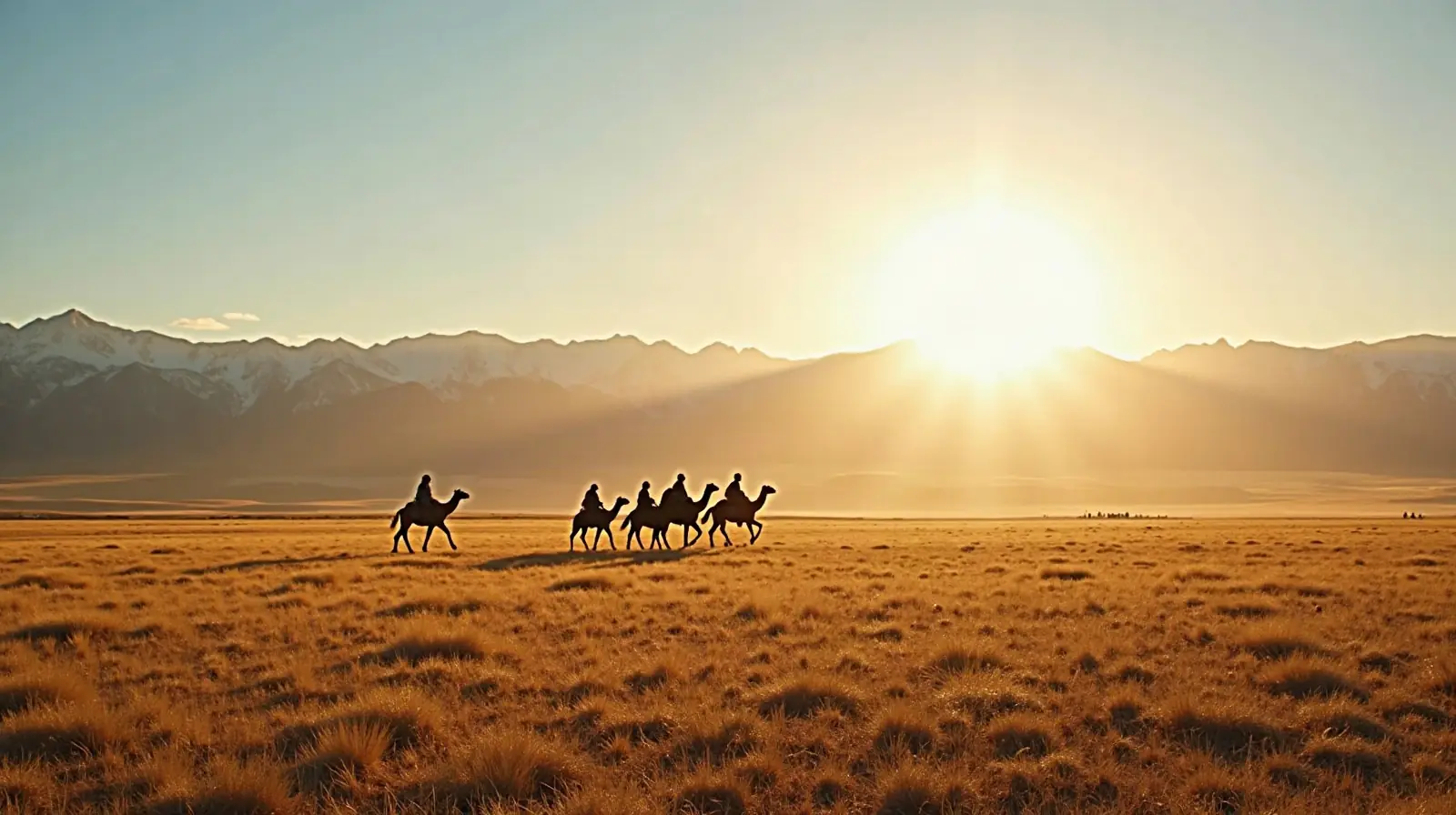
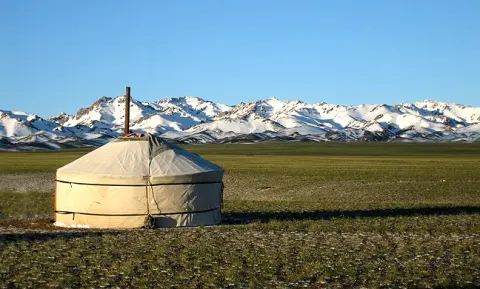
vast semidesert and desert plains, grassy steppe, mountains in west and southwest; Gobi Desert in south-central
Highest point
Nayramadlin Orgil (Khuiten Peak) 4,374 m
Natural resources
oil, coal, copper, molybdenum, tungsten, phosphates, tin, nickel, zinc, fluorspar, gold, silver, iron
Natural hazards
dust storms; grassland and forest fires; drought; "zud," which is harsh winter conditions
National symbols
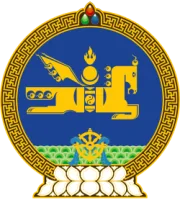
Soyombo character (from the Soyombo writing system)
Driving
Speed limits & road rules in Mongolia
The default speed limits in Mongolia are 60 km/h in built-up areas and 80 km/h outside built-up areas. The legal alcohol limit for drivers is 0.4‰. Posted signs always take priority over these defaults.
- 2020 km/hResidential zonesLiving streets & residential areas
- 6060 km/hBuilt-up areasTowns and cities
- 8080 km/hOutside built-up areasCountry roadsWith a trailer: 60 km/h
- International Driving PermitRecognised: 1968 ViennaCarry the IDP together with your national licence
- Driving sideDrive on the rightOvertake on the left
- Alcohol limit0.4‰ blood alcohol (0.04% BAC)
- Seat beltsRequired by law
- Child seatsNo national child-restraint law
- Motorcycle helmetsRequired for riders
- Road deaths (2021)12.4 per 100,000 peopleClose to the world median (12.4)
Speed limits: OpenStreetMap wiki — Default speed limits (CC BY-SA 2.0). Road-safety laws: WHO Global Health Observatory. Compare speed limits and alcohol limits by country. Defaults for cars; local signs, weather and vehicle type can lower them.
Safety
Is Mongolia safe to visit?
Yes — Mongolia is generally safe to visit: the US State Department rates Mongolia Level 1 (“Exercise Normal Precautions”), and the UK Foreign Office has no warnings against travel there.
 US State Department
 UK Foreign Office (FCDO)
Latest update: New information on fuel shortages in Mongolia (‘Warnings and insurance’ page).
Updated 7 Aug 2026 · Full travel advice
Sources: US Department of State travel advisories (public domain) and UK FCDO foreign travel advice (contains public sector information licensed under the Open Government Licence v3.0). Checked daily. Advice can change quickly — always read the official page before you travel.
Weather
Best time to visit Mongolia
The best time to visit Mongolia is June to July, when daytime highs in Ulaanbaatar are around 22–24°C. August is also a good time to go. July is the warmest month (24°C by day), January the coldest (-26°C at night), and July the wettest with about 68 mm of rain.
- Jan-16°C-26°C
- Feb-12°C-24°C
- Mar-3°C-15°C
- Apr7°C-6°C
- May15°C-0°C
- Jun22°C8°C
- Jul24°C11°C
- Aug21°C8°C
- Sep15°C1°C
- Oct4°C-7°C
- Nov-7°C-16°C
- Dec-15°C-23°C
Best time Good Less ideal
Before you go
Plugs, voltage & emergency numbers in Mongolia
Plugs & sockets
- Type C (Europlug)two round pins
- Type Etwo round pins and a hole for the socket's earth pin
- Type F (Schuko)two round pins with earth clips on the sides
220 V, 50 Hz · Standard 220–240 V: devices from the US or Japan (110–120 V) need a converter unless they are dual voltage (100–240 V).
Emergency numbers
Save the local numbers before you travel — 112 or 911 may not connect here. All countries →
Sources: Wikipedia — Mains electricity by country and List of emergency telephone numbers (CC BY-SA 4.0).
Ski resorts
1 ski resort in Mongolia
- 6 km of slopes
- 2 lifts
- up to 1,564 m
Biggest: Sky Resort
National parks
19 national parks in Mongolia
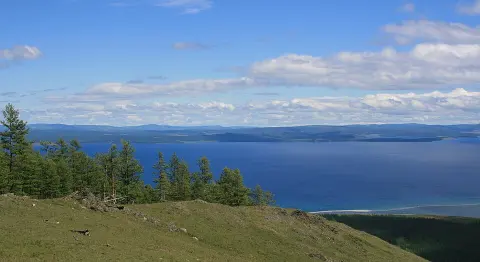
- 100,367 km² protected
- oldest from 1965
Largest: Gobi Gurvansaikhan National Park · Khuvsgul National Park · Khangai Nuruu National Park
Currency · 26 October 2026
Mongolian tögrög exchange rates today
Mongolia uses the Mongolian tögrög (MNT, ₮). One US dollar buys 3,600.5 MNT; over the last 30 days the MNT has lost 0.1% against the dollar.
What other currencies cost in MNT
Currency converter
Daily reference rates from the open-source currency-api (CC0), 26 Oct 2026. Banks and exchange offices add a margin.
World rankings
Where Mongolia ranks
How Mongolia compares with the rest of the world — open any card for the full ranking.
Airports
Airports in Mongolia
37 airports and airfields — 2 large, 12 medium and 23 small, plus 0 heliports. 13 have scheduled passenger flights.
Borders
Neighbouring countries
Mongolia borders 2 countries along 8,082 km of land borders. It is landlocked.


Military
Mongolian armed forces
Mongolia ranks #99 of 145 in the Global Firepower military strength ranking, with a defence budget of $221 million (2025).
People
Population & society
Religion
Largest cities: Ulaanbaatar (1.7 million)
Economy
Economy
Main industries
construction and construction materials; mining (coal, copper, molybdenum, fluorspar, tin, tungsten, gold); oil; food and beverages; processing of animal products, cashmere and natural fiber manufacturing
Export partners
China 92%, Switzerland 6%, Italy 1%, Thailand 0%, Japan 0% (2023)
Top exports
coal, copper ore, gold, iron ore, crude petroleum (2023)
Travel tools
Handy before every trip to Mongolia
Next public holiday
Republic Day — Thursday, 26 November 2026. Then Independence Day (29 Dec).

Mongolian passport
Ranked #132: 36 countries visa-free, 28 with visa on arrival, 3 with an eTA and 42 with an eVisa.
Mongolian passport photo
Exact size, head position and background for Mongolia's passport and visa photos — make one free with AI checks.
Calling Mongolia
Dial +976 before the local number. Internet domain .mn.
Climate footprint
44.7 million tonnes of CO₂ in 2024 — 12.86 t per person.
Entry requirements
Visa rules for every passport visiting Mongolia: visa-free stays, eVisas, visas on arrival and documents to bring.
News
Latest travel news about Mongolia
Travellers to North Korea unaffected; South Korea counts 31,665 visa over-stayers
Justice Ministry data shows 31,665 foreign students on D-2 or D-4 visas were in South Korea without permission as of August. Language trainees accoun…
Mongolia Named Fifth-Safest Asian Country for 2026 in Travel Safety Ranking
Mongolia places fifth among Asia's safest countries for 2026, with a Level 1 US travel advisory and normal security precautions for Canadian travelle…
Mongolian Students Third-Largest Group in South Korea's Record D-2 Overstays
The number of international students overstaying South Korean D-2 degree visas hit a record 9,946 as of August 2026, Ministry of Justice data shows. …
Frequently asked questions about Mongolia
What do I need to travel to Mongolia?
How long must my passport be valid for Mongolia?
Where is Mongolia?
What is Mongolia known for?
What is the capital of Mongolia?
What language is spoken in Mongolia?
What currency does Mongolia use?
What is the calling code of Mongolia?
Which countries border Mongolia?
How strong is the Mongolian passport?
What is the speed limit in Mongolia?
Is Mongolia safe to visit?
When is the best time to visit Mongolia?
What plug type does Mongolia use?
How many airports does Mongolia have?
Sources: CIA World Factbook (public domain); World Bank Open Data (CC BY 4.0); names, languages and currencies: mledoze/countries (ODbL); flag: flag-icons (MIT); coat of arms: Wikimedia Commons (file page); exchange rates: Daily reference rates from the open-source currency-api (CC0); airports: OurAirports.