
Eastern Africa · UN member

Tanzania: Travel Guide & Requirements
United Republic of Tanzania
Tanzania is a country in Eastern Africa with its capital in Dodoma. It has a population of 70.5 million (#21 in the world) and covers 947,300 km². The official languages are English and Swahili. The currency is the Tanzanian shilling (TZS, Sh).
Where is Tanzania? Map of Tanzania
Eastern Africa, bordering the Indian Ocean, between Kenya and Mozambique.
- Region
- Eastern Africa
- Coordinates
- 6° S, 35° E
- Neighbours
- 8 — see list
- Coastline
- 1,424 km
- Tanzania
- Neighbours
- Capital
- Largest cities
Map of Tanzania showing Dodoma (capital) and the largest cities: Mwanza, Zanzibar, Arusha, Mbeya, Morogoro, Kahama, Tanga and Geita.
Travel requirements
What you need to travel to Tanzania
- Passport
Tanzania's visa guidelines say visa applicants must ensure that their passports have a validity of at least six months and at least one unused visa page before submitting their application.
- Visa or eTA
Depends on your passport: of 198 passports, 46 need no visa, 151 need an eVisa, 1 gets a visa on arrival. Check yours or see Tanzania entry requirements for every passport.
- Return or onward ticket
Tanzania's visa guidelines say visitors must show their return ticket upon arrival at the entry point.
- Proof of funds
No official requirement.
- Travel insurance
The UK Foreign Office says all visitors to mainland Tanzania and Zanzibar, except residents, must have mandatory Tanzanian Government-provided inbound travel insurance, even if they already have a personal policy in pla…
- Vaccinations
WHO lists Tanzania as requiring proof of yellow fever vaccination from travellers aged 1 year or over arriving from countries at risk of yellow fever transmission, including travellers who transited more than 12 hours t…
- Arrival card
The UK Foreign Office says visitors (except residents) who arrive in mainland Tanzania first must buy travel insurance from the National Insurance Corporation (NIC) upon arrival, or online beforehand, even if they alrea…
- Customs allowance
The Government of Canada says you must declare all currencies exceeding 10,000 U.S. dollars upon arrival in and departure from Tanzania.
- Travel advice
Some caution needed — US and UK advice.
Entry rules: TravelRequirements.info — Entry Requirements Dataset (CC BY 4.0), each rule cited to an official government source. Always confirm with the airline and the official source before you travel.
Before you go
10 things to know before you travel to Tanzania
- Safety: Tanzania is generally safe for travellers, but some caution is needed: the US State Department rates Tanzania Level 2 (“Exercise Increased Caution”), and the UK Foreign Office advises against all but essential travel to parts of the country.
- Best time to go: June to September — when daytime highs in Dodoma are around 27–28°C.
- Money: the Tanzanian shilling (TZS) — 1 US dollar is about 2,645.1 TZS.
- Plugs: type D and G, 230 V, 50 Hz — standard 220–240 V: devices from the US or Japan (110–120 V) need a converter unless they are dual voltage (100–240 V).
- Emergency numbers: Police 112, Ambulance 114, Fire 115.
- Language: English and Swahili are official.
- Driving: on the left — speed limits are 50 km/h in built-up areas and 110 km/h outside built-up areas.
- Time zone: UTC+3 in Dodoma.
- Capital: Dodoma; the largest city is Dar Es Salaam. About 70.5 million people live in Tanzania.
- Outdoors: 21 national parks.
Key facts
Tanzania at a glance
Languages spoken: Kiswahili or Swahili (official), Kiunguja (name for Swahili in Zanzibar), English (official, primary language of commerce, administration, and higher education), Arabic, many local languages
Geography & history
About Tanzania
Tanzania contains some of Africa’s most iconic national parks and famous paleoanthropological sites, and its diverse cultural heritage reflects the multiple ethnolinguistic groups that live in the country. Its long history of integration into trade networks spanning the Indian Ocean and the African interior led to the development of Swahili as a common language in much of east Africa and the introduction of Islam into the region. A number of independent coastal and island trading posts in what is now Tanzania came under Portuguese control after 1498 when they began to take control of much of the coast and Indian Ocean trade. By 1700, the Sultanate of Oman had become the dominant power in th…
Read the full history
Tanzania contains some of Africa’s most iconic national parks and famous paleoanthropological sites, and its diverse cultural heritage reflects the multiple ethnolinguistic groups that live in the country. Its long history of integration into trade networks spanning the Indian Ocean and the African interior led to the development of Swahili as a common language in much of east Africa and the introduction of Islam into the region. A number of independent coastal and island trading posts in what is now Tanzania came under Portuguese control after 1498 when they began to take control of much of the coast and Indian Ocean trade. By 1700, the Sultanate of Oman had become the dominant power in the region after ousting the Portuguese, who were also facing a series of local uprisings. During the next hundred years, Zanzibar -- an archipelago off the coast that is now part of Tanzania -- became a hub of Indian Ocean trade, with Arab and Indian traders establishing and consolidating trade routes with communities in mainland Tanzania that contributed to the expansion of the slave trade. Zanzibar briefly became the capital of the Sultanate of Oman before it split into separate Omani and Zanzibar Sultanates in 1856. Beginning in the mid-1800s, European explorers, traders, and Christian missionaries became more active in the region. The Germans eventually established control over mainland Tanzania -- which they called Tanganyika -- and the British established control over Zanzibar. Tanganyika came under British administration after the German defeat in World War I. Tanganyika gained independence from Great Britain in 1961, and Zanzibar followed in 1963 as a constitutional monarchy. In Tanganyika, Julius NYERERE, a charismatic and idealistic socialist, established a one-party political system that centralized power and encouraged national self-reliance and rural development. In 1964, a popular uprising overthrew the Sultan in Zanzibar and either killed or expelled many of the Arabs and Indians who had dominated the isles for more than 200 years. Later that year, Tanganyika and Zanzibar combined to form the United Republic of Tanzania, but Zanzibar retained considerable autonomy. Their two ruling parties combined to form the Chama Cha Mapinduzi (CCM) party in 1977, which has since won every presidential election. Tanzania held its first multi-party elections in 1995, but CCM candidates have continued to dominate politics. The ruling party has claimed victory in four contentious elections since 1995, despite international observers' claims of voting irregularities. In 2001, 35 people died in Zanzibar when soldiers fired on protestors. John MAGUFULI won the 2015 and 2020 presidential elections, and the CCM won over two-thirds of the seats in Parliament in both elections. MAGUFULI died in 2021 while in office and was succeeded by his vice president, Samia Suluhu HASSAN.
Location
Eastern Africa, bordering the Indian Ocean, between Kenya and Mozambique
Climate
varies from tropical along coast to temperate in highlands
Terrain
plains along coast; central plateau; highlands in north, south
Highest point
Kilimanjaro (highest point in Africa) 5,895 m
Natural resources
hydropower, tin, phosphates, iron ore, coal, diamonds, gemstones (including tanzanite, found only in Tanzania), gold, natural gas, nickel
Natural hazards
flooding on the central plateau during the rainy season; drought volcanism: limited volcanic activity; Ol Doinyo Lengai (2,962 m) has emitted lava in recent years; other historically active volcanoes include Kieyo and Meru
National symbols
Uhuru (freedom) torch, giraffe
Driving
Speed limits & road rules in Tanzania
The default speed limits in Tanzania are 50 km/h in built-up areas and 110 km/h outside built-up areas. The legal alcohol limit for drivers is 0.8‰. Posted signs always take priority over these defaults.
- 5050 km/hBuilt-up areasTowns and cities
- 110110 km/hOutside built-up areasCountry roads
- International Driving PermitNot a party to the IDP conventionsCheck with the embassy whether your licence is accepted
- Driving sideDrive on the leftOvertake on the right
- Alcohol limit0.8‰ blood alcohol (0.08% BAC)
- Seat beltsRequired by law
- Child seatsNo national child-restraint law
- Motorcycle helmetsRequired for riders
- Road deaths (2021)15.8 per 100,000 peopleHigher than most countries (median 12.4)
Speed limits: OpenStreetMap wiki — Default speed limits (CC BY-SA 2.0). Road-safety laws: WHO Global Health Observatory. Compare speed limits and alcohol limits by country. Defaults for cars; local signs, weather and vehicle type can lower them.
Safety
Is Tanzania safe to visit?
Tanzania is generally safe for travellers, but some caution is needed: the US State Department rates Tanzania Level 2 (“Exercise Increased Caution”), and the UK Foreign Office advises against all but essential travel to parts of the country.
 US State Department
 UK Foreign Office (FCDO)
Latest update: Updated information about Ebola screening measures for all travellers arriving into Tanzania, addition of information about the risk of protests on 29 October and new information about the risks of bringing cannabidiol (CBD) products into Tanzania (‘Entry requirements’ and ‘Safety and security’ page
Updated 20 Oct 2026 · Full travel advice
Sources: US Department of State travel advisories (public domain) and UK FCDO foreign travel advice (contains public sector information licensed under the Open Government Licence v3.0). Checked daily. Advice can change quickly — always read the official page before you travel.
Weather
Best time to visit Tanzania
The best time to visit Tanzania is June to September, when daytime highs in Dodoma are around 27–28°C. October is also a good time to go. February is the warmest month (30°C by day), July the coldest (23°C at night), and April the wettest with about 258 mm of rain.
- Jan30°C26°C
- Feb30°C26°C
- Mar30°C26°C
- Apr29°C26°C
- May28°C25°C
- Jun28°C23°C
- Jul27°C23°C
- Aug28°C23°C
- Sep28°C23°C
- Oct29°C24°C
- Nov30°C25°C
- Dec30°C26°C
Best time Good Less ideal
Before you go
Plugs, voltage & emergency numbers in Tanzania
Plugs & sockets
230 V, 50 Hz · Standard 220–240 V: devices from the US or Japan (110–120 V) need a converter unless they are dual voltage (100–240 V).
Emergency numbers
112 works from any mobile phone, even without a SIM card in most networks. All countries →
Sources: Wikipedia — Mains electricity by country and List of emergency telephone numbers (CC BY-SA 4.0).
National parks
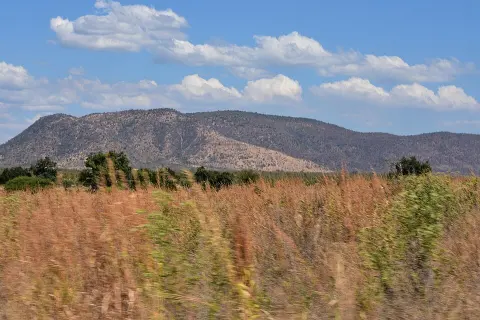
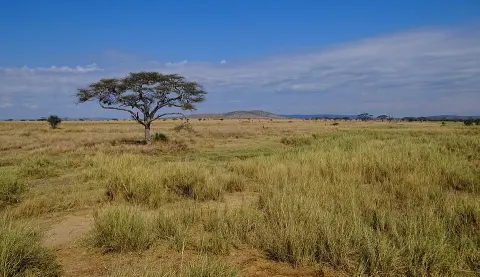
21 national parks in Tanzania
- 91,277 km² protected
- oldest from 1940
Largest: Nyerere National Park · Ruaha National Park · Serengeti National Park
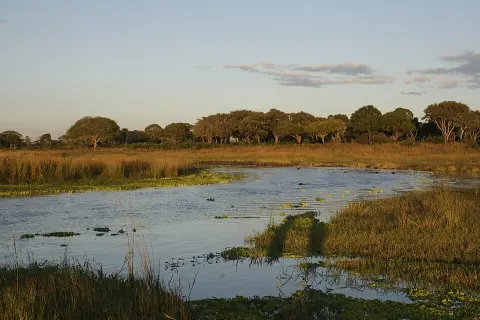
Currency · 26 October 2026
Tanzanian shilling exchange rates today
Tanzania uses the Tanzanian shilling (TZS, Sh). One US dollar buys 2,645.1 TZS; over the last 30 days the TZS has gained 0.1% against the dollar.
What other currencies cost in TZS
Currency converter
Daily reference rates from the open-source currency-api (CC0), 26 Oct 2026. Banks and exchange offices add a margin.
World rankings
Where Tanzania ranks
How Tanzania compares with the rest of the world — open any card for the full ranking.
Airports
Airports in Tanzania
206 airports and airfields — 4 large, 8 medium and 194 small, plus 0 heliports. 16 have scheduled passenger flights.
Borders
Neighbouring countries
Tanzania borders 8 countries along 4,161 km of land borders. Coastline: 1,424 km.


Military
Tanzanian armed forces
Tanzania ranks #101 of 145 in the Global Firepower military strength ranking, with a defence budget of $1.0 billion (2025).
People
Population & society
Religion
Largest cities: Dodoma (262,000), Dar Es Salaam (7.8 million), Mwanza (1.3 million), Zanzibar (800,000)
Economy
Economy
Main industries
agricultural processing (sugar, beer, cigarettes, sisal twine); mining (diamonds, gold, and iron), salt, soda ash; cement, oil refining, shoes, apparel, wood products, fertilizer
Export partners
India 15%, UAE 14%, Uganda 12%, South Africa 10%, China 6% (2023)
Top exports
gold, refined petroleum, dried legumes, refined copper, coal (2023)
Travel tools
Handy before every trip to Tanzania
Next public holiday
Independence Day — Wednesday, 9 December 2026. Then Christmas Day (25 Dec).

Tanzanian passport
Ranked #113: 44 countries visa-free, 23 with visa on arrival, 3 with an eTA and 30 with an eVisa.
Tanzanian passport photo
Exact size, head position and background for Tanzania's passport and visa photos — make one free with AI checks.
Calling Tanzania
Dial +255 before the local number. Internet domain .tz.
Climate footprint
20.0 million tonnes of CO₂ in 2024 — 0.29 t per person.
Entry requirements
Visa rules for every passport visiting Tanzania: visa-free stays, eVisas, visas on arrival and documents to bring.
News
Latest travel news about Tanzania

More intra-African flights, but visas and fares still deter travellers
Seats on intra-African tourism routes rose 10.5% year-on-year in August 2026, yet visas, high fares and indirect connections still hold back regional…
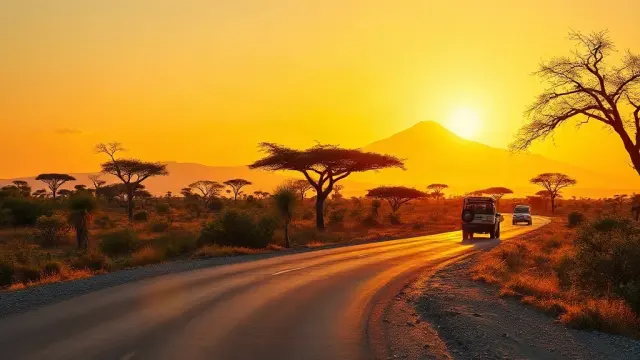
Tanzania Trips: AFCON 2027 3-Nation Visa Not Yet Open, Costs Unpublished
Kenya, Tanzania and Uganda are preparing a common visa for AFCON 2027, which the three countries host in June and July 2027. Fees, eligibility and pr…
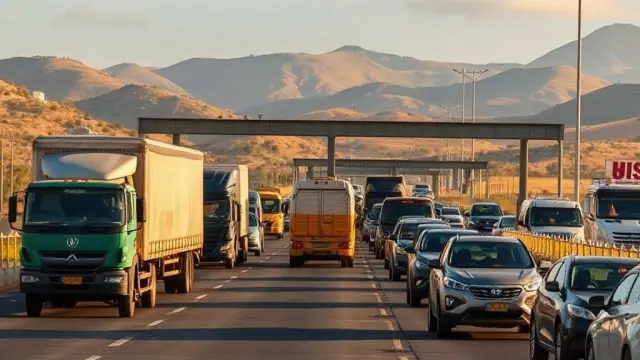
Travellers at Songwe May Face Tighter Patrols as Malawi Closes Check Gaps
Malawi's Parliamentary Committee on Health said Songwe Border inspections focus on cost and quality rather than verifying what consignments contain, …
Frequently asked questions about Tanzania
What do I need to travel to Tanzania?
How long must my passport be valid for Tanzania?
Where is Tanzania?
What is Tanzania known for?
What is the capital of Tanzania?
What language is spoken in Tanzania?
What currency does Tanzania use?
What is the calling code of Tanzania?
Which countries border Tanzania?
How strong is the Tanzanian passport?
What is the speed limit in Tanzania?
Is Tanzania safe to visit?
When is the best time to visit Tanzania?
What plug type does Tanzania use?
How many airports does Tanzania have?
Sources: CIA World Factbook (public domain); World Bank Open Data (CC BY 4.0); names, languages and currencies: mledoze/countries (ODbL); flag: flag-icons (MIT); coat of arms: Wikimedia Commons (file page); exchange rates: Daily reference rates from the open-source currency-api (CC0); airports: OurAirports.