
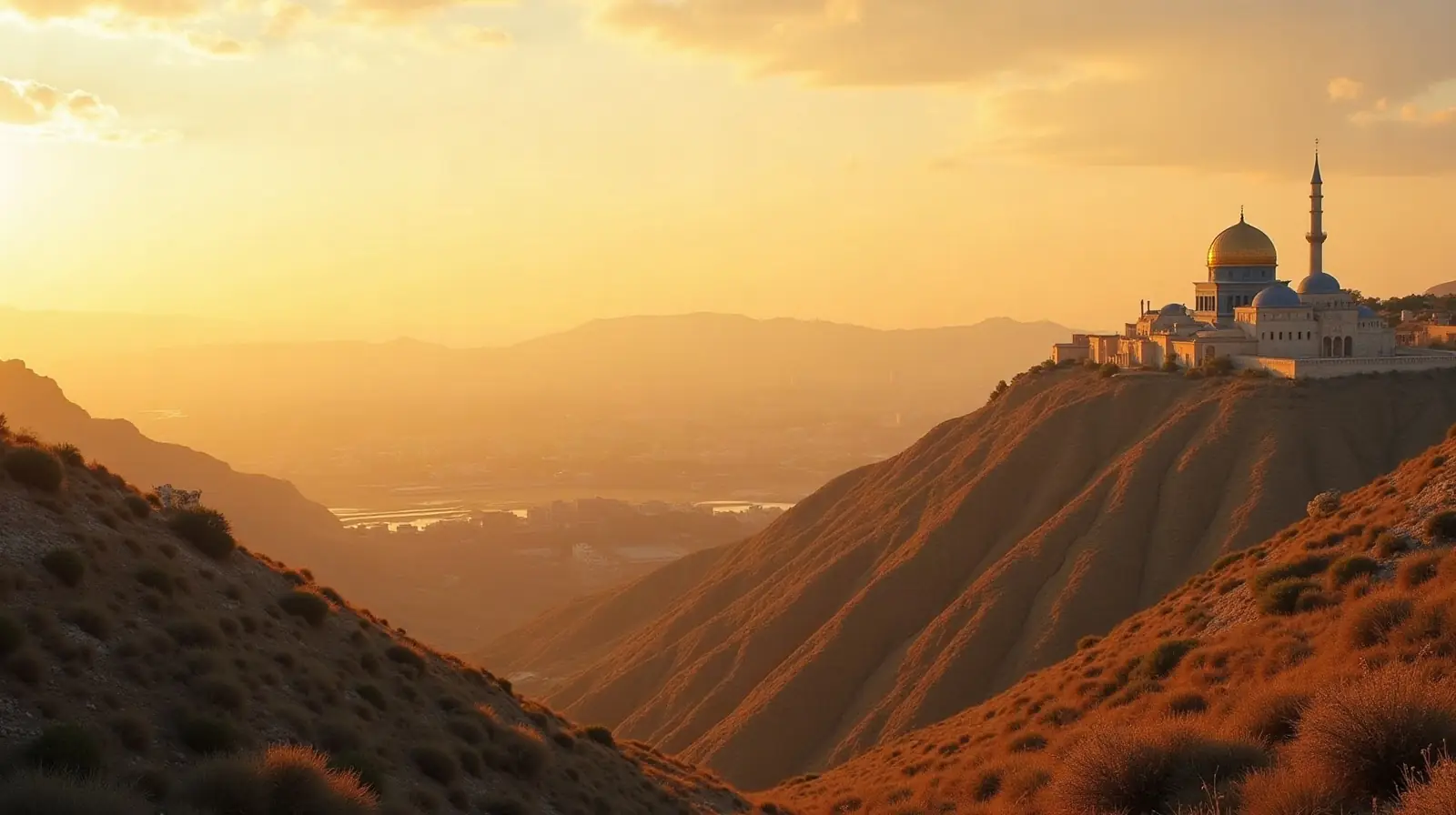
Western Asia · UN member


Israel: Travel Guide & Requirements
State of Israel · دولة إسرائيل · מדינת ישראל
Israel is a country in Western Asia with its capital in Jerusalem. It has a population of 10.1 million (#95 in the world) and covers 21,937 km². The official languages are Arabic and Hebrew. The currency is the Israeli new shekel (ILS, ₪).
Where is Israel? Map of Israel
Middle East, bordering the Mediterranean Sea, between Egypt and Lebanon.
- Region
- Western Asia
- Coordinates
- 31.47° N, 35.13° E
- Neighbours
- 5 — see list
- Coastline
- 273 km
- Israel
- Neighbours
- Capital
- Largest cities
Map of Israel showing Jerusalem (capital) and the largest cities: Tel Aviv, Haifa, Beersheba and Ashkelon.
Travel requirements
What you need to travel to Israel
- Passport
The Population and Immigration Authority says that to apply for an ETA-IL your passport must be valid for at least three months from the date of your arrival in Israel.
- Visa or eTA
Depends on your passport: of 198 passports, 102 need an eTA, 3 need an eVisa, 93 need a visa from an embassy. Check yours or see Israel entry requirements for every passport.
- Return or onward ticket
The Population and Immigration Authority lists round trip tickets to Israel among the documents for an eVisa-B2 tourist visa.
- Proof of funds
No official requirement. The Population and Immigration Authority asks eVisa-B2 applicants for proof of monetary means: bank account statements for the last three months, approval from the bank of financial feasibility, or a document attesting …
- Travel insurance
No official requirement. The Population and Immigration Authority lists, among the documents for an eVisa-B2 tourist visa, health insurance valid in Israel for the entire period of the visit.
- Customs allowance
Israel's Tax Authority says anyone entering or leaving Israel must report cash, bank cheques, travellers' cheques, bearer securities, negotiable instruments and payment cards worth ILS 50,000 or more at any border cross…
- Travel advice
High risk — US and UK advice.
Entry rules: TravelRequirements.info — Entry Requirements Dataset (CC BY 4.0), each rule cited to an official government source. Always confirm with the airline and the official source before you travel.
Before you go
10 things to know before you travel to Israel
- Safety: Travel to Israel carries a high risk: the US State Department rates Israel Level 3 (“Reconsider Travel”), and the UK Foreign Office advises against all travel to parts of the country.
- Best time to go: April to May and October to November — when daytime highs in Jerusalem are around 23–28°C.
- Money: the Israeli new shekel (ILS) — 1 US dollar is about 3.1134 ILS.
- Plugs: type C and H, 230 V, 50 Hz — standard 220–240 V: devices from the US or Japan (110–120 V) need a converter unless they are dual voltage (100–240 V).
- Emergency numbers: Police 100, Ambulance 101, Fire 102.
- Language: Arabic and Hebrew are official; English is also spoken.
- Driving: on the right — speed limits are 50 km/h in built-up areas, 80 km/h outside built-up areas, 90 km/h on expressways and 110 km/h on motorways.
- Time zone: UTC+2 in Jerusalem.
- Capital: Jerusalem; the largest city is Tel Aviv-Yafo. About 10.1 million people live in Israel.
- Outdoors: 60 national parks and 1 ski area.
Key facts
Israel at a glance
Languages spoken: Hebrew (official), Arabic (special status under Israeli law), English (most commonly used foreign language)
Geography & history
About Israel
Israel has become a regional economic and military powerhouse, leveraging its prosperous high-tech sector, large defense industry, and concerns about Iran to foster partnerships around the world. The State of Israel was established in 1948. The UN General Assembly proposed in 1947 partitioning the British Mandate for Palestine into an Arab and Jewish state. The Jews accepted the proposal, but the local Arabs and the Arab states rejected the UN plan and launched a war. The Arabs were subsequently defeated in the 1947-1949 war that followed the UN proposal and the British withdrawal. Israel joined the UN in 1949 and saw rapid population growth, primarily due to Jewish refugee migration from E…
Read the full history
Israel has become a regional economic and military powerhouse, leveraging its prosperous high-tech sector, large defense industry, and concerns about Iran to foster partnerships around the world. The State of Israel was established in 1948. The UN General Assembly proposed in 1947 partitioning the British Mandate for Palestine into an Arab and Jewish state. The Jews accepted the proposal, but the local Arabs and the Arab states rejected the UN plan and launched a war. The Arabs were subsequently defeated in the 1947-1949 war that followed the UN proposal and the British withdrawal. Israel joined the UN in 1949 and saw rapid population growth, primarily due to Jewish refugee migration from Europe and the Middle East. Israel and its Arab neighbors fought wars in 1956, 1967, and 1973, and Israel signed peace treaties with Egypt in 1979 and Jordan in 1994. Israel took control of the West Bank, the eastern part of Jerusalem, the Gaza Strip, the Sinai Peninsula, and the Golan Heights in the course of the 1967 war. It ceded the Sinai back to Egypt in the 1979-1982 period but has continued to administer the other territories through military authorities. Israel and Palestinian officials signed interim agreements in the 1990s that created a period of Palestinian self-rule in parts of the West Bank and Gaza. Israel withdrew from Gaza in 2005. The most recent formal efforts between Israel and the Palestinian Authority to negotiate final status issues occurred in 2013 and 2014, and the US continues its efforts to advance peace. Israel signed the US-brokered normalization agreements (the Abraham Accords) with Bahrain, the UAE, and Morocco in 2020 and reached an agreement with Sudan in 2021. Immigration to Israel continues, with more than 44,000 estimated new immigrants, mostly Jewish, in the first 11 months of 2023. Former Prime Minister Benjamin NETANYAHU returned to office in 2022, continuing his dominance of Israel's political landscape at the head of Israel's most rightwing and religious government. NETANYAHU previously served as premier from 1996 to 1999 and from 2009 to 2021, becoming Israel's longest serving prime minister. On 7 October 2023, HAMAS militants launched a combined unguided rocket and ground terrorist attack from Gaza into southern Israel. The same day Israel’s Air Force launched air strikes inside Gaza and initiated a sustained air campaign against HAMAS targets across the Gaza Strip. The following day, NETANYAHU formally declared war on HAMAS, and on 28 October, the Israel Defense Forces launched a large-scale ground assault inside Gaza. The Israeli economy has undergone a dramatic transformation in the last 30 years, led by cutting-edge high-tech sectors. Offshore gas discoveries in the Mediterranean place Israel at the center of a potential regional natural gas market. In 2022, a US-brokered agreement between Israel and Lebanon established their maritime boundary, allowing Israel to begin production on additional gas fields in the Mediterranean. However, Israel's economic development has been uneven. Structural issues such as low labor-force participation among religious and minority populations, low workforce productivity, high costs for housing and consumer staples, and high income inequality concern both economists and the general population. The current war with Hamas disrupted Israel’s solid economic fundamentals, but it is not likely to have long-term structural implications for the economy.
Location
Middle East, bordering the Mediterranean Sea, between Egypt and Lebanon
Climate
temperate; hot and dry in southern and eastern desert areas
Terrain
Negev desert in the south; low coastal plain; central mountains; Jordan Rift Valley
Highest point
Mitspe Shlagim 2,224 m; note - this is the highest named point, the actual highest point is an unnamed dome slightly to the west of Mitspe Shlagim at 2,236 m; both points are on the northeastern border of Israel, along the southern end of the Anti-Lebanon
Natural resources
timber, potash, copper ore, natural gas, phosphate rock, magnesium bromide, clays, sand
Natural hazards
sandstorms may occur during spring and summer; droughts; periodic earthquakes
National symbols
Star of David (Magen David), menorah (seven-branched lampstand)
Driving
Speed limits & road rules in Israel
The default speed limits in Israel are 50 km/h in built-up areas, 80 km/h outside built-up areas, 90 km/h on expressways and 110 km/h on motorways. The legal alcohol limit for drivers is 0.5‰. Posted signs always take priority over these defaults.
- 3030 km/hResidential zonesLiving streets & residential areas
- 5050 km/hBuilt-up areasTowns and cities
- 8080 km/hOutside built-up areasCountry roads
- 9090 km/hExpresswaysDual carriageways & expressways
- 110110 km/hMotorwaysMotorways / freeways
- International Driving PermitRecognised: 1968 Vienna, 1949 GenevaCarry the IDP together with your national licence
- Driving sideDrive on the rightOvertake on the left
- Alcohol limit0.5‰ blood alcohol (0.05% BAC)0.1‰ for young / novice drivers
- Seat beltsRequired by law
- Child seatsRequired by law
- Motorcycle helmetsRequired for riders
- Road deaths (2021)4.2 per 100,000 peopleSafer than most countries (median 12.4)
Speed limits: OpenStreetMap wiki — Default speed limits (CC BY-SA 2.0). Road-safety laws: WHO Global Health Observatory. Compare speed limits and alcohol limits by country. Defaults for cars; local signs, weather and vehicle type can lower them.
Safety
Is Israel safe to visit?
Travel to Israel carries a high risk: the US State Department rates Israel Level 3 (“Reconsider Travel”), and the UK Foreign Office advises against all travel to parts of the country.
 US State Department
 UK Foreign Office (FCDO)
Latest update: Updated information about regional tensions, including information about recent strikes and retaliatory attacks by Iran ('Warnings insurance') page.
Updated 22 Jul 2026 · Full travel advice
Sources: US Department of State travel advisories (public domain) and UK FCDO foreign travel advice (contains public sector information licensed under the Open Government Licence v3.0). Checked daily. Advice can change quickly — always read the official page before you travel.
Weather
Best time to visit Israel
The best time to visit Israel is April to May and October to November, when daytime highs in Jerusalem are around 23–28°C. March, June and September are also a good time to go. July is the warmest month (33°C by day), January the coldest (7°C at night), and January the wettest with about 88 mm of rain.
- Jan16°C7°C
- Feb17°C8°C
- Mar20°C9°C
- Apr24°C12°C
- May28°C15°C
- Jun31°C18°C
- Jul33°C20°C
- Aug33°C21°C
- Sep31°C20°C
- Oct28°C17°C
- Nov23°C13°C
- Dec18°C9°C
Best time Good Less ideal
Before you go
Plugs, voltage & emergency numbers in Israel
Plugs & sockets
230 V, 50 Hz · Standard 220–240 V: devices from the US or Japan (110–120 V) need a converter unless they are dual voltage (100–240 V).
Emergency numbers
Save the local numbers before you travel — 112 or 911 may not connect here. All countries →
Sources: Wikipedia — Mains electricity by country and List of emergency telephone numbers (CC BY-SA 4.0).
Ski resorts
1 ski resort in Israel
- 14 km of slopes
- 10 lifts
- up to 2,037 m
Biggest: אתר סקי הר החרמון
National parks
60 national parks in Israel
- 69 km² protected
- oldest from 1
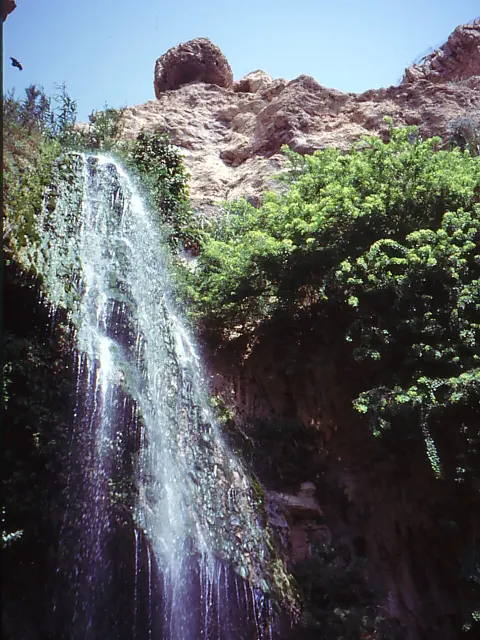
Largest: Har Carmel Nationalpark · Sepphoris · Ein Gedi


Currency · 26 October 2026
Israeli new shekel exchange rates today
Israel uses the Israeli new shekel (ILS, ₪). One US dollar buys 3.1134 ILS; over the last 30 days the ILS has lost 2.2% against the dollar.
What other currencies cost in ILS
Currency converter
Daily reference rates from the open-source currency-api (CC0), 26 Oct 2026. Banks and exchange offices add a margin.
World rankings
Where Israel ranks
How Israel compares with the rest of the world — open any card for the full ranking.
Airports
Airports in Israel
52 airports and airfields — 2 large, 7 medium and 30 small, plus 13 heliports. 3 have scheduled passenger flights.


Military
Israeli armed forces
Israel ranks #18 of 145 in the Global Firepower military strength ranking, with a defence budget of $48.3 billion (2025).
People
Population & society
Religion
Largest cities: Tel Aviv-Yafo (4.4 million), Haifa (1.2 million), Jerusalem (970,000)
Economy
Economy
Main industries
high-technology products (including aviation, communications, computer-aided design and manufactures, medical electronics, fiber optics), wood and paper products, potash and phosphates, food, beverages, and tobacco, cau…
Export partners
USA 29%, China 10%, Ireland 6%, Germany 4%, Hong Kong 4% (2023)
Top exports
integrated circuits, diamonds, broadcasting equipment, medical instruments, refined petroleum (2023)
Travel tools
Handy before every trip to Israel
Next public holiday
Pesach — Thursday, 22 April 2027. Then Seventh day of Pesach (28 Apr).

Israeli passport
Ranked #47: 105 countries visa-free, 32 with visa on arrival, 6 with an eTA and 25 with an eVisa.
Israeli passport photo
Exact size, head position and background for Israel's passport and visa photos — make one free with AI checks.
Calling Israel
Dial +972 before the local number. Internet domain .il.
Climate footprint
52.6 million tonnes of CO₂ in 2024 — 5.61 t per person.
Entry requirements
Visa rules for every passport visiting Israel: visa-free stays, eVisas, visas on arrival and documents to bring.
News
Latest travel news about Israel

Israeli visitors to Slovakia more than double as winter flights expand
Israeli arrivals in Slovakia rose 204% in August 2026 compared with a year earlier, and the national tourism bureau is adding marketing and new winte…
UAE trips: US advisory adds terror, conflict risk; check plans before you fly
The United States updated its United Arab Emirates travel advisory on 24 October 2026 to add terrorism and armed conflict risks. The alert stays at L…

Thailand's Koh Phangan panel urges visa revocation for Israeli visitor
A Koh Phangan committee has recommended revoking the visa of a 33-year-old Israeli woman after complaints about her conduct toward hotel staff and to…
Frequently asked questions about Israel
What do I need to travel to Israel?
How long must my passport be valid for Israel?
Where is Israel?
What is Israel known for?
What is the capital of Israel?
What language is spoken in Israel?
What currency does Israel use?
What is the calling code of Israel?
Which countries border Israel?
How strong is the Israeli passport?
What is the speed limit in Israel?
Is Israel safe to visit?
When is the best time to visit Israel?
What plug type does Israel use?
How many airports does Israel have?
Sources: CIA World Factbook (public domain); World Bank Open Data (CC BY 4.0); names, languages and currencies: mledoze/countries (ODbL); flag: flag-icons (MIT); coat of arms: Wikimedia Commons (file page); exchange rates: Daily reference rates from the open-source currency-api (CC0); airports: OurAirports.