
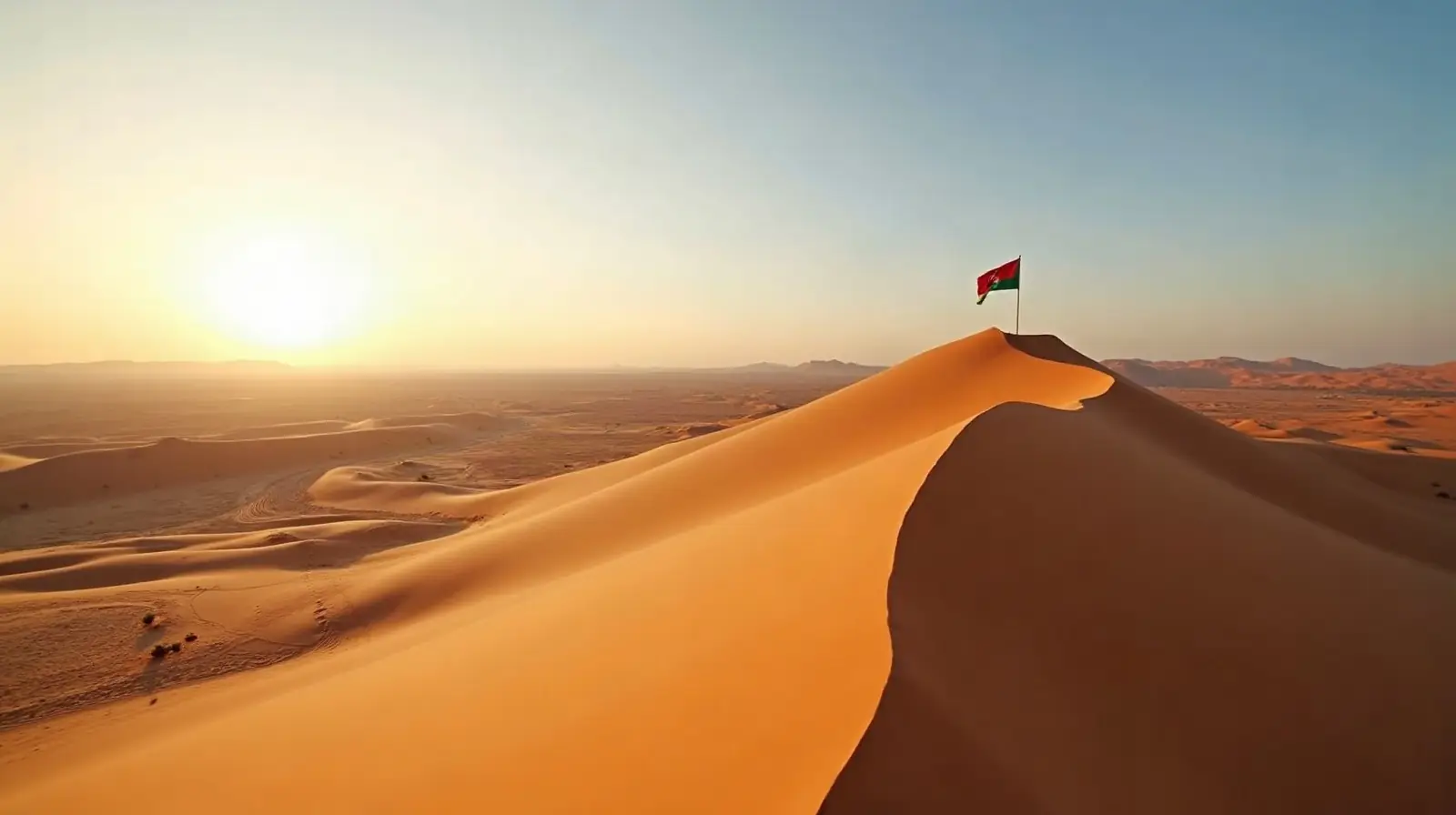
Northern Africa · UN member

Libya: Travel Guide & Requirements
State of Libya · دولة ليبيا
Libya is a country in Northern Africa with its capital in Tripoli. It has a population of 7.5 million (#105 in the world) and covers 1,759,540 km². The official language is Arabic. The currency is the Libyan dinar (LYD, ل.د).
Where is Libya? Map of Libya
Northern Africa, bordering the Mediterranean Sea, between Egypt, Tunisia, and Algeria.
- Region
- Northern Africa
- Coordinates
- 25° N, 17° E
- Neighbours
- 6 — see list
- Coastline
- 1,770 km
- Libya
- Neighbours
- Capital
- Largest cities
Map of Libya showing Tripoli (capital) and the largest cities: Benghazi, Misratah, Zliten, Sabha, Tobruk, Ajdabiya, Al Ajaylat and Al Bayḑā’.
Travel requirements
What you need to travel to Libya
- Passport
Libya's eVisa portal lists, among the requirements for its tourist visa, a travel document valid for not less than six months entitling its holder to return to the issuing country; for the study visa it asks for not les…
- Visa or eTA
Depends on your passport: of 198 passports, 4 need no visa, 192 need an eVisa, 1 needs a visa from an embassy. Check yours or see Libya entry requirements for every passport.
- Return or onward ticket
No official requirement. Libya's eVisa portal lists a valid return travel ticket among the requirements for the Temporary Assignment Visa, and a confirmed travel ticket to the final destination for the Transit Visa; the Tourist Visa requirement…
- Proof of funds
Libya's eVisa portal lists among the tourist visa requirements that the tourist must possess an amount of not less than USD 1,000 or its equivalent in a convertible currency.
- Travel insurance
No official requirement. The UK Foreign Office says to make sure you have appropriate travel insurance for local treatment or unexpected medical evacuation.
- Customs allowance
The UK Foreign Office says that if you enter or leave Libya with over USD 10,000-worth of cash, you must declare it to the customs authorities, or you risk having the money confiscated and even being detained, and that …
- Travel advice
Avoid travel — US and UK advice.
Entry rules: TravelRequirements.info — Entry Requirements Dataset (CC BY 4.0), each rule cited to an official government source. Always confirm with the airline and the official source before you travel.
Before you go
10 things to know before you travel to Libya
- Safety: Governments advise against travel to Libya: the US State Department rates Libya Level 4 (“Do Not Travel”), and the UK Foreign Office advises against all travel to parts of the country.
- Best time to go: May to June and October — when daytime highs in Tripoli are around 24–27°C.
- Money: the Libyan dinar (LYD) — 1 US dollar is about 6.3891 LYD.
- Plugs: type C, F and L, 230 V, 50 Hz — standard 220–240 V: devices from the US or Japan (110–120 V) need a converter unless they are dual voltage (100–240 V).
- Emergency numbers: Police 1515, Ambulance 1515, Fire 1515.
- Language: Arabic is official; English is also spoken.
- Driving: on the right — speed limits are 50 km/h in built-up areas and 85 km/h outside built-up areas.
- Time zone: UTC+2 in Tripoli.
- Capital: Tripoli. About 7.5 million people live in Libya.
- Libya is the 17th largest country in the world by area.
Key facts
Libya at a glance
Languages spoken: Arabic (official), Italian, English (all widely understood in the major cities); Tamazight (Nafusi, Ghadamis, Suknah, Awjilah, Tamasheq)
Geography & history
About Libya
Berbers have inhabited central north Africa since ancient times, but Phoenicians, Greeks, Carthaginians, Persians, Egyptians, Romans, and Vandals have all settled and ruled the region. In the 7th century, Islam spread through the area. In the mid-16th century, Ottoman rule began; the Italians supplanted the Ottoman Turks in the area around Tripoli in 1911 and held it until 1943, when they were defeated in World War II. Libya then came under UN administration and achieved independence in 1951. Col. Muammar al-QADHAFI assumed leadership with a military coup in 1969 and began to espouse a political system that combined socialism and Islam. During the 1970s, QADHAFI used oil revenues to promote…
Read the full history
Berbers have inhabited central north Africa since ancient times, but Phoenicians, Greeks, Carthaginians, Persians, Egyptians, Romans, and Vandals have all settled and ruled the region. In the 7th century, Islam spread through the area. In the mid-16th century, Ottoman rule began; the Italians supplanted the Ottoman Turks in the area around Tripoli in 1911 and held it until 1943, when they were defeated in World War II. Libya then came under UN administration and achieved independence in 1951. Col. Muammar al-QADHAFI assumed leadership with a military coup in 1969 and began to espouse a political system that combined socialism and Islam. During the 1970s, QADHAFI used oil revenues to promote his ideology outside Libya, supporting subversive and terrorist activities that included the downing of two airliners -- one over Scotland and another in Northern Africa -- and a discotheque bombing in Berlin. UN sanctions in 1992 isolated QADHAFI politically and economically; the sanctions were lifted in 2003 when Libya accepted responsibility for the bombings and agreed to claimant compensation. QADHAFI also agreed to end Libya's program to develop weapons of mass destruction, and he made significant strides in normalizing relations with Western nations. Unrest that began in several Middle Eastern and North African countries in 2010 erupted in Libyan cities in 2011. QADHAFI's brutal crackdown on protesters spawned an eight-month civil war that saw the emergence of a National Transitional Council (NTC), UN authorization of air and naval intervention by the international community, and the toppling of the QADHAFI regime. In 2012, the NTC handed power to an elected parliament, the General National Congress (GNC), which was replaced two years later with the House of Representatives (HoR). In 2015, the UN brokered the Libyan Political Agreement (LPA) among a broad array of political parties and social groups, establishing an interim executive body. However, hardliners continued to oppose and hamper the LPA implementation, leaving Libya with eastern and western-based rival governments. In 2018, the international community supported a recalibrated plan that aimed to break the political deadlock with a National Conference in 2019. These plans, however, were derailed when the eastern-based, self-described Libyan National Army (LNA) launched an offensive to seize Tripoli. The LNA offensive collapsed in 2020, and a subsequent UN-sponsored cease-fire helped formalize the pause in fighting between rival camps. In 2021, the UN-facilitated Libyan Political Dialogue Forum selected a new prime minister for an interim government -- the Government of National Unity (GNU) -- and a new presidential council charged with preparing for elections and uniting the country’s state institutions. The HoR approved the GNU and its cabinet the same year, providing Libya with its first unified government since 2014, but the parliament then postponed the planned presidential election to an undetermined date in the future. In 2022, the HoR voted to replace GNU interim Prime Minister, Abdul Hamid DUBAYBAH, with another government led by Fathi BASHAGHA. GNU allegations of an illegitimate HoR vote allowed DUBAYBAH to remain in office and rebuff BASHAGHA's attempts to seat his government in Tripoli. In 2023, the HoR voted to replace BASHAGHA with Osma HAMAD. Special Representative of the UN Security-General for Libya, Abdoulaye BATHILY, is leading international efforts to persuade key Libyan political actors to resolve the core issues impeding elections.
Location
Northern Africa, bordering the Mediterranean Sea, between Egypt, Tunisia, and Algeria
Climate
Mediterranean along coast; dry, extreme desert interior
Terrain
mostly barren, flat to undulating plains, plateaus, depressions
Highest point
Bikku Bitti 2,267 m
Natural resources
petroleum, natural gas, gypsum
Natural hazards
hot, dry, dust-laden ghibli is a southern wind lasting one to four days in spring and fall; dust storms, sandstorms
National symbols
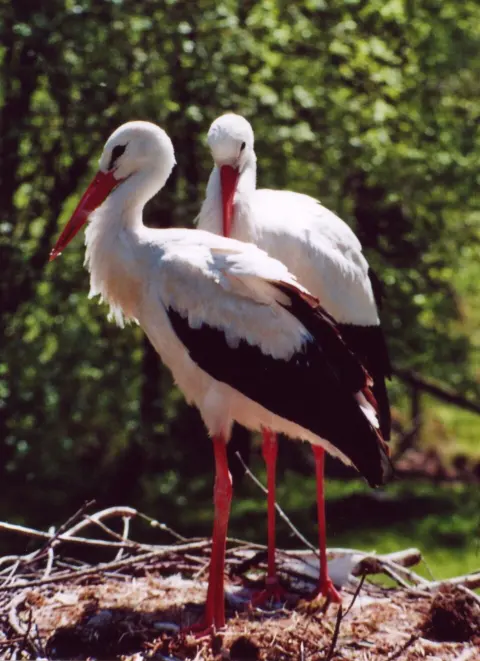
star and crescent, hawk
Driving
Speed limits & road rules in Libya
The default speed limits in Libya are 50 km/h in built-up areas and 85 km/h outside built-up areas. Posted signs always take priority over these defaults.
- 5050 km/hBuilt-up areasTowns and citiesWHO data (2017)
- 8585 km/hOutside built-up areasCountry roadsWHO data (2017)
- International Driving PermitNot a party to the IDP conventionsCheck with the embassy whether your licence is accepted
- Driving sideDrive on the rightOvertake on the left
- Seat beltsRequired by law
- Child seatsNo national child-restraint law
- Motorcycle helmetsNo nationwide law
- Road deaths (2021)34.0 per 100,000 peopleHigher than most countries (median 12.4)
Speed limits: OpenStreetMap wiki — Default speed limits (CC BY-SA 2.0) and WHO. Road-safety laws: WHO Global Health Observatory. Compare speed limits and alcohol limits by country. Defaults for cars; local signs, weather and vehicle type can lower them.
Safety
Is Libya safe to visit?
Governments advise against travel to Libya: the US State Department rates Libya Level 4 (“Do Not Travel”), and the UK Foreign Office advises against all travel to parts of the country.
 US State Department
 UK Foreign Office (FCDO)
Latest update: FCDO now advises against all but essential travel to the cities of Tripoli, Benghazi, Al-Bayda and Derna, and the surrounding area knows as Jebel Akhdar, either side of the coastal and desert roads between and including the towns of Al-Maqrun and Al-Tamimi, Misrata ('Warnings and insurance' and 'Re
Updated 21 Jul 2026 · Full travel advice
Sources: US Department of State travel advisories (public domain) and UK FCDO foreign travel advice (contains public sector information licensed under the Open Government Licence v3.0). Checked daily. Advice can change quickly — always read the official page before you travel.
Weather
Best time to visit Libya
The best time to visit Libya is May to June and October, when daytime highs in Tripoli are around 24–27°C. April, July to September and November are also a good time to go. August is the warmest month (31°C by day), February the coldest (12°C at night).
- Jan16°C13°C
- Feb16°C12°C
- Mar18°C13°C
- Apr21°C15°C
- May24°C18°C
- Jun27°C21°C
- Jul30°C25°C
- Aug31°C26°C
- Sep29°C25°C
- Oct26°C22°C
- Nov22°C18°C
- Dec18°C15°C
Best time Good Less ideal
Before you go
Plugs, voltage & emergency numbers in Libya
Plugs & sockets
- Type C (Europlug)two round pins
- Type F (Schuko)two round pins with earth clips on the sides
- Type Lthree round pins in a row
230 V, 50 Hz · Standard 220–240 V: devices from the US or Japan (110–120 V) need a converter unless they are dual voltage (100–240 V).
Emergency numbers
Save the local numbers before you travel — 112 or 911 may not connect here. All countries →
Sources: Wikipedia — Mains electricity by country and List of emergency telephone numbers (CC BY-SA 4.0).
National parks
6 national parks in Libya
- 514 km² protected
- oldest from 1975
Largest: El-Kouf National Park · Algharabolli National Park · Abughilan National Park
Currency · 26 October 2026
Libyan dinar exchange rates today
Libya uses the Libyan dinar (LYD, ل.د). One US dollar buys 6.3891 LYD; over the last 30 days the LYD has lost 0.0% against the dollar.
What other currencies cost in LYD
Currency converter
Daily reference rates from the open-source currency-api (CC0), 26 Oct 2026. Banks and exchange offices add a margin.
World rankings
Where Libya ranks
How Libya compares with the rest of the world — open any card for the full ranking.
Airports
Airports in Libya
75 airports and airfields — 4 large, 9 medium and 62 small, plus 0 heliports. 7 have scheduled passenger flights.


Military
Libyan armed forces
Libya ranks #80 of 145 in the Global Firepower military strength ranking, with a defence budget of $1.6 billion (2023).
People
Population & society
Religion
Largest cities: Tripoli (1.2 million), Misratah (984,000), Benghazi (859,000)
Economy
Economy
Main industries
petroleum, petrochemicals, aluminum, iron and steel, food processing, textiles, handicrafts, cement
Export partners
Italy 23%, Germany 15%, Spain 9%, France 7%, China 6% (2023)
Top exports
crude petroleum, natural gas, refined petroleum, gold, scrap iron (2023)
Travel tools
Handy before every trip to Libya
Next public holiday
Independence Day — Thursday, 24 December 2026. Then Revolution Day (17 Feb).
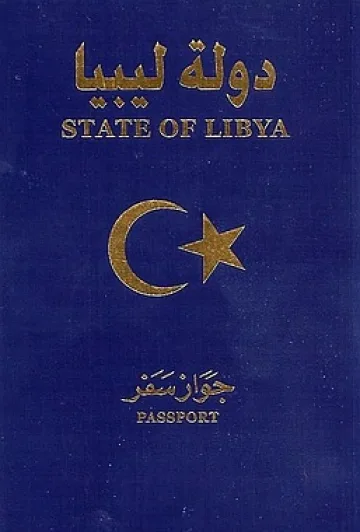
Libyan passport
Ranked #184: 14 countries visa-free, 24 with visa on arrival, 3 with an eTA and 45 with an eVisa.
Libyan passport photo
Exact size, head position and background for Libya's passport and visa photos — make one free with AI checks.
Calling Libya
Dial +218 before the local number. Internet domain .ly.
Climate footprint
65.3 million tonnes of CO₂ in 2024 — 8.84 t per person.
Entry requirements
Visa rules for every passport visiting Libya: visa-free stays, eVisas, visas on arrival and documents to bring.
News
Latest travel news about Libya
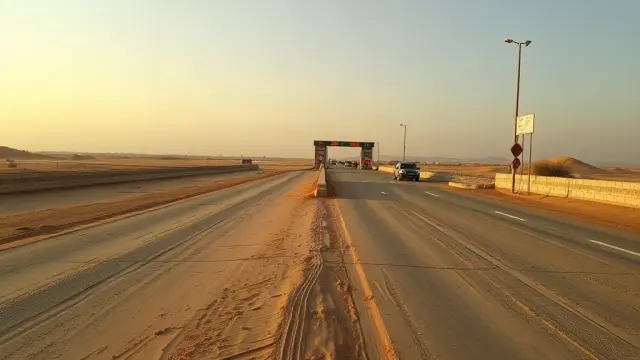
Tunisia drops visas for Iranian travellers as land borders stay tough
Tunisia lifted visa requirements for Iranians entering the country after President Kais Saied's May 2024 visit to Tehran. Its land borders with Alger…
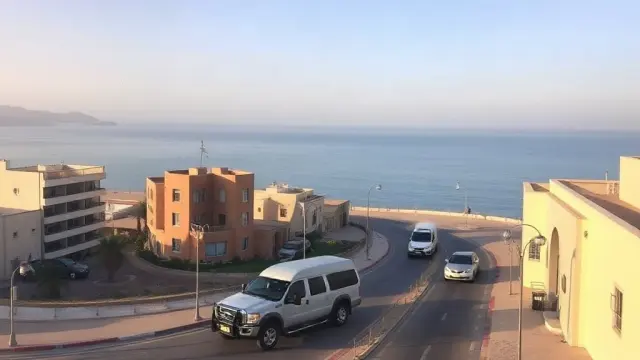
Libya and US discuss visa application hurdles in Tripoli consular meeting
Libya's Foreign Ministry met the new Head of Consular Affairs at the US Embassy in Tripoli to discuss visa application difficulties facing citizens o…
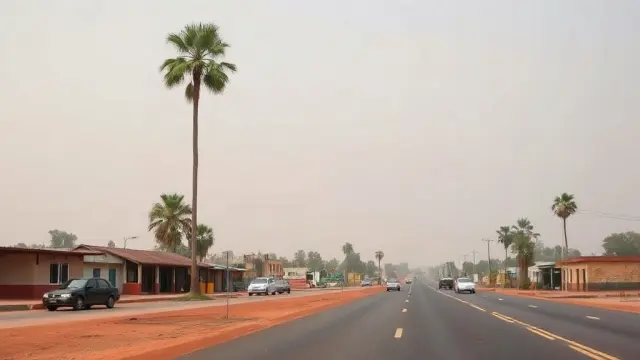
Travel to Central African Republic discouraged by US over crime and kidnapping risks
The US Department of State has placed the Central African Republic and 10 other African countries on its Level 4 'Do Not Travel' advisory as of Octob…
Frequently asked questions about Libya
What do I need to travel to Libya?
How long must my passport be valid for Libya?
Where is Libya?
What is Libya known for?
What is the capital of Libya?
What language is spoken in Libya?
What currency does Libya use?
What is the calling code of Libya?
Which countries border Libya?
How strong is the Libyan passport?
What is the speed limit in Libya?
Is Libya safe to visit?
When is the best time to visit Libya?
What plug type does Libya use?
How many airports does Libya have?
Sources: CIA World Factbook (public domain); World Bank Open Data (CC BY 4.0); names, languages and currencies: mledoze/countries (ODbL); flag: flag-icons (MIT); coat of arms: Wikimedia Commons (file page); exchange rates: Daily reference rates from the open-source currency-api (CC0); airports: OurAirports.