
Western Africa · UN member

Burkina Faso: Travel Guide & Requirements
Burkina Faso is a country in Western Africa with its capital in Ouagadougou. It has a population of 24.1 million (#59 in the world) and covers 274,200 km². The official language is French. The currency is the West African CFA franc (XOF, Fr).
Where is Burkina Faso? Map of Burkina Faso
Western Africa, north of Ghana.
- Region
- Western Africa
- Coordinates
- 13° N, 2° W
- Neighbours
- 6 — see list
- Coastline
- Landlocked
- Burkina Faso
- Neighbours
- Capital
- Largest cities
Map of Burkina Faso showing Ouagadougou (capital) and the largest cities: Bobo-Dioulasso, Koudougou, Ouahigouya, Kaya, Banfora, Pouytenga, Houndé and Fada N'gourma.
Travel requirements
What you need to travel to Burkina Faso
- Passport
The entry conditions require a passport or travel document "en cours de validité" (valid), and the UK FCDO says your passport must be valid for the duration of your stay and have 2 blank pages for entry stamps.
- Visa or eTA
Depends on your passport: of 198 passports, 19 need no visa, 176 need an eVisa, 2 need a visa from an embassy. Check yours or see Burkina Faso entry requirements for every passport.
- Return or onward ticket
Every foreigner must show border officers a return ticket, or a repatriation deposit or an exemption from it.
- Proof of funds
The entry conditions list what every foreigner must present to border officers, and proof of funds is not among them: a passport or travel document, an entry visa or permit unless exempt, a health card, and a return tic…
- Travel insurance
Short-stay visa applicants must provide a health insurance certificate covering the whole stay, together with a medical certificate showing they have no contagious disease.
- Vaccinations
WHO's country list says proof of vaccination against yellow fever is required for all travellers aged 9 months or over.
- Customs allowance
The BCEAO lists Burkina among its member states.
- Travel advice
Avoid travel — US and UK advice.
Entry rules: TravelRequirements.info — Entry Requirements Dataset (CC BY 4.0), each rule cited to an official government source. Always confirm with the airline and the official source before you travel.
Before you go
10 things to know before you travel to Burkina Faso
- Safety: Governments advise against travel to Burkina Faso: the US State Department rates Burkina Faso Level 4 (“Do Not Travel”), and the UK Foreign Office advises against all travel to the whole country.
- Best time to go: December to January — when daytime highs in Ouagadougou are around 32°C.
- Money: the West African CFA franc (XOF) — 1 US dollar is about 584.5354 XOF.
- Plugs: type C and E, 220 V, 50 Hz — standard 220–240 V: devices from the US or Japan (110–120 V) need a converter unless they are dual voltage (100–240 V).
- Emergency numbers: Police 17, Ambulance 112, Fire 18.
- Language: French is official.
- Driving: on the right — speed limits are 50 km/h in built-up areas and 90 km/h outside built-up areas.
- Time zone: UTC0 in Ouagadougou.
- Capital: Ouagadougou. About 24.1 million people live in Burkina Faso.
- Outdoors: 6 national parks.
Key facts
Burkina Faso at a glance
Languages spoken: Mossi 52.9%, Fula 7.8%, Gourmantche 6.8%, Dyula 5.7%, Bissa 3.3%, Gurunsi 3.2%, French (official) 2.2%, Bwamu 2%, Dagara 2%, San 1.7%, Marka 1.6%, Bobo 1.5%, Senufo 1.5%, Lobi 1.2%, other 6.6% (2019 est.)
Geography & history
About Burkina Faso
Many of Burkina Faso’s ethnic groups arrived in the region between the 12th and 15th centuries. The Gurma and Mossi peoples established several of the largest kingdoms in the area and used horse-mounted warriors in military campaigns. Of the various Mossi kingdoms, the most powerful were Ouagadougou and Yatenga. In the late 19th century, European states competed for control of the region. France eventually conquered the area and established it as a French protectorate. The country achieved independence from France in 1960 and changed its name to Burkina Faso in 1984. Repeated military coups were common in the country’s first few decades. In 1987 Blaise COMPAORE deposed the president, establ…
Read the full history
Many of Burkina Faso’s ethnic groups arrived in the region between the 12th and 15th centuries. The Gurma and Mossi peoples established several of the largest kingdoms in the area and used horse-mounted warriors in military campaigns. Of the various Mossi kingdoms, the most powerful were Ouagadougou and Yatenga. In the late 19th century, European states competed for control of the region. France eventually conquered the area and established it as a French protectorate. The country achieved independence from France in 1960 and changed its name to Burkina Faso in 1984. Repeated military coups were common in the country’s first few decades. In 1987 Blaise COMPAORE deposed the president, established a government, and ruled for 27 years. In 2014, COMPAORE resigned after protests against his repeated efforts to amend the constitution's two-term presidential limit. An interim administration led a year-long transition, organizing presidential and legislative elections. In 2015, Roch Marc Christian KABORE was elected president, and he was reelected in 2020. In 2022, the military conducted two takeovers: In January, army colonel Paul Henri DAMIBA overthrew KABORE in a coup d'etat, and then in September, army captain Ibrahim TRAORE deposed DAMIBA and declared himself transition president. The transition government planned to hold elections by July 2024, but they may be delayed due to security concerns. Terrorist groups -- including groups affiliated with Al-Qa’ida and the Islamic State -- began attacks in the country in 2016 and conducted attacks in the capital in 2016, 2017, and 2018. By early 2023, insecurity in Burkina Faso had displaced more than 2 million people and led to significant jumps in humanitarian needs and food insecurity. In addition to terrorism, the country faces a myriad of problems including high population growth, recurring drought, pervasive and perennial food insecurity, and limited natural resources. It is one of the world’s poorest countries.
Location
Western Africa, north of Ghana
Climate
three climate zones including a hot tropical savanna with a short rainy season in the southern half, a tropical hot semi-arid steppe climate typical of the Sahel region in the northern half, and small area of hot desert in the very north of the country border…
Terrain
mostly flat to dissected, undulating plains; hills in the west and southeast; occupies an extensive plateau with savanna that is grassy in the north and gradually gives way to sparse forests in the south
Highest point
Tena Kourou 749 m
Natural resources
gold, manganese, zinc, limestone, marble, phosphates, pumice, salt
Natural hazards
recurring droughts
National symbols
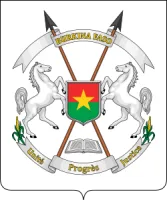
white stallion
Driving
Speed limits & road rules in Burkina Faso
The default speed limits in Burkina Faso are 50 km/h in built-up areas and 90 km/h outside built-up areas. The legal alcohol limit for drivers is 0.5‰. Posted signs always take priority over these defaults.
- 5050 km/hBuilt-up areasTowns and cities
- 9090 km/hOutside built-up areasCountry roads
- International Driving PermitRecognised: 1949 GenevaCarry the IDP together with your national licence
- Driving sideDrive on the rightOvertake on the left
- Alcohol limit0.5‰ blood alcohol (0.05% BAC)0.2‰ for young / novice drivers
- Seat beltsRequired by law
- Child seatsRequired by law
- Motorcycle helmetsRequired for riders
- Road deaths (2021)27.8 per 100,000 peopleHigher than most countries (median 12.4)
Speed limits: OpenStreetMap wiki — Default speed limits (CC BY-SA 2.0). Road-safety laws: WHO Global Health Observatory. Compare speed limits and alcohol limits by country. Defaults for cars; local signs, weather and vehicle type can lower them.
Safety
Is Burkina Faso safe to visit?
Governments advise against travel to Burkina Faso: the US State Department rates Burkina Faso Level 4 (“Do Not Travel”), and the UK Foreign Office advises against all travel to the whole country.
 US State Department
 UK Foreign Office (FCDO)
Latest update: New information about dual nationals returning to the UK (‘Entry requirements’ page).
Updated 10 Dec 2025 · Full travel advice
Sources: US Department of State travel advisories (public domain) and UK FCDO foreign travel advice (contains public sector information licensed under the Open Government Licence v3.0). Checked daily. Advice can change quickly — always read the official page before you travel.
Weather
Best time to visit Burkina Faso
The best time to visit Burkina Faso is December to January, when daytime highs in Ouagadougou are around 32°C. February and October to November are also a good time to go. April is the warmest month (40°C by day), January the coldest (14°C at night), and August the wettest with about 245 mm of rain.
- Jan32°C14°C
- Feb36°C18°C
- Mar39°C22°C
- Apr40°C25°C
- May38°C26°C
- Jun35°C24°C
- Jul32°C23°C
- Aug31°C22°C
- Sep31°C22°C
- Oct34°C21°C
- Nov34°C17°C
- Dec32°C14°C
Best time Good Less ideal
Before you go
Plugs, voltage & emergency numbers in Burkina Faso
Plugs & sockets
220 V, 50 Hz · Standard 220–240 V: devices from the US or Japan (110–120 V) need a converter unless they are dual voltage (100–240 V).
Emergency numbers
112 works from any mobile phone, even without a SIM card in most networks. All countries →
Sources: Wikipedia — Mains electricity by country and List of emergency telephone numbers (CC BY-SA 4.0).
National parks
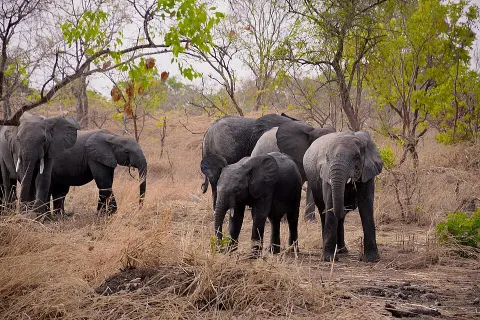
6 national parks in Burkina Faso
- 5,387 km² protected
- oldest from 1967
Largest: Kaboré Tambi National Park · W National Park of Burkina Faso · Deux Balés National Park
Currency · 26 October 2026
West African CFA franc exchange rates today
Burkina Faso uses the West African CFA franc (XOF, Fr). One US dollar buys 584.5354 XOF; over the last 30 days the XOF has lost 1.5% against the dollar.
What other currencies cost in XOF
Currency converter
Daily reference rates from the open-source currency-api (CC0), 26 Oct 2026. Banks and exchange offices add a margin.
World rankings
Where Burkina Faso ranks
How Burkina Faso compares with the rest of the world — open any card for the full ranking.
Airports
Airports in Burkina Faso
49 airports and airfields — 2 large, 0 medium and 47 small, plus 0 heliports. 2 have scheduled passenger flights.
Borders
Neighbouring countries
Burkina Faso borders 6 countries along 3,611 km of land borders. It is landlocked.


Military
Burkinabe armed forces
Burkina Faso ranks #121 of 145 in the Global Firepower military strength ranking, with a defence budget of $892 million (2025).
People
Population & society
Religion
Largest cities: Ouagadougou (3.2 million), Bobo-Dioulasso (1.1 million)
Economy
Economy
Main industries
cotton lint, beverages, agricultural processing, soap, cigarettes, textiles, gold
Export partners
Switzerland 72%, UAE 10%, India 3%, Mali 3%, Cote d'Ivoire 2% (2023)
Top exports
gold, cotton, oil seeds, coconuts/brazil nuts/cashews, cement (2023)
Travel tools
Handy before every trip to Burkina Faso
Next public holiday
Martyrs' Day — Saturday, 31 October 2026. Then All Saints' Day (1 Nov).

Burkinabe passport
Ranked #143: 30 countries visa-free, 25 with visa on arrival, 2 with an eTA and 41 with an eVisa.
Burkinabe passport photo
Exact size, head position and background for Burkina Faso's passport and visa photos — make one free with AI checks.
Calling Burkina Faso
Dial +226 before the local number. Internet domain .bf.
Climate footprint
6.5 million tonnes of CO₂ in 2024 — 0.28 t per person.
Entry requirements
Visa rules for every passport visiting Burkina Faso: visa-free stays, eVisas, visas on arrival and documents to bring.
News
Latest travel news about Burkina Faso
More intra-African flights, but visas and fares still deter travellers
Seats on intra-African tourism routes rose 10.5% year-on-year in August 2026, yet visas, high fares and indirect connections still hold back regional…
Chad Still Not Issuing Tourist Visas to US Citizens in 2026
Chad's president ordered a suspension of visas for US citizens in June 2025, and the country is not routinely issuing them. Niger, Mali and Burkina F…
Guinea-Bissau Travellers Holding Nigerian Passports Get 24 Visa-Free Entries
Nigerian passport holders can enter 24 destinations without arranging a visa in advance, according to the IziVisa Passport Ranking Index, which ranks…
Frequently asked questions about Burkina Faso
What do I need to travel to Burkina Faso?
How long must my passport be valid for Burkina Faso?
Where is Burkina Faso?
What is Burkina Faso known for?
What is the capital of Burkina Faso?
What language is spoken in Burkina Faso?
What currency does Burkina Faso use?
What is the calling code of Burkina Faso?
Which countries border Burkina Faso?
How strong is the Burkinabe passport?
What is the speed limit in Burkina Faso?
Is Burkina Faso safe to visit?
When is the best time to visit Burkina Faso?
What plug type does Burkina Faso use?
How many airports does Burkina Faso have?
Sources: CIA World Factbook (public domain); World Bank Open Data (CC BY 4.0); names, languages and currencies: mledoze/countries (ODbL); flag: flag-icons (MIT); coat of arms: Wikimedia Commons (file page); exchange rates: Daily reference rates from the open-source currency-api (CC0); airports: OurAirports.