
Central America · UN member

Nicaragua: Travel Guide & Requirements
Republic of Nicaragua
Nicaragua is a country in Central America with its capital in Managua. It has a population of 7.0 million (#108 in the world) and covers 130,370 km². The official language is Spanish. The currency is the Nicaraguan córdoba (NIO, C$).
Where is Nicaragua? Map of Nicaragua
Central America, bordering both the Caribbean Sea and the North Pacific Ocean, between Costa Rica and Honduras.
- Region
- Central America
- Coordinates
- 13° N, 85° W
- Neighbours
- 2 — see list
- Coastline
- 910 km
- Nicaragua
- Neighbours
- Capital
- Largest cities
Map of Nicaragua showing Managua (capital) and the largest cities: León, Matagalpa, Estelí, Nueva Guinea, Juigalpa, Bluefields, Ocotal and Puerto Cabezas.
Travel requirements
What you need to travel to Nicaragua
- Passport
The UK Foreign Office says your passport must have an expiry date at least 6 months after the date you arrive.
- Visa or eTA
Depends on your passport: of 198 passports, 68 need no visa, 128 need an eVisa, 2 need a visa from an embassy. Check yours or see Nicaragua entry requirements for every passport.
- Return or onward ticket
The UK Foreign Office tells British visitors, who can visit Nicaragua for up to 90 days without a visa, that they may be refused entry if they do not have an onward ticket.
- Proof of funds
Canada's travel advice says customs officials may ask you to show proof of sufficient funds to cover your stay.
- Travel insurance
No official requirement. Canada's travel advice says good health care is limited, especially outside of Managua.
- Vaccinations
The UK Foreign Office says you must have a yellow fever vaccination certificate if you are coming from a country listed as a transmission risk.
- Arrival card
Nicaragua's customs service (DGA) says all travellers or heads of family entering or leaving the country must complete a Traveller's Declaration, which its application lets you register and print, but only three days be…
- Customs allowance
Nicaragua's customs Traveller's Declaration, which all travellers entering or leaving must complete, asks whether you carry cash, securities, objects or precious metals worth US$10,000.00 or more, and if so asks for the…
- Travel advice
High risk — US and UK advice.
Entry rules: TravelRequirements.info — Entry Requirements Dataset (CC BY 4.0), each rule cited to an official government source. Always confirm with the airline and the official source before you travel.
Before you go
10 things to know before you travel to Nicaragua
- Safety: Travel to Nicaragua carries a high risk: the US State Department rates Nicaragua Level 3 (“Reconsider Travel”), and the UK Foreign Office has no warnings against travel there.
- Best time to go: December to February — when daytime highs in Managua are around 31–33°C.
- Money: the Nicaraguan córdoba (NIO) — 1 US dollar is about 36.7581 NIO.
- Plugs: type A and B, 120 V, 60 Hz — low-voltage country: devices made only for 220–240 V need a voltage converter. Phone and laptop chargers (100–240 V) only need a plug adapter.
- Emergency numbers: Police 118, Ambulance 128, Fire 115.
- Language: Spanish is official.
- Driving: on the right — speed limits are 45 km/h in built-up areas and 60 km/h outside built-up areas.
- Time zone: UTC-6 in Managua.
- Capital: Managua. About 7.0 million people live in Nicaragua.
- Outdoors: 4 national parks.
Key facts
Nicaragua at a glance
Languages spoken: Spanish (official) 99.5%, Indigenous 0.3%, Portuguese 0.1%, other 0.1% (2020 est.)
Geography & history
About Nicaragua
The Pacific coast of Nicaragua was settled as a Spanish colony in the early 16th century. Independence from Spain was declared in 1821, and the country became an independent republic in 1838. Britain occupied the Caribbean Coast in the first half of the 19th century, but gradually ceded control of the region in subsequent decades. By 1978, violent opposition to governmental manipulation and corruption resulted in a short-lived civil war that brought a civil-military coalition to power in 1979, spearheaded by Marxist Sandinista guerrillas led by Daniel ORTEGA Saavedra. Nicaraguan aid to leftist rebels in El Salvador prompted the US to sponsor anti-Sandinista Contra guerrillas through much of…
Read the full history
The Pacific coast of Nicaragua was settled as a Spanish colony in the early 16th century. Independence from Spain was declared in 1821, and the country became an independent republic in 1838. Britain occupied the Caribbean Coast in the first half of the 19th century, but gradually ceded control of the region in subsequent decades. By 1978, violent opposition to governmental manipulation and corruption resulted in a short-lived civil war that brought a civil-military coalition to power in 1979, spearheaded by Marxist Sandinista guerrillas led by Daniel ORTEGA Saavedra. Nicaraguan aid to leftist rebels in El Salvador prompted the US to sponsor anti-Sandinista Contra guerrillas through much of the 1980s. After losing free and fair elections in 1990, 1996, and 2001, ORTEGA was elected president in 2006, 2011, 2016, and most recently in 2021. Municipal, regional, and national-level elections since 2008 have been marred by widespread irregularities. Democratic institutions have lost their independence under the ORTEGA regime as the president has assumed full control over all branches of government, as well as cracking down on a nationwide pro-democracy protest movement in 2018 and shuttering over 3,300 civil society organizations between 2018 and 2024. In the lead-up to the 2021 presidential election, authorities arrested over 40 individuals linked to the opposition, including presidential candidates, private sector leaders, NGO workers, human rights defenders, and journalists. Only five lesser-known presidential candidates from mostly small parties allied to ORTEGA's Sandinistas were allowed to run against ORTEGA. He then awarded the Sandinistas control of all 153 of Nicaraguan municipalities in the 2022 municipal elections, consolidating one-party rule.
Location
Central America, bordering both the Caribbean Sea and the North Pacific Ocean, between Costa Rica and Honduras
Climate
tropical in lowlands, cooler in highlands
Terrain
extensive Atlantic coastal plains rising to central interior mountains; narrow Pacific coastal plain interrupted by volcanoes
Highest point
Mogoton 2,085 m
Natural resources
gold, silver, copper, tungsten, lead, zinc, timber, fish
Natural hazards
destructive earthquakes; volcanoes; landslides; extremely susceptible to hurricanes volcanism: significant volcanic activity; Cerro Negro (728 m) is one of Nicaragua's most active volcanoes; its lava flows and ash have been known to cause significant damage t…
National symbols
turquoise-browed motmot (bird)
Driving
Speed limits & road rules in Nicaragua
The default speed limits in Nicaragua are 45 km/h in built-up areas and 60 km/h outside built-up areas. Posted signs always take priority over these defaults.
- 4545 km/hBuilt-up areasTowns and cities
- 6060 km/hOutside built-up areasCountry roads
- International Driving PermitNot a party to the IDP conventionsCheck with the embassy whether your licence is accepted
- Driving sideDrive on the rightOvertake on the left
- Road deaths (2021)13.6 per 100,000 peopleClose to the world median (12.4)
Speed limits: OpenStreetMap wiki — Default speed limits (CC BY-SA 2.0). Road-safety laws: WHO Global Health Observatory. Compare speed limits and alcohol limits by country. Defaults for cars; local signs, weather and vehicle type can lower them.
Safety
Is Nicaragua safe to visit?
Travel to Nicaragua carries a high risk: the US State Department rates Nicaragua Level 3 (“Reconsider Travel”), and the UK Foreign Office has no warnings against travel there.
 US State Department
 UK Foreign Office (FCDO)
Latest update: New information about dual nationals returning to the UK (‘Entry requirements’ page).
Updated 10 Dec 2025 · Full travel advice
Sources: US Department of State travel advisories (public domain) and UK FCDO foreign travel advice (contains public sector information licensed under the Open Government Licence v3.0). Checked daily. Advice can change quickly — always read the official page before you travel.
Weather
Best time to visit Nicaragua
The best time to visit Nicaragua is December to February, when daytime highs in Managua are around 31–33°C. March to April, July and November are also a good time to go. April is the warmest month (35°C by day), January the coldest (22°C at night), and October the wettest with about 312 mm of rain.
- Jan32°C22°C
- Feb33°C23°C
- Mar35°C24°C
- Apr35°C25°C
- May33°C25°C
- Jun30°C25°C
- Jul30°C24°C
- Aug31°C24°C
- Sep30°C24°C
- Oct29°C24°C
- Nov29°C23°C
- Dec31°C22°C
Best time Good Less ideal
Before you go
Plugs, voltage & emergency numbers in Nicaragua
Plugs & sockets
120 V, 60 Hz · Low-voltage country: devices made only for 220–240 V need a voltage converter. Phone and laptop chargers (100–240 V) only need a plug adapter.
Emergency numbers
Save the local numbers before you travel — 112 or 911 may not connect here. All countries →
Sources: Wikipedia — Mains electricity by country and List of emergency telephone numbers (CC BY-SA 4.0).
National parks
4 national parks in Nicaragua
- 231 km² protected
- oldest from 1971
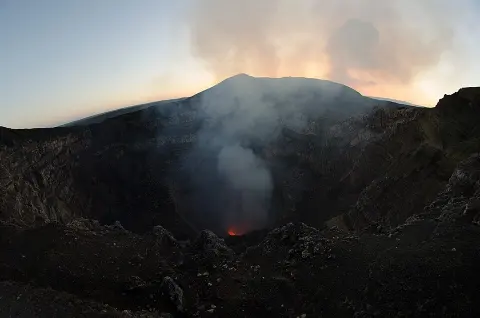
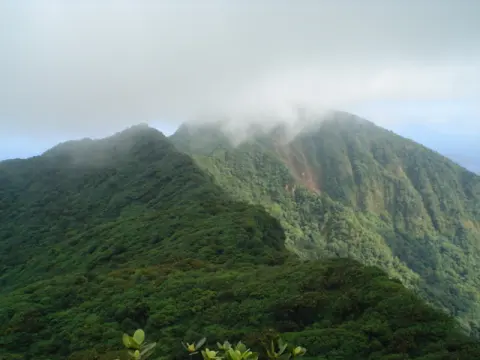
Largest: Saslaya National Park · Masaya Volcano National Park · Volcán Maderas
Currency · 26 October 2026
Nicaraguan córdoba exchange rates today
Nicaragua uses the Nicaraguan córdoba (NIO, C$). One US dollar buys 36.7581 NIO; over the last 30 days the NIO has lost 0.0% against the dollar.
What other currencies cost in NIO
Currency converter
Daily reference rates from the open-source currency-api (CC0), 26 Oct 2026. Banks and exchange offices add a margin.
World rankings
Where Nicaragua ranks
How Nicaragua compares with the rest of the world — open any card for the full ranking.
Airports
Airports in Nicaragua
39 airports and airfields — 1 large, 2 medium and 36 small, plus 0 heliports. 5 have scheduled passenger flights.
Borders
Neighbouring countries
Nicaragua borders 2 countries along 1,253 km of land borders. Coastline: 910 km.


Military
Nicaraguan armed forces
Nicaragua ranks #117 of 145 in the Global Firepower military strength ranking, with a defence budget of $116 million (2025).
People
Population & society
Religion
Largest cities: Managua (1.1 million)
Economy
Economy
Main industries
food processing, chemicals, machinery and metal products, knit and woven apparel, petroleum refining and distribution, beverages, footwear, wood, electric wire harness manufacturing, mining
Export partners
USA 51%, Mexico 12%, El Salvador 6%, Canada 6%, Switzerland 4% (2023)
Top exports
garments, gold, insulated wire, coffee, beef (2023)
Travel tools
Handy before every trip to Nicaragua
Next public holiday
Immaculate Conception — Tuesday, 8 December 2026. Then Christmas Day (25 Dec).
Nicaraguan passport
Ranked #90: 73 countries visa-free, 33 with visa on arrival, 5 with an eTA and 41 with an eVisa.
Nicaraguan passport photo
Exact size, head position and background for Nicaragua's passport and visa photos — make one free with AI checks.
Calling Nicaragua
Dial +505 before the local number. Internet domain .ni.
Climate footprint
5.6 million tonnes of CO₂ in 2024 — 0.81 t per person.
Entry requirements
Visa rules for every passport visiting Nicaragua: visa-free stays, eVisas, visas on arrival and documents to bring.
News
Latest travel news about Nicaragua
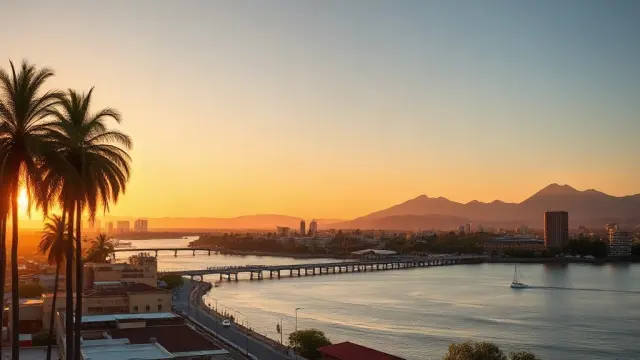
Nicaragua Diplomatic, Official and Service Passport Holders Get Cambodia Visa Waiver
Cambodia and Nicaragua have signed a visa exemption agreement for holders of diplomatic, official or service passports, in Phnom Penh in April 2026. …
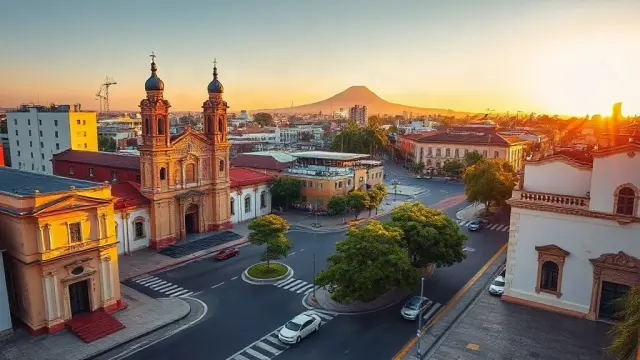
Nicaragua and Cambodia Hold First Political Talks, Confirm Visa Exemption
Cambodia and Nicaragua held their first bilateral political consultations in Managua on 18–19 October 2026. Their April agreements include mutual vis…
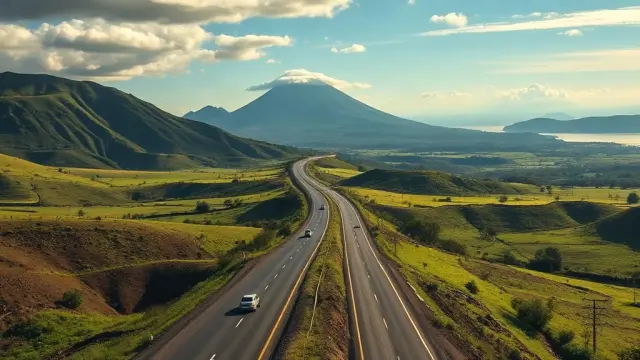
Nicaragua travel basics: western roads, rainy season and the airport near Managua
Nicaragua's transport links are concentrated in the west, and parts of the highway network become impassable in the rainy season. The main internatio…
Frequently asked questions about Nicaragua
What do I need to travel to Nicaragua?
How long must my passport be valid for Nicaragua?
Where is Nicaragua?
What is Nicaragua known for?
What is the capital of Nicaragua?
What language is spoken in Nicaragua?
What currency does Nicaragua use?
What is the calling code of Nicaragua?
Which countries border Nicaragua?
How strong is the Nicaraguan passport?
What is the speed limit in Nicaragua?
Is Nicaragua safe to visit?
When is the best time to visit Nicaragua?
What plug type does Nicaragua use?
How many airports does Nicaragua have?
Sources: CIA World Factbook (public domain); World Bank Open Data (CC BY 4.0); names, languages and currencies: mledoze/countries (ODbL); flag: flag-icons (MIT); coat of arms: Wikimedia Commons (file page); exchange rates: Daily reference rates from the open-source currency-api (CC0); airports: OurAirports.