
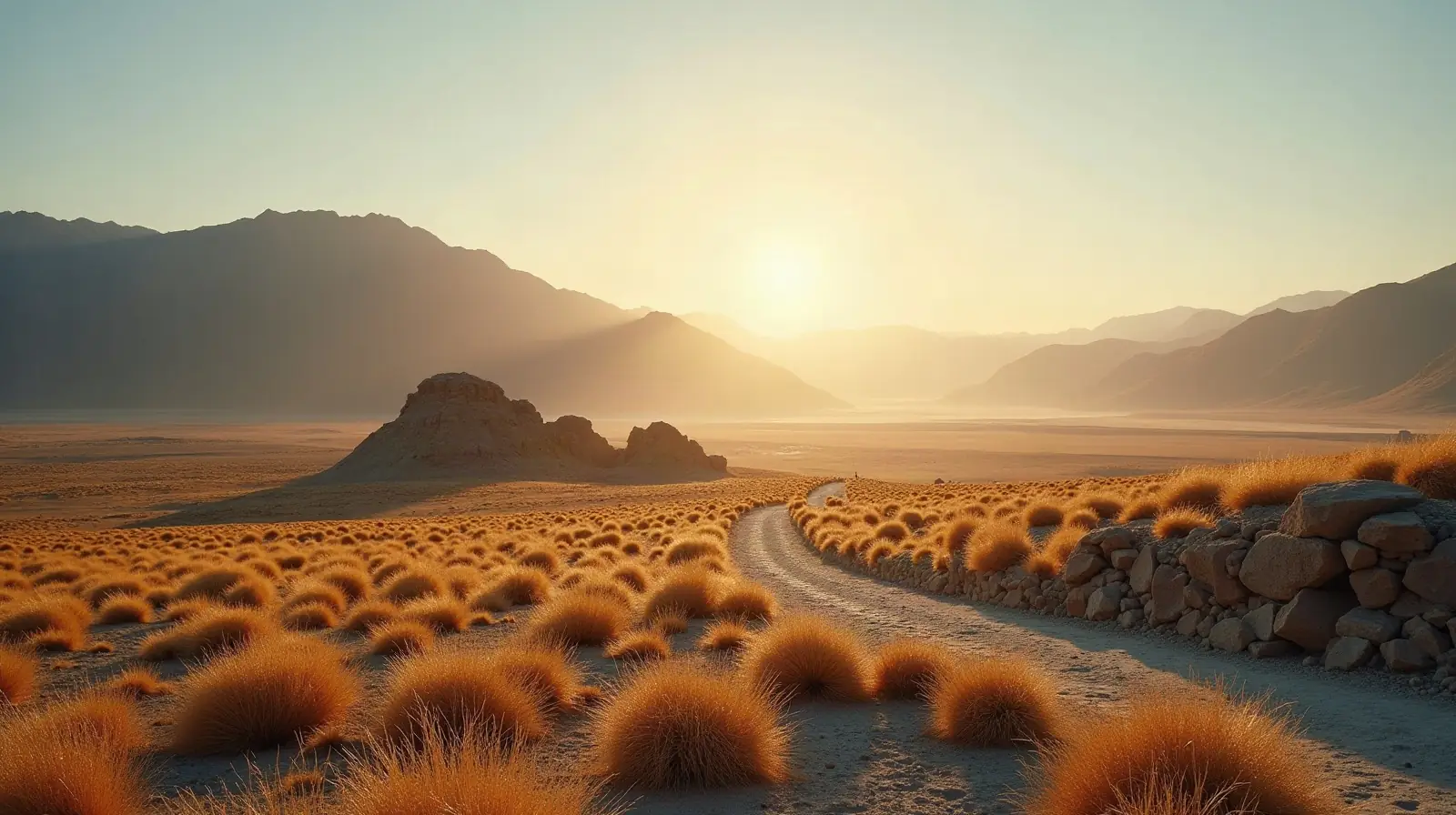
Southern Asia · UN member

Afghanistan: Travel Guide & Requirements
Islamic Republic of Afghanistan · جمهوری اسلامی افغانستان · د افغانستان اسلامي جمهوریت
Afghanistan is a country in Southern Asia with its capital in Kabul. It has a population of 43.8 million (#36 in the world) and covers 652,230 km². The official languages are Dari, Pashto and Turkmen. The currency is the Afghan afghani (AFN, ؋).
Where is Afghanistan? Map of Afghanistan
Southern Asia, north and west of Pakistan, east of Iran.
- Region
- Southern Asia
- Coordinates
- 33° N, 65° E
- Neighbours
- 6 — see list
- Coastline
- Landlocked
- Afghanistan
- Neighbours
- Capital
- Largest cities
Map of Afghanistan showing Kabul (capital) and the largest cities: Herāt, Kandahār, Mazār-e Sharīf, Jalālābād, Kunduz, Ghazni, Baghlān and Gardez.
Travel requirements
What you need to travel to Afghanistan
- Passport
Canada's travel advice says your passport must be valid for at least 6 months from the date you enter Afghanistan.
- Visa or eTA
Depends on your passport: of 198 passports, 2 need an eVisa, 196 need a visa from an embassy. Check yours or see Afghanistan entry requirements for every passport.
- Return or onward ticket
No official requirement.
- Proof of funds
No official requirement. The Ministry of Foreign Affairs says a tourist visa is issued on the basis of the applicant's travel purpose and documents such as a valid passport and a hotel booking confirmation.
- Travel insurance
No official requirement. The UK Foreign Office advises checking before you travel that you have valid and appropriate travel insurance for local treatment or unexpected medical evacuation.
- Vaccinations
The UK government says that when you leave Afghanistan, the authorities may ask for a certificate proving you have had a polio vaccine.
- Customs allowance
The UK government says it is illegal to carry more than US$5,000 in cash through airports, or more than US$500 through land borders.
- Travel advice
Avoid travel — US and UK advice.
Entry rules: TravelRequirements.info — Entry Requirements Dataset (CC BY 4.0), each rule cited to an official government source. Always confirm with the airline and the official source before you travel.
Before you go
10 things to know before you travel to Afghanistan
- Safety: Governments advise against travel to Afghanistan: the US State Department rates Afghanistan Level 4 (“Do Not Travel”), and the UK Foreign Office advises against all travel to the whole country.
- Best time to go: May and September — when daytime highs in Kabul are around 25–26°C.
- Money: the Afghan afghani (AFN) — 1 US dollar is about 64.4734 AFN.
- Plugs: type C and F, 220 V, 50 Hz — standard 220–240 V: devices from the US or Japan (110–120 V) need a converter unless they are dual voltage (100–240 V).
- Emergency numbers: Police 119, Ambulance 112, Fire 119.
- Language: Dari, Pashto and Turkmen are official; English is also spoken.
- Driving: on the right — speed limits are 90 km/h in built-up areas and 90 km/h outside built-up areas.
- Time zone: UTC+4.5 in Kabul.
- Capital: Kabul. About 43.8 million people live in Afghanistan.
- Outdoors: 3 national parks.
Key facts
Afghanistan at a glance
Languages spoken: Afghan Persian or Dari (official, lingua franca) 77%, Pashto (official) 48%, Uzbeki 11%, English 6%, Turkmani 3%, Urdu 3%, Pashaie 1%, Nuristani 1%, Arabic 1%, Balochi 1%, other <1% (2020 est.)
Geography & history
About Afghanistan
Ahmad Shah DURRANI unified the Pashtun tribes and founded Afghanistan in 1747. The country served as a buffer between the British and Russian Empires until it won independence from notional British control in 1919. A brief experiment in increased democracy ended in a 1973 coup and a 1978 communist countercoup. The Soviet Union invaded in 1979 to support the tottering Afghan communist regime, touching off a long and destructive war. Internationally supported anti-communist mujahidin rebels forced the USSR to withdraw in 1989. A series of subsequent civil wars saw Kabul finally fall in 1996 to the Taliban, a hardline Pakistani-sponsored movement. Following the 11 September 2001 terrorist atta…
Read the full history
Ahmad Shah DURRANI unified the Pashtun tribes and founded Afghanistan in 1747. The country served as a buffer between the British and Russian Empires until it won independence from notional British control in 1919. A brief experiment in increased democracy ended in a 1973 coup and a 1978 communist countercoup. The Soviet Union invaded in 1979 to support the tottering Afghan communist regime, touching off a long and destructive war. Internationally supported anti-communist mujahidin rebels forced the USSR to withdraw in 1989. A series of subsequent civil wars saw Kabul finally fall in 1996 to the Taliban, a hardline Pakistani-sponsored movement. Following the 11 September 2001 terrorist attacks, a US and Allied military action toppled the Taliban for sheltering Usama BIN LADIN. A UN-sponsored Bonn Conference in 2001 established a process for political reconstruction that included the adoption of a new constitution, a presidential election in 2004, and National Assembly elections in 2005. In 2004, Hamid KARZAI became the first democratically elected president of Afghanistan, and he was reelected in 2009. Ashraf Ghani AHMADZAI succeeded him as president in 2014 following a disputed election. The Taliban conducted an insurgency for two decades against the Afghan Government and forces from the United States and other countries. In February 2020, the US and the Taliban signed an agreement that led to the withdrawal of international forces in exchange for commitments on counterterrorism and other assurances. The Taliban took over Afghanistan on 15 August 2021. The Taliban established an all-male interim leadership structure dominated by Pashtun clerics under the leadership of Haivatrullah AKHUNDZADA. The Taliban issued numerous edicts that constrained women's mobility, ability to study and work, and access to education beyond primary school. To date, no country has recognized the Taliban as the government of Afghanistan.
Location
Southern Asia, north and west of Pakistan, east of Iran
Climate
arid to semiarid; cold winters and hot summers
Terrain
mostly rugged mountains; plains in north and southwest
Highest point
Noshak 7,492 m
Natural resources
natural gas, petroleum, coal, copper, chromite, talc, barites, sulfur, lead, zinc, iron ore, salt, precious and semiprecious stones, arable land
Natural hazards
damaging earthquakes occur in Hindu Kush mountains; flooding; droughts
National symbols
lion
Driving
Speed limits & road rules in Afghanistan
The default speed limits in Afghanistan are 90 km/h in built-up areas and 90 km/h outside built-up areas. Posted signs always take priority over these defaults.
- 9090 km/hBuilt-up areasTowns and citiesWHO data (2017)
- 9090 km/hOutside built-up areasCountry roads
- International Driving PermitNot a party to the IDP conventionsCheck with the embassy whether your licence is accepted
- Driving sideDrive on the rightOvertake on the left
- Seat beltsNo national seat-belt law
- Child seatsNo national child-restraint law
- Road deaths (2021)24.1 per 100,000 peopleHigher than most countries (median 12.4)
Speed limits: OpenStreetMap wiki — Default speed limits (CC BY-SA 2.0) and WHO. Road-safety laws: WHO Global Health Observatory. Compare speed limits and alcohol limits by country. Defaults for cars; local signs, weather and vehicle type can lower them.
Safety
Is Afghanistan safe to visit?
Governments advise against travel to Afghanistan: the US State Department rates Afghanistan Level 4 (“Do Not Travel”), and the UK Foreign Office advises against all travel to the whole country.
 US State Department
 UK Foreign Office (FCDO)
Latest update: Addition of information about UK Government support (see ‘Do not travel to Afghanistan’ on the ‘Warnings and insurance’ page).
Updated 30 Jul 2026 · Full travel advice
Sources: US Department of State travel advisories (public domain) and UK FCDO foreign travel advice (contains public sector information licensed under the Open Government Licence v3.0). Checked daily. Advice can change quickly — always read the official page before you travel.
Weather
Best time to visit Afghanistan
The best time to visit Afghanistan is May and September, when daytime highs in Kabul are around 25–26°C. June, August and October are also a good time to go. July is the warmest month (32°C by day), January the coldest (-6°C at night), and April the wettest with about 79 mm of rain.
- Jan5°C-6°C
- Feb7°C-5°C
- Mar14°C0°C
- Apr20°C5°C
- May25°C9°C
- Jun29°C12°C
- Jul32°C14°C
- Aug30°C13°C
- Sep26°C9°C
- Oct21°C5°C
- Nov13°C-0°C
- Dec8°C-4°C
Best time Good Less ideal
Before you go
Plugs, voltage & emergency numbers in Afghanistan
Plugs & sockets
220 V, 50 Hz · Standard 220–240 V: devices from the US or Japan (110–120 V) need a converter unless they are dual voltage (100–240 V).
Emergency numbers
112 works from any mobile phone, even without a SIM card in most networks. All countries →
Sources: Wikipedia — Mains electricity by country and List of emergency telephone numbers (CC BY-SA 4.0).
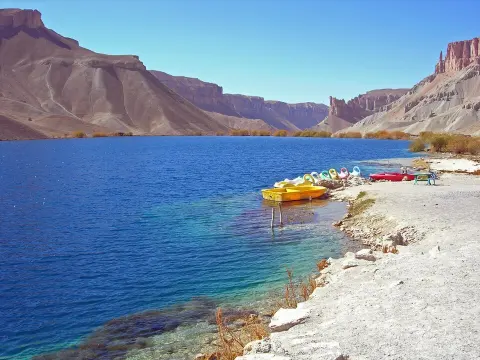
National parks
3 national parks in Afghanistan
- 6,323 km² protected
- oldest from 2009
Largest: Nuristan National Park · Band-e Amir National Park · Ajar Valley National Park
Currency · 26 October 2026
Afghan afghani exchange rates today
Afghanistan uses the Afghan afghani (AFN, ؋). One US dollar buys 64.4734 AFN; over the last 30 days the AFN has gained 0.2% against the dollar.
What other currencies cost in AFN
Currency converter
Daily reference rates from the open-source currency-api (CC0), 26 Oct 2026. Banks and exchange offices add a margin.
World rankings
Where Afghanistan ranks
How Afghanistan compares with the rest of the world — open any card for the full ranking.
Airports
Airports in Afghanistan
76 airports and airfields — 4 large, 5 medium and 59 small, plus 8 heliports. 8 have scheduled passenger flights.
Borders
Neighbouring countries
Afghanistan borders 6 countries along 5,987 km of land borders. It is landlocked.


Military
Afghan armed forces
Afghanistan ranks #114 of 145 in the Global Firepower military strength ranking, with a defence budget of $278 million (2021).
People
Population & society
Religion
Largest cities: Kabul (4.6 million)
Economy
Economy
Main industries
small-scale production of bricks, textiles, soap, furniture, shoes, fertilizer, apparel, food products, non-alcoholic beverages, mineral water, cement; handwoven carpets; natural gas, coal, copper
Export partners
Pakistan 42%, India 40%, China 4%, UAE 2%, Turkey 2% (2023)
Top exports
coal, grapes, tropical fruits, gum resins, other nuts (2023)
Travel tools
Handy before every trip to Afghanistan
Next public holiday
First Day of Ramadan — Monday, 8 February 2027. Then Liberation Day (15 Feb).

Afghan passport
Ranked #199: 4 countries visa-free, 20 with visa on arrival, 2 with an eTA and 50 with an eVisa.
Afghan passport photo
Exact size, head position and background for Afghanistan's passport and visa photos — make one free with AI checks.
Calling Afghanistan
Dial +93 before the local number. Internet domain .af.
Climate footprint
10.8 million tonnes of CO₂ in 2024 — 0.25 t per person.
Entry requirements
Visa rules for every passport visiting Afghanistan: visa-free stays, eVisas, visas on arrival and documents to bring.
News
Latest travel news about Afghanistan
Filings say Canada did not respond before ICE sent Afghan woman to Africa
An Afghan woman travelling to Toronto was detained by U.S. ICE and deported to the Central African Republic in June 2026. Legal filings say U.S. auth…
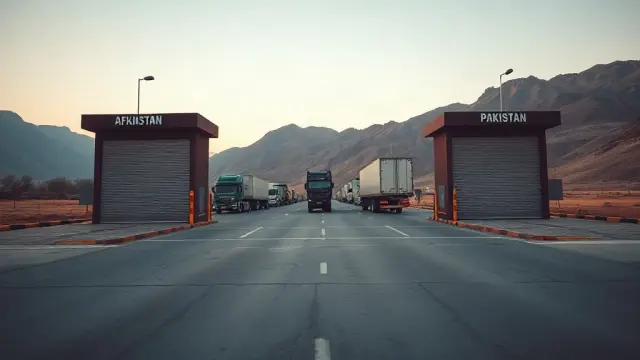
Travellers blocked: Afghan-Pakistan land crossings shut since Oct 12
Pakistan's main border crossings with Afghanistan have remained closed since 12 October 2025, and bilateral trade has fallen sharply. Pakistan has sa…
El Salvador travellers face deportation risk as TPS court challenges limited
A June 2026 Supreme Court decision means federal courts cannot review most challenges to ending Temporary Protected Status (TPS). Around 1 million pe…
Frequently asked questions about Afghanistan
What do I need to travel to Afghanistan?
How long must my passport be valid for Afghanistan?
Where is Afghanistan?
What is Afghanistan known for?
What is the capital of Afghanistan?
What language is spoken in Afghanistan?
What currency does Afghanistan use?
What is the calling code of Afghanistan?
Which countries border Afghanistan?
How strong is the Afghan passport?
What is the speed limit in Afghanistan?
Is Afghanistan safe to visit?
When is the best time to visit Afghanistan?
What plug type does Afghanistan use?
How many airports does Afghanistan have?
Sources: CIA World Factbook (public domain); World Bank Open Data (CC BY 4.0); names, languages and currencies: mledoze/countries (ODbL); flag: flag-icons (MIT); coat of arms: Wikimedia Commons (file page); exchange rates: Daily reference rates from the open-source currency-api (CC0); airports: OurAirports.