
 CroatiaPassports
Croatian Citizenship by Descent: Old 'Austrian' Papers Do Not Rule It Out
Descendants of Croatian emigrants may still qualify for citizenship even when family records list an ancestor as Austrian, Hungarian or Italian. Croatia's Ministry of the Interior tests where the ancestor came from on today's map, not the passport they travelled on.
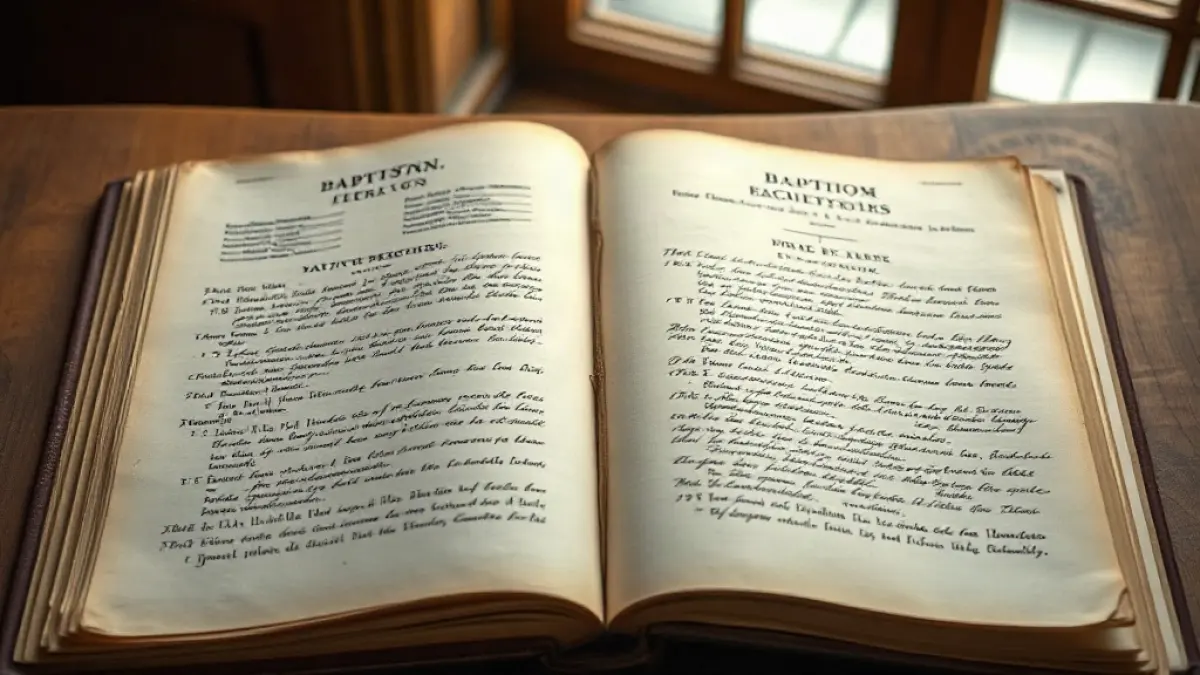
Family documents from the great migration waves of the late 1800s to the 1920s often list an ancestor's origin as "Austria", "Hungary", "Yugoslavia" or "Italy" rather than Croatia. That wording does not disqualify a descendant from claiming Croatian citizenship: the Croatian Ministry of the Interior assesses applications on the basis of geography and municipal records, not the nationality written on an old emigration document.
Key facts
- The test under the current Croatian Citizenship Act is whether the town or village the ancestor left sits within Croatia's modern, legally recognised borders.
- The Republic of Croatia declared independence on 8 October 1991.
- Applications are submitted to a Croatian consulate.
- The burden of proof rests entirely on the applicant.
- Applicants must supply both a registry match and name and identity reconciliation.
Why do old records say Austria, Hungary or Italy?
Before 1918, Croatia was part of the Austro-Hungarian Empire, and emigrants from Zagreb, Slavonia, Dalmatia and the islands travelled on Austrian or Hungarian documents. After the Treaty of Rapallo in 1920, parts of Istria, Rijeka, Zadar and several Dalmatian islands — including Cres and Lošinj — were annexed by the Kingdom of Italy, and residents there became Italian citizens, sometimes adopting Italian forms of their names. From 1945 to 1991, Croatia formed part of the successive Yugoslav states.
What does the Croatian Citizenship Act actually test?
Under the current Act, the decisive question is where the ancestor's place of origin lies on today's map. An ancestor born near Split in 1905 was born under Austro-Hungarian rule, but because Split is Croatian territory now, the family connection remains legally valid. Modern Croatian citizenship law does not treat an imperial passport from 1910 as cancelling a present-day claim.
What proof do applicants need?
Reviewing officers at a Croatian consulate expect a paper trail that bridges the historical gap. Two elements must be established at once.
The first is a registry match: locating the original historical birth or baptismal record in a local municipal registry or church archive in Croatia, showing the person was registered on that territory. The second is name and identity reconciliation — proving that the "Giovanni" or "Giuseppe" named on an Italian emigration record from Istria is the same person as the "Ivan" or "Josip" in the local village archives.
What this means for travellers
Descendants exploring a Croatian passport through ancestry should not dismiss a claim solely because the surviving paperwork says Austria, Hungary, Yugoslavia or Italy. The practical step is to trace the ancestor's specific town or village and check whether it lies within Croatia's present borders. Applicants should also expect to gather records from Croatian municipal or church archives and to resolve differences in names and spellings before submitting a file to a consulate.
Where families came from areas such as Istria or Zadar, which changed between Italian and Slavic administration, records may be spread across separate archives, written in Latin, Italian or old Croatian scripts, or filed under altered surnames. The source gives no fees, processing times or application deadlines; these are not stated in the guidance described.
 Austria
 Hungary
 Italy