
Polynesia · Territory

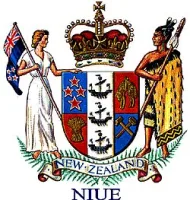
Niue: Travel Guide & Requirements
· Niuē
Niue is a territory in Polynesia with its capital in Alofi. It covers 260 km². The official languages are English and Niuean. The currency is the New Zealand dollar (NZD, $).
Where is Niue? Map of Niue
Oceania, island in the South Pacific Ocean, east of Tonga.
- Region
- Polynesia
- Coordinates
- 19.0333° S, 169.8667° W
- Neighbours
- none (no land borders)
- Coastline
- 64 km
- Niue
- Capital
Before you go
8 things to know before you travel to Niue
- Best time to go: June to October — when daytime highs in Alofi are around 25–26°C.
- Money: the New Zealand dollar (NZD) — 1 US dollar is about 1.7538 NZD.
- Plugs: type I, 230 V, 50 Hz — standard 220–240 V: devices from the US or Japan (110–120 V) need a converter unless they are dual voltage (100–240 V).
- Emergency numbers: Police 683 / 4333, Ambulance 683 / 4202, Fire 683 / 4133.
- Language: English and Niuean are official.
- Driving: on the left.
- Time zone: UTC-11 in Alofi.
- Capital: Alofi.
Key facts
Niue at a glance
Languages spoken: Niuean 46% (official, a Polynesian language closely related to Tongan and Samoan), Niuean and English 32%, English (official) 11%, Niuean and others 5%, other 6% (2011 est.)
Geography & history
About Niue
Voyagers from Samoa first settled on Niue around A.D. 900, and a second main group of settlers came from Tonga around 1500. With only one reliable source of fresh water, conflict was high on the island. Samoan and Tongan customs heavily influenced Niuean culture, including the formation of an island-wide elected kingship system in the early 1700s. In 1774, British explorer James COOK landed on the island and named it Savage Island because of the Niueans' hostility. Missionaries arrived in 1830 but were also largely unsuccessful at staying on the island until 1846, when a Niuean trained as a Samoan missionary returned to the island and provided a space from which the missionaries could work.…
Read the full history
Voyagers from Samoa first settled on Niue around A.D. 900, and a second main group of settlers came from Tonga around 1500. With only one reliable source of fresh water, conflict was high on the island. Samoan and Tongan customs heavily influenced Niuean culture, including the formation of an island-wide elected kingship system in the early 1700s. In 1774, British explorer James COOK landed on the island and named it Savage Island because of the Niueans' hostility. Missionaries arrived in 1830 but were also largely unsuccessful at staying on the island until 1846, when a Niuean trained as a Samoan missionary returned to the island and provided a space from which the missionaries could work. In addition to converting the population, the missionaries worked to stop the violent conflicts and helped establish the first parliament in 1849. Great Britain established a protectorate over Niue in 1900. The following year, Niue was annexed to New Zealand and included as part of the Cook Islands. Niue’s remoteness and cultural and linguistic differences with the Cook Islands led New Zealand to separate Niue into its own administration in 1904. The island became internally self-governing in 1974; it is an independent member of international organizations but is in free association with New Zealand, which is responsible for defense and foreign affairs. In September 2023, the US recognized Niue as a sovereign and independent state.
Location
Oceania, island in the South Pacific Ocean, east of Tonga
Climate
tropical; modified by southeast trade winds
Terrain
steep limestone cliffs along coast, central plateau
Highest point
unnamed elevation 1.4 km east of Hikutavake 80 m
Natural resources
arable land, fish
Natural hazards
tropical cyclones
National symbols
yellow five-pointed star
Weather
Best time to visit Niue
The best time to visit Niue is June to October, when daytime highs in Alofi are around 25–26°C. May and November to December are also a good time to go. February is the warmest month (28°C by day), August the coldest (24°C at night), and January the wettest with about 206 mm of rain.
- Jan28°C27°C
- Feb28°C27°C
- Mar28°C27°C
- Apr27°C27°C
- May27°C26°C
- Jun26°C25°C
- Jul25°C24°C
- Aug25°C24°C
- Sep25°C24°C
- Oct26°C25°C
- Nov26°C25°C
- Dec27°C26°C
Best time Good Less ideal
Before you go
Plugs, voltage & emergency numbers in Niue
Plugs & sockets
230 V, 50 Hz · Standard 220–240 V: devices from the US or Japan (110–120 V) need a converter unless they are dual voltage (100–240 V).
Sources: Wikipedia — Mains electricity by country and List of emergency telephone numbers (CC BY-SA 4.0).
Currency · 26 October 2026
New Zealand dollar exchange rates today
Niue uses the New Zealand dollar (NZD, $). One US dollar buys 1.7538 NZD; over the last 30 days the NZD has gained 0.7% against the dollar.
What other currencies cost in NZD
Currency converter
Daily reference rates from the open-source currency-api (CC0), 26 Oct 2026. Banks and exchange offices add a margin.
World rankings
Where Niue ranks
How Niue compares with the rest of the world — open any card for the full ranking.
Airports
Airports in Niue
1 airports and airfields — 0 large, 1 medium and 0 small, plus 0 heliports. 1 have scheduled passenger flights.
Borders
No land borders
Niue has no land borders with other countries. Coastline: 64 km.
People
Population & society
Religion
Largest cities: Alofi (1,000)
Economy
Economy
Main industries
handicrafts, food processing
Export partners
USA 54%, Germany 8%, Canada 5%, UK 5%, Guatemala 4% (2023)
Top exports
abrasive powder, coin (2023)
Frequently asked questions about Niue
Where is Niue?
What is the capital of Niue?
What language is spoken in Niue?
What currency does Niue use?
What is the calling code of Niue?
Does Niue have land borders?
When is the best time to visit Niue?
What plug type does Niue use?
How many airports does Niue have?
Sources: CIA World Factbook (public domain); World Bank Open Data (CC BY 4.0); names, languages and currencies: mledoze/countries (ODbL); flag: flag-icons (MIT); coat of arms: Wikimedia Commons (file page); exchange rates: Daily reference rates from the open-source currency-api (CC0); airports: OurAirports.