
Polynesia · Territory

Tokelau: Travel Guide & Requirements
Tokelau is a territory in Polynesia. It covers 12 km². The official languages are English, Samoan and Tokelauan. The currency is the New Zealand dollar (NZD, $).
Where is Tokelau? Map of Tokelau
Oceania, group of three atolls in the South Pacific Ocean, about one-half of the way from Hawaii to New Zealand.
- Region
- Polynesia
- Coordinates
- 9° S, 172° W
- Neighbours
- none (no land borders)
- Coastline
- 101 km
- Tokelau
Before you go
6 things to know before you travel to Tokelau
- Best time to go: April to November — when daytime highs in the capital are around 28–29°C.
- Money: the New Zealand dollar (NZD) — 1 US dollar is about 1.7538 NZD.
- Emergency numbers: Police 690 / 2116, Ambulance 690 / 2112.
- Language: English, Samoan and Tokelauan are official.
- Driving: on the left.
- Time zone: UTC+13.
Key facts
Tokelau at a glance
Languages spoken: Tokelauan 88.1% (a Polynesian language), English 48.6%, Samoan 26.7%, Tuvaluan 11.2%, Kiribati 1.5%, other 2.8%, none 2.8%, unspecified 0.8% (2016 ests.)
Geography & history
About Tokelau
Tokelau is composed of three atolls (Fakaofo, Atafu, and Nukunonu), and it was first settled by Polynesians around A.D. 1000. The atolls operated relatively independently, but Fakaofo Atoll eventually subjugated the others. British explorers first saw the atolls in 1765 and 1791. Catholic and Protestant missionaries arrived in the 1840s and converted the population on the islands on which they landed. In 1863 Peruvian slave raiders abducted many islanders, and roughly contemporary outbreaks of disease reduced the population to about 200. Settlers of diverse nationalities subsequently intermarried with Tokelauans. In the same period, local governance moved to a system based on a Council of E…
Read the full history
Tokelau is composed of three atolls (Fakaofo, Atafu, and Nukunonu), and it was first settled by Polynesians around A.D. 1000. The atolls operated relatively independently, but Fakaofo Atoll eventually subjugated the others. British explorers first saw the atolls in 1765 and 1791. Catholic and Protestant missionaries arrived in the 1840s and converted the population on the islands on which they landed. In 1863 Peruvian slave raiders abducted many islanders, and roughly contemporary outbreaks of disease reduced the population to about 200. Settlers of diverse nationalities subsequently intermarried with Tokelauans. In the same period, local governance moved to a system based on a Council of Elders, which still exists today. British interest began in the late 1870s, and Tokelau became a British protectorate in 1889, and in 1916 under the name Union Group, Tokelau became part of the Gilbert and Ellice Islands Colony. In 1925, the UK placed Tokelau under New Zealand administration. The Tokelau Islands Act of 1948 formally transferred sovereignty from the UK to New Zealand, and Tokelauans were granted New Zealand citizenship. In 1979, the US relinquished its claim to Tokelau in the Treaty of Tokehega, and Tokelau relinquished its claim to Swains Island, which is part of American Samoa. Economic opportunities in Tokelau are sparse, and about 80% of Tokelauans live in New Zealand. Tokelau held self-governance referendums in 2006 and 2007 in which more than 60% of voters chose free association with New Zealand; however, the referendums failed to achieve the two-thirds majority necessary to enact a status change.
Location
Oceania, group of three atolls in the South Pacific Ocean, about one-half of the way from Hawaii to New Zealand
Climate
tropical; moderated by trade winds (April to November)
Terrain
low-lying coral atolls enclosing large lagoons
Highest point
unnamed location 5 m
Natural resources
fish
Natural hazards
lies in Pacific cyclone belt
National symbols
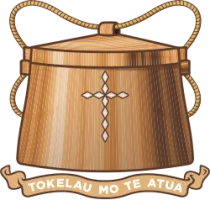
tuluma (fishing tackle box)
Weather
Best time to visit Tokelau
The best time to visit Tokelau is April to November, when daytime highs in the capital are around 28–29°C. March is also a good time to go. May is the warmest month (29°C by day), August the coldest (28°C at night), and January the wettest with about 308 mm of rain.
- Jan29°C28°C
- Feb29°C28°C
- Mar29°C28°C
- Apr29°C28°C
- May29°C28°C
- Jun29°C28°C
- Jul29°C28°C
- Aug28°C28°C
- Sep29°C28°C
- Oct29°C28°C
- Nov29°C28°C
- Dec29°C28°C
Best time Good Less ideal
Before you go
Plugs, voltage & emergency numbers in Tokelau
Emergency numbers
112 works from any mobile phone, even without a SIM card in most networks. All countries →
Sources: Wikipedia — Mains electricity by country and List of emergency telephone numbers (CC BY-SA 4.0).
Currency · 26 October 2026
New Zealand dollar exchange rates today
Tokelau uses the New Zealand dollar (NZD, $). One US dollar buys 1.7538 NZD; over the last 30 days the NZD has gained 0.7% against the dollar.
What other currencies cost in NZD
Currency converter
Daily reference rates from the open-source currency-api (CC0), 26 Oct 2026. Banks and exchange offices add a margin.
World rankings
Where Tokelau ranks
How Tokelau compares with the rest of the world — open any card for the full ranking.
Borders
No land borders
Tokelau has no land borders with other countries. Coastline: 101 km.
People
Population & society
Religion
Economy
Economy
Main industries
small-scale enterprises for copra production, woodworking, plaited craft goods; stamps, coins; fishing
Export partners
Czechia 92%, Singapore 2%, Brazil 1%, South Africa 1%, Sri Lanka 1% (2023)
Top exports
cars, telephones, garments, iron fasteners, fabric (2023)
Travel tools
Handy before every trip to Tokelau
Frequently asked questions about Tokelau
Where is Tokelau?
What language is spoken in Tokelau?
What currency does Tokelau use?
What is the calling code of Tokelau?
Does Tokelau have land borders?
When is the best time to visit Tokelau?
Sources: CIA World Factbook (public domain); World Bank Open Data (CC BY 4.0); names, languages and currencies: mledoze/countries (ODbL); flag: flag-icons (MIT); coat of arms: Wikimedia Commons (file page); exchange rates: Daily reference rates from the open-source currency-api (CC0); airports: OurAirports.