
Caribbean · Territory

Turks and Caicos Islands: Travel Guide & Requirements
The Turks and Caicos Islands is a territory in Caribbean with its capital in Grand Turk. It has a population of 46,855 (#203 in the world) and covers 948 km². The official language is English. The currency is the United States dollar (USD, $).
Where is the Turks and Caicos Islands? Map of the Turks and Caicos Islands
two island groups in the North Atlantic Ocean, southeast of The Bahamas, north of Haiti; note - although the Turks and Caicos Islands do not border the Caribbean Sea, geopolitically they are often designated as being Caribbean.
- Region
- Caribbean
- Coordinates
- 21.75° N, 71.5833° W
- Neighbours
- none (no land borders)
- Coastline
- 389 km
- Turks and Caicos Islands
- Capital
Travel requirements
What you need to travel to the Turks and Caicos Islands
- Passport
A passport valid for your whole stay (check the rules of the governing country).
- Travel advice
Some caution needed — US and UK advice.
Before you go
8 things to know before you travel to the Turks and Caicos Islands
- Safety: the Turks and Caicos Islands is generally safe for travellers, but some caution is needed: the US State Department rates the Turks and Caicos Islands Level 2 (“Exercise Increased Caution”), and the UK Foreign Office has no warnings against travel there.
- Best time to go: December to April — when daytime highs in Grand Turk are around 25–26°C.
- Money: the United States dollar (USD) — 1 euro is about 1.1222 USD.
- Emergency numbers: Police 911, Ambulance 911, Fire 911.
- Language: English is official.
- Driving: on the left.
- Time zone: UTC-5 in Grand Turk.
- Capital: Grand Turk. About 46,855 people live in the Turks and Caicos Islands.
Key facts
Turks and Caicos Islands at a glance
Languages spoken: English (official)
Geography & history
About the Turks and Caicos Islands
The islands were part of the UK's Jamaican colony until 1962, when they assumed the status of a separate Crown colony upon Jamaica's independence. The governor of The Bahamas oversaw affairs from 1965 to 1973. With Bahamian independence, the islands received a separate governor in 1973. Although independence was agreed upon for 1982, the policy was reversed, and the islands remain a British overseas territory. Grand Turk Island suffered extensive damage from Hurricane Maria in 2017.
Location
two island groups in the North Atlantic Ocean, southeast of The Bahamas, north of Haiti; note - although the Turks and Caicos Islands do not border the Caribbean Sea, geopolitically they are often designated as being Caribbean
Climate
tropical; marine; moderated by trade winds; sunny and relatively dry
Terrain
low, flat limestone; extensive marshes and mangrove swamps
Highest point
Blue Hill on Providenciales and Flamingo Hill on East Caicos 48 m
Natural resources
spiny lobster, conch
Natural hazards
frequent hurricanes
National symbols
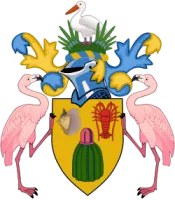
conch shell, Turk's cap cactus
Safety
Is the Turks and Caicos Islands safe to visit?
the Turks and Caicos Islands is generally safe for travellers, but some caution is needed: the US State Department rates the Turks and Caicos Islands Level 2 (“Exercise Increased Caution”), and the UK Foreign Office has no warnings against travel there.
 US State Department
 UK Foreign Office (FCDO)
Latest update: Updated information about passport validity requirements ('Entry requirements' page).
Updated 13 Mar 2026 · Full travel advice
Sources: US Department of State travel advisories (public domain) and UK FCDO foreign travel advice (contains public sector information licensed under the Open Government Licence v3.0). Checked daily. Advice can change quickly — always read the official page before you travel.
Weather
Best time to visit the Turks and Caicos Islands
The best time to visit the Turks and Caicos Islands is December to April, when daytime highs in Grand Turk are around 25–26°C. May to August and November are also a good time to go. August is the warmest month (29°C by day), March the coldest (24°C at night), and October the wettest with about 82 mm of rain.
- Jan26°C25°C
- Feb25°C25°C
- Mar25°C24°C
- Apr26°C25°C
- May27°C26°C
- Jun28°C27°C
- Jul28°C28°C
- Aug29°C28°C
- Sep29°C28°C
- Oct29°C28°C
- Nov27°C27°C
- Dec26°C26°C
Best time Good Less ideal
Before you go
Plugs, voltage & emergency numbers in the Turks and Caicos Islands
Emergency numbers
Save the local numbers before you travel — 112 or 911 may not connect here. All countries →
Sources: Wikipedia — Mains electricity by country and List of emergency telephone numbers (CC BY-SA 4.0).
Currency · 26 October 2026
United States dollar exchange rates today
The Turks and Caicos Islands uses the United States dollar (USD, $).
What other currencies cost in USD
Currency converter
Daily reference rates from the open-source currency-api (CC0), 26 Oct 2026. Banks and exchange offices add a margin.
World rankings
Where the Turks and Caicos Islands ranks
How the Turks and Caicos Islands compares with the rest of the world — open any card for the full ranking.
Airports
Airports in the Turks and Caicos Islands
9 airports and airfields — 1 large, 3 medium and 5 small, plus 0 heliports. 5 have scheduled passenger flights.
Borders
No land borders
The Turks and Caicos Islands has no land borders with other countries. Coastline: 389 km.
People
Population & society
Religion
Largest cities: Grand Turk (5,000)
Economy
Economy
Main industries
tourism, offshore financial services
Export partners
Gabon 27%, USA 25%, Zimbabwe 17%, Czechia 8%, UAE 3% (2023)
Top exports
plastics, shellfish, carbonates, tobacco, garments (2023)
Travel tools
Handy before every trip to the Turks and Caicos Islands
News
Latest travel news about the Turks and Caicos Islands

Southwest to open 11 tropical nonstop routes from US airports from November
Southwest Airlines is adding 11 nonstop international routes from US airports, starting 1 November with Las Vegas to Puerto Vallarta. Two of the new …
Southwest Adds 11 International Routes, Including Two to Liberia, Costa Rica
Southwest Airlines is launching 11 new international routes between November 2026 and June 2027, with nonstops to Liberia, Costa Rica from both Nashv…
Frequently asked questions about the Turks and Caicos Islands
What do I need to travel to the Turks and Caicos Islands?
Where is the Turks and Caicos Islands?
What is the capital of the Turks and Caicos Islands?
What language is spoken in the Turks and Caicos Islands?
What currency does the Turks and Caicos Islands use?
What is the calling code of the Turks and Caicos Islands?
Does the Turks and Caicos Islands have land borders?
Is the Turks and Caicos Islands safe to visit?
When is the best time to visit the Turks and Caicos Islands?
How many airports does the Turks and Caicos Islands have?
Sources: CIA World Factbook (public domain); World Bank Open Data (CC BY 4.0); names, languages and currencies: mledoze/countries (ODbL); flag: flag-icons (MIT); coat of arms: Wikimedia Commons (file page); exchange rates: Daily reference rates from the open-source currency-api (CC0); airports: OurAirports.