
Polynesia · Territory

Wallis and Futuna: Travel Guide & Requirements
Territory of the Wallis and Futuna Islands · Territoire des îles Wallis et Futuna
Wallis and Futuna is a territory in Polynesia with its capital in Mata-Utu. It covers 142 km². The official language is French. The currency is the CFP franc (XPF, ₣).
Where is Wallis and Futuna? Map of Wallis and Futuna
Oceania, islands in the South Pacific Ocean, about two-thirds of the way from Hawaii to New Zealand.
- Region
- Polynesia
- Coordinates
- 13.3° S, 176.2° W
- Neighbours
- none (no land borders)
- Coastline
- 129 km
- Wallis and Futuna
- Capital
Travel requirements
What you need to travel to Wallis and Futuna
- Passport
A passport valid for your whole stay (check the rules of the governing country).
- Travel advice
Safe to visit — US and UK advice.
Before you go
8 things to know before you travel to Wallis and Futuna
- Safety: Yes — Wallis and Futuna is generally safe to visit: the UK Foreign Office has no warnings against travel there.
- Best time to go: June to September — when daytime highs in Mata-Utu are around 28°C.
- Money: the CFP franc (XPF) — 1 US dollar is about 106.3387 XPF.
- Emergency numbers: Police 15, Ambulance 15, Fire 15.
- Language: French is official.
- Driving: on the right.
- Time zone: UTC+12 in Mata-Utu.
- Capital: Mata-Utu.
Key facts
Wallis and Futuna at a glance
Languages spoken: Wallisian (indigenous Polynesian language) 58.9%, Futunian 30.1%, French (official) 10.8%, other 0.2% (2003 est.)
Geography & history
About Wallis and Futuna
Around 800 B.C., the first settlers arrived on the islands of Wallis and Futuna, which are a natural midpoint between Fiji and Samoa. Around A.D. 1500, Tongans invaded Wallis, and a chiefdom system resembling Tonga’s formal hierarchy developed on the island. Tongans attempted to settle Futuna but were repeatedly rebuffed. Samoans settled Futuna in the 1600s, and a slightly less centralized chiefdom system formed. Dutch explorers were the first Europeans to see the islands in 1616, followed intermittently by other Europeans, including British explorer Samuel WALLIS in 1767. French Catholic missionaries were the first Europeans to permanently settle Wallis and Futuna in 1837, and they convert…
Read the full history
Around 800 B.C., the first settlers arrived on the islands of Wallis and Futuna, which are a natural midpoint between Fiji and Samoa. Around A.D. 1500, Tongans invaded Wallis, and a chiefdom system resembling Tonga’s formal hierarchy developed on the island. Tongans attempted to settle Futuna but were repeatedly rebuffed. Samoans settled Futuna in the 1600s, and a slightly less centralized chiefdom system formed. Dutch explorers were the first Europeans to see the islands in 1616, followed intermittently by other Europeans, including British explorer Samuel WALLIS in 1767. French Catholic missionaries were the first Europeans to permanently settle Wallis and Futuna in 1837, and they converted most of the population of both islands by 1846. The missionaries and newly converted King LAVELUA of Uvea on Wallis asked France for a protectorate in 1842 following a local rebellion. France agreed, although the protectorate status would not be ratified until 1887. In 1888, King MUSULAMU of Alo and King TAMOLE of Sigave, both on Futuna, signed a treaty establishing a French protectorate; the Wallis and Futuna protectorate was integrated into the territory of New Caledonia the same year. France renegotiated the terms of the protectorate with the territory’s three kings in 1910, expanding French authority. Wallis and Futuna was the only French colony to side with the Vichy regime during World War II, until the arrival of Free French and US troops in 1942. In 1959, inhabitants of the islands voted to separate from New Caledonia, becoming a French overseas territory in 1961. Despite the split, a significant Wallisian and Futunan community still lives in New Caledonia. In 2003, Wallis and Futuna became a French overseas collectivity. The islands joined the Pacific Islands Forum as an associate member in 2018, two years after France’s other Pacific territories became full members of the organization.
Location
Oceania, islands in the South Pacific Ocean, about two-thirds of the way from Hawaii to New Zealand
Climate
tropical; hot, rainy season (November to April); cool, dry season (May to October); rains 250-300 cm per year (80% humidity); average temperature 26.6 degrees Celsius
Terrain
volcanic origin; low hills
Highest point
Mont Singavi (on Futuna) 522 m
Natural resources
NEGL
Natural hazards
cyclones; tsunamis
National symbols
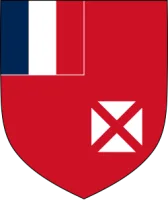
red saltire (Saint Andrew's Cross) on a white square on a red field
Safety
Is Wallis and Futuna safe to visit?
Yes — Wallis and Futuna is generally safe to visit: the UK Foreign Office has no warnings against travel there.
 UK Foreign Office (FCDO)
Latest update: New information about dual nationals returning to the UK (‘Entry requirements’ page).
Updated 10 Dec 2025 · Full travel advice
Sources: US Department of State travel advisories (public domain) and UK FCDO foreign travel advice (contains public sector information licensed under the Open Government Licence v3.0). Checked daily. Advice can change quickly — always read the official page before you travel.
Weather
Best time to visit Wallis and Futuna
The best time to visit Wallis and Futuna is June to September, when daytime highs in Mata-Utu are around 28°C. March to May and October are also a good time to go. April is the warmest month (29°C by day), August the coldest (26°C at night), and January the wettest with about 258 mm of rain.
- Jan28°C27°C
- Feb28°C27°C
- Mar28°C27°C
- Apr29°C27°C
- May28°C27°C
- Jun28°C27°C
- Jul28°C26°C
- Aug28°C26°C
- Sep28°C26°C
- Oct28°C26°C
- Nov28°C27°C
- Dec28°C27°C
Best time Good Less ideal
Before you go
Plugs, voltage & emergency numbers in Wallis and Futuna
Emergency numbers
Save the local numbers before you travel — 112 or 911 may not connect here. All countries →
Sources: Wikipedia — Mains electricity by country and List of emergency telephone numbers (CC BY-SA 4.0).
Currency · 26 October 2026
CFP franc exchange rates today
Wallis and Futuna uses the CFP franc (XPF, ₣). One US dollar buys 106.3387 XPF; over the last 30 days the XPF has lost 1.5% against the dollar.
What other currencies cost in XPF
Currency converter
Daily reference rates from the open-source currency-api (CC0), 26 Oct 2026. Banks and exchange offices add a margin.
World rankings
Where Wallis and Futuna ranks
How Wallis and Futuna compares with the rest of the world — open any card for the full ranking.
Airports
Airports in Wallis and Futuna
2 airports and airfields — 1 large, 0 medium and 1 small, plus 0 heliports. 2 have scheduled passenger flights.
Borders
No land borders
Wallis and Futuna has no land borders with other countries. Coastline: 129 km.
People
Population & society
Religion
Largest cities: Mata-Utu (1,000)
Economy
Economy
Main industries
copra, handicrafts, fishing, lumber
Export partners
Denmark 35%, Sweden 14%, Netherlands 14%, Pakistan 9%, Poland 7% (2023)
Top exports
seats (2023)
Travel tools
Handy before every trip to Wallis and Futuna
Frequently asked questions about Wallis and Futuna
What do I need to travel to Wallis and Futuna?
Where is Wallis and Futuna?
What is the capital of Wallis and Futuna?
What language is spoken in Wallis and Futuna?
What currency does Wallis and Futuna use?
What is the calling code of Wallis and Futuna?
Does Wallis and Futuna have land borders?
Is Wallis and Futuna safe to visit?
When is the best time to visit Wallis and Futuna?
How many airports does Wallis and Futuna have?
Sources: CIA World Factbook (public domain); World Bank Open Data (CC BY 4.0); names, languages and currencies: mledoze/countries (ODbL); flag: flag-icons (MIT); coat of arms: Wikimedia Commons (file page); exchange rates: Daily reference rates from the open-source currency-api (CC0); airports: OurAirports.