
 DenmarkPassports
Denmark third in Happy Passports Index 2026 as Nordics take top four
Global Citizen Solutions' Happy Passports Index 2026 places Denmark third on 92.1 points, with Nordic countries holding the top four spots. Southern European passports score highly, but their residents rate their lives lower.
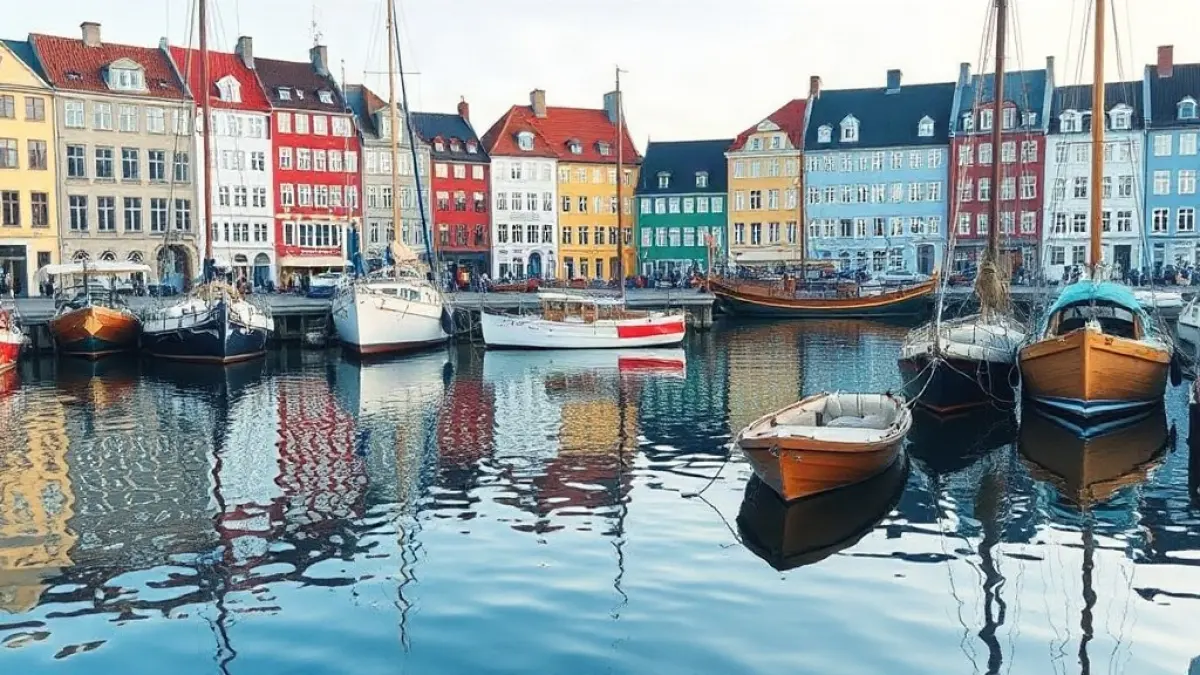
Denmark has placed third in the Happy Passports Index 2026, published by Global Citizen Solutions (GCS), behind Finland and Iceland. The Nordic countries hold the top four positions overall, while Southern European nations with similarly strong passports rank far lower on how satisfied residents are with their lives.
Key facts
- Finland leads the index with 93.2 points, followed by Iceland on 92.4 and Denmark on 92.1
- Nordic countries take the top four places; Norway is fourth and Sweden sixth
- Spain, Italy, Greece and Portugal hold passports among the ten strongest in the sample, yet none reaches the top 15 overall
- The index covers 50 countries across six regions on seven indicators
- Among higher-income countries, life evaluation correlates with freedom of choice at 0.79, against 0.28 for passport strength and 0.29 for income
What does the index measure?
The index groups its seven indicators into four equally weighted pillars: wellbeing; freedom at home, measured both as people feel it and as the civil liberties they hold; mobility, measured by the GCS Global Passport Index; and prosperity, health and safety.
GCS defines a "happy passport" as the nationality of a country that combines a happy life with wide access to the world. The full Happy Passports Index 2026 is available on the GCS website.
How did Denmark and the other Nordics rank?
Denmark, third on 92.1 points, is described as the most balanced country in the index and the only one to rank in the top four on all four pillars. Finland leads on 93.2 and ranks second in the sample on both freedom at home and mobility. Iceland is second on 92.4 and first on freedom at home, although its passport ranks only 20th in the sample — below those of all four Southern European countries.
The Nordic countries also take five of the top seven places on wellbeing. GCS notes that their passports are strong, but comparable to Southern Europe's; what distinguishes them is how people rate their lives and how free they are at home.
Why do strong-passport countries in Southern Europe rank lower?
Spain ranks 16th overall but 26th on wellbeing, with a life evaluation score less than 0.01 points below the sample median. Italy ranks 18th overall and is one of the 18 countries classified as "Happiest Passports" — those in the top half of the sample on both happiness and passport strength — yet it is 24th on wellbeing despite a passport level with Norway's and Sweden's. Greece ranks 36th overall, with the ninth-strongest passport in the sample but 43rd place on wellbeing.
All six Southern European countries in the sample report lower life evaluations than their income levels would predict. The group including Spain, Portugal, Greece, Malta and Cyprus records the longest healthy lives of any group in the index, and Southern Europe performs relatively well on mobility, health and peace.
What this means for travellers and passport buyers
For people weighing overseas residency, citizenship or investment-linked residency, GCS argues that passport strength alone is a limited guide. A passport is often measured by how many countries its holders can enter without a visa in advance, but someone relocating permanently may also want to weigh civil liberties, personal freedom, healthcare, safety and life satisfaction.
Dr. Laura Madrid, Lead Researcher at Global Citizen Solutions, said that "happiness correlates far more strongly with freedom than with passport strength" among wealthier countries. GCS concludes that international mobility is best viewed as an enabler of opportunity rather than a direct measure of happiness.
No further editions or updates to the index have been announced.
Also about:  Finland
 Iceland
 Norway
 Sweden
 Spain
 Italy
 Greece