
 MyanmarEntry rules
India-Myanmar Border Crossings Now Require Permits as Free Movement Ends
India has scrapped the Free Movement Regime that let hill-tribe communities cross the India-Myanmar border without documents. Crossers now need a border permit, a background check and face a seven-day stay limit.
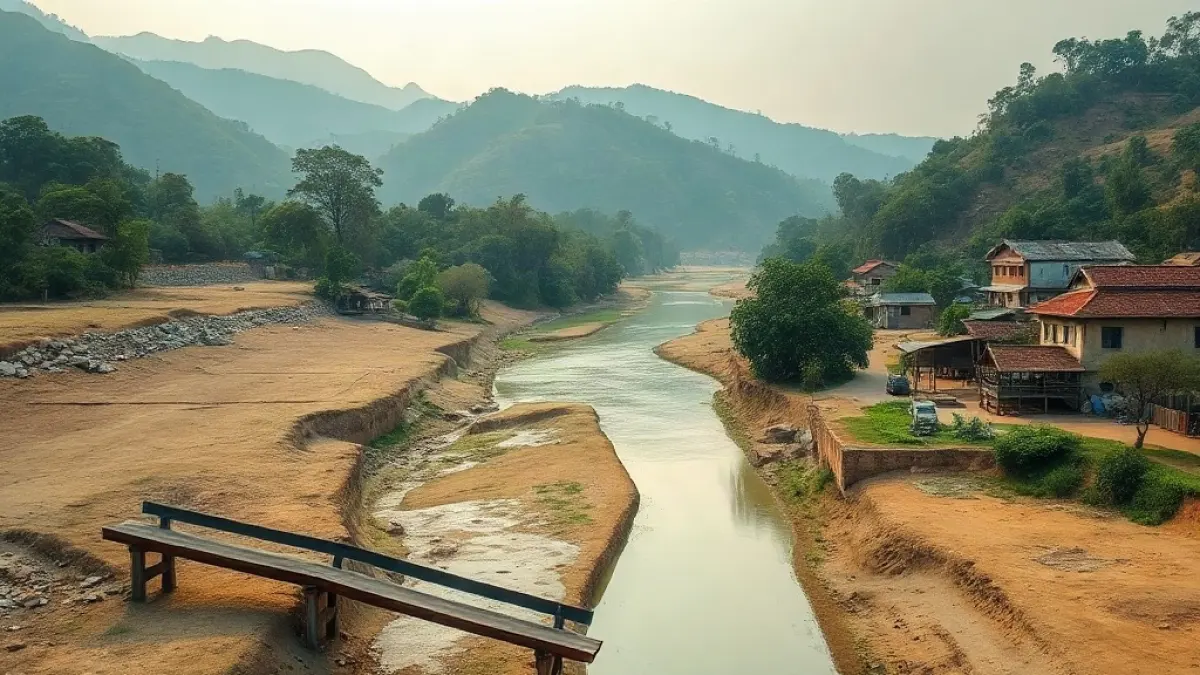
India has ended the arrangement that allowed people on both sides of the India-Myanmar border to cross without documents for decades. Crossings along the frontier now require a border permit and a background check, and stays are limited to seven days.
Key facts
- The Free Movement Regime (FMR), dating from 1950, let hill-tribe members living within 40 kilometres of the border cross freely without documentation.
- In 2004 India cut that zone to 16 kilometres and limited crossings to three designated entry points; the scheme was reconfirmed in 2018 with visa-free stays of up to 14 days.
- In February 2024, India's Minister for Home Affairs, Amit Shah, announced the FMR would be terminated and the border fenced.
- By 2025, arrivals from Chin State needed special permits and were checked by the Assam Rifles, the paramilitary force controlling the Indian side.
- Roughly 30 kilometres of fencing are currently under construction along the 1,643-kilometre border.
What is changing?
Until 2024, crossing between the Indian village of Zokhawthar in Mizoram and the Myanmar village of Khawmawi in Chin State required neither an Indian passport nor permission from Delhi or Naypyidaw. The two settlements sit on opposite banks of the Tiau River, which can be crossed on foot in the dry season.
The FMR had allowed eligible crossers to stay visa-free for up to 14 days. Only ten kilometres of the 1,643-kilometre border were fenced. That regime has now been scrapped and the border is being fenced.
Who is affected?
The rule change hits the Zo tribe, known as Mizo in Mizoram and Chin in Chin State, whose members have crossed the river for centuries to trade, marry and bury their dead. Children from Khawmawi attended schools in Zokhawthar, and hospitals in Mizoram treated people from Chin State.
It also affects Myanmar nationals who fled to India after the 2021 military coup. By 2025, approximately 35,000 Myanmar nationals had sought refuge in Mizoram, the largest concentration of Myanmar refugees anywhere in India.
What do crossers need now?
People crossing the river must apply for a border permit, pass a background check and limit their stay to seven days. By 2025, arrivals from Chin State were required to hold special permits and were scrutinised by the Assam Rifles. The article notes that many find the process too slow or costly and instead cross unmonitored jungle routes.
Why is this happening?
India's Home Ministry said the porous border posed a serious threat to national security. Amit Shah justified the fence as a measure to protect internal security and to maintain the "demographic structure" of India's northeastern states bordering Myanmar. The Ministry also said rebel groups fighting in Manipur were exploiting weak border controls to bring in militants and weapons; Meitei-Kuki clashes there killed approximately 258 people and displaced around 60,000 residents between 2023 and 2025.
The Mizoram state government opposed the decision. Home Minister K. Sapdanga said Mizos "cannot accept the India-Myanmar border imposed upon us". Thousands marched in Aizawl in protest.
What this means for travellers
Anyone planning to cross between India and Myanmar in this region can no longer rely on informal, document-free movement. A border permit, a background check and a seven-day maximum stay now apply, and only three designated entry points have been permitted for crossings since 2004.
Construction of the fence continues, with roughly 30 kilometres under way. The article gives no completion date for the fencing or timetable for further changes to crossing rules.
Also about:  India