
 PakistanTravel
Pakistan imposes emergency rule in Khyber Pakhtunkhwa amid border clashes
Pakistan has imposed emergency rule in Khyber Pakhtunkhwa and detained its chief minister, as it trades blame with the Afghan Taliban over border clashes and Pakistani airstrikes in Afghanistan.
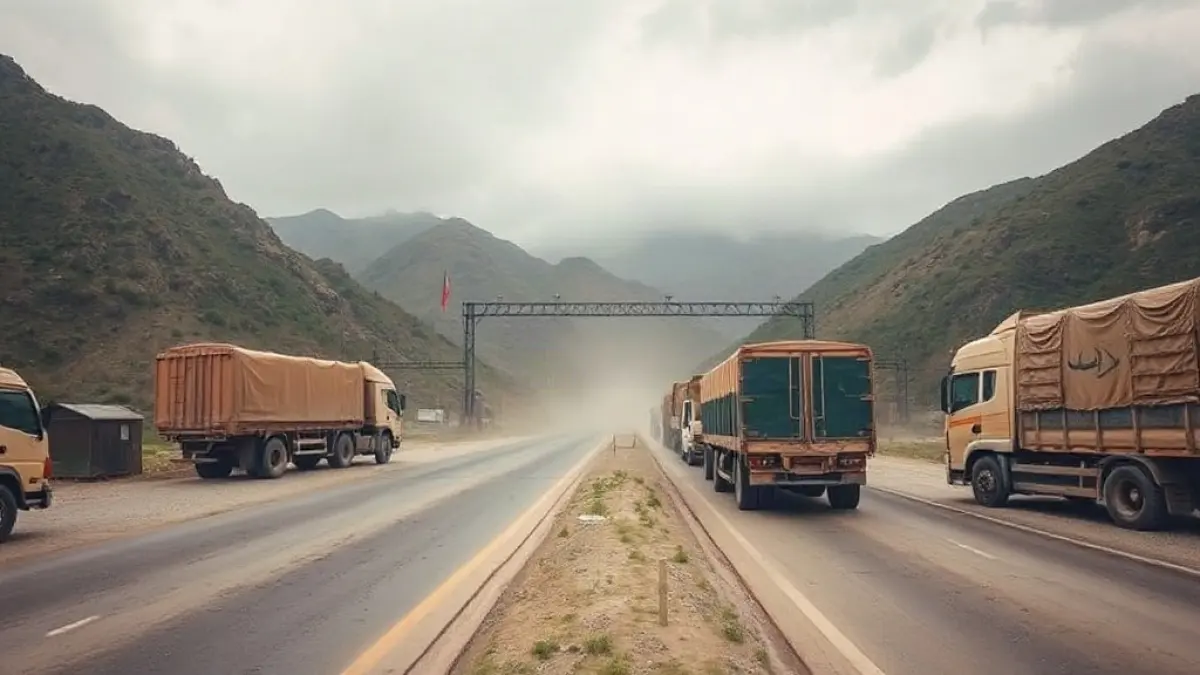
Pakistan and the Afghan Taliban are exchanging accusations over a wave of cross-border violence that includes Pakistani airstrikes inside Afghanistan and Taliban attacks on Pakistani border posts. At the same time, Pakistan has imposed emergency rule in the northwestern province of Khyber Pakhtunkhwa, detaining the province's chief minister and cabinet members.
Key facts
- Pakistani airstrikes in Kunar and Helmand on 1 October killed at least 10 people and injured 10 others, according to the Taliban and the United Nations.
- The United Nations Mission in Afghanistan said in September it had documented more than 1,100 civilian deaths and injuries from cross-border attacks in Afghanistan.
- Pakistan says more than 3,000 people have been killed in 2,800 militant attacks since January.
- Emergency rule was imposed in Khyber Pakhtunkhwa on Sunday, suspending the provincial government.
- Chief Minister Sohail Afridi and several cabinet members were detained.
What is happening at the Pakistan-Afghanistan border?
Pakistan launched multiple airstrikes inside Afghanistan after militant attacks on its territory, and the Taliban said the strikes hit civilians. The Taliban and the U.N. reported that airstrikes in the eastern province of Kunar and the southern province of Helmand on 1 October killed at least 10 people and injured 10 others.
The Taliban responded with attacks on Pakistani border posts, escalating clashes between the two sides. The U.N. said attacks by the Pakistani Taliban inside Pakistan have increased, while Pakistan says more than 3,000 people have been killed in 2,800 militant attacks since January.
Why are the two sides trading blame?
Speaking at a think tank in Islamabad on Monday, Pakistan's Foreign Minister Ishaq Dar warned the Taliban against supporting militants who launch attacks inside Pakistan. Taliban spokesman Zabihullah Mujahid rejected the accusation on X, saying Pakistan was "blaming Afghanistan for its own failures" and that Pakistani officials were using propaganda rather than seeking solutions.
Pakistan rejected that statement, saying any negotiations would require the Taliban to act against Pakistani militants operating from Afghanistan. Pakistan accuses the Taliban of sheltering Tehrik-e-Taliban Pakistan (TTP), which has claimed responsibility for attacks inside Pakistan. The Taliban publicly deny harbouring any militant group, but a U.N. report released in August said the Taliban continue to support the TTP.
What has happened inside Pakistan?
On Sunday, Pakistan imposed emergency rule in Khyber Pakhtunkhwa, suspending the provincial government led by the party of imprisoned former Prime Minister Imran Khan. Authorities detained Chief Minister Sohail Afridi, the province's top elected official, along with several cabinet members. The federal government accused the provincial administration of colluding with TTP militants.
Ghaus Janbaz, a former Afghan diplomat, said suspending the provincial government would not ease the crisis but would escalate it, given existing tension between the province and the federal government.
What has the international response been?
A U.S. State Department spokesperson said the department was aware of the reports and expects local authorities to act in accordance with Pakistani law as they seek to maintain order.
Amnesty International condemned the emergency declaration. Babu Ram Pant, its deputy director for South Asia, said the action raised concerns about the proportionality of the measures, and the organisation urged authorities to avoid using military personnel for ordinary policing and to keep military forces accountable under international human rights law.
What this means for travellers
The developments described centre on the Pakistan-Afghanistan border area and on Khyber Pakhtunkhwa province, where emergency rule is now in force and the provincial government has been suspended. The source does not state whether any border crossings, airports or roads have been closed, and it contains no travel advice or entry-rule changes.
Travellers with plans involving Khyber Pakhtunkhwa or the border region should follow developments closely, since the situation described is still escalating.
No timeline has been given for how long emergency rule will remain in place, and no further talks between Pakistan and the Taliban have been announced.
Also about:  Afghanistan