
 PanamaVisas
Panama Keeps $300,000 Investor Visa Route for Newly Built Homes
Executive Decree No. 17, in force since 16 September 2026, keeps Panama's Qualified Investor residence threshold at $300,000 for new, unoccupied homes bought from developers, while previously sold, leased or occupied property now needs $500,000.
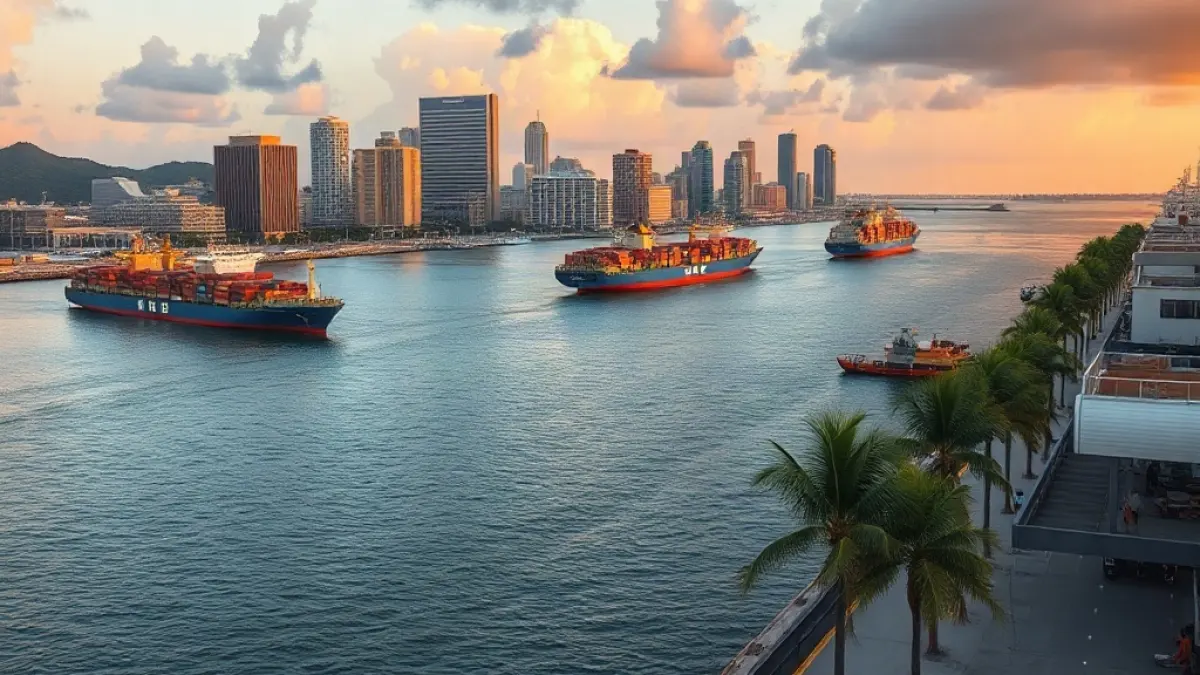
Panama has split its Qualified Investor residence route in two, and the difference matters to anyone weighing a property purchase there. Under Executive Decree No. 17, in force since 16 September 2026, a new, unoccupied home bought directly from its developer still qualifies at $300,000, while any property previously sold, leased or occupied now requires $500,000.
Key facts
- New, unoccupied home from a developer: $300,000 minimum
- Previously sold, leased or occupied property: $500,000 minimum
- Other routes: $500,000 in qualifying securities, $500,000 in a five-year deposit at a state-owned bank, or $750,000 at a private bank
- Processing: 15 business days for the Ministry of Commerce and Industries (MICI) to certify the investment, 30 business days for the National Migration Service (SNM) to decide a complete file
- Permanent residence is granted on approval; one visit every two years keeps it
- Later additions to the family — a spouse married after approval, or children born or adopted afterwards — pay $2,000 each in government fees
What changed?
The decree's preamble frames the split as construction policy, arguing that purchases of newly built homes support far more jobs than resale deals. For buyers, the practical effect is an entry price $200,000 lower when they buy new rather than previously owned, making a new home the cheapest way into the program and the only qualifying option at that price that can be lived in.
Who can apply, and on what terms?
The route turns on the investment itself rather than on nationality, unlike Panama's Friendly Nations visa, which is limited to citizens of designated countries. Permanent residence is issued on approval, and nothing obliges an investor to live in Panama before or during processing; keeping the status requires one visit every two years.
The paperwork carries conditions. First-sale status must be proven through the Public Registry, the qualifying amount is the lower of the price paid and the property's substantiated value, and every dollar must be the applicant's own and traceable, with gifts excluded. Off-plan buyers who pay in full must hold an irrevocable bank guarantee until the finished unit is registered in their name; if a developer misses its deadlines, the investor can execute that guarantee and has 180 business days to redirect the investment.
Is there a route to citizenship?
For the first time, the program's rules set out a path to naturalization: qualified investors and their dependents may apply after five consecutive years of residence, with files handled through MICI's investment window. Naturalisation is not automatic, and the rules do not define how much time spent in Panama counts as residence, so that point needs settling before the clock starts.
What this means for travellers
Anyone considering the Qualified Investor route should check whether the property they have in mind is new, unoccupied and sold by its developer before committing, since that determines whether $300,000 or $500,000 applies. Buyers of unbuilt units should confirm the bank guarantee arrangement, and applicants should be able to document the source of every dollar used.
Demand has been rising. Between July 2025 and June 2026, MICI issued 268 Qualified Investor certificates backed by $113.6 million, a 38.9% increase on the year before, with an average of roughly $424,000 per certificate against the $300,000 floor. Colombians led the applicant pool from the program's launch in 2020, but by late 2025 investors from the United States and Canada had taken the top spot, with Colombia third.
Also about:  United States
 Canada
 Colombia