
 Saudi ArabiaTravel
U.S. alert warns of airport attack risk and flight disruption in Saudi Arabia
The U.S. Mission to Saudi Arabia warned of possible airport attacks, airspace closures and flight cancellations after Houthi strikes, and said non-emergency U.S. government staff were ordered to leave from 23 October 2026.
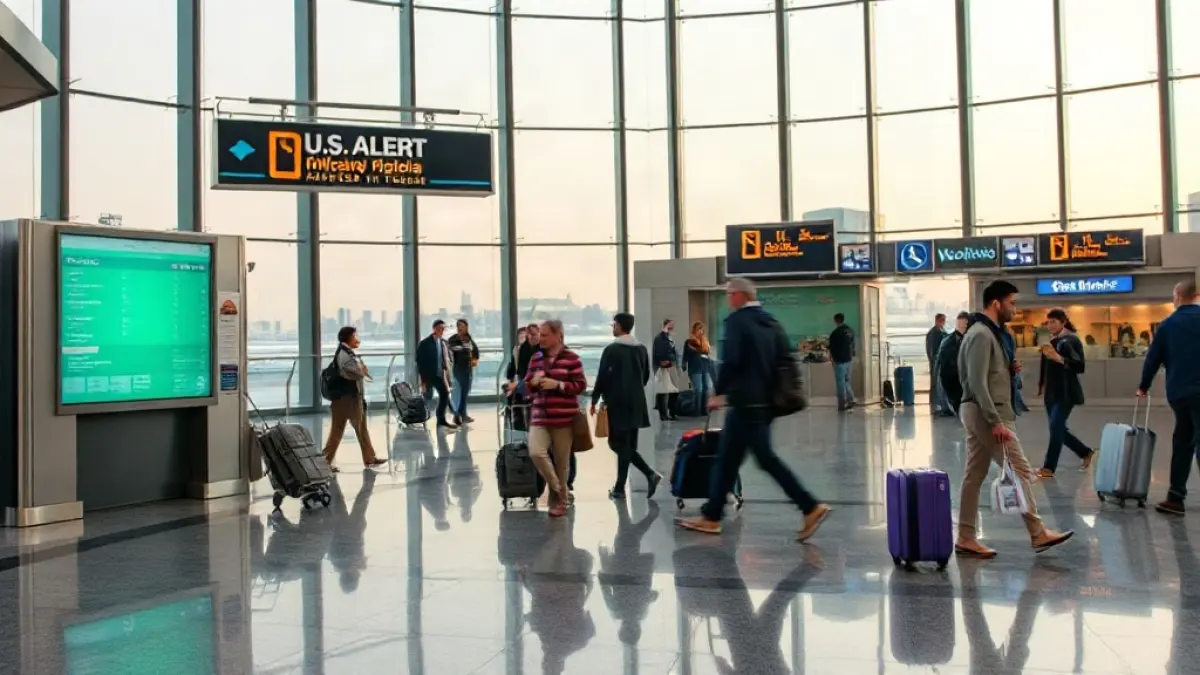
The U.S. Mission to Saudi Arabia issued a countrywide security alert on 2 November 2026, warning of potential attacks on airports, airspace closures, flight cancellations and wider travel disruption. Iranian-backed Houthis have carried out hostilities against Saudi Arabia, including strikes on civilian airports and other critical infrastructure that caused civilian casualties and severe travel disruption, the alert said. Effective 23 October 2026, the U.S. Department of State ordered non-emergency U.S. government employees and their family members to leave Saudi Arabia because of safety risks.
Key facts
- Alert dated 2 November 2026 and applies throughout Saudi Arabia.
- Non-emergency U.S. government staff and their families ordered to leave from 23 October 2026.
- Riyadh's King Khalid International Airport (RUH) partially reopened on 23 October for domestic flights and some international flights run by national carriers.
- Jeddah (JED) and Dammam (DMM) airports are operating, with some delays and cancellations.
- All land border crossings, including the King Fahd Causeway to Bahrain, remain operational.
- Emergency consular services remain available for U.S. citizens.
What is happening?
The alert states that the hostilities have the potential to escalate rapidly beyond the immediate area. U.S. citizens are told to be aware of possible airport attacks, airspace closures, flight cancellations and travel disruptions, and to exercise extreme caution if they use airports in Saudi Arabia.
Travellers are also reminded to follow national alerts issued by Saudi Arabia's Civil Defense through cellular broadcasts.
Which airports are operating?
King Khalid International Airport (RUH) in Riyadh announced a partial reopening as of 23 October for domestic flights and some international flights operated by national carriers. A limited number of flights normally based at RUH are running from Prince Naif bin Abdulaziz International Airport (ELQ) in Qassim.
King Abdulaziz International Airport (JED) in Jeddah and King Fahd International Airport (DMM) in Dammam are operational, with some delays and cancellations. The alert advises travellers to check flight departure status directly with the airline and the airport.
What are the alternatives to flying?
Private car, train and bus services may provide alternatives for travel to or from Saudi Arabia. The alert lists Saudi Arabia Railways, SAT Transportation and SAPTCO as resources, and says availability and schedules should be confirmed directly with the providers.
All land border crossings, including the King Fahd Causeway to Bahrain, remain operational, as do all highways and roads in and around Riyadh, Jeddah and Dhahran. International airports in neighbouring countries are also operational: Bahrain (BAH), Jordan (AMM), Oman (MCT), Qatar (DOH) and the United Arab Emirates (AUH, DXB, SHJ), though the alert says travellers should confirm status directly with the airports.
What rules apply to filming and social media?
Saudi Arabia's Ministry of Interior continues to warn that filming, publishing or sharing information about counter-missile and drone activity and their impact sites can bring legal liability. The alert says U.S. citizens have been detained for failing to follow these rules, including for photographing government buildings, airports and impact sites. Visitors and residents are subject to local laws while in the country.
What restrictions apply to U.S. government staff?
U.S. government employees working in Saudi Arabia need special authorisation from the Chief of Mission to use any airport in the Kingdom following recent missile and unmanned aircraft attacks. They may not travel within 20 miles of the Yemen border and require authorisation for the provinces of Jizan, Asir and Najran and the cities of Qatif, Yanbu and Taif.
What this means for travellers
Anyone flying to, from or within Saudi Arabia should confirm departure status with the airline and the airport before travelling and be prepared for cancellations or airspace closures. Those considering overland routes should confirm schedules with the transport providers and note that land crossings remain open.
The alert advises travellers to monitor local media, follow the instructions of local authorities, avoid demonstrations, large gatherings and areas with a heavy police presence, and keep a low profile. It also recommends keeping a mobile phone charged with emergency numbers saved. If an aerial attack occurs, stay away from glass doors and windows and from fallen debris.
The U.S. Department of State's travel advisory displayed for Saudi Arabia is Level 3: Reconsider Travel. Emergency consular services remain available for U.S. citizens, and the alert provides local emergency numbers: 911 for unified emergency services, 999 for police, 997 for ambulance and 996 for highway security.
The alert does not say when the departure order for U.S. government staff or the airport restrictions will be lifted. U.S. citizens are advised to review the travel advisories for Saudi Arabia and Yemen and to enrol in the Smart Traveler Enrollment Program (STEP) for security updates.
Also about:  United States
 Bahrain
 Jordan
 Oman
 Qatar
 United Arab Emirates
 Yemen