
 SwitzerlandTravel
Ebola patient from Nigeria treated in Geneva; husband isolated in Zurich
A Swiss diplomat's wife infected with Ebola has been flown from Nigeria to a Geneva hospital, while her husband is in isolation in Zurich. It is Nigeria's first Ebola case in more than a decade.
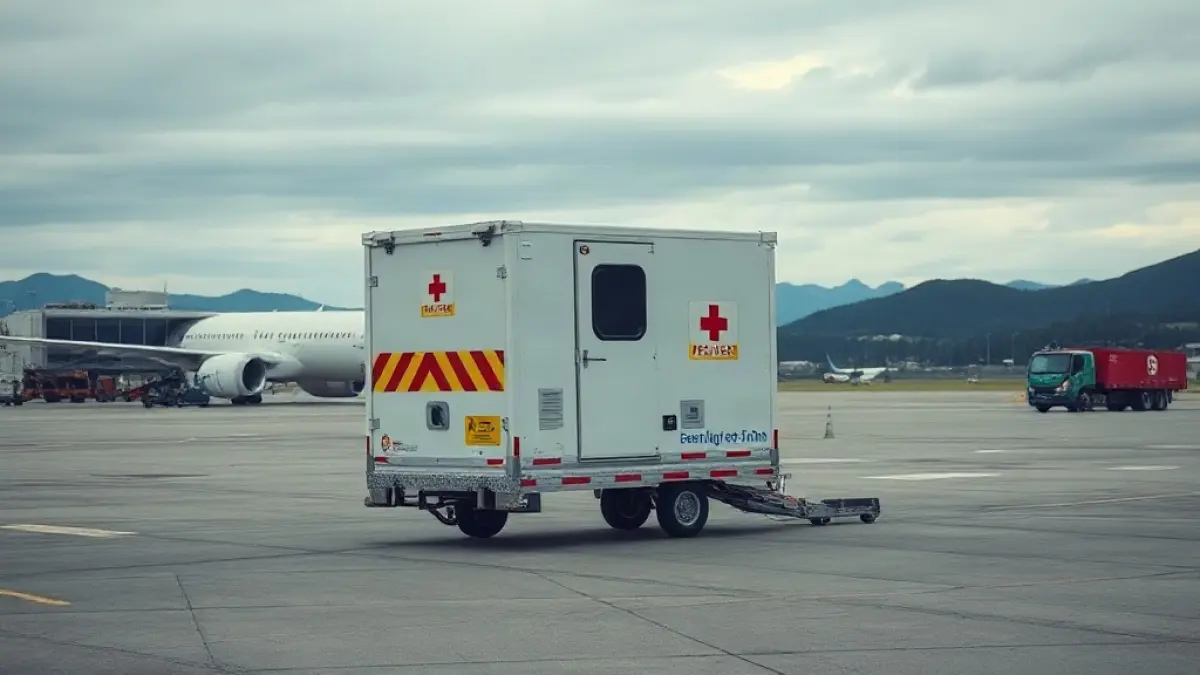
A woman infected with the Ebola virus and her husband, a Swiss diplomat, were flown from Nigeria to hospitals in Switzerland on Monday 26 October 2026, Swiss authorities said. The woman is being treated at Geneva University Hospitals and her husband, considered a close contact, is in isolation at University Hospital Zurich.
Key facts
- Who: the Ugandan-born wife of a Swiss diplomat based in Abuja, and her husband
- Strain: Bundibugyo, the variant behind the outbreak that began in the Democratic Republic of Congo
- Where: Geneva University Hospitals (patient) and University Hospital Zurich (husband, in isolation)
- Significance: Nigeria's first Ebola case in more than a decade
- Scale of outbreak: almost 10,000 cases and more than 4,800 deaths in Congo from this strain
What has happened?
The patient was evacuated from Nigeria to Switzerland on Monday, according to Swiss authorities. The Swiss Federal Office of Public Health said both hospitals are equipped to handle such cases without endangering others. It was not immediately clear why the couple were separated into two different hospitals.
Nigeria's health minister, Muhammad Ali Pate, said the woman's clinical condition had much improved and described her as "stable, conscious, communicating", with test results reverting towards "baseline". Her husband had no symptoms and left Nigeria on the same flight, Pate added. The World Health Organization's Africa director, Mohamed Janabi, congratulated Nigeria's government and health workers on stabilising the patient's condition, which allowed the evacuation.
Why is Uganda under scrutiny?
The woman spent a two-week holiday in Uganda before returning to Abuja, raising the possibility that she was infected there. That has fuelled concerns about undetected transmission in a country where the outbreak had appeared to be under control. Uganda reported 20 cases in May and June but has not recorded any since, and the World Health Organization declared it free of the virus in August.
Africa CDC Director General Jean Kaseya said experts will travel to Nigeria to help investigate how the patient caught the virus. He said her travel documents showed she had not visited DR Congo, contradicting statements from Ugandan officials. The Swiss foreign ministry and Uganda's health ministry did not immediately respond to requests for comment.
How far has the outbreak spread?
The disease has now been reported in East, Central and West Africa, giving it the widest geographic spread of any Ebola outbreak on the continent to date. The Bundibugyo strain has caused almost 10,000 cases and more than 4,800 deaths in Congo, and there are no approved vaccines or treatments for it. Kenya has reported nine cases and two deaths, all linked to a man who had travelled from Congo via Uganda's Entebbe airport.
What happens next?
Africa CDC experts are set to travel to Nigeria to work on tracing how the patient was infected. The source does not announce any new entry rules, travel restrictions or screening measures for Switzerland, Nigeria or the other affected countries.
 Nigeria
 Uganda
 Kenya