
 TongaVisas
US Visa Curbs Affect Tonga, Tuvalu, Vanuatu and Fiji Travellers
Tonga, Tuvalu and Vanuatu have appeared on a US State Department visa-restriction list, and Fiji was caught up in a January 2026 suspension of immigrant visas. Pacific governments say they rely on migration pathways as a climate adaptation strategy.
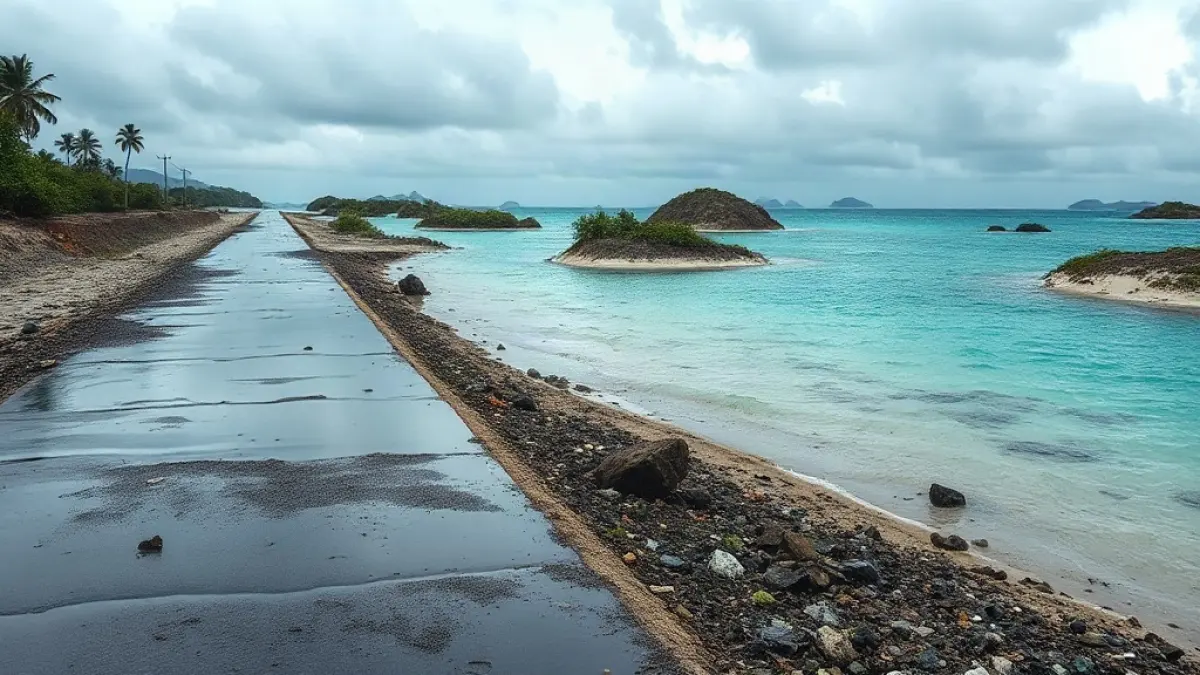
Washington has made legal migration pathways for Pacific Islanders less predictable, according to an analysis of climate mobility in the region. Tonga, Tuvalu and Vanuatu appeared on a US State Department visa-restriction list in 2025, and Fiji was caught up in a January 2026 suspension of immigrant visas.
The commentary argues that the United States is closing routes that Pacific states say they depend on as an adaptation strategy to climate change.
Key facts
- Tonga, Tuvalu and Vanuatu were placed on a US State Department visa-restriction list in 2025
- Fiji was affected by a January 2026 suspension of immigrant visas
- Citizens of the Marshall Islands and Palau can move freely to the United States under the Compact of Free Association
- Australia has agreed a migration pathway with Tuvalu
- New Zealand committed NZ$17.9 million (roughly US$10 million) in August to a Pacific Climate Mobility Partnerships Program
- China announced US$2 million for Pacific climate cooperation in May 2025
Which Pacific travellers are affected?
Travellers from Tonga, Tuvalu and Vanuatu face US visa restrictions, the analysis says, without detailing which visa categories or travellers are covered. Fijian applicants were affected by a suspension of immigrant visas in January 2026. No start dates, fees or application procedures for these measures are given.
Other regional arrangements remain in place. Under the Compact of Free Association, citizens of the Marshall Islands and Palau — two of Taiwan's remaining partners — can move freely to the United States in exchange for US defence rights. Australia has also struck a deal with Tuvalu creating a migration pathway, while giving Canberra a say in Tuvalu's defence agreements with third countries.
Why are the pathways narrowing?
The commentary links the shift to a broader US retreat from international climate policy. In January, the Trump administration announced a US withdrawal from the UN Framework Convention on Climate Change and the Intergovernmental Panel on Climate Change, having already left the Green Climate Fund the year before.
Earlier work on climate mobility has been reversed. Under the Biden administration, the White House released a first-ever US government report on how climate change affects migration, set up an interagency working group and was close to launching a US Climate Mobility Plan of Action.
Could China create new routes?
The authors suggest Beijing could respond with its own options, but stress this is unconfirmed: no Chinese visa or labour pathway for Pacific Islanders has been announced. In May 2025, Beijing pledged US$2 million for Pacific climate cooperation, 100 "small and beautiful" community projects over three years, and collaboration on early warning and coastal protection, including disaster monitoring from its weather satellites.
China has also built "sponge cities" designed to absorb heavy rainfall and relocated 9.6 million people between 2015 and 2020, many from disaster-prone areas. The analysis says a future Chinese climate summit presidency could bundle funding, technical expertise and planning support — or, more boldly, open temporary labour pathways for its most climate-exposed partners. It notes Beijing has reasons to hold back, including scrutiny of its relocation record and a preference for helping countries keep people in place.
What this means for travellers
For nationals of Tonga, Tuvalu, Vanuatu and Fiji, US immigration pathways are described as less predictable than before. Anyone planning travel or relocation should check the current entry and visa requirements that apply to their nationality before making arrangements. No replacement routes have been confirmed.
COP33 in 2028 is due to be hosted by an Asia-Pacific country after India withdrew its bid. China is reportedly weighing a bid, the commentary says, but nothing has been confirmed.
Also about:  Tuvalu
 Vanuatu
 Fiji
 United States
 China
 Australia
 New Zealand