
 United StatesVisas
US Tightens B-1 Rules: Mexican and Canadian Drivers Barred From Domestic Hauls
US authorities have stepped up enforcement of B-1 visa rules for Mexican and Canadian truck drivers. The visa covers only cross-border freight; domestic point-to-point hauling, or cabotage, is prohibited and can cost a driver their visa.
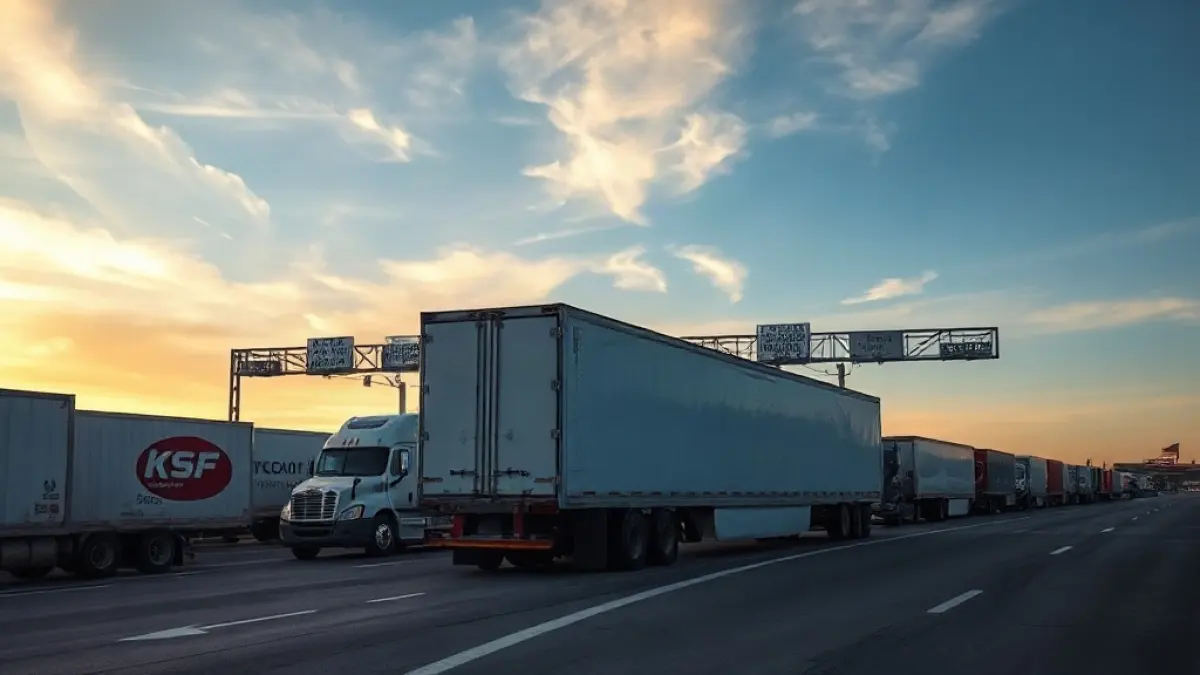
Foreign truck drivers entering the United States on a B-1 business-visitor visa may carry only freight that crosses a border, US guidance states. Federal regulators have made enforcement of these long-standing rules a priority during 2026, raising the stakes for drivers and the carriers that dispatch them.
Key facts
- The B-1 is a business-visitor classification used by drivers domiciled in Mexico or Canada
- Two separate systems govern each load: customs rules for goods and equipment, immigration rules for the driver
- Domestic point-to-point hauling, known as cabotage, is not permitted
- US Transportation Secretary Sean Duffy said roughly 3,200 Mexican drivers have had visas revoked for the violation
What does a B-1 driver allow?
The visa covers movements that form part of the flow of international commerce, meaning the load must be crossing a border in either direction. A driver domiciled in Mexico or Canada may deliver a shipment loaded in their home country to one or more points in the United States. They may also enter empty and collect a US load bound for Mexico or Canada, drop the trailer they brought in and run empty with that same trailer to reload for the return, or drop a loaded inbound trailer, run without a trailer to another US location and hook up a different loaded trailer heading for export. Loading and unloading that is part of moving international freight is also covered.
Guidance published by US Customs and Border Protection (CBP) states that a US carrier may employ a foreign driver only for international deliveries to or from the country, never for domestic carriage without US work authorization.
What counts as cabotage?
Cabotage means domestic transportation between points inside the United States by a foreign operator. A Mexican driver who delivers an import to Dallas cannot then take a paid load from Dallas to Houston, because both origin and destination are domestic. Nor may a driver add a domestic shipment to an international load to fill empty space, sit in the United States soliciting domestic freight, or reposition an empty trailer between two US points unless it is the trailer they entered with or will leave with.
CBP guidance also sets out that freight which has come to rest loses its international character. Once an import reaches its destination, is unloaded and enters the domestic supply chain, it can no longer be hauled onward under a B-1. Some field application remains inconsistent: Canacar's Tijuana delegate has said officers disagree over how to treat an empty trailer, with some regarding the trailer itself as cargo.
Why the B-1 is not a work visa
The US State Department's Foreign Affairs Manual treats B-1 status as suitable for commercial activity that does not amount to gainful employment inside the United States. Its clearest parallel is aviation, where foreign airline crews in B-1 status may not work purely domestic flights. Carrying international freight is classed as business travel, while running domestic loads for pay requires work authorisation the B-1 does not provide.
What this means for travellers
Drivers and carriers moving cross-border freight must confirm on every leg that both the customs and the immigration conditions are satisfied. Loads that begin and end within the United States fall outside the B-1, and stepping beyond the visa's limits can lead to a revoked visa and consequences for the carrier that arranged the load.
An executive order issued in April 2025, titled Enforcing Commonsense Rules of the Road for America's Truck Drivers, directed the Department of Transportation to act on the issue. No further implementation dates are given in this article.
 Mexico
 Canada