
 BahrainTravel
Kuwait reopens airspace to overflights; Gulf route via Bahrain restored
Kuwait has reopened its airspace to overflights, restoring the Europe–Middle East routing through Turkey, Iraq, Kuwait, Bahrain, Qatar and the UAE. Flights between the Bahrain and Baghdad flight information regions are permitted at FL280 or above, but not for all operators.
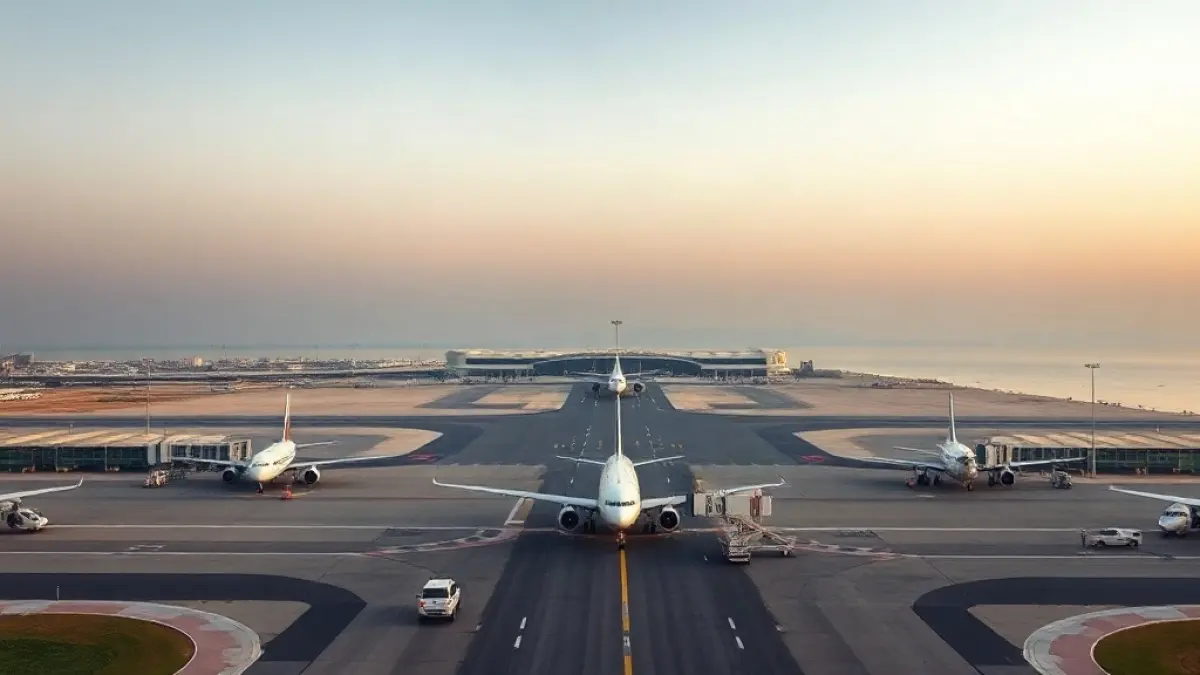
Kuwait has reopened its airspace to overflights, bringing back the central Europe–Middle East routing through Turkey, Iraq, Kuwait, Bahrain, Qatar and the United Arab Emirates. A new notice to airmen (Notam) permits flights between the Bahrain and Baghdad flight information regions (FIRs) through Kuwait at flight level 280 or above. The route is not open to every operator, however, because the European Union Aviation Safety Agency (EASA) and several European countries advise against or prohibit overflights of Iraq.
Key facts
- 15 October: Kuwait reopened its airspace to overflights.
- Flights between the Bahrain and Baghdad FIRs through Kuwait are allowed at FL280 or above.
- The route is only available to operators permitted to overfly Iraq.
- EASA's Gulf advice for Bahrain, Kuwait, Qatar and the UAE is extended to 16 November.
- Saudi Arabia remains open to overflights but is rated Level 1 – Do Not Fly by Safe Airspace.
What has changed for flights through Bahrain?
Bahrain, along with Qatar and the UAE, remains open to overflights and landings, with flow restrictions still in place. EASA continues to advise operators to avoid flying over the waters of the Persian Gulf in these four flight information regions, except when travelling to or from an airport there. That advice now runs to 16 November.
For operators allowed into Iraqi airspace, Kuwait's reopening restores the central routing option via Turkey–Iraq–Kuwait–Bahrain–Qatar–UAE. Others may need to use the northern bypass through the Caucasus and Afghanistan, or the southern route through Egypt and Saudi Arabia.
Why is Saudi Arabia being avoided?
Safe Airspace has raised its warning for Saudi Arabia to Level 1 – Do Not Fly, and recommends avoiding Saudi airspace entirely, including overflights and the use of Saudi airports as en-route alternates. Houthi missile and drone attacks have targeted Riyadh, Abha, Jazan and Najran airports, with further reports near Dammam.
Riyadh airport reopened on 18 October after more than a week of disruption, but normal operations have not resumed. Aircraft need prior permission from Saudi Arabia's General Authority of Civil Aviation (GACA), the airport is not available as an alternate, and several international airlines continue to suspend or restrict flights there. EASA now says operators must avoid two areas of the Jeddah FIR at all altitudes.
What else should travellers know?
On 16 October, missiles struck Aden airport in Yemen, landing about 500 metres from a passenger aircraft preparing to depart for Cairo. The aircraft was evacuated and no casualties were reported. Safe Airspace recommends avoiding Yemen entirely.
EASA's advice for Iran and Iraq remains avoid at all altitudes, with the conflict zone information bulletins (CZIBs) extended to 16 November. Jordan's advice has eased after no conflict-related military activity was reported there over the past month, though EASA warns attacks could resume at short notice. Syria's CZIB was revised on 1 October, allowing operations above FL260 in parts of the Damascus FIR.
Flight crews report widespread GPS jamming and spoofing across the region, including complete GPS loss on arrival and departure at Bahrain, Dubai, Doha, Abu Dhabi, Sharjah and Dammam airports. Reports also mention fuel delays, slower ground handling and heavy air traffic control congestion in the Jeddah FIR as traffic concentrates on the southern bypass.
What this means for travellers
Passengers booked on flights between Europe and the Gulf may see routings change as the central corridor through Kuwait and Bahrain reopens for some operators. Flights may be longer or re-timed where airlines avoid Saudi or Iraqi airspace, and connections through Riyadh remain disrupted while prior permission is required there.
EASA's Gulf advice expires on 16 November, and further updates to the regional airspace warnings are possible before then.
Also about:  Kuwait
 Saudi Arabia
 Qatar
 United Arab Emirates
 Oman
 Jordan
 Iran