
 BrazilTravel
Fans Headed to Brazil 2027 Need e-Visas and Domestic Flights Between 8 Host Cities
Brazil hosts the 2027 Women's World Cup from 24 June to 25 July 2027, with 64 matches in eight cities. U.S. and Canadian citizens need an e-Visa, and long distances mean most multi-city trips require domestic flights.
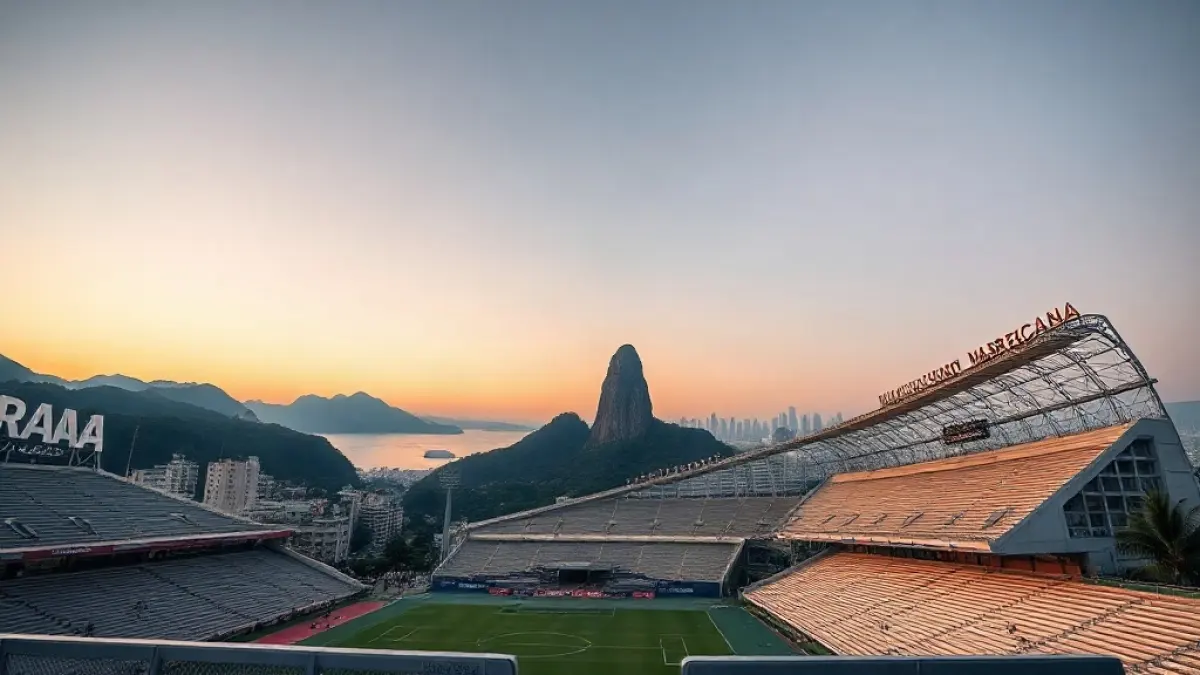
Brazil will stage the 2027 Women's World Cup from 24 June to 25 July 2027, with 32 teams playing 64 matches across eight host cities. It is the first Women's World Cup ever held in South America, and the tournament opens and closes at the Maracanã in Rio de Janeiro.
For travellers, the practical issues are distance between the host cities and Brazil's entry requirements. U.S. and Canadian citizens need an e-Visa, and the host cities sit nearly 2,000 miles (3,193 km) apart at their extremes.
Key facts
- Dates: 24 June to 25 July 2027
- Scale: 32 teams, 64 matches, eight host cities
- Venues: Rio de Janeiro hosts the opener and the final; São Paulo hosts the most matches, with 10
- Entry rules: U.S. and Canadian citizens need an e-Visa for Brazil — apply at least two months before scheduled travel
- Draw: group matchups will not be known until after the draw on 11 December 2026
Which cities are hosting, and what will they stage?
The host cities are Rio de Janeiro, São Paulo, Belo Horizonte, Brasília, Porto Alegre, Salvador, Recife and Fortaleza. Every city hosts at least seven matches and at least one knockout match. São Paulo has the most, with 10, followed by Rio de Janeiro and Fortaleza with nine each.
The Maracanã in Rio stages the opener, group games, a quarter-final, a semi-final and the final, with the host nation playing the opening match on 24 June. São Paulo's Arena Itaquera (Neo Química Arena) covers the group stage, round of 16, quarter-final, semi-final and bronze final. Belo Horizonte's Mineirão and Fortaleza's Arena Castelão each stage a quarter-final, while Brasília's Estádio Nacional (Mané Garrincha), Salvador's Arena Fonte Nova, Recife's Arena de Pernambuco and Porto Alegre's Arena Beira-Rio each stage group matches and a round-of-16 tie.
How far apart are the host cities?
Porto Alegre in the far south and Fortaleza on the northeast coast are 1,984 miles apart in a straight line, and there is no nonstop flight between them. By road, Rio de Janeiro to Fortaleza takes about 39 hours; by air it is roughly three hours 10 minutes.
Flights between most host cities take one to three hours, and door-to-door journeys run four to eight hours once airport time and transfers are included. The quickest links are in the Southeast, where Rio de Janeiro, São Paulo and Belo Horizonte are about an hour apart. Adding three to four hours for transfers, check-in, security and boarding turns a one-hour hop from Rio to São Paulo into a four or five-hour journey.
In October 2026, every host-city pair had regular nonstop flights except Porto Alegre's routes to Salvador, Recife and Fortaleza, which had limited nonstops or none. Porto Alegre is therefore easiest to pair with São Paulo, Rio de Janeiro or Brasília. Inside the Southeast, flying is generally faster than driving, and bus journeys typically take longer; elsewhere, flying is recommended. Airports used are Rio GIG and SDU, São Paulo GRU and CGH, Belo Horizonte CNF, Brasília BSB, Fortaleza FOR, Porto Alegre POA, Recife REC and Salvador SSA.
What entry rules apply?
U.S. and Canadian citizens need an e-Visa for Brazil. The advice is to apply at least two months before scheduled travel. The tournament involves one country, one currency, one time zone and one set of entry rules.
What will the weather be like?
June and July are winter in Brazil, but conditions vary by region. The Northeast stays warm, with July highs of 79 to 88°F, while São Paulo and Porto Alegre turn cool, with lows of 50 to 54°F. Recife and Salvador are in their wet season.
What this means for travellers
Travellers following more than one city should plan on domestic flights and allow four to eight hours door to door between matches. U.S. and Canadian passport holders should start their e-Visa application at least two months before travel, and anyone waiting on group matchups will need to hold off until the draw on 11 December 2026.
Airlines have not yet published mid-2027 schedules, and the flight and nonstop information available is based on October 2026 timetables, so travellers should check routes again closer to the tournament.
Also about:  United States
 Canada