
 Central African RepublicTravel
Ebola risk grows along CAR–DRC border, says UN update on 27 October
The UN says no Ebola cases have been recorded in the Central African Republic, but cross-border movement with the Democratic Republic of the Congo keeps the risk of importation high. Threats to aid workers were also reported in Haute-Kotto.
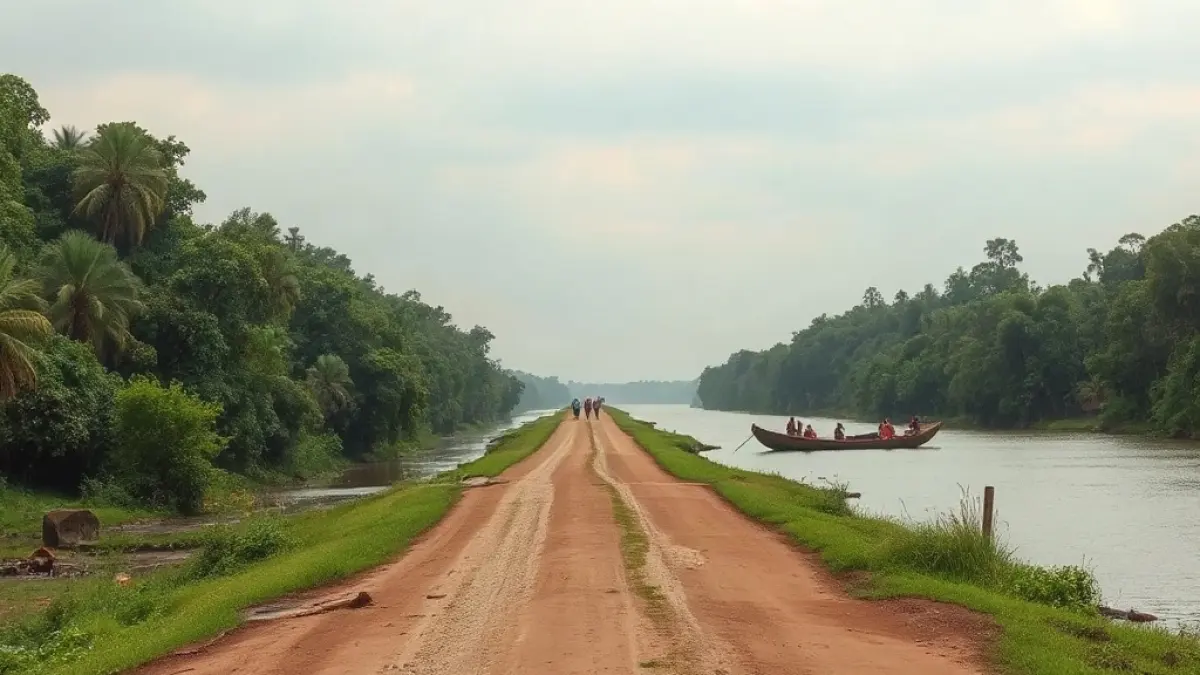
The United Nations Office for the Coordination of Humanitarian Affairs (OCHA) says the Ebola outbreak in the Democratic Republic of the Congo (DRC) continues to expand towards the Central African Republic (CAR) border, keeping the risk of cross-border transmission high. No Ebola cases have been recorded in the Central African Republic as of the report dated 27 October 2026.
Key facts
- No Ebola cases recorded in the Central African Republic as of the reporting period
- DRC outbreak: 9,637 confirmed cases and 4,602 deaths as of 18 October 2026
- Most exposed areas: Basse-Kotto and Haut-Mbomou prefectures, plus Zemio
- About 1,500 people fled Bilsem village on 21 October and later returned
- US$3 million allocated in August by the Central Emergency Response Fund (CERF)
Is Ebola present in the Central African Republic?
No. OCHA reports that no Ebola cases have been recorded in the country. The threat comes from the outbreak in the DRC, which a regional analysis by REACH says is still expanding across that country's north-eastern provinces, with 9,637 confirmed cases and 4,602 deaths reported as of 18 October 2026.
The outbreak has recently reached the health zones of Dungu, Alimbongo, Ango and Wapinda. The last two are located close to the CAR border.
Which border areas are most at risk?
Population movements and economic exchanges along major road and river corridors could carry the virus across the border, OCHA says, particularly between Nord-Ubangi in the DRC and the CAR prefectures of Basse-Kotto and Haut-Mbomou.
The localities of Yakoma and Gbadolite in the DRC and Zemio in the CAR have been identified as especially exposed to risks linked to cross-border movement. More than 264,000 Central African refugees and asylum seekers are living in the DRC, mainly in the provinces of Nord-Ubangi, Sud-Ubangi and Bas-Uele, which could further increase cross-border travel between the two countries.
OCHA says enhanced epidemiological surveillance at points of entry, early detection of suspected cases and preparedness of health facilities in border areas remain critical. In August, the Central Emergency Response Fund allocated US$3 million for prevention in high-risk areas, surveillance and isolation capacity, community engagement and improved access to water.
What is the security situation?
In Haute-Kotto prefecture, a staff member of a humanitarian organisation was threatened by armed elements on 21 October. Community members and staff of a United Nations agency faced similar threats, and one day earlier an NGO staff member received verbal threats from an armed individual while carrying out child protection activities.
In Ouham-Pendé prefecture, roughly 1,500 people left Bilsem village on 21 October over security concerns, sheltering in the bush, at temporary farming sites or in nearby localities including Gaïboula, 5 km from Bocaranga. The movement followed tensions between a herder and a farmer. Local authorities intervened the next day, and the displaced residents later returned home after the security situation improved.
What this means for travellers
Travellers in the Central African Republic should note that the areas identified as most exposed to cross-border disease movement are Basse-Kotto, Haut-Mbomou and Zemio. Spontaneous displacement and threats to humanitarian workers have been reported in Haute-Kotto and Ouham-Pendé, so conditions locally can change quickly.
On 21 October, the Prime Minister of the Central African Republic visited Zemio with government ministers, the Humanitarian Coordinator and United Nations representatives, where UNFPA distributed dignity kits to 50 survivors of gender-based violence. OCHA continues to monitor the border situation.
Also about:  DR Congo