
 FranceTravel
Paris Protests: Metro Closures, Curfews and What Travellers Should Know
Protests across France have closed Metro stations in central Paris and brought curfews to several cities. Further action is planned for 24 October, 3 November and 5 November, with disruption expected.
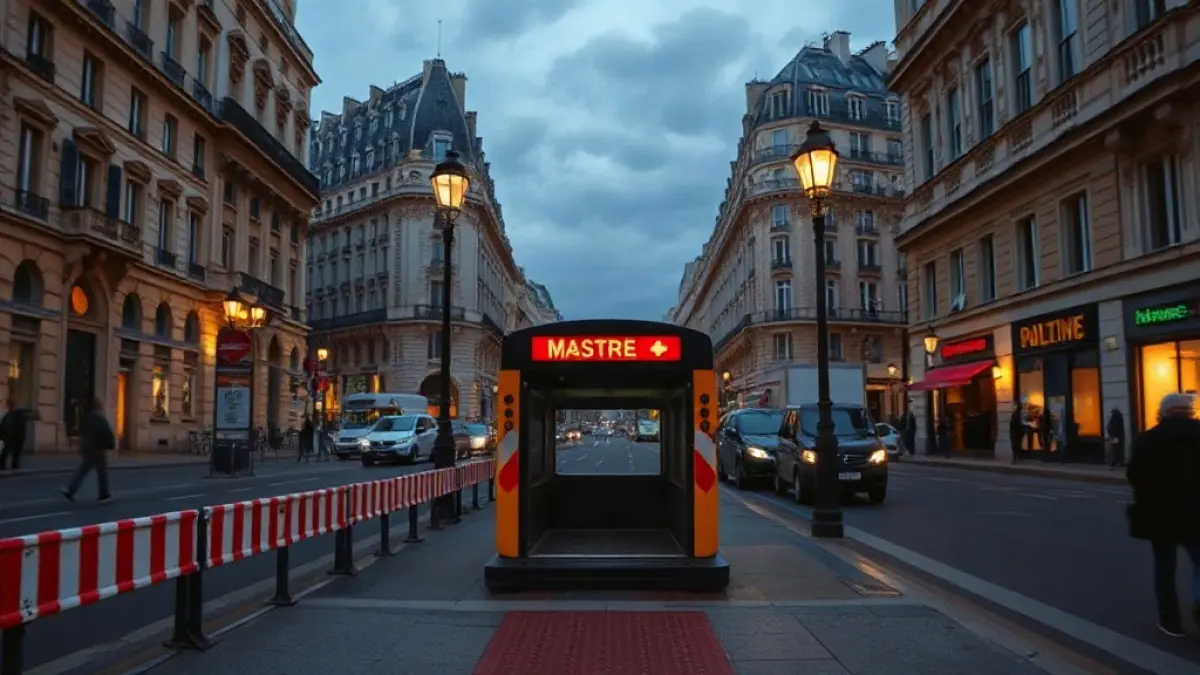
Protests that began with French high school students in September have spread across the country, bringing transport closures in central Paris and curfews in several other cities. High school students have called further days of action on 22 and 24 October and 3 and 5 November, so travellers should expect further disruption in the coming weeks.
Key facts
- Demonstrations are planned for Saturday 24 October, with further action called for 3 and 5 November
- Unauthorised gatherings were banned in parts of central Paris from 8 a.m. to 8 p.m. on 22 October
- Several Metro stations closed from 10 a.m. on 22 October, with further closures possible at short notice
- Localised curfews are in force in Lyon, Bordeaux, Lille and Nice
- An estimated 550,000 people demonstrated across France on 17 October, according to French authorities
What is happening in Paris?
On 22 October, the Préfecture de Police banned unauthorised demonstrations and gatherings between 8 a.m. and 8 p.m. in several parts of central Paris. The areas covered include those around the Louvre, the Champs-Élysées, the Élysée Palace, Bastille, République and major railway stations.
Several Metro stations were closed from 10 a.m. on 22 October at the request of the Préfecture de Police, including Bastille, Saint-Paul, Place d'Italie, Campo Formio, Saint-Marcel, Quai de la Rapée, Gare d'Austerlitz, Bréguet-Sabin and Chemin Vert. Services on Metro Line 10 were also interrupted between Gare d'Austerlitz and Jussieu. Earlier in the week, trains were unable to stop at major transport interchanges including République and Châtelet-Les Halles.
For the demonstration planned on 24 October, the government is preparing a substantial security operation in central Paris that will deploy armoured vehicles, specialist police and gendarmerie units, and military personnel from Operation Sentinelle.
Which other cities are affected?
Unrest is not limited to Paris. On 17 October, demonstrations took place across the country, with French authorities estimating 550,000 participants and organisers putting the figure at 800,000. While many marches remained peaceful, violent outbreaks occurred in Lyon, Marseille, Bordeaux and Lille.
Localised curfews have been introduced in Lyon, Bordeaux, Lille and Nice. In Lyon, restrictions covering part of the central Presqu'île district, from the Hôtel de Ville to Place Carnot, ran from 9 p.m. to 6 a.m. and were renewed through Thursday morning. In Bordeaux, Lille and Nice, curfews and restrictions have primarily been put in place for minors.
In Lyon, more than 20,000 people gathered for demonstrations that descended into violent clashes with police. A branch of the city's tourist office at Place Bellecour was vandalised and set on fire, and dozens of shops across the Presqu'île were damaged and looted. In Limoges, the historic Hôtel de Ville was devastated by a fire, with local authorities warning it had not yet been saved. Protesters also entered Marseille's town hall, damaging the interior, and similar incidents were reported at municipal buildings in Lille and Angers.
What this means for travellers
Paris is not a no-go zone, but certain streets and neighbourhoods may be affected by demonstrations, police operations or temporary closures, and disruption is not necessarily city-wide. Travellers should check the latest RATP Group updates before setting off, as further transport closures may be introduced at short notice.
Those booking accommodation are advised to avoid hotels close to main squares or places of particular significance such as République, Bastille, Nation and Place de Clichy, and to consider quieter residential areas instead.
Some hotels have reported cancellations and early departures, although the overall impact on bookings remains limited for now, according to Le Monde. France's tourism industry has raised concerns as the country enters the Toussaint school holidays.
Further days of action have been called for 3 and 5 November, and travellers planning trips around those dates should monitor announcements from the French authorities and transport operators.