
 HondurasTravel
Honduras travel warning stays as US internal report compares crime to US cities
The US State Department is publicly warning Americans about violent crime in Honduras, Mexico, Guatemala and El Salvador, while internal assessments tell asylum officers conditions compare favourably with some US cities.
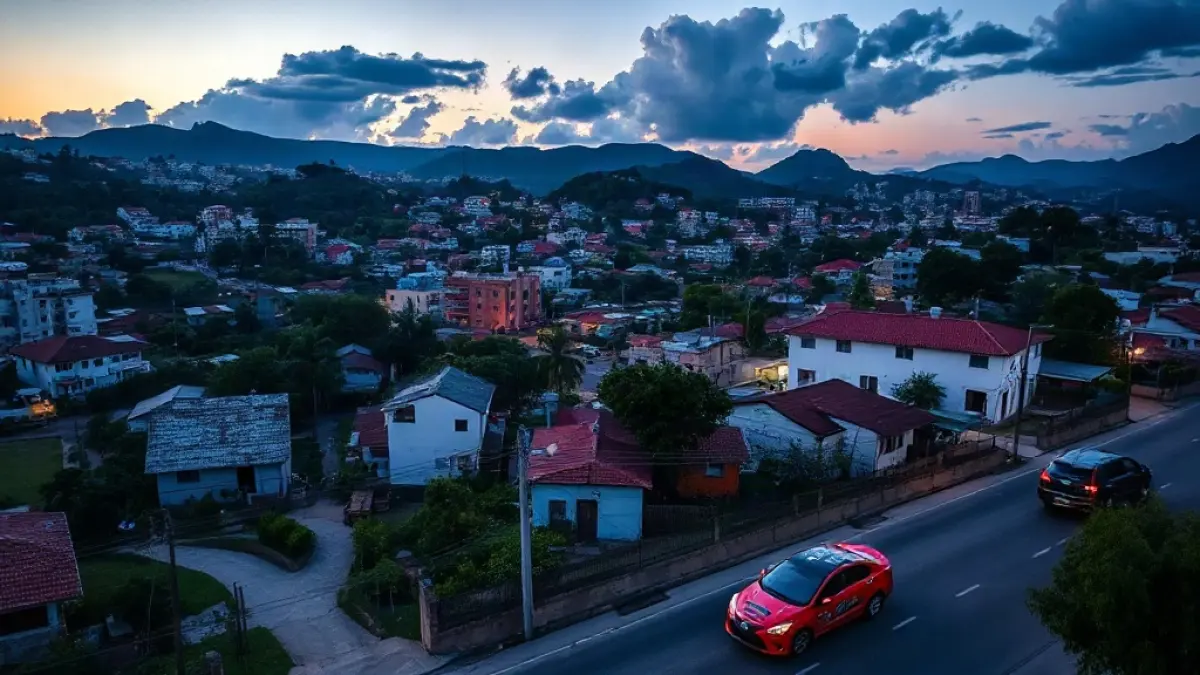
The US State Department continues to warn American travellers about violent crime in parts of Latin America, but internal assessments sent to asylum officers describe conditions in four of those countries as no more dangerous than in some US cities. The documents cover Mexico, Honduras, Guatemala and El Salvador and are intended to inform decisions on who can remain in the United States.
Key facts
- The internal assessments cover Mexico, Honduras, Guatemala and El Salvador.
- They were distributed to US Citizenship and Immigration Services (USCIS), the agency within the Department of Homeland Security (DHS) that processes immigration benefits.
- They compare violent-crime rates in those countries with US cities including Baltimore, Houston and Memphis.
- The State Department's public advice warns against travel to Honduras, citing violent crime and terrorism, and specifically flags Gracias a Dios Department for crime.
- The department's annual human rights report, usually released in March or April, has been delayed this year.
What do the internal documents say?
Rather than highlighting human rights issues, kidnapping and extortion, the assessments draw comparisons with the United States. In Mexico and El Salvador, the documents claim many areas have violent-crime rates at least one order of magnitude lower than those of major US cities.
On Honduras, the documents state that violent-crime rates in the country and in its cities compare favourably with rates in parts of the United States. They also say police in Honduras are willing and able to respond to requests for help from residents, with the main constraints being vehicle availability, response times and uneven rural access — constraints that can also occur in the United States.
The assessments add that people can move freely in each of the four countries, including victims of abuse and extortion. One document cautions that conditions vary within developed countries and that no general judgement should be made about a whole country based on certain areas.
How does this differ from the public travel advice?
The State Department's public alert for Honduras warns against travel there, citing violent crime and terrorism, and singles out Gracias a Dios Department. The internal documents take a different tone on the same country, describing crime levels as comparable with parts of the United States.
Why were the assessments prepared?
The State Department says the assessments were produced by staff with regional expertise and circulated for review, including to US missions overseas, and are meant to provide background for officials evaluating protection claims. Asylum applicants must show a "well-founded fear" of persecution at home, and the documents bear on two key questions: whether a home government can offer protection and whether an applicant could safely relocate within their own country.
Asylum officers normally rely on the department's annual human rights report, which covers the previous year and is usually published in March or April. That report has been delayed this year, so the new assessments give officers more recent country conditions. Denials are already high: 94% of asylum cases were denied in June, according to the Transactional Records Access Clearinghouse at Syracuse University, up from a rate of around 50% two years ago.
Andrew Selee, president of the Migration Policy Institute, a nonpartisan thinktank, said the shift in the official description of conditions was a concern, calling it "a wholesale shift in conditions on the ground".
What this means for travellers
For Americans travelling to Honduras, the public travel advice is unchanged: the State Department still warns against travel to the country, citing violent crime and terrorism, and highlights Gracias a Dios Department in particular. Anyone planning a trip should check the current advisory for Honduras and the specific areas it names before booking.
Travellers should also be aware that the two messages now circulating — the public warning and the internal assessments — describe the same country differently. The DHS referred questions about the country reports to the State Department.
The State Department's annual human rights report has been delayed this year and no release date is stated. In the meantime, the new assessments are being provided as background to USCIS personnel and immigration judges.
Also about:  Mexico
 Guatemala
 El Salvador
 United States