
 NigeriaTravel
Ebola Case in Nigeria Traced to Travel From Uganda via Addis Ababa
Nigeria has confirmed an imported Ebola case in a traveller who entered on 3 October from Uganda via Addis Ababa. Authorities are tracing her route and monitoring 44 identified contacts.
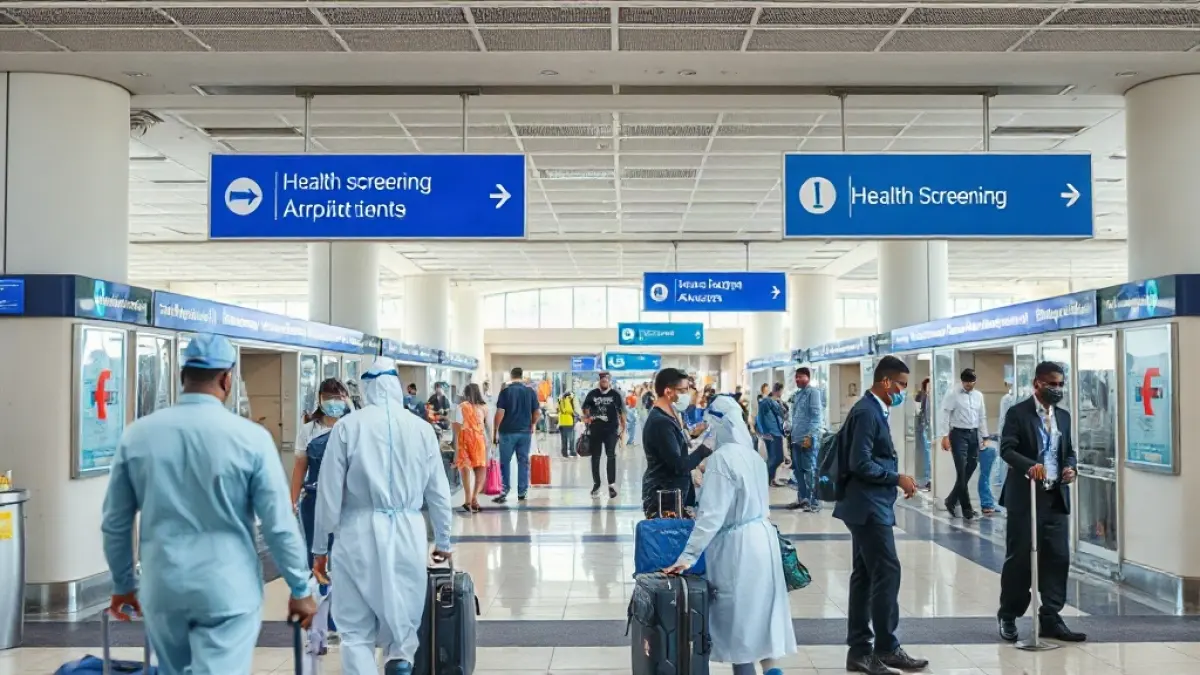
Nigeria has confirmed its first Ebola case, in a woman reported to have travelled to the capital, Abuja, from Uganda via Addis Ababa in Ethiopia. The World Health Organization (WHO) Africa region said she entered Nigeria on 3 October and was diagnosed on 20 October, as investigators work to reconstruct her full travel and exposure history.
Key facts
- The patient entered Nigeria on 3 October and developed symptoms on 7 October
- She was admitted to hospital two days later and diagnosed on 20 October
- She is reported to be the wife of a Ugandan diplomat
- Nigeria's Health Ministry has identified 44 contacts, who are being monitored
- The case is an imported Bundibugyo virus infection
What happened?
The patient is reported to have reached Abuja from Uganda, travelling via Addis Ababa. She entered Nigeria on 3 October, began showing symptoms on 7 October and was admitted to hospital two days later, but was only diagnosed on 20 October, according to the WHO's Africa region.
She is said to be the wife of a Ugandan diplomat. Uganda was declared Ebola-free in August after treating 20 people who had contracted the Bundibugyo virus imported from the Democratic Republic of Congo (DRC).
What are authorities doing?
The WHO said investigations are continuing to establish the likely source of her infection and to reconstruct her full travel and exposure history. Nigeria's Health Ministry has identified 44 contacts, who are being monitored as efforts intensify to find other people who may have been exposed.
Infection prevention and control measures are being ramped up at the private health facility where the patient sought care, the WHO added.
What is happening elsewhere in the region?
Kenya has reported nine cases, all quarantined contacts of the first case, who died after travelling across the DRC, according to the country's Health Ministry. Three are health workers, one is a hospital cleaner and four are relatives of the patient. The Kenyan government says it has traced 128 of the 130 identified contacts of the deceased, and they are all in quarantine.
The case fatality rate in the DRC is over 48%, with most cases in Ituri province. On Sunday, authorities in North Kivu introduced a week-long ban on people travelling from Ituri to slow transmission, and also suspended large sporting activities, concerts, parades and nightclubs. They have limited passenger numbers for vehicles and introduced mandatory vehicle disinfection, hand washing and temperature screening at checkpoints.
What this means for travellers
The WHO's Africa region has urged countries to maintain strong disease surveillance and rapid alert investigation, ensure laboratories can safely test suspected cases, keep rapid response and clinical teams ready for immediate activation, and reinforce infection prevention and control in both public and private health facilities. Travellers should note that North Kivu authorities have restricted movement from Ituri and introduced screening measures at checkpoints.
African health ministers are due to meet next week to discuss Ebola, after Nigeria reported its first case, Kenya's outbreak infected nine people and the DRC reported 9,455 cases. The meeting was announced by the Africa Centre for Disease Control and Prevention (Africa CDC), which described Ebola as an "escalating threat to health security across the continent".
 Uganda
 Ethiopia
 Kenya
 DR Congo