
 PakistanTravel
Passengers Still Crossing Gabd-Rimdan as Cargo Remains Halted at Pakistan-Iran Borders
Cargo traffic at the Gabd-Rimdan and Taftan border crossings between Pakistan and Iran remained suspended on 20 October 2026, stranding trucks and goods. Passenger movement reportedly continued at Gabd-Rimdan, and no reopening date has been announced.
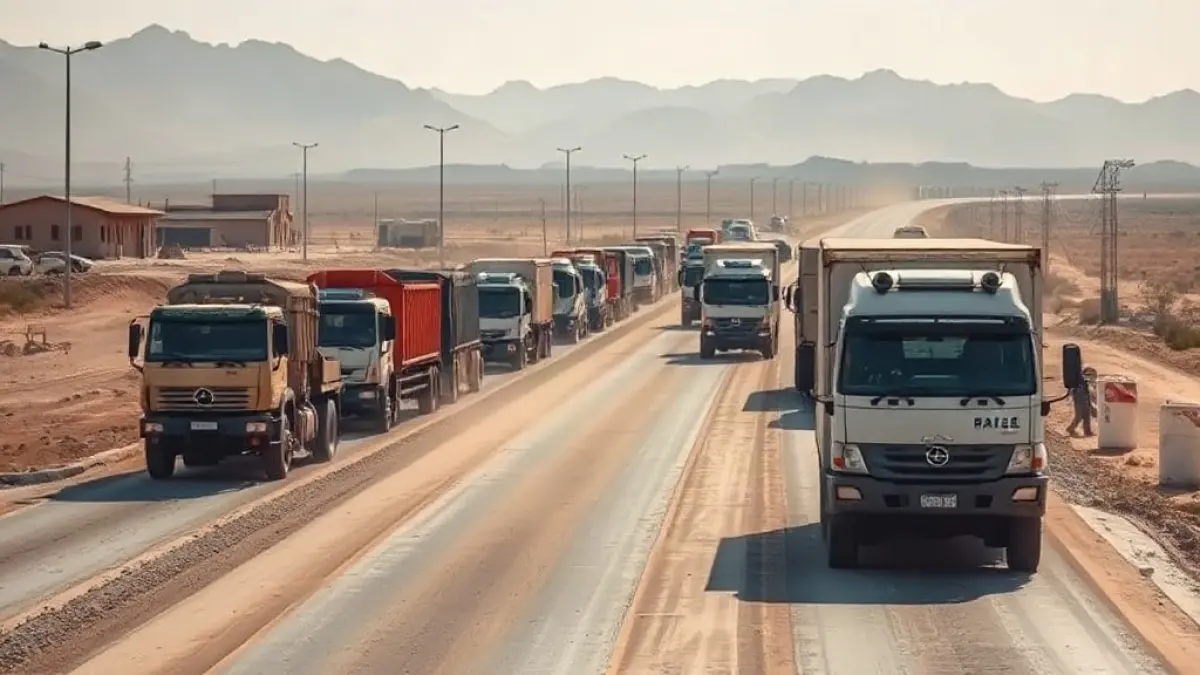
Commercial traffic at two major border crossings between Pakistan and Iran remained suspended on Tuesday, 20 October 2026, leaving trucks and cargo stranded. Pakistani authorities described the halt as a temporary security and anti-smuggling measure, while Iran pointed to technical difficulties and precautionary steps.
Key facts
- The suspension affects commercial traffic at the Gabd-Rimdan and Taftan crossings as of 20 October 2026.
- Passenger movement reportedly continued at Gabd-Rimdan; the source does not state whether passengers are affected at Taftan.
- Iranian media had already reported about 3,000 trucks queued at Rimdan before the latest halt, with some drivers waiting 20 to 30 days to cross.
- No timetable for resuming commercial traffic had been announced by Tuesday.
- Negotiations between the two countries are continuing, with perishable goods given priority.
What is happening at the border?
Trucks and cargo have been stranded at the Gabd-Rimdan and Taftan crossings since the halt took effect. People affected by the disruption urged drivers not to send further shipments toward the borders, saying long queues formed and trucks began turning back.
The stoppage has raised the risk of prolonged vehicle inactivity and financial losses for transport operators and cargo owners, according to the source.
Are travellers and passengers affected?
Passenger movement reportedly continued at Gabd-Rimdan while commercial traffic stopped. The source does not say whether passenger movement has also been halted or maintained at Taftan, so travellers planning to use either crossing should confirm the current status before setting out.
Why has traffic been stopped?
Pakistan described the suspension as a temporary measure to strengthen security and combat smuggling. Iran attributed the disruption to technical issues and precautionary measures. Iranian Foreign Ministry spokesman Esmail Baghaei said the two countries remain in contact to resolve the problem.
The halt comes as Iran has grown more dependent on land routes for foreign trade because maritime shipping has been restricted during the war and a US military blockade has affected its southern ports. Before the conflict, more than 80 percent of Iran's foreign trade passed through the ports of Rajaei and Khomeini. Land crossings lack the capacity to replace maritime trade, and the diversion of shipments to roads has raised transport costs and congestion.
When will the crossings reopen?
No date has been announced. Abdolsalim Hoot, a border market director, said on 18 October that negotiations with Pakistani authorities to remove obstacles at Rimdan were continuing and that perishable goods were being given priority. An official in Pakistan's Balochistan province described progress in the talks and the possibility of reopening the crossings soon.
Delays had built up before the suspension because of limited processing capacity on the Pakistani side and requirements to transfer cargo from Iranian trucks to Pakistani vehicles. An industry circular issued in August also described difficulties unloading Iranian trucks in Pakistan and moving their cargo.
What this means for travellers
Anyone planning to cross at Gabd-Rimdan or Taftan should check whether passenger movement is operating before travelling, as the source only confirms that passengers continued to move at Gabd-Rimdan. Cargo operators have been urged not to send additional shipments toward the borders until the crossings reopen.
Talks between the two sides are ongoing, and no timetable for the resumption of commercial traffic has been made public.
Also about:  Iran