
 PhilippinesEntry rules
Philippines Biometric Border Upgrade Targets December Rollout at Airports
The Philippines' PHP 10.74 billion (about US$171.5 million) CAISS border project would add face, fingerprint and iris checks at 11 international airports, a seaport and six crossing stations. The Bureau of Immigration targets an initial rollout by December, but the project is still under review.
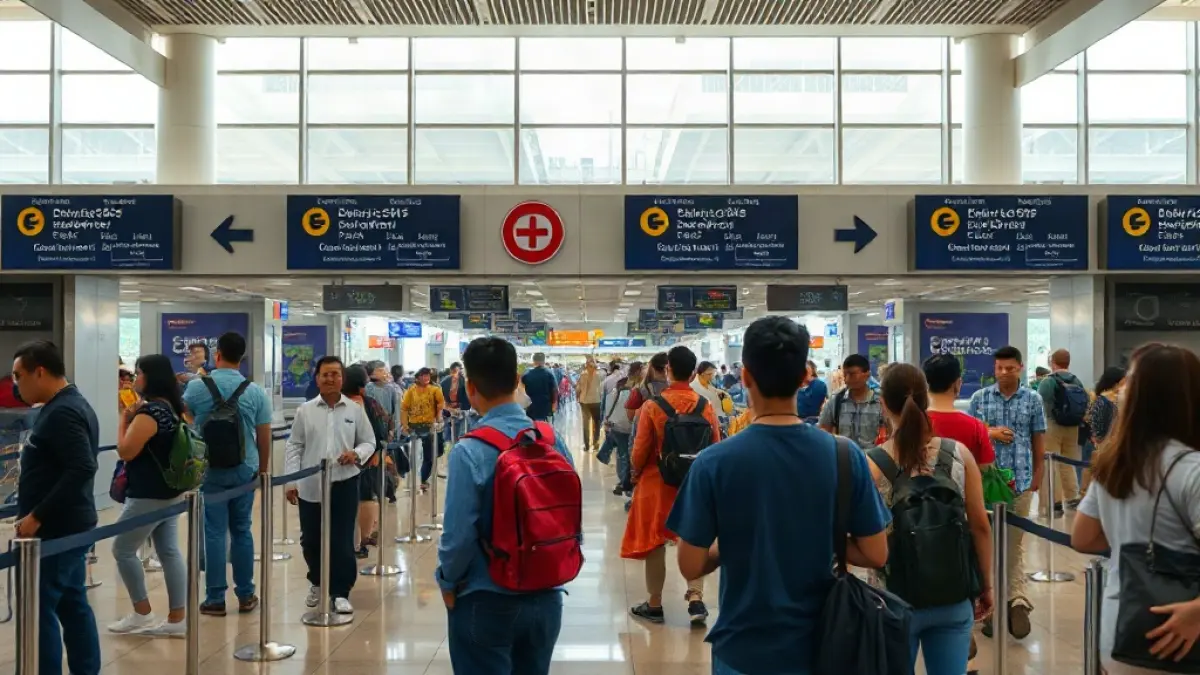
The Philippines is weighing a PHP 10.74 billion (about US$171.5 million) public-private partnership that would add biometric identity checks to its border control systems. U.S. company Securiport says the Civil Aviation and Immigration Security Services (CAISS) project is designed to work alongside existing government systems rather than replace them, and the Bureau of Immigration (BI) is targeting an initial rollout by December.
Key facts
- Cost: PHP 10.74 billion (about US$171.5 million), financed as a public-private partnership
- Who is affected: travellers passing through 11 international airports, Zamboanga international seaport and six border crossing stations
- Technology: one-to-many matching of face, fingerprint and iris data against historical records
- Timeline: initial rollout targeted by December, full modernisation in two to three years
- Status: the project remains under government review
What would change at the border?
CAISS would combine Advance Passenger Information (API) and Passenger Name Record (PNR) data on a single platform. API data shows who is expected to travel, while biometrics would be used to confirm who is actually present. PNR data adds booking and payment details, giving authorities more information for risk assessment before passengers board.
Biometric checks would use one-to-many matching, comparing face, fingerprint and iris data against historical records. The aim is to flag mismatches while moving low-risk travellers through e-gates more quickly.
Where would it be used?
The platform would be deployed at 11 international airports, the Zamboanga international seaport and six border crossing stations, extending beyond airports to seaports and other land crossings. Securiport chief technology officer Nate Carpenter, speaking at the International Civil Aviation Organization (ICAO) Traveller Identification Programme (TRIP) Symposium in Montreal, said CAISS would link with the BI's ongoing e-gates expansion rather than duplicate it.
Who is behind the project and how is it financed?
CAISS was proposed by Securiport through the Public-Private Partnership Center of the Philippines. The financing model follows a user-pays approach, meaning only travellers who use the service would shoulder the cost. The proposal includes a guaranteed technology refresh every four years over the project's 20-year period, which the company says would keep the system current without extra government spending.
When would it start?
The BI targets initial rollout by December, with full modernisation over two to three years. However, the project remains under review, and the government has not endorsed Securiport's position that CAISS would complement rather than duplicate existing systems.
What this means for travellers
Nothing is finalised yet, so there are no new entry requirements in force. Travellers planning trips through Philippine airports, Zamboanga international seaport or the border crossing stations covered by the proposal should watch for government decisions on the CAISS review and any confirmed rollout dates, as the December target has not been formally approved.
No timetable for the government's decision has been announced.
Also about:  United States