
 RussiaVisas
Travellers to Russia now pay more for e-Visas and fast-track consular visas
Russia's e-Visa now costs 238 AED, up from 202 AED, while expedited consular visa fees for European applicants have doubled. The changes took effect on 14 October 2026 under a government decree of 2 October 2026.
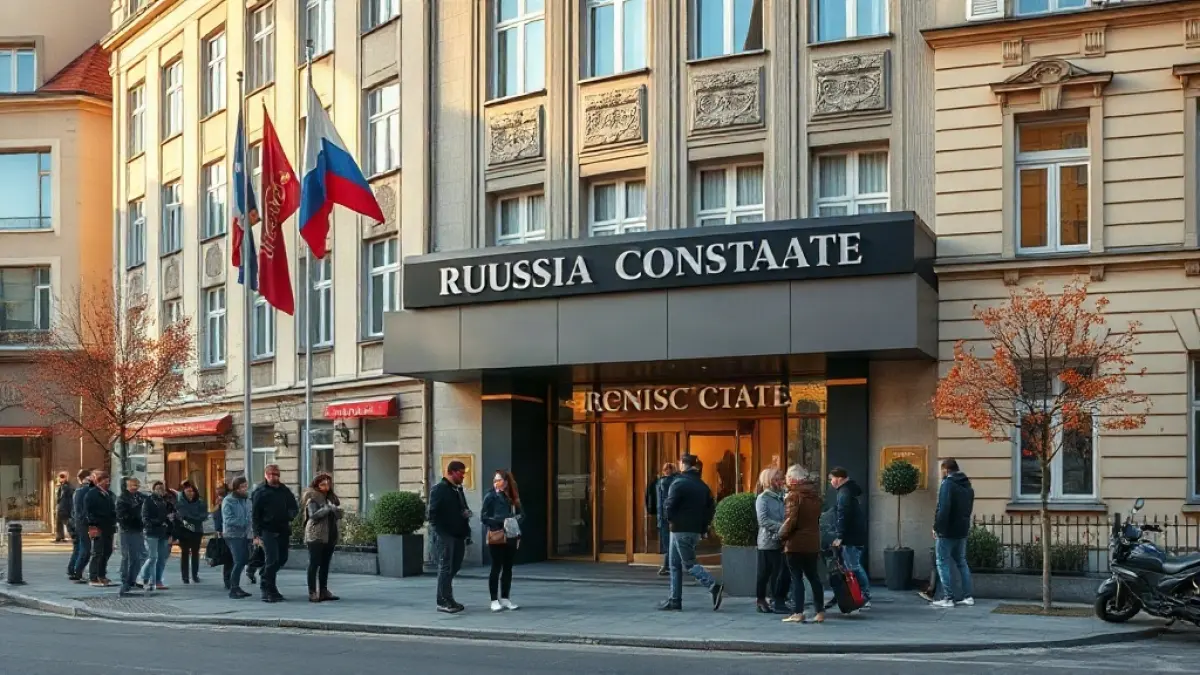
Travellers applying for Russia's electronic visa (e-Visa) are paying more from 14 October 2026, when the fee rose from 202 to 238 United Arab Emirates dirhams (AED) — an increase of 36 AED, or nearly 18%. On the same date, Russia introduced sharply higher consular visa fees for European applicants, with expedited processing charges doubling and work visa fees rising even more.
Key facts
- e-Visa fee: 238 AED from 14 October 2026, up from 202 AED (about $55/€49 to about $65/€58)
- Expedited single-entry consular visa for Europeans: €320, up from €160
- Legal basis: a Russian government decree adopted on 2 October 2026
- e-Visa eligibility: nationals of 64 countries, including France, Belgium, Switzerland, Japan, India and Mexico
- U.S. passport holders: not eligible for the e-Visa and covered by separate fee arrangements
What is changing?
Two sets of fees moved on 14 October 2026. First, the unified e-Visa became more expensive: the price shown during payment on Russia's official e-Visa portal rose from 202 AED to 238 AED, roughly $65 (€58). The portal allows payment in UAE dirhams.
Second, consular visa charges for European nationals increased. Russia's Consulate General in Strasbourg, France published an updated fee schedule confirming the new rates. Standard processing fees for tourist and business visas are unchanged, but expedited fees have doubled: €320 for a single-entry visa (previously €160), €512 for a double-entry visa (previously €256) and €960 for a multiple-entry visa (previously €480).
How much do work and student visas cost?
Work visas follow a separate schedule with steeper increases. The Strasbourg consulate lists €160 for a single-entry work visa on regular processing and €640 for expedited processing; €256 or €1,024 for a double-entry visa; and €480 or €1,920 for a multiple-entry visa. Compared with the previous general schedule, regular work visa charges have doubled and expedited charges have increased fourfold.
Student visa fees are unchanged for standard processing at €80, €128 and €240 for single-, double- and multiple-entry visas. Expedited student processing costs €160, €256 and €480.
Who is affected?
The e-Visa remains open to nationals of 64 countries, including France, Belgium, Switzerland, Japan, India and Mexico, for tourism, business, private visits and certain events. U.S. passport holders are not currently eligible for the e-Visa and must apply through a Russian embassy or consulate unless they qualify for a visa exemption.
The euro-denominated consular rates published in Strasbourg apply to European applicants and should not be read as changes to fees for U.S. citizens, which are governed by separate arrangements including the bilateral visa facilitation framework between Washington and Moscow. The Russian Embassy in Washington had not posted an equivalent update at the time of the initial review, so applicants through missions in the United States should confirm the fees for their nationality with the responsible embassy or consulate.
What has not changed?
The e-Visa's main conditions are unchanged: it is valid for 120 days from issuance, allows a maximum stay of 30 days, is single entry and takes up to four calendar days to process. Standard consular processing generally takes 4 to 20 business days, compared with up to 3 business days for expedited applications.
What this means for travellers
Travellers from eligible countries planning a short stay can still use the e-Visa, which remains the most affordable and straightforward option despite the increase. European applicants who need a visa quickly should weigh the higher expedited fees against standard processing, since regular tourist and business charges have not changed. Applicants through Russian missions in the United States should check the applicable fee for their nationality before applying.
The revision follows earlier increases for European nationals in January 2024, when Russia removed preferential fees and raised the regular single-entry charge from €35 to €80 after the European Union suspended its visa facilitation agreement with Moscow. Russian authorities have not issued a specific public statement explaining the e-Visa price increase.
Also about:  France
 Belgium
 Switzerland
 Japan
 India
 Mexico
 United States