
 Vatican CityEntry rules
Vatican City Visitors Travel Through Schengen: One Visa, 90-Day Limit Across 29 States
The Schengen Area covers 29 European countries with no routine internal passport checks, though eight members have reinstated temporary controls. One visa covers all members and stays are capped at 90 days across the whole area.
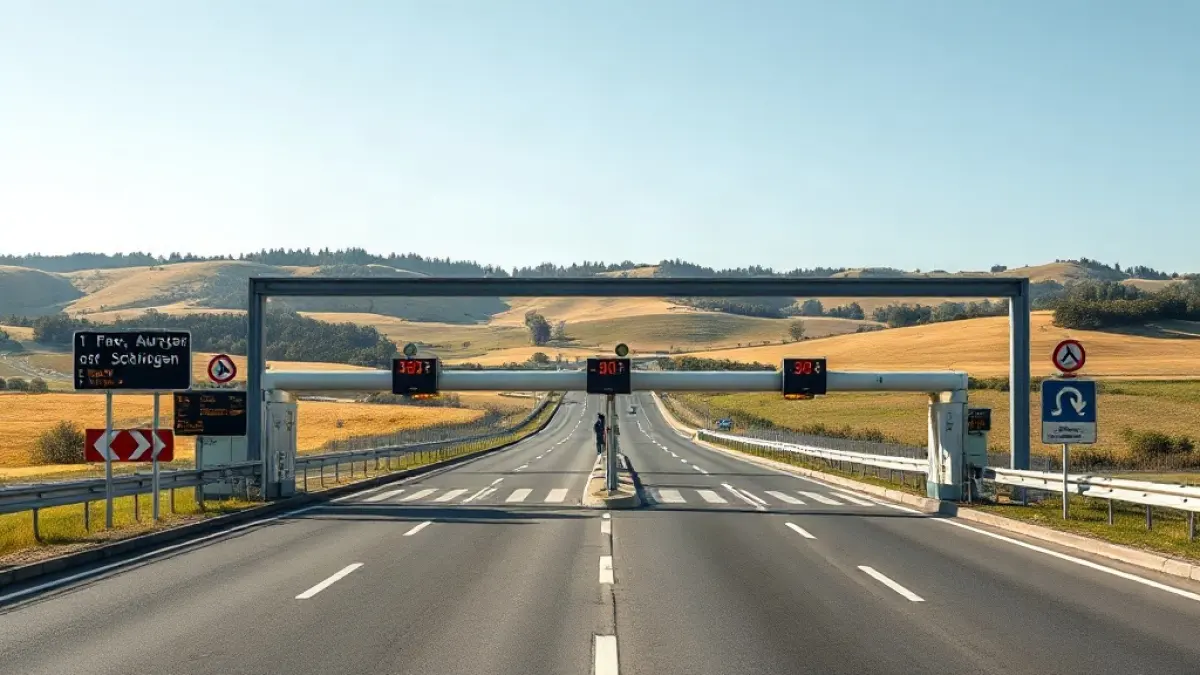
The Schengen Area brings together 29 European countries that have abolished routine passport checks at their shared borders. For travellers from outside the EU, a single short-stay visa covers the entire zone, and the 90-day limit applies across all member states combined rather than country by country.
Key facts
- 29 member countries as of October 2026: 25 EU states plus Iceland, Liechtenstein, Norway and Switzerland
- Schengen Agreement signed 14 June 1985; internal border checks first lifted 26 March 1995
- Area of more than 4 million km² with over 450 million residents
- About 1.25 billion journeys a year within the area, and roughly 3.5 million internal border crossings a day
- Short stays are limited to 90 days in any 180-day period across the whole area
Which countries are in the Schengen Area?
The members are Austria, Belgium, Bulgaria, Croatia, Czechia, Denmark, Estonia, Finland, France, Germany, Greece, Hungary, Iceland, Italy, Latvia, Liechtenstein, Lithuania, Luxembourg, Malta, the Netherlands, Norway, Poland, Portugal, Romania, Slovakia, Slovenia, Spain, Sweden and Switzerland. Four of these — Iceland, Liechtenstein, Norway and Switzerland — are not EU members.
Two EU countries remain outside the zone: Ireland, which has chosen to stay out, and Cyprus, which is still waiting to join.
Where are border checks back right now?
Eight Schengen countries have temporarily reintroduced checks at some internal borders, based on notifications to the European Commission. The list was checked on 24 October 2026, and countries notify new periods every few months.
Austria is checking its land borders with Czechia, Hungary, Slovakia and Slovenia from 16 September 2026 to 15 March 2027, citing irregular migration, pressure on asylum and reception services and the wider security situation. Denmark is checking its land and sea borders with Germany from 12 July to 11 November 2026, with a further period notified from 12 November 2026 to 11 May 2027, citing risks of sabotage, terrorism and organised crime. France has checks in place at all internal land, air and sea borders.
What happens at the external border?
The Entry/Exit System (EES) has been in use since 2025. ETIAS, the travel authorisation for visa-exempt visitors, is not yet in operation.
What this means for travellers
Travellers should carry their passport even when moving between Schengen countries, because checks can take place inside the area. Anyone counting days of stay should track time across the whole zone, not per country, and should check whether internal border controls apply on their route before travelling.
The European Commission's list of notified border checks is updated as countries submit new periods, so travellers should confirm the current situation close to departure.
Also about:  Austria
 Belgium
 Bulgaria
 Croatia
 Czechia
 Denmark
 Estonia