
 CameroonEntry rules
Cameroon border crossing: Nigeria to finish Adamawa boundary pillars in 2-3 months
Nigeria and Cameroon expect to complete the physical demarcation of their shared land border within two to three months, a Nigerian official said. Work remaining in the Adamawa sector includes more than 260 boundary pillars.
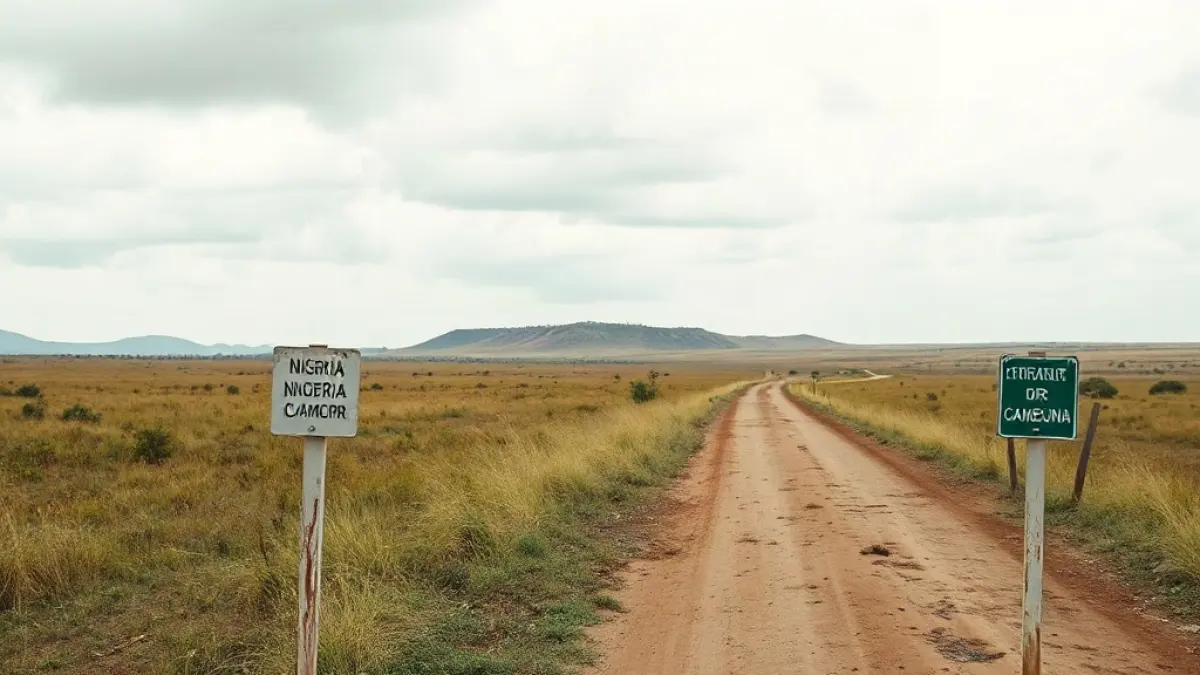
Nigeria and Cameroon are close to completing the physical demarcation of their shared border, more than two decades after the International Court of Justice (ICJ) ruled on the two countries' land and maritime dispute. Adamu Adaji, director general of Nigeria's National Boundary Commission, said the remaining work is concentrated in the Adamawa sector and should be finished within two to three months.
Key facts
- Remaining work: more than 260 boundary pillars still to be installed in the Adamawa sector
- Target: demarcation expected to be completed within two to three months, by the end of the year
- Length of the border: about 2,100 kilometres, Nigeria's longest international land border
- Origin: ICJ ruling of 10 October 2002, implemented with UN assistance
- Next phase: border management, community needs, smuggling, irregular migration and documentation of legal border movements
What is changing?
The two countries are in the final stage of physically marking their international boundary. Once the remaining pillars are in place, Adaji expects the demarcation to be completed within two to three months, by the end of the year. After that, the countries plan to turn to border management issues and the needs of the population affected by the boundary determination.
Where is the remaining work?
Outstanding work is concentrated in the Adamawa sector, where more than 260 boundary pillars still need to be installed, according to Adaji. He said disagreements over certain omitted sections were resolved after the intervention of the presidents of both countries.
Why is this happening?
On 10 October 2002 the International Court of Justice settled the land and maritime dispute between Cameroon and Nigeria. The court transferred sovereignty over the Bakassi Peninsula to Cameroon and defined the land and maritime borders of the two states. Implementation of the ruling began in 2002 under an agreement between the two governments with UN assistance, and the countries established a mixed Nigeria-Cameroon commission chaired by the UN to resolve outstanding issues.
How were border communities affected?
Adaji said both sides took into account the interests of communities that could have ended up on different sides of the border. He cited the Koja community as an example: under the initial line defined by the court, about 90% of the community was to fall in Cameroon, but following an agreement between the states the entire community remained in Nigeria. In other areas the sides made mutual concessions, including the settlement of Turu, where Cameroonians predominate, which was a concession to Cameroon.
What this means for travellers
The source does not announce any change to visas, passports or entry requirements for crossing between Nigeria and Cameroon. It does say that after demarcation the two countries should focus on border communities, information exchange, combating smuggling and irregular migration, and documenting legal movements across the border. Travellers planning to cross the land boundary, particularly in the Adamawa area, should follow official announcements as the work concludes.
The Nigeria-Cameroon border runs about 2,100 kilometres and is Nigeria's longest international land border. No further dates have been announced for the post-demotion phase of border management and community measures.
Also about:  Nigeria