
 DR CongoTravel
DR Congo: Ebola border closures and roadblocks restrict movement as lean season starts
An expanding Ebola virus disease outbreak in the Democratic Republic of the Congo has triggered border closures and roadblocks that restrict population movements and cut cross-border trade, according to FEWS NET. Conflict continues to disrupt the east.
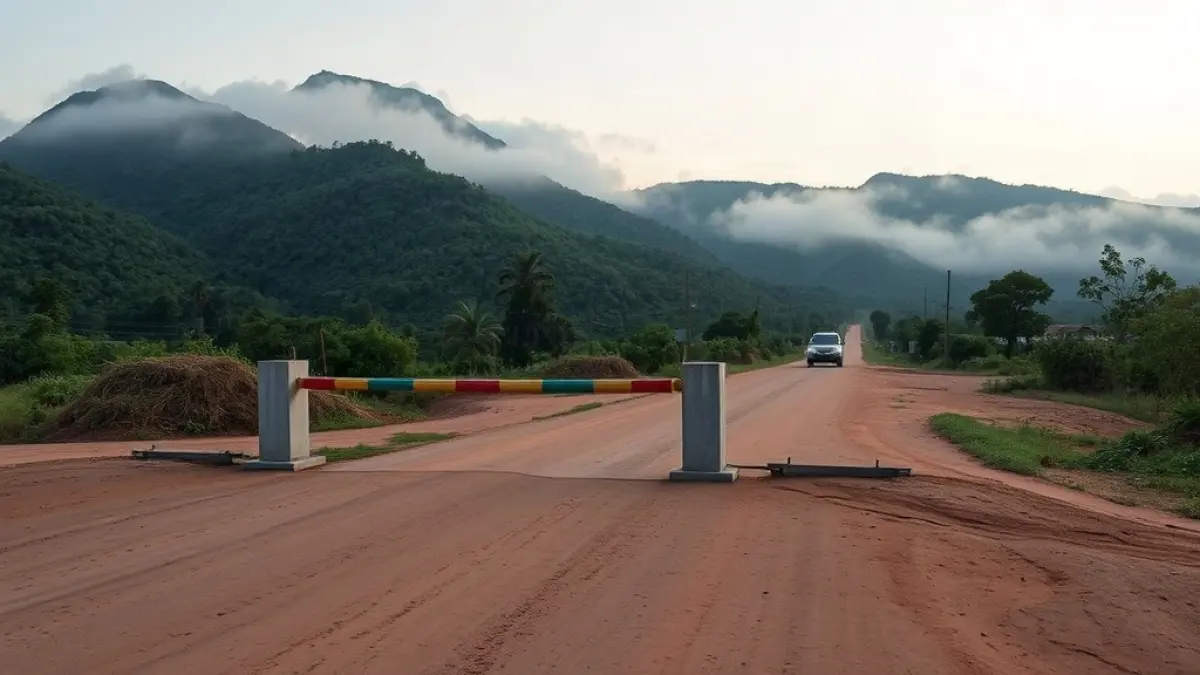
Border closures and roadblocks imposed to contain an expanding Ebola virus disease outbreak are restricting population movements and reducing cross-border trade flows in parts of the Democratic Republic of the Congo, the Famine Early Warning System Network (FEWS NET) said in an update published on 22 September 2026. The measures are weakening trade systems and cutting incomes for poor households that depend on cross-border activities.
The report, based on information available as of 25 August 2026, covers the period from August 2026 to January 2027 and updates FEWS NET's earlier food security outlook for the country.
Key facts
- Ebola outbreak is expanding geographically and case numbers are increasing
- Border closures and roadblocks are limiting cross-border trade and population movement
- The lean season is expected to begin early, in September
- Crisis (IPC Phase 3) outcomes are expected in eastern DRC through January 2027
- Improvements are expected from mid-December for households that cultivated in Season 2
What is happening with travel and movement?
FEWS NET says containment measures, including border closures and roadblocks, are reducing cross-border trade flows in some areas and restricting how far people can move. Trade systems are being weakened as a result.
The report notes that households near front lines in the east face severely restricted mobility. The outbreak is disrupting food supplies and causing income losses for thousands of poor households who depend on cross-border activities.
What else is affecting the country?
Continued conflict in the eastern part of the country is disrupting livelihoods, markets and trade, according to FEWS NET. The analysis expects Crisis (IPC Phase 3) outcomes to persist there through January 2027, with households most affected by conflict, particularly near front lines, facing Emergency (IPC Phase 4) outcomes.
FEWS NET expects the lean season to start early in September, with households turning to negative coping strategies such as taking on debt and selling productive assets. From mid-December, households able to cultivate during agricultural Season 2 should see improvements, though a significant share of poor households are expected to remain in Crisis.
Across most of the rest of the country, Stressed (IPC Phase 2) outcomes are expected through January, as declining purchasing power leaves households unable to meet essential non-food needs. Some territories in the Kasaïs affected by communal conflict, repeated displacement and asset losses are expected to face Crisis outcomes during the lean season.
What this means for travellers
The report describes border closures, roadblocks and restricted population movements in parts of the country, alongside an expanding Ebola outbreak. Travellers should factor in disrupted cross-border routes and limited mobility, particularly in eastern areas, when planning journeys.
As the lean season approaches, FEWS NET expects food availability to begin deteriorating and market dependence to increase. No specific dates for the border closures or roadblocks are given in the report.