
 Equatorial GuineaTravel
Equatorial Guinea's Malaria Push Aims to Draw Tourists, but No Start Date Set
Equatorial Guinea is extending its Bioko Island malaria programme to the mainland and Annobon, backed by a $116 million investment. Health officials say removing malaria is needed to attract tourists, but no rollout start date has been announced.
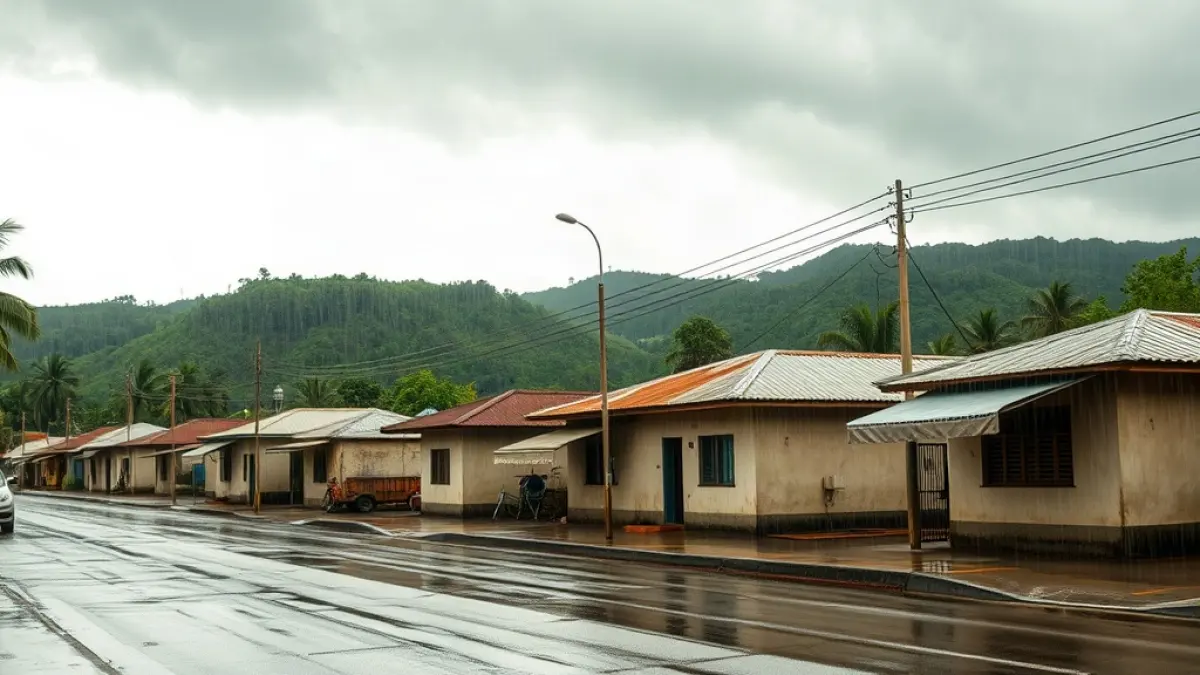
Equatorial Guinea is extending the malaria control programme it credits with sharply reducing infections on Bioko Island to the country's mainland and to Annobon, its remote, volcanic southernmost province. A $116 million investment from the government and businesses was announced earlier this year to fund the expansion, and the health minister says eliminating the disease nationwide is necessary to attract tourists and support economic growth.
Key facts
- $116 million was announced earlier this year by the government and businesses for the mainland and Annobon.
- More than $130 million was invested over two decades in the Bioko programme by the government and U.S. oil companies, including ConocoPhillips and Chevron Oil.
- Malaria prevalence on Bioko is now around 7%, down from around half the island's population, and deaths of children under five fell by 78%.
- The plan aims to vaccinate 300,000 children with R21, a vaccine recommended by the World Health Organization (WHO).
- The mainland is 13 times bigger than Bioko and borders Cameroon and Gabon, both high-malaria countries.
- No start date for the mainland rollout has been announced.
What has worked on Bioko Island so far?
Bioko, off mainland Equatorial Guinea and roughly half the size of Rhode Island, has used indoor insecticide spraying, mosquito nets and control of mosquito larvae. MCD Global Health, a U.S. nonprofit that implements the programme, says its success also rests on two decades of detailed data collection: because Equatorial Guinea has no address system, the team created its own mapping system to record how many houses exist and where, and to track spraying and malaria cases.
That data lets teams compare when houses were sprayed with which ones reported malaria, then adjust interventions in real time. Workers go door to door to explain the strategy and persuade residents to allow spraying, which programme coordinator Cristina Ngui Otogo said can take several attempts.
What will change on the mainland and Annobon?
The expansion will combine the Bioko methods with the rollout of R21, which Guillermo Garcia of MCD Global Health said is intended for 300,000 children across the country. New surveillance tools, including drones to identify mosquito hot spots, are also planned.
Authorities are additionally evaluating genetically modified mosquitoes being developed by experts at the University of California, Davis. These insects would no longer carry the malaria parasite and would be released to either suppress wild mosquito numbers or reduce their ability to transmit the disease.
Why is this harder on the mainland?
Equatorial Guinea's authorities insist Bioko's results are "perfectly replicable" on the mainland, but experts note Bioko has an island advantage: less risk of the disease arriving from abroad. Mosquitoes and infected people move freely across the mainland's borders with Cameroon and Gabon, both countries with high malaria prevalence, and success would require complex coordination between governments.
Dr. Matthew M. Ippolito of the Johns Hopkins School of Medicine said current interventions are not sufficient to eliminate malaria anywhere in continental sub-Saharan Africa, and that infections can return if neighbouring countries' control efforts fail.
How big is the malaria problem in the region?
Around 610,000 people died of malaria in 2024, according to the latest available WHO data, and African countries accounted for 95% of global cases and deaths. Only Mauritius and Cabo Verde have been certified malaria-free in sub-Saharan Africa. Despite tools such as new vaccines for children, progress has stalled, making the continent's goal of elimination by 2030 unlikely.
What this means for travellers
Malaria remains present in Equatorial Guinea, and the health ministry has linked nationwide elimination directly to attracting visitors. Travellers planning a trip can check current malaria risk guidance for the areas they intend to visit, including Bioko, the mainland and Annobon.
No timetable has been given for the mainland and Annobon rollout. The announced vaccine target of 300,000 children and the evaluation of genetically modified mosquitoes are the next stages to watch.
 Cameroon
 Gabon
 Mauritius