
 PanamaTravel
Panama quake grounds flights at Tocumen airport and triggers tsunami warning
A magnitude 7.7 earthquake and a 6.6 aftershock struck Panama on 9 October 2026, collapsing buildings and prompting Tocumen International Airport to suspend operations. A tsunami warning covers Panama's coast and neighbouring countries.
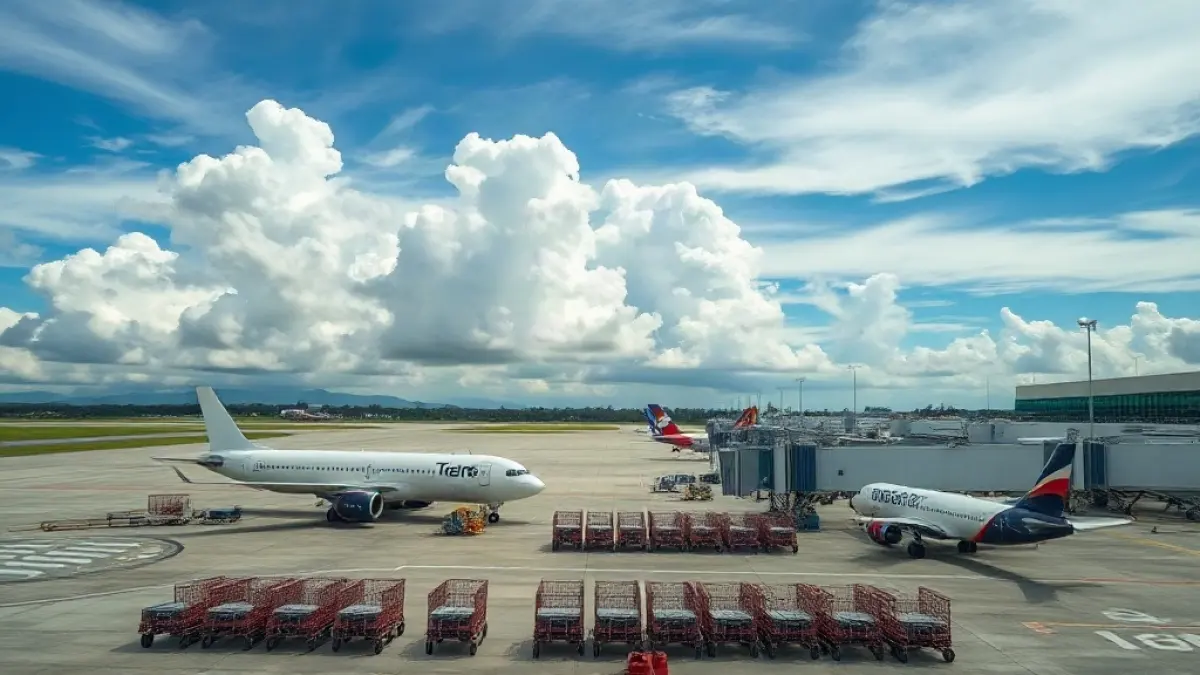
Two powerful earthquakes, of magnitude 7.7 and 6.6, hit Panama on Friday afternoon, 9 October 2026, collapsing buildings near the epicentre and prompting evacuations across the country, the U.S. Geological Survey (USGS) said. The main quake led Panama City's Tocumen International Airport to suspend operations temporarily, and a tsunami warning was issued for Panama's coast and several neighbouring countries.
Key facts
- The first quake struck on 9 October 2026 at a depth of 10 kilometres (6 miles), centred about 10 kilometres (6 miles) southwest of Pitaloza Arriba in the central province of Herrera, the USGS said
- The USGS initially reported the quake as magnitude 8, then revised it to 7.6 and later to 7.7; a magnitude 6.6 aftershock followed
- Tocumen International Airport in Panama City temporarily suspended operations and activated evacuation plans
- The National Weather Service issued a tsunami warning for the coasts of Panama, Colombia, Ecuador, Nicaragua and Guatemala
- Damage was concentrated in the central provinces of Veraguas, Herrera and Los Santos
What happened?
The earlier quake was felt as far away as neighbouring Colombia, according to the USGS. Seismologists at the University of Panama recorded more than 45 aftershocks, though many were too weak to be felt; among those that were noticed were several measuring magnitude 5.8, 5.5 and 5.2.
Omar Smith of the National Civil Protection Service told the Telemetro Reporta news channel that damage was concentrated in the central provinces of Veraguas, Herrera and Los Santos. He said there were no reports of damage in the capital, which is known for its hundreds of skyscrapers.
Several injuries have been reported, including one person struck by debris from a partially collapsed structure in the city of Penonomé, around 93 miles (150 km) from the capital. Smith confirmed a partial collapse and cracks at the cathedral in the district's main square, plus damage at the governor's office building and the Dos Continentes hotel. No casualties were immediately reported. Local news outlets also reported that the Church of San Atanasio, a colonial-style Catholic church in Los Santos province declared a National Historic Heritage Site in 1938, had collapsed, while large fissures ran along roadways in Veraguas province.
What does this mean for flights and transport?
Tocumen International Airport in Panama City, one of the region's busiest airports with more than 20 million travellers in 2025, said it would temporarily suspend operations and activated evacuation plans. It said operations would resume once security conditions have been checked; no restart time was given.
The Panama Canal Authority said operations were continuing normally along the key global trade route. It said its priority was the safety of employees, vessels and crews and that specialised technical teams were inspecting facilities for possible damage.
Where were tsunami warnings issued?
The National Weather Service issued a tsunami warning for the coasts of Panama, Colombia, Ecuador, Nicaragua and Guatemala. It warned that waves ranging from 3 to 9 feet (1 to 3 metres) above tide may occur in some coastal areas of Panama.
Alerts were also issued in El Salvador and as far as Chile's Easter Island, about 3,500 kilometres (2,175 miles) off Chile's mainland coast. Chile's government placed the island under a precautionary advisory.
What this means for travellers
Travellers flying to, from or through Panama City should expect disruption at Tocumen International Airport while security checks are carried out, and should confirm flight status before heading to the airport. Anyone in coastal areas of Panama and the other warned countries should follow the tsunami warning issued for those coasts.
Panamanian President José Raúl Mulino called for calm on Friday, writing on X that what happened "should not be used to cause alarm or disorder." The U.S. Embassy in Panama said it was closely monitoring the aftermath and accounting for the welfare of its citizens in the country.
The story is still developing, and further updates on damage, injuries and when airport operations will resume are expected.
Also about:  Colombia
 Ecuador
 Nicaragua
 Guatemala
 El Salvador
 Chile