
 South KoreaTravel
Travellers to Korea's border await clarity as Seoul proposes military talks
South Korea has proposed military talks with North Korea to confirm the Military Demarcation Line and restore communication lines as both sides reinforce the border. It is unclear whether Pyongyang will accept.
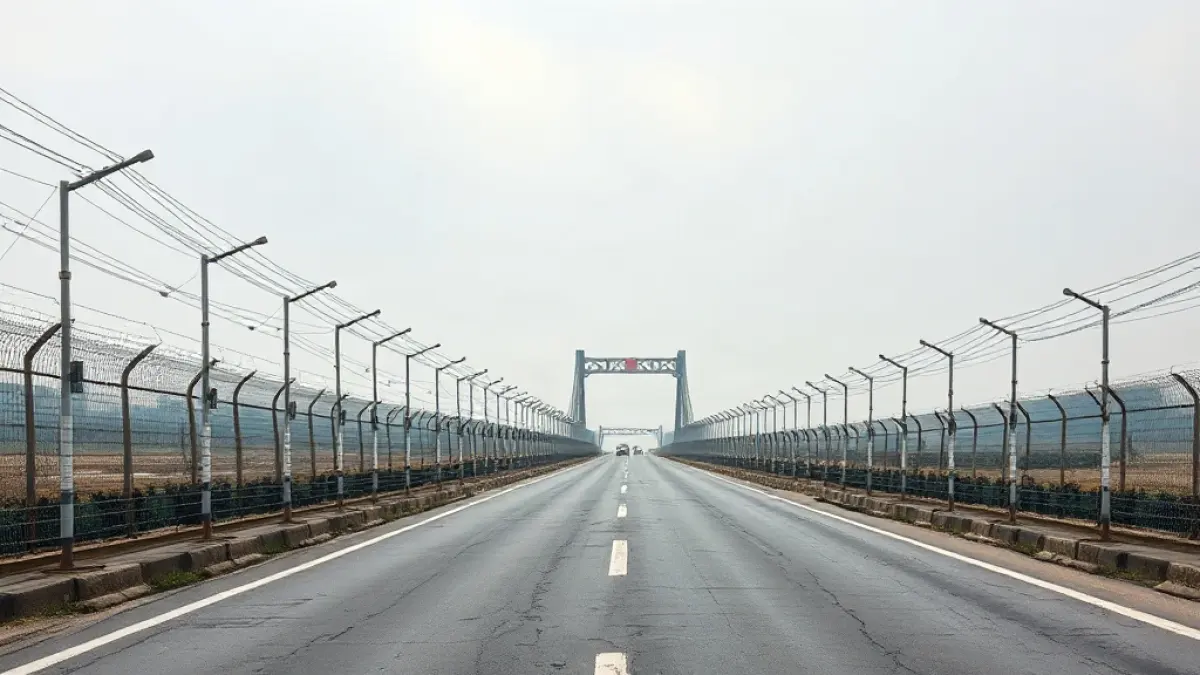
South Korea has proposed holding military talks with North Korea over the two countries' heavily fortified border, Seoul announced on 23 October 2026. The invitation aims to calm rising tensions along the Demilitarized Zone (DMZ) and comes days after Pyongyang said it had moved new military units to the border.
Key facts
- Announced: 23 October 2026 by South Korea's Ministry of National Defence.
- Aim: confirm the precise location of the land Military Demarcation Line and restore military communication lines.
- Where: dates and locations to be discussed through Panmunjom, the truce village on the border.
- Who: South Korea is open to three-way talks including the United States-led United Nations Command.
- Background: three South Korean soldiers were injured by explosions near the border in September 2026.
What would the talks cover?
Kim Hong-cheol, deputy minister for national defence policy, said the discussions would aim to mutually confirm the exact position of the land Military Demarcation Line (MDL) and to find ways to restore military communication lines and prevent accidental clashes in border areas.
Specific dates and locations could be worked out through Panmunjom, the symbolic truce village where soldiers from the two Koreas stand face to face. Seoul said it would also be willing to hold three-way talks involving the United States-led United Nations Command.
Why has South Korea made the offer now?
North Korea has been increasing its military activity along the border. Kim Yo Jong, the sister of the North Korean leader, said on Wednesday that new military units had been moved into firing positions there. Mines, barbed-wire fences, tactical roads and antitank walls have been added to one of the world's most heavily armed borders.
Tensions worsened after three South Korean soldiers were hurt by explosions near the MDL in the western section of the DMZ in September 2026. South Korea blamed landmines laid by the North and demanded an apology; Pyongyang firmly rejected the accusation.
Seoul's Ministry of National Defence warned that it was hard to predict "what further incidents could occur if this situation is allowed to continue unaddressed".
Will North Korea agree to talks?
That remains unclear. Leader Kim Jong Un has taken a hard line towards Seoul and suspended virtually all dialogue and cooperation with the South in recent years. South Korea's ministry noted that a talks proposal last year drew no response from Pyongyang.
South Korean President Lee Jae Myung has called on the North to return to dialogue, but Kim Yo Jong dismissed the suggestion of bilateral talks, and no date for any meeting has been set.
What this means for travellers
The announcement brings no change to South Korea's visa requirements or entry rules. The military activity described is taking place along the border and the DMZ, but the information provided says nothing about visitor access to those areas or about any travel advice.
South Korea is now waiting for North Korea's reply. If Pyongyang accepts, the two sides would work out the timing and venue of the talks through Panmunjom.
Also about:  North Korea
 United States